Grave
Devorah HaNevia
Yahrzeit (Hillula)
- 15 Tishrei — Devorah HaNeviah
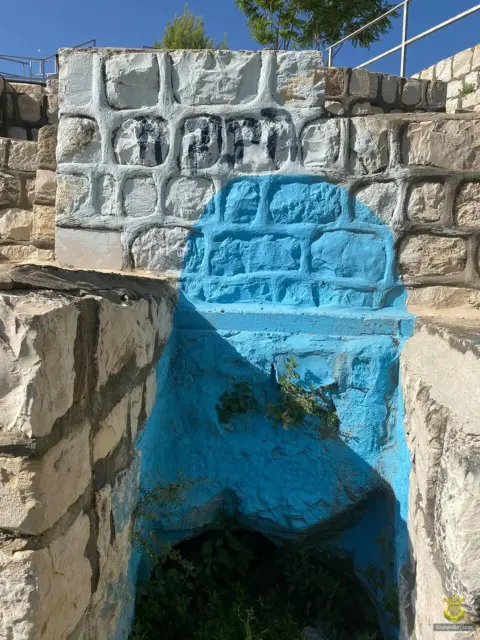
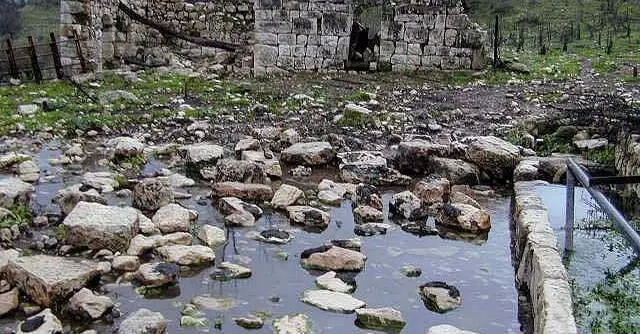
The Grave of Devorah HaNevia
Yahrzeit - 15 Tishrei
Burial Place - Tel Kedesh
A gift from Yeshivat "Yodei Bina" for my birthday - a surprise trip to the grave of Devorah HaNevia. The announced trip to Meron (one of our regular ones) turned out to be unusually long. When I asked, "why are we taking so long" - they answered: "we're avoiding traffic." After 2 hours (from Hadera to Meron is 1.5 hours maximum with all the traffic) I ask again - it's a strange road - not a soul for half an hour now and some barbed wire - where are we? Completely seriously they answer - at the Israeli-Lebanese border. We approach a picturesque place - not a soul around, the stars so low that you could reach out and catch them... I ask: where have we come - they say, to your namesake - Devorah HaNevia... From confusion and delight I didn't even take a photo then... there was no time for that...
Toda, Hashem, for such golden friends.
The prophetess Devorah - Devorah HaNevia - was the 4th judge of the Jewish people in the era of the Judges. She came from the tribe of Naftali. She was also called "a mother in Israel" (Shoftim 5:7).
Her husband Barak ben Avinoam was a G-d-fearing man. Devorah made wicks for the Menorah in the Mishkan, and Barak would bring them to Shiloh, where the Mishkan stood at that time, and where Pinchas ben Elazar was the High Priest.
Barak was nicknamed Lapidot - from the word "lapid" (torch). The words "barak" (lightning) and "lapid" (flame) are synonyms.
And Devorah herself was called "eshet Lapidot," that is, "the wife of the torch-bearer", (Yalkut Shimoni, Shoftim 42, 4).
The midrash "Tana d'vei Eliyahu" (The Teaching of the House of Eliyahu) answers the question of what it was about this woman that made her both a judge and a prophetess:
"I call heaven and earth to witness: whether a person is of Israel or a non-Jew, whether man or woman, whether slave or maidservant - according to the deeds a person does, so does the Divine Spirit rest upon them."
This testimony is that the spirit of prophecy rests upon a person regardless of their age, gender, social status, nationality, etc.
In verse 5 it is said of Devorah: "she sits under a palm tree." It is told that she sat under the "palm tree of Devorah," in the mountains of Ephraim, between Ramah and Beit-El, and the Jews would come to her for judgment.
The midrash explains that, since she was a woman, she could not receive men in an enclosed space - this would have cast a shadow on her reputation, and one should not act this way. Devorah was a very wealthy woman, which is one of the necessary qualities for a person to become a prophet.
The Jezreel Valley was fertile land and was constantly under attack from the Canaanite tribes.
Devorah received a revelation from the Almighty to save the people from the yoke of the Canaanites by the hand of Barak, and she summoned him: "And she (Devorah) sent and called Barak ben Avinoam from Kedesh Naftali, and said to him: Has not the L-rd, G-d of Israel, commanded: Go and draw toward Mount Tabor, and take with you ten thousand men from the sons of Naftali and from the sons of Zevulun. And I will draw to you, to the river Kishon, Sisera, the commander of Yavin's army, with his chariots and his multitudes, and I will deliver him into your hand."
Barak answers Devorah: "if you go with me, I will go, but if you do not go, I will not go." He, of course, did not doubt the prophecy conveyed by Devorah, but he knew well - the Jews were frightened, they feared Sisera's warriors and might not follow him, for they would not believe his words. If they saw that the prophetess who conveyed the words of the G-d of Israel was also with them, they would believe in victory.
Yavin's army under the command of Sisera included 900 iron chariots - it was thanks to them that Yavin "cruelly oppressed the children of Israel for twenty years". (Shoftim 4:3) The Israelite army positioned itself on Mount Tabor; Sisera, at the head of the chariots and infantry, advanced toward the valley of the Kishon River. Despite the fact that the enemy army was at a considerable distance (about 25 km), Devorah ordered Barak to attack the Canaanites immediately, counting on the flooded Kishon to hinder the chariots. The battle took place at Taanach, by the waters of Megiddo (Shoftim 5:19); the calculation proved correct: Sisera's chariots became mired in the swampy ground, and the Canaanite army was completely routed. Sisera himself fled the battlefield, abandoning his chariot, and, pursued by the Israelites, tried to take refuge in the tent of Chever the Kenite, and his wife - Yael (a descendant of Yitro) - offered "hospitality" to Sisera, and killed him with a tent peg and a hammer.
In the "Shirat Devorah", Devorah praises Yael: "Above them (above them) she shall receive blessing." The midrash says she is praised above the women in the tent. The "women in the tent" are Sarah, Rivkah, Rachel, and Leah. Yael, however, is praised even higher, because although they gave birth to and established this nation, it is she who saves it from its enemies.
Rabbi Chaim Vital taught in "Etz Chaim," may the memory of the righteous be blessed, that the prophetess Devorah sat under a palm tree, and the secret of the palm tree is "tzadik ke-tamar yifrach" - (the righteous shall flourish like the palm tree). "Tamar" has a gematria of 640, which equals the gematria of "Shemesh" (sun) - the prophetess Devorah was to the people of Israel like the shining sun. David HaMelech comes from the root of Devorah, because he sang just as she did.
Rabbi Menachem Azaria of Fano explains in "Sefer Gilgulei Neshamot":
"Devorah is the gilgul of Tamar, and the tikun consists in the fact that Devorah must now be outside" (unlike Tamar, who was in the place of harlots).
Tzipporah, the wife of Moshe Rabbeinu, was also reincarnated as Devorah. When Am Yisrael sang "Shirat HaYam" to Hashem, Tzipporah was not with them - she was in Midian.
In the merit of what she did for her son's brit, "vatikach Tzipporah tzur vatichrot [et] orlat b'nah" ("and Tzipporah took a flint and cut off her son's foreskin"), Tzipporah, embodied in Devorah, merits the song "Shirat Devorah" through Ruach HaKodesh, and the words "bifroa perao t" in Devorah's song allude to the brit milah of the son of Tzipporah and Moshe Rabbeinu.
Tzipporah, Tamar, and Devorah are connected to Mashiach
Tzipporah was the wife of the first redeemer - Moshe Rabbeinu.
Tamar and Yehuda are the root of David HaMelech (Mashiach Ben David).
The song of Devorah is a song about the final redemption and Mashiach.
The secret of the name Devorah is in the root - DAVAR (word) - DIBUR (speech) (from Malchut). When speech rises to the level of song, speech is elevated through the musical notes of the melody (Taamei HaMikra), which come from a higher level.
Dibur (speech) is also the secret of Yehuda - the power he possesses comes from his speech. The name Devorah דבורה contains the word bor - (pit), into which Yosef HaTzadik was thrown on Yehuda's advice, and this song is the key to Geulah.
Devorah - Yosef - David - gematria = 387.
בשכינה - Be Shechinah - also = gematria 387.
Wicks
Devorah used wicks for the Menorah in the Mishkan in Shiloh and always thickened the wicks so that the Menorah would give more light. The "guf" (physical body) is called the wick petilah, and the "soul" is called the light ner. The wick petilah shares its letters with the word prayer tefilah. The song of Devorah is a Prayer of Thanksgiving.
The tikun of the last generation is Yesod HaKadosh (Tikun HaBrit), and Devorah connects and purifies the damaged klipah of the Brit through her song. According to the words of "Shirat Devorah," she repairs the damage of the Brit and hastens the coming of Mashiach.
How so?
Devorah sits under a palm tree and through Ruach HaKodesh tells her husband Barak ben Avinoam to call the 2 tribes, Naftali and Zevulun with 10,000 men, to fight Sisera and his 900 iron chariots.
900 iron chariots - tesha meot rechev - forms the acronym Tamar.
The secret of the 10,000 men commanded by Devorah is ke-neged "Tikun HaKlali" - 10 psalms. The holy Rabbi Nachman of Breslov taught that a person who understands this great remez and reads the "Tikun HaKlali" at the resting place of Devorah HaNevia, and then recites her Song with praise and thanksgiving to Hashem, will gain very much.
Devorah calls upon her husband Barak ben Avinoam to repair the Yesod of Brit HaKodesh. Barak comes from the tribe of Naftali, son of Yaakov Avinu.
Naftali from the words - nafalta li - "you have fallen before me" - the secret of the Tikun, for those who have spilled seed in vain.
Zevulun ben Leah Imeinu - from the words - zera l'vatalah - (spilled seed).
נַחַל קִישֹׁון גְּרָפָם נַחַל קְדוּמִים נַחַל קִישֹׁון תִּדְרְכִי נַפְשִׁי עֹז:
"The river Kishon swept them (the enemies) away, that ancient river, the river Kishon."
"Nachal Kishon" (the Kishon River) - the secret of Tikun HaBrit.
Eliyahu HaNavi brought the Jews to Mount Carmel, and the Nachal Kishon is the point of separation. In the word Kishon are the letters of the word "Nishuk" (kiss). In this context - a kiss into Kedushah (holiness).
In the words of "Shirat Devorah" - bayom hahu - "on that day", there is a prophecy that relates not only to individual redemption, but also to the global one - to the coming of Mashiach:
ותשר דבורה וברק בן אבינעם ביום ההוא לאמר
"And Devorah and Barak, son of Avinoam, sang on that day in these words";
והיה יהוה למלך, על-כל-הארץ; ביום ההוא, יהיה יהוה אחד — ושמו אחד
"And the L-rd shall be King over all the earth: on that day the L-rd shall be One and His Name One."
This song serves as an entry ticket for Mashiach Ben Yosef, to enter the Heichal היכל (Sanctuary) of Mashiach and begin the purifying path for the Kingdom of Hashem.
(from a trip to "Kivrei Tzadikim" with Yeshivat "Yodei Bina," material based on the site "Shirat Devorah" http://shiratdevorah.blogspot.com/p/song-of-devorah.html)