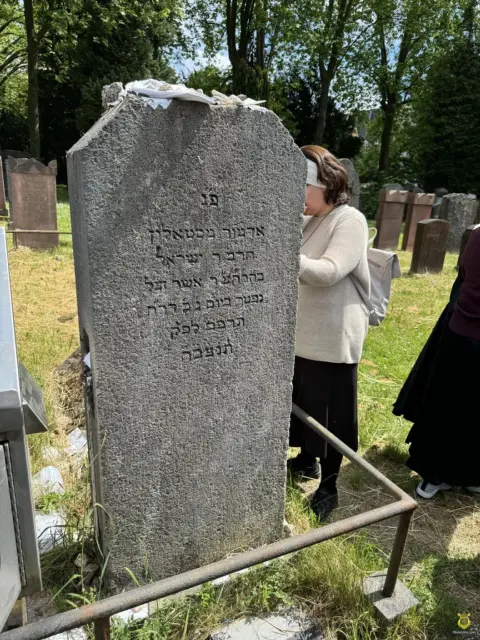
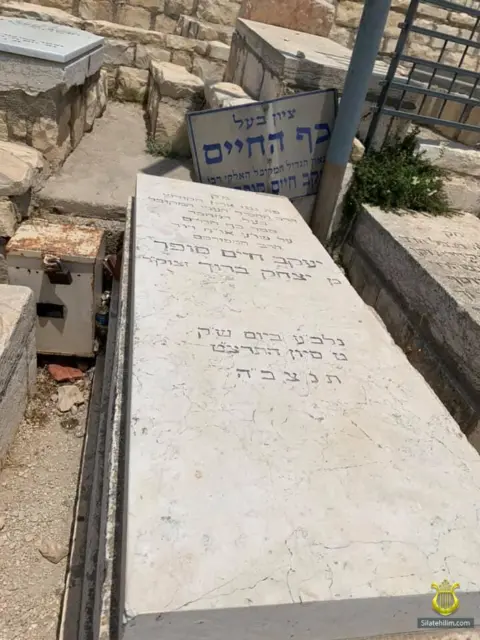
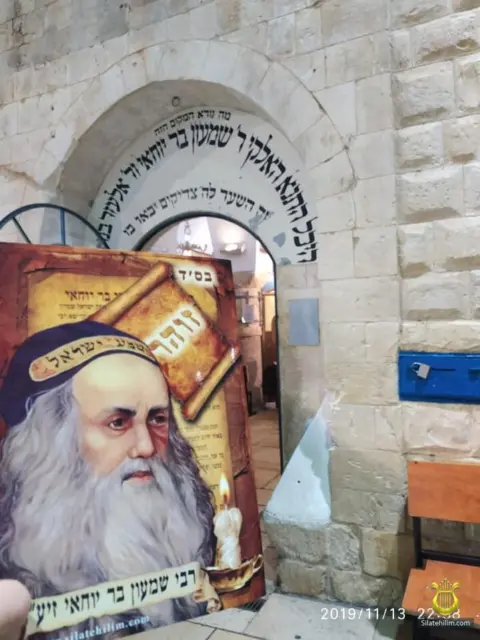
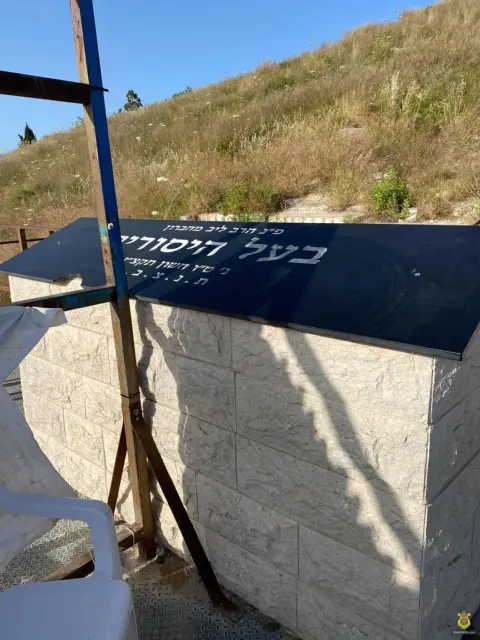
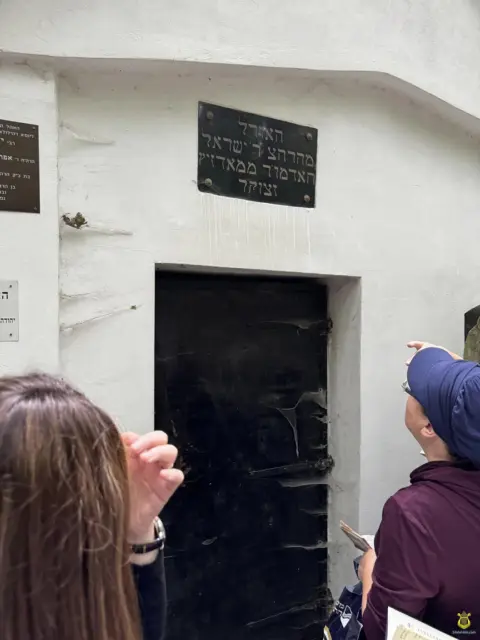
Grave
Beit HaShunamit
the place of a double miracle
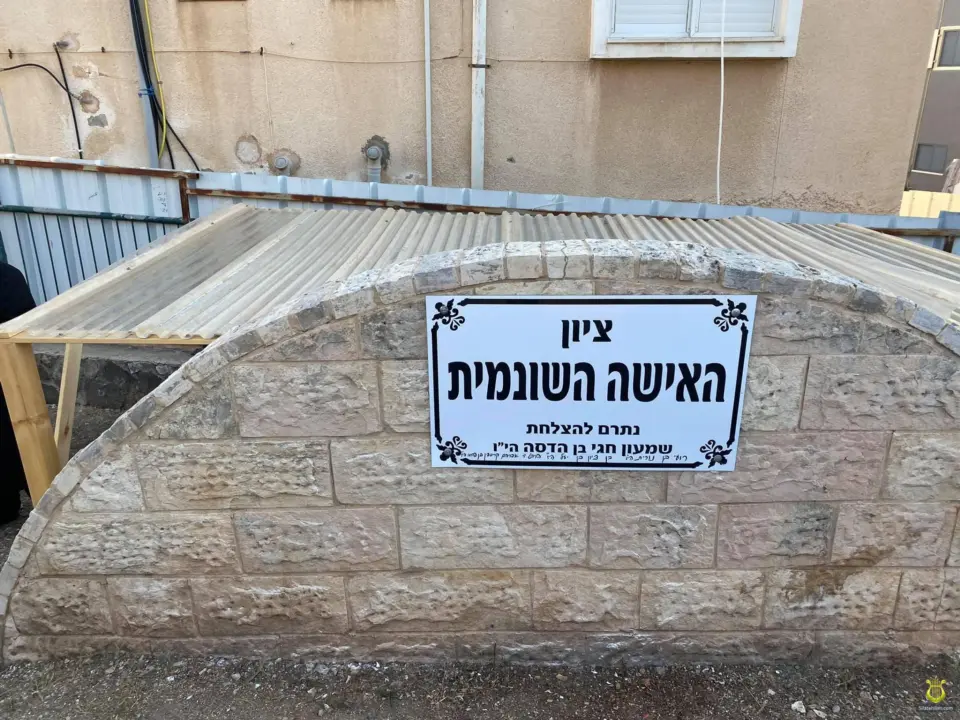
Beit HaShunamit - the place of a double miracle
This story took place in the time of the prophet Elisha.
The prophet Elisha would often pass through the Jezreel Valley. The woman of Shunam and her husband prepared a special room for Elisha, fully furnished with a bed, table, and lamps.
In return for her warm hospitality, the prophet blessed the woman of Shunam with a son.
In the sefer "Kaftor VaFerach," Rav Ishtori HaParchi — a well-known 13th-century geographer — confirms that the house of the Shunamit woman is the very same house described in Tanach, in the Jezreel Valley, in the territory of the tribe of Issachar.
In "Orchot Rabbeinu," Rabbi Avraham Horowitz, a close student of the Steipler Gaon, relates in his teacher's name that since Elisha's prayer was answered at Beit HaShunamit, we know that this is a place where childless couples can find an answer to their tefillah.
"Orchot Rabbeinu" writes that Beit HaShunamit is located near Afula. However, since it is situated in the Arab village of Sulam, the Steipler Gaon gave clear instructions that Jews should go there only accompanied by armed security.
In 1980, with the Steipler Gaon's blessing, a group of Jews set out with Rabbi Chaim Kanievsky and his grandchildren to Shunam accompanied by a policeman. Within a year of their visit, all the young couples who had gone on that trip were blessed with children.
After 2001, the Rebbetzin and Rav Kanievsky would travel to Shunam only with an armed escort.
Once Rav Chaim Kanievsky was invited to be sandak in Bnei Brak.
The day before leaving, Rav Chaim told the Rebbetzin that he was going to Yokneam. Usually she accompanied Rav Chaim only to Jerusalem, but this time she asked whether he might consider stopping at Beit HaShunamit along the way to pray for childless couples (including some of their own grandchildren). Although there was no official announcement, many people learned of the trip to Beit HaShunamit.
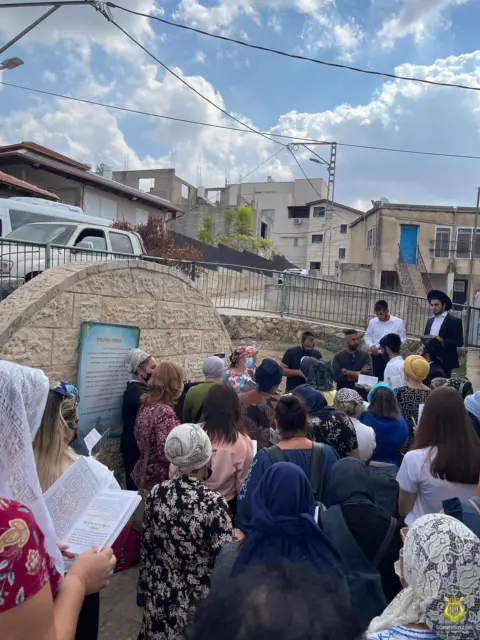
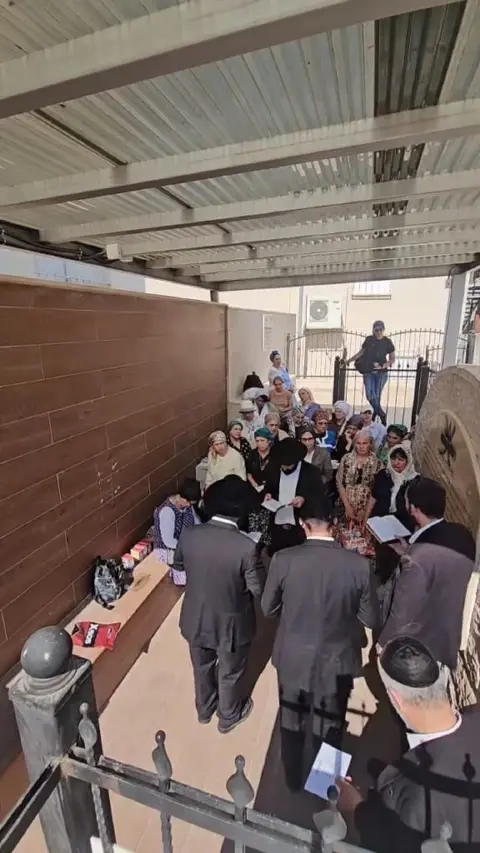
The next day, on the 9th of Sivan, 2001, more than 1,000 people were waiting for Rabbi Chaim and Rebbetzin Batsheva.
The Rav and Rebbetzin recited Psalms 102 and 103 (for the birth of children).
After this trip, dozens of children were born within two years to couples who had prayed in Shunam; some couples named their sons after the prophet — Elisha. One mother even named her son Chavakuk, since the Zohar writes that the prophet Chavakuk was the very son of the woman of Shunam.
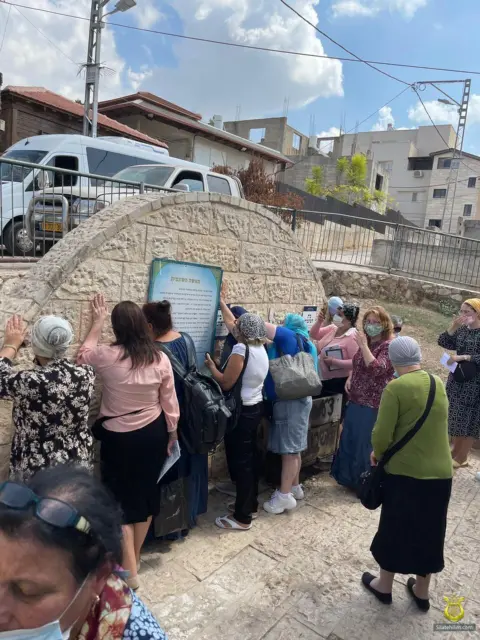
Five years before her passing, Rebbetzin Batsheva went to the House of the Shunamit woman with a group of women accompanied by police officers. The residents of the village of Sulam, including the mayor, came out to greet her. The Rebbetzin told them that it was a blessing for them to live in such a holy place, and that if they would guarantee that none of them would harm this holy site or hinder Jewish pilgrims, then this place would be a source of blessing for their village as well.
The Woman of Shunam
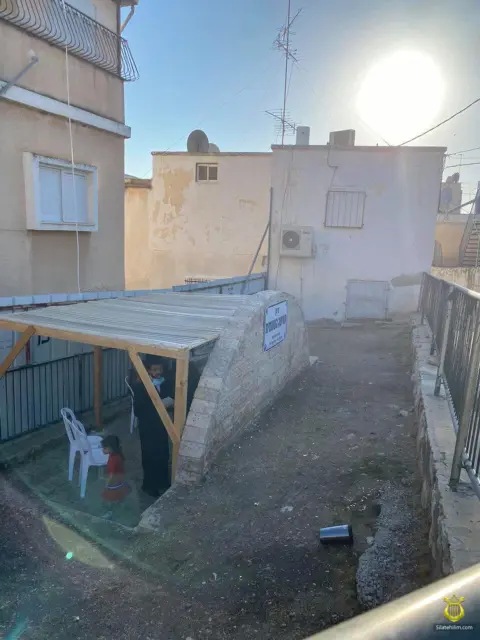
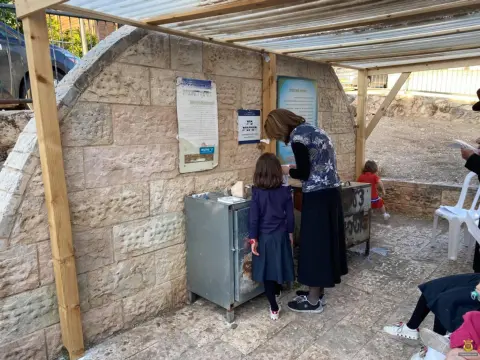
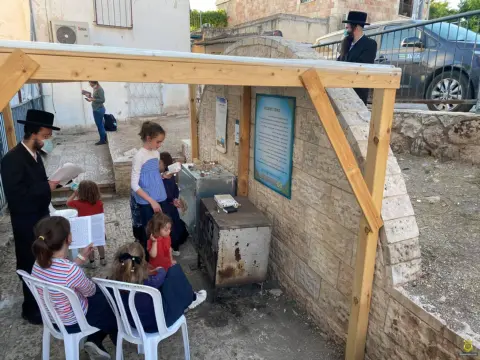
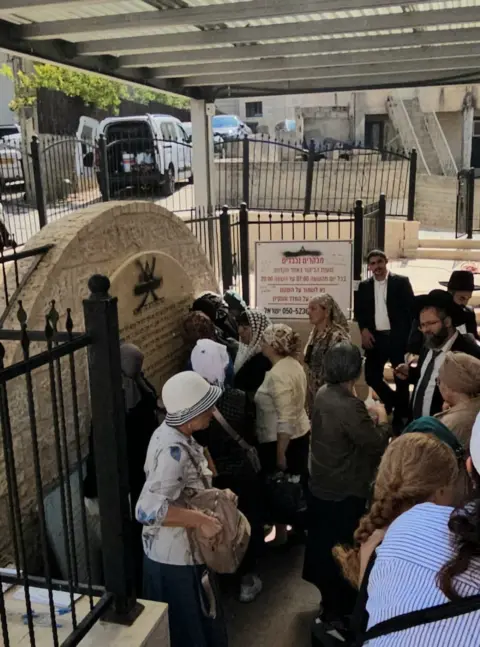
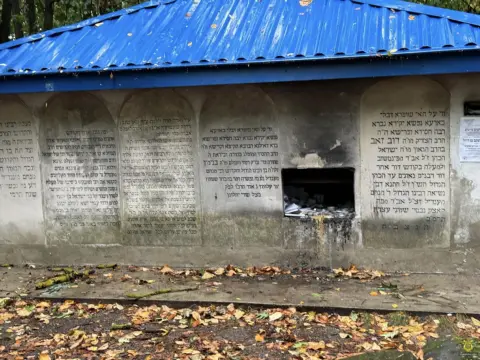
Not far from Afula, in the remote Arab village of Sulam (Shunam), next to an ordinary old house, stands the grave and wall of the house of the woman of Shunam. The road passes through Moshav Merhavia along a dirt road.
It was in this house that an elderly couple hosted the prophet Elisha, setting aside a separate room for him.
On Rosh Hashanah, the day when Ha-Shem "remembered" childless women such as Sarah Imeinu, Rachel Imeinu, and Chana the mother of Shmuel HaNavi, Elisha HaNavi sent his servant Geichazi to the woman of Shunam to ask how he could repay her hospitality.
She said she needed nothing — but his servant Geichazi reminded him that she had no children. The prophet said to her:
"At this season, at the time of life, ka'et chaya, you shall embrace, chovekhet, a son."
The Zohar HaKadosh reveals that the prophet Elisha's word "chovekhet" — (you shall embrace) — hinted at Chavakuk, who became the son of the Shunamit woman. Moreover, the Zohar HaKadosh says there were two embraces — one maternal, and the second Elisha's (when he revived the child), as it is written: "and he put his mouth upon his mouth."
Thus, the Mekubalim state that Elisha's blessing became part of this place forever.
Just as Elisha prayed and blessed the woman of Shunam with a child, this blessing carries the spiritual power to bless childless women who so desperately want to conceive.
Sometime later the child fell ill (complaining of a headache) and died. The woman of Shunam, without telling anyone of her son's death, laid him down, asked her husband for a donkey, and set out to find the prophet. When she found him, she fell at his feet, saying: "Did I ask you for a child, so why has Ha-Shem taken him away?"
The prophet Elisha commanded his servant Geichazi to take his staff, go to Shunam, and by placing it on the child, revive him.
The Prophet Chavakuk and the Resurrection of the Dead
King Shlomo said: "A living dog is better than a dead lion". (Kohelet 9:4)
Elisha said to him: "Take my staff in your hand and lay it upon the boy's face." [II Kings 4:29]
The prophet also instructed Geichazi not to speak with anyone along the way and not to be distracted by anything. But on the way he laid the staff upon a dead dog and revived it.
When he reached the place and laid the staff on the boy's face, the boy was not revived. [Rabbi Shmuel Laniado, Keli Yakar, II Kings]
It is known that the son of the Shunamit woman was the prophet Chavakuk [Zohar II, 44b], whose name shares the same gematria as the word אריה (lion), as well as the word בחור (young man).
From this it follows that Chavakuk's death was the cause of the dead dog's revival.
This is the meaning of the phrase "a living dog is better", because the "dead lion" is Chavakuk (whose gematria is "lion"). (Rabbi Yehuda Petaya, "Minchat Yehuda," ch. 109, Kohelet)
The students of the Arizal HaKadosh relate the following story about him. Once Rabbi Yitzchak Luria was late for a wedding. He explained his lateness by saying that on the way he had met a dog that was barking at him. The Arizal asked it who it was — to which the dog answered that it was a gilgul of Geichazi.
When the prophet Elisha commanded that the son of the Shunamit woman be revived with the staff, Geichazi did not believe in the miracle that was about to occur. Along the way he saw a dead dog cast at the roadside and decided to test the power of the prophet's staff on it. The dog indeed came back to life, but the staff no longer had the power to affect the young man to whom the prophet had sent him. Therefore Geichazi's punishment was to be reincarnated into a dog.
And Elisha came to Beit HaShunamit, and lay upon the child: eye to eye, hands to hands, mouth to mouth, and prayed. The child grew warm. Then he got up, walked about, and lay upon him once more — the boy sneezed seven times and came back to life.
The Zohar HaKadosh says that Chavakuk was revived through Ha-Shem's Name of 72 words — at the splitting of the Yam Suf there are three verses — the Name of 72 words contains 216 letters. The gematria of Chavakuk = 216.
Shunam — Rabbi Chaim Palagi
Time — Shavuot, place — Shunam, author of the segula — Rav Chaim Palagi.
Beit HaShunamit is the house of the well-known woman of Shunam near Afula, where the prophet Elisha performed miracles — blessing a childless woman with the birth of a son and later reviving him.
Rav Chaim Palagi taught that one should give tzedakah of 104 — this is the famous segula for having children: giving 104 coins as tzedakah on Erev Shavuot to a needy and humble talmid chacham.
Rav Chaim Palagi taught that this works as follows: you set aside 91 coins, and then add more until you reach the number 104 — which is double the gematria of the word בן, "son."
The double 52 alludes to the first miracle — when the prophet Elisha promised the woman of Shunam that she would embrace a son — and he was born, and the second, that he revived her son (the prophet Chavakuk).
Rav Chaim Palagi writes that this segula is meant for the birth of children and for hastening the Geulah, for relief from financial hardship, from health problems, from household difficulties, and for redemption from everything that troubles us. Because we all need a personal Geulah, as well as a collective one — Geulah shelemah.
Rabbeinu Bachya (Kad HaKemach, Orchim) notes that the simplest segula for having a child is Hachnasat Orchim (the mitzvah of hospitality), and that we learn this from the fact that Sarah Imeinu and the woman of Shunam performed this mitzvah shortly before being blessed with a child.
Gallery