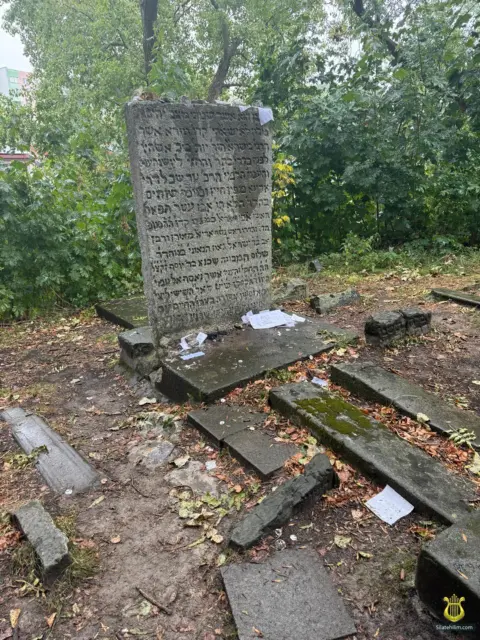
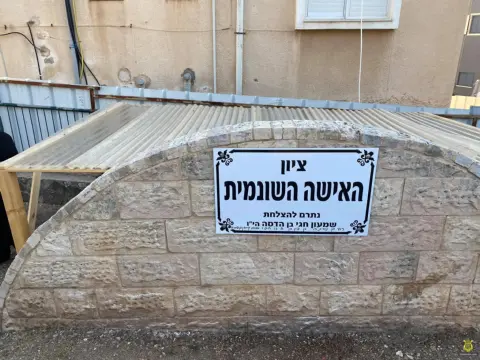
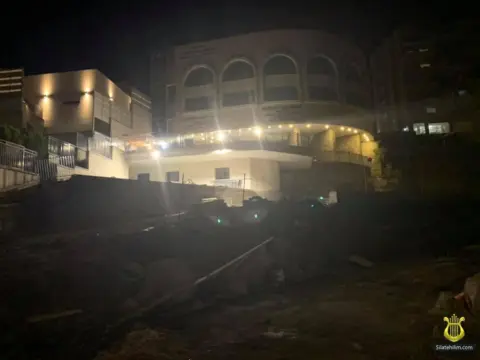
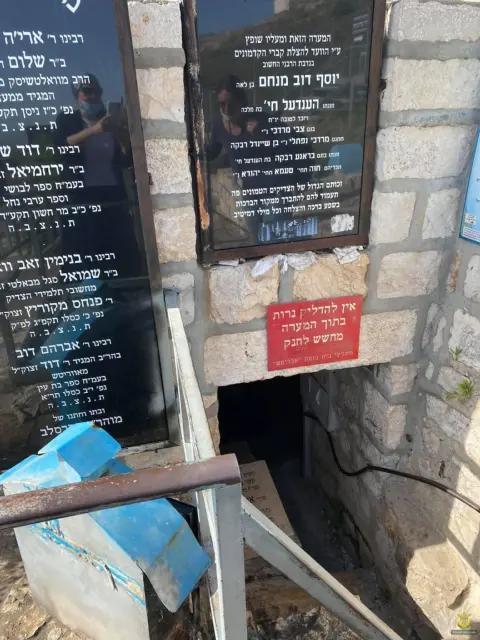
Grave
Amnona Saba (Zohar HaKadosh)
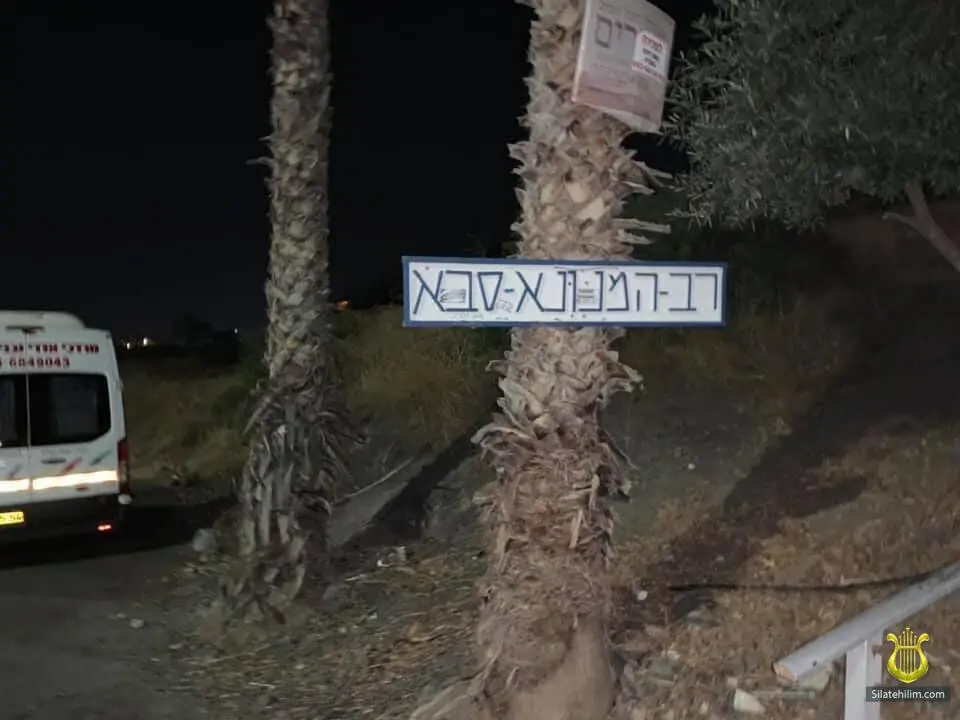
Rabbi Amnona Saba from Zohar HaKadosh - father of the Yanuka (child).
According to the website Zissil.com - Amnona Saba from Zohar HaKadosh is buried together with Rabbi Chiya of the Zohar and his sons.
The Zohar states that there are exceptions not usually studied - there are special souls, lofty souls, who merit becoming a kli (vessel), MA"N, for the great zivug of RADLA after their passing, and receiving there, in the higher world, the level of Yechida attained through that zivug.
These are rare souls - the souls of Benayahu ben Yehoyada, Rabbi Amnona Saba and very few others.
These lofty souls reveal themselves to tzadikim in this world, whereby the tzadikim merit, even in this world, to enjoy the light of Yechida, which shines only in such lofty souls.
The Letters of Amnona Saba
The mystical meaning of the letters is revealed in the Zohar, in the section "The Letters of Rabbi Amnona Saba" and "Sitrei Otiot."
Since G-d created the world with ten utterances, the letters of the holy tongue are also considered various manifestations of His influence in the world. Thus, the name of each thing in the holy tongue reflects its essence and the Divine energy invested within it. Commentators on the Torah explain that the first man, Adam, could perceive this essence, which is why he gave names to the animals.
The Zohar explains that the shapes of the black letters on a white background convey various possible relationships between the forces of nature grasped by the Kabbalists, relationships inaccessible to the five human senses.
The Son of Amnona Saba - the Yanuka
Rabbi Yitzchak and Rabbi Yehuda were on the road. They came to the village of Sichnin, to the place where Rav Amnuna Saba had (once) lived. There they went to visit his wife, who had a small son. Every day he was usually at school, but that day he came home and saw these sages.
His mother said to him: "Go up to these exalted men and receive a blessing from them." He approached them, but immediately stepped back. The boy said to his mother: "I do not wish to come near them, for today they did not recite the Shema on time - the whole day is rejected."
They were astonished to hear this.
They raised their hands and blessed him. They confirmed: "Indeed, we did not recite the Shema, because we were busy today with the concerns of a groom and bride who lacked everything necessary, and their wedding was delayed, and there was no one to take care of them, so we took care of them, and therefore did not recite the Shema on time. And one who is engaged in one mitzvah is exempt from another."
They asked him: "How did you know this, my son?"
He answered them: "I determined it by the scent of your clothing as I approached you." They were amazed. They sat down. They washed their hands and began to eat bread.
Rabbi Yehuda's hands were dirty. He washed his hands and made the blessing, and the boy (before the washing) said to him: "If you are disciples of the Chasid Rabbi Shmaya, you should not make a blessing with dirty hands; a person who recites a blessing with dirty hands is punished with death."
This child spoke, proclaiming: "When they go in to the Tent of Meeting, they shall wash with water, that they die not."
From this statement we learn that one who does not attend to this and appears before the King with unclean hands must be put to death. For a person's hands must be lifted up to the summit of the world.
"But earlier I noticed that you did not recite the 'Keriat Shema,' and now I see that you are not exalted holy men. For my father always drives the donkeys of holy men, in order to bear the yoke of Torah together with them. But since you have not merited this, and my father did not drive your donkeys, I cannot tell you his name."
Rabbi Yehuda said to Rabbi Yitzchak:
"It seems to us this boy is not a mere human being (he is like an angel)." They ate, and the boy spoke words of Torah and chiddushim of Torah. They said: "Let us bless." The boy said to them: "You have spoken well, since the Holy Name is blessed in Birkat HaMazon only through the power of the invitation (zimun)."
To recite the Shema takes 3 minutes. Why could the holy Tannaim not spend those 3 minutes to read this passage, and only afterward occupy themselves with collecting funds for the groom and bride?
The matter is that if the passage of the Shema is recited without kavanah, the mitzvah is not considered fulfilled. And the spiritual level of the holy Tannaim was so high that they could not concentrate on the kavanah of the Shema while knowing that a groom and bride needed their help. Therefore, in this case, most of us are not permitted to follow the example of the holy Tannaim (we do not sufficiently empathize with the troubles of our fellow man).
about the Yanuka - the legendary son of Rabbi Amnona Saba, here:
(Compiled by Silatehilim.com based on the Zohar HaKadosh, Balak, translated by Rav Tzvi Nisanzon; )
Gallery