

 Sila Tehilim
כוחה של תהילים
silatehilim.com
Sila Tehilim
כוחה של תהילים
silatehilim.com
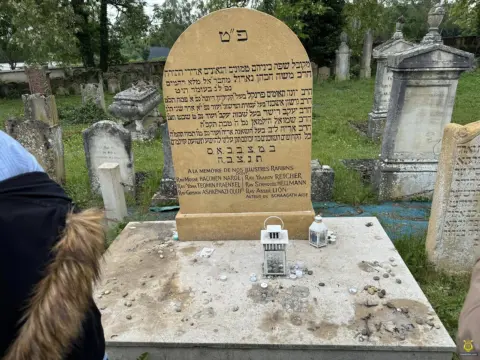
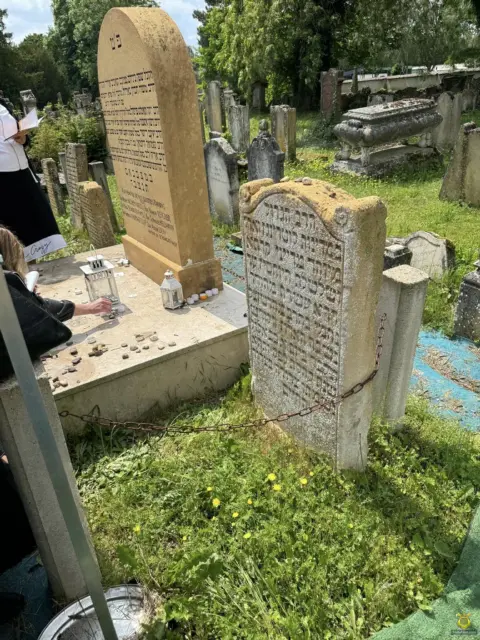
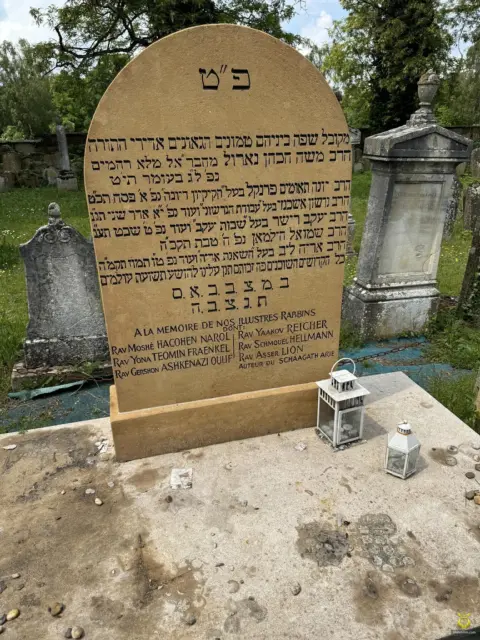
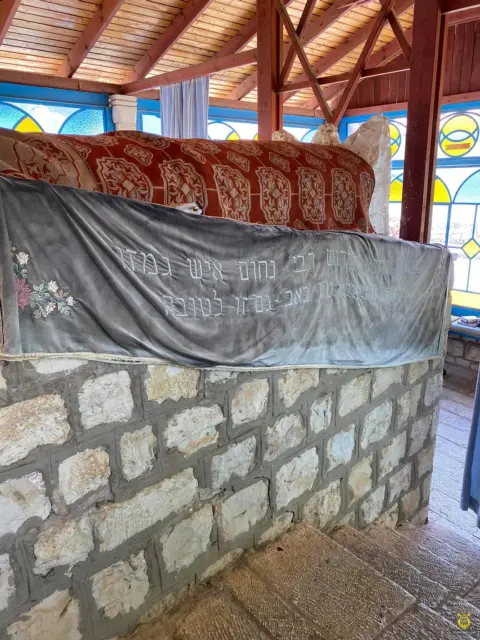
Grave
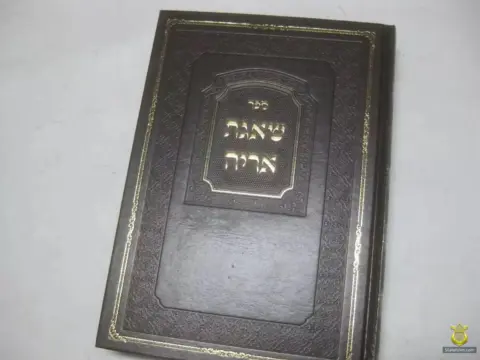
Shaagat Aryeh
Rabbi Aryeh Leib ben Asher Ginzburg
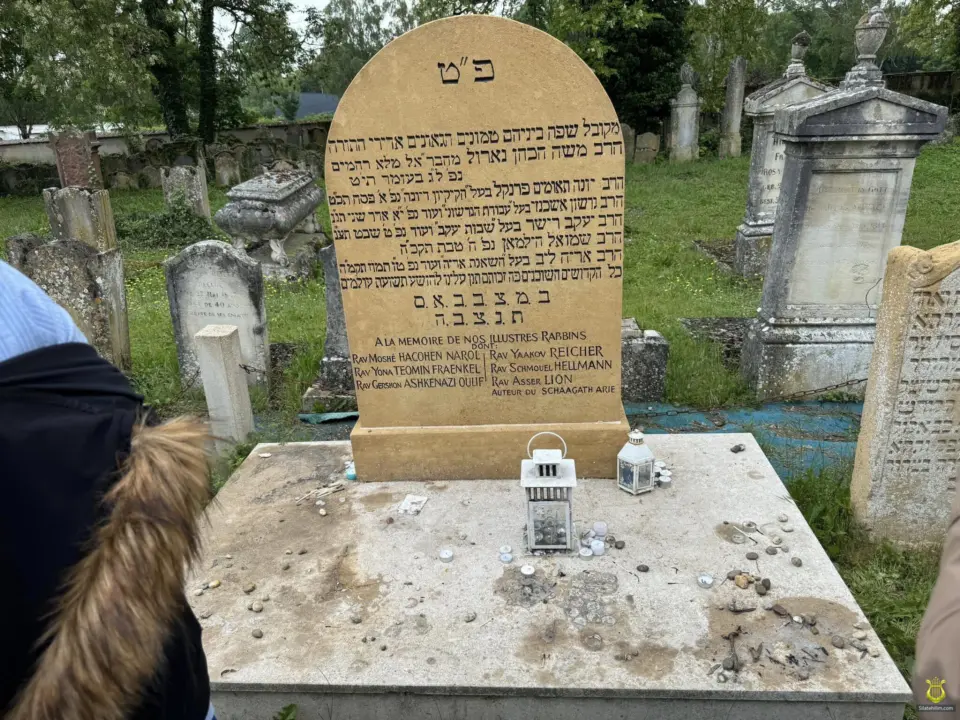
Yahrzeit (Hillula)
- 15 Tammuz — Rabbi Aryeh Leib Ginzburg – the “Baal Shaagat Aryeh”
Rabbi Aryeh Leib ben Asher Ginzburg – the "Baal Shaagat Aryeh" - resembled his name (Aryeh means "lion").
Yahrzeit - 25 Tammuz
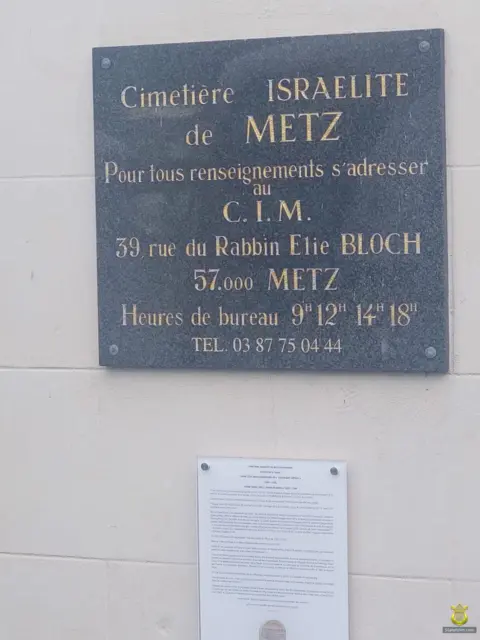
Burial place – Metz, France
He had a large head, like a lion, eyes bright like smoldering coals, and long, flowing hair. His appearance inspired both fear and respect.
Rabbi Aryeh Leib was born around 1695 in the Minsk region. At first he served as Rav and Rosh Yeshiva of Minsk. Although he was respected for his scholarship, his sharp criticism of other rabbis and their views was viewed negatively by the community.
His debates with Yechiel Halperin, the rabbi of Minsk and head of the yeshiva, over the role of pilpul (dialectical reasoning) in the teaching of Talmud led to his forced departure from Minsk in 1742.
Some time later, he was appointed Rav of Volozhin. There he headed a yeshiva and had many students.
Rav Aryeh served as rabbi of Volozhin between 1750 and 1755, but had a difficult relationship with the community's leaders. There he put the finishing touches on his collection of responsa titled "Shaagat Aryeh" ("The Roar of the Lion," 1755). This work brought him lasting recognition and has since been reprinted at least 40 times, still considered a very important work of responsa today. Shaagat Aryeh rejected the use of pilpul and insisted on a direct approach to the text of the Talmud, giving little weight to the contributions of authors from the sixteenth through eighteenth centuries.
He wished to continue the work of the Rishonim (the rabbinic scholars of earlier generations).
He lived in poverty - his entire salary amounted to a very small sum, and his wife had to work in a bakery, kneading dough, to earn a loaf of bread as payment. Rav Aryeh had only one suit, which he wore both on Shabbat and on weekdays.
After 1755, Rav Aryeh spent some time in Frankfurt and Berlin, but eventually returned to Volozhin, where during this period Rabbi Chaim of Volozhin became his student.
Rav Ginzburg remained there until 1764, after which he moved from city to city, including Vilna, where he met the Gaon, and then returned to Germany. This was a period of self-imposed exile, moving from town to town like a poor beggar, carrying on his shoulder a sack containing his Tallit, Tefillin, and a copy of the Rambam.
In 1766, he was invited to serve in Metz, one of the largest and most prosperous Jewish communities in Europe, known for its outstanding rabbis. The French king sanctioned his appointment as rabbi, and his contract with the community guaranteed him 12 years of service.
One villager took pity on him and provided him lodging in an attic for several weeks. One evening, after a meager supper, Rabbi Aryeh Leib was studying Torah by the light of a tiny oil lamp while his wife sat by the warm stove knitting socks. Suddenly he began to weep bitterly.
- "Leib, why are you crying?" his wife asked.
- "Look how comfortable we are," he said, "here, in this warm house, while I study Torah by lamplight and you sit by the warm stove knitting socks. Who knows whether we are now using up our share in the World to Come while still in this world" - and he continued to weep.
His usual practice was as follows: wherever he traveled, he would stay at the "inn" of the poor and spend the night there.
Once, during his many wanderings, he arrived in the city of Breslau in Germany, whose rabbi was Rabbi Yechaya Berlin. He went straight to the Rav's house, entered the kitchen, and handed the Rebbetzin a pot and some barley for her to cook a meal for him. Rabbi Aryeh Leib was very strict about the prohibition on new grain, so he ate very little. The Rebbetzin was not accustomed to such a guest and immediately told her husband about this strange visitor. Rabbi Yechaya came out to meet him, and one glance was enough to see that this was no ordinary man. He began discussing Torah with him, and from what he said, Rabbi Yechaya Berlin understood that he was speaking with an extraordinary person.
Before leaving the town, Rav Aryeh Leib turned to him and said: "I am amazed to see a Rav who lives in wealth and honor, yet is still able to learn. This is one of the wonders I have had the privilege to witness in my lifetime."
Meanwhile, he published his book "Shaagat Aryeh", which brought him great fame and revealed him as a man whose insight and intellect were unmatched in his generation.
Once Shaagat Aryeh arrived in Königsberg, where the rabbi was Aryeh Leib Epstein (author of "HaPardes"). Without revealing his identity, he went to the Rav's house and began discussing Torah with him.
He dominated the discussion, so the author of "HaPardes" went to his library and took out the book "Shaagat Aryeh" to prove one of his points. Rabbi Aryeh Leib smiled and said: "The Rav knows my book, but does not know its author."
Rav Epstein looked at his guest and started. He saw before him a man with the head of a lion and eyes like blazing coals, and realized he was speaking with Shaagat Aryeh himself.
He asked forgiveness for not having received him properly and prepared a special room for him in his house. Rav Epstein cherished every day spent with him discussing Torah.
Around this time, the residents of Metz offered Rav Epstein a contract to become their rabbi. Rav Epstein took the contract and passed it on to Shaagat Aryeh - and that is how he became the rabbi of Metz at the age of 70.
The residents of Metz were overjoyed to have such a great Rav, but their joy was not complete, because he was already 70 years old at the time. Sensing that their joy was mixed with sorrow, Shaagat Aryeh addressed them and said: "The days of my life have been unhappy. I was persecuted and lived a life of wandering, so I aged before my time. But I promise you that, G-d willing, I will remain with you as your Rav for at least 20 more years."
His promise was fulfilled, and he remained the Rav of the noble city of Metz for 20 years.
The great lion found rest there. He studied Torah day and night in holiness and purity. He did not sleep in a bed and did not eat any animal products except on Shabbat and holidays. He lost his sight when he became very old, and so he studied Torah from memory, knowing it by heart.
His student, Rabbi Gedaliah Rothenburg, wrote down his commentaries and published them in a book titled "Turei Even." In the same way, he published the book "Gevurat Ari."
When the book "Shaagat Aryeh" was first published, it was full of abbreviations, because the author was poor at the time and did not have enough money to buy more paper. So he wrote as much as possible using abbreviations. Later, publishers reprinted it and spelled out all the shorthand notations to make it easier to read. From his work it is evident that he based his halachic rulings on his own conclusions drawn from the Gemara and its commentators, without taking into account the opinions of other poskim.
Moreover, according to the Vilna Gaon, he was able to review the entire Talmud in just an hour to find the proof he was looking for.
Rabbi Aryeh Leib died at an advanced age on 25 Tammuz 5545 (1785), at the age of 90.
The BookcaseOnce he was alone in the Beit Midrash where he studied. At some point he wanted to consult a book and went to the bookcase to take it from the shelf. However, the shelf and all its books collapsed on top of him. When he was finally lifted up, he said with a smile: "All the books whose authors I polemicized against and attacked with criticism have now fallen upon me. And while I was buried under these books, I made peace with them. However, only Rabbi Mordechai Yaffe, author of "Levushim", did not want to forgive me, and it is because of him that I am now leaving this world." At that moment, his soul departed.
It is told that one of the students of Rabbi Yisrael Salanter - Rabbi Naftali of Amsterdam said to his teacher: "If I had a mind like that of Shaagat Aryeh, and a heart like that of Rav Alexander Ziskind of Grodno ("Yesod ve-Shoresh HaAvodah"), and moral qualities like those of my esteemed teacher, I could serve the Al-mighty. To this Rabbi Salanter replied: with your own mind, your own heart, and your own qualities of soul, you can serve G-d.Sipurei Tzadikim
It is written: "Pharaoh said to Yaakov: How many are the days of the years of your life?"
Yaakov answered Pharaoh: "The days of the years of my sojournings are a hundred and thirty years; few and hard have been the days of the years of my life, and they have not attained the days of the years of the life of my fathers in the days of their sojournings." (Bereishit 47:8-9)
When the Gaon Rav Aryeh Leib Ginzburg, author of "Shaagat Aryeh," was appointed rabbi of Metz, some members of the community expressed concern over his advanced age (he was about 70 at the time).
Shaagat Aryeh raised this issue during his next public sermon. He began with Yaakov's answer to Pharaoh: "Few and hard have been the days of my life," and pointed out that neither Pharaoh's question to his guest nor the guest's answer makes obvious sense. This is because a person, upon first meeting a guest, does not usually ask him his age, and a guest does not usually complain about his troubles. In fact, Yaakov's answer seemingly had nothing to do with Pharaoh's question.
Rabbi Aryeh Leib explained that Pharaoh knew that Egypt had experienced abundance thanks to Yaakov's merit. In fact, Yaakov appeared to Pharaoh so old that he did not think he would live long. So Pharaoh was concerned about his age and asked him about it. Yaakov, well aware of this, told Pharaoh that in fact he was not as old as he appeared, for he had not yet reached the age of his fathers. Indeed, his hair had turned gray only because of the many misfortunes that had befallen him.
"This is also my case," Shaagat Aryeh continued. "The days of my life have been few and hard. I was persecuted and exiled, and age has overtaken me. Nevertheless, I promise to remain with you for a long time."
The Baker Woman's BlessingBefore this, several people in Minsk literally persecuted Shaagat Aryeh while he served as Rosh Yeshiva, and he was forced to leave Minsk. At that time there lived in Minsk a righteous woman named Blumke Vilenkin. She supported Shaagat Aryeh, helping him financially and feeding him.
She even built a Beit Midrash for him, which from that time until World War II was called the "Blumke Kloiz." Later, with her support, Rabbi Chaim of Volozhin and his students founded a yeshiva in this Beit Midrash, where the greatest rabbis of the generations served as Rosh Yeshiva.
It is said that Shaagat Aryeh blessed this generous woman to build a synagogue in Minsk and another one in the Holy Land. Many years later, when Blumke turned 80, she became eager to fulfill the tzadik's promise and go to Eretz Yisrael. She went to Rabbi Chaim of Volozhin and asked him whether she should go.
Rabbi Chaim told her: "Since you hold in your hands the blessing of Shaagat Aryeh, why are you in such a hurry to leave? Who knows how long you will live afterward? In any case, he promised that you would build a synagogue in Eretz Yisrael, so it is better to wait and see how things unfold."
So Blumke heeded Rav Chaim and remained in Minsk. Only many years later, when she had reached a very advanced age, did she go to the Holy Land and build a synagogue, as Shaagat Aryeh had promised her. As soon as it was built, the righteous woman departed from this world.
The Blessing of Shaagat Aryeh In the generation of the Vilna Gaon there were many great sages, but Shaagat Aryeh was among the greatest sages of the people of Israel. Two outstanding students of the Vilna Gaon - Rav Chaim of Volozhin and his brother Shlomo Zalman - came into this world thanks to the blessing of Shaagat Aryeh. He was a truly astonishing personality. Torah burned within him like fire. And the pursuit of the truth of Torah was powerful in him. He feared no one and never flattered. He was very firm, tough, at times bordering on harsh. When he arrived in Volozhin, he pretended to be an ordinary traveler. He was sent to the house of Reb Yitzchak, one of the respected members of the community. Reb Aryeh Leib came to him. Reb Yitzchak immediately understood that this man was a great sage. He was glad to lodge him in his home and place his books at his disposal. Once the time came for his wife to give birth, and her labor pains began. She wanted to cry out in pain, but remembered that one of the great men of the generation was staying and studying with them, so she did not cry out. Afterward the husband came to Reb Aryeh Leib and said: "A son has been born to us." The Gaon realized that the woman had not cried out only so as not to disturb his studying. He was amazed at her righteousness and went to bless her: "I bless you that, in the merit of your having remained silent during childbirth, you will have children, sons, whose voice of Torah will be heard from one end of the world to the other." Through this blessing the woman merited to bring into this world two great sages - Reb Shlomo Zalman, who died fairly young, and Reb Chaim of Volozhin, who founded the yeshiva in Volozhin. Shaagat Aryeh even served for a time as the rabbi of the young Reb Chaim. A few years later, Reb Chaim went to study Torah with Rav Eliyahu of Vilna. The Curse of MinskDuring the ten years that Shaagat Aryeh lived in Minsk, his constant disputes with the city's chief rabbi, the kabbalist and Torah scholar known as the "Minsk Gaon," Rav Yechiel Halperin, reached such intensity that the latter's supporters decided to expel the rebel from the community. And they did so in the most hurtful and humiliating way: they would not even let him take Shabbat candles with him!
Passing over the Plebanski Bridge, Aryeh Leib stopped for a moment, turned his face toward the river, and cried out an ominous curse. The boys running after the cart froze and covered their faces in horror. And almost immediately, from the east, from the direction of the Golden Hill Church, the wind drove a heavy cloud toward the city, shaped like a tall, thin man with the folds of a black cloak spread wide. By evening, one of the most terrible floods in Minsk's history had begun.
On the edge of town, a woman quietly approached the cart in which the Talmudic scholar was setting out into exile. History has preserved her name - Blumke the baker woman. In her hands she held two fresh challahs and a package of Shabbat candles. Blumke handed her modest gifts to Aryeh Leib's wife. Legend says that the disgraced sage, moved by the unexpected gesture, wept and blessed the giver, promising that she would grow rich from her challahs. And so it came to pass: Blumke not only built the first major bakery in Minsk, but made Minsk bread famous all the way to Vilna! Aryeh Leib ben Asher was undoubtedly a man of tremendous spiritual power - for two centuries his curse hung over the city like the sword of Damocles. The residents of Minsk finally managed to rid themselves of the floods only by the mid-1950s, when the Minsk Sea reservoir was created. The site for the foundation of the hydroelectric station had to be cleared by explosion: only in this way could the giant quicksand layer be removed from the many meters of silt deposits. It is said that when the explosion thundered and particles of silt flew several kilometers into the air (20 tons of TNT), many thought they saw a gigantic shadow rise from earth to sky, resembling the figure of a man in a long black cloak. The demolition workers said it was so frightening that even nonbelievers began crossing themselves!
Tefillin Once Rav Aryeh Leib Ginzburg hired a carriage right after morning prayers and set out on a long journey. He did not remove his tallit or tefillin, and, still wearing them, immersed himself in Torah study. The coachman, too, sat in his tallit and tefillin, praying as they traveled. Suddenly armed bandits ran out of the forest and stopped the carriage. They demanded that the horses be unharnessed and all money and valuables handed over. The idea of parting with his belongings clearly did not sit well with the coachman. "We're in trouble, Rabbi," he said, grasping at the last straw. Hearing a commotion, Rav Aryeh Leib leaned out of the carriage to see what was happening. Upon seeing him, the bandits, armed to the teeth, for some reason bolted and fled headlong, forgetting all their demands. When the coachman recovered from his shock, he asked the rabbi why the bandits had fled. "They were frightened of me," answered Rav Aryeh Leib. "But I am younger and stronger, and yet they were not afraid of me," the coachman went on. "The reason is that I was wearing tefillin, and the Talmud (tractate Berachot, page 6) explains that our verse - 'and all the peoples of the earth shall see that the Name of the Al-mighty is proclaimed over you, and they shall be afraid of you' - refers precisely to the head tefillin." "But I too was wearing tefillin," the coachman insisted. Tefillin should not be only on the head. What is on the head is merely the tip of the iceberg. Awareness of this mitzvah must be firmly rooted in the mind. Only then can it be said that the Name of the Al-mighty is proclaimed over you. Only then, consequently, will the nations be afraid.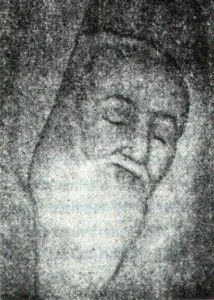
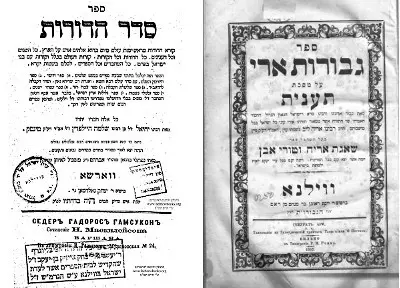
(from a trip to Kivrei Tzadikim in Alsace-Lorraine with Rebbetzin Chava Kuperman; https://hevratpinto.org/tzadikim_eng/099_rabbi_aryeh_leib_ginsburg.html; https://chassidus.ru/posts/2022/09/21/blagoslovenie-shaagat-are.htm )
Gallery




Articles about this tzadik 2


Other graves




Source: https://silatehilim.com/en/kivrei_tsadikim/шаагат-арье-рабби-арье-лейб-бен-ашер-г/
Material from our site may be copied for the purpose of spreading Torah, provided a link to Silatehilim.com is included. Any use of the site's material in print publications or for commercial purposes is prohibited without the rights holder's consent.