

 Sila Tehilim
כוחה של תהילים
silatehilim.com
Sila Tehilim
כוחה של תהילים
silatehilim.com
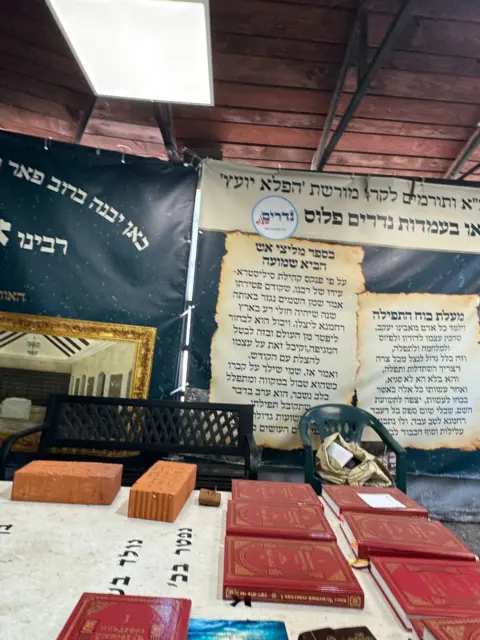
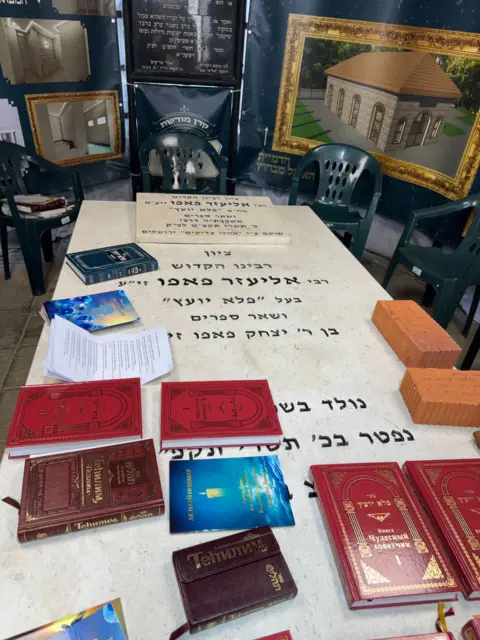
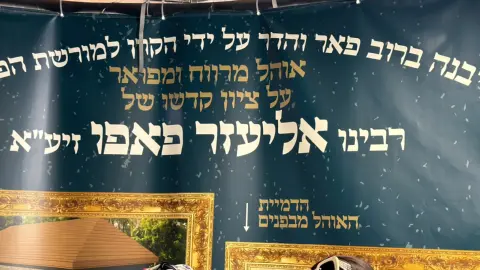
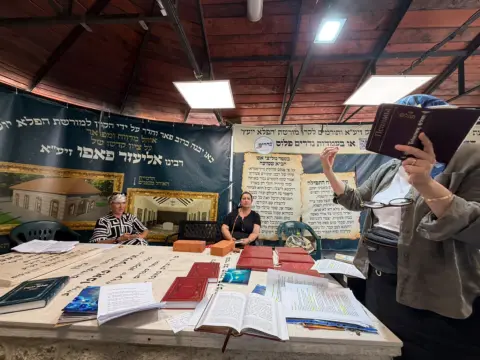
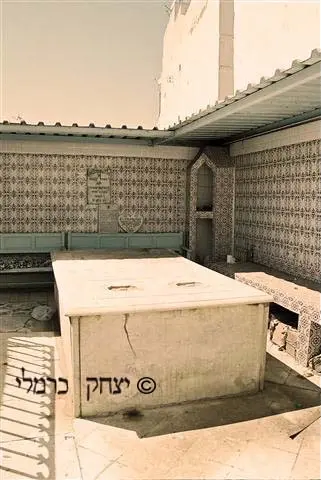
Grave
Rabbi Eliezer Papo – “Pele Yoetz”
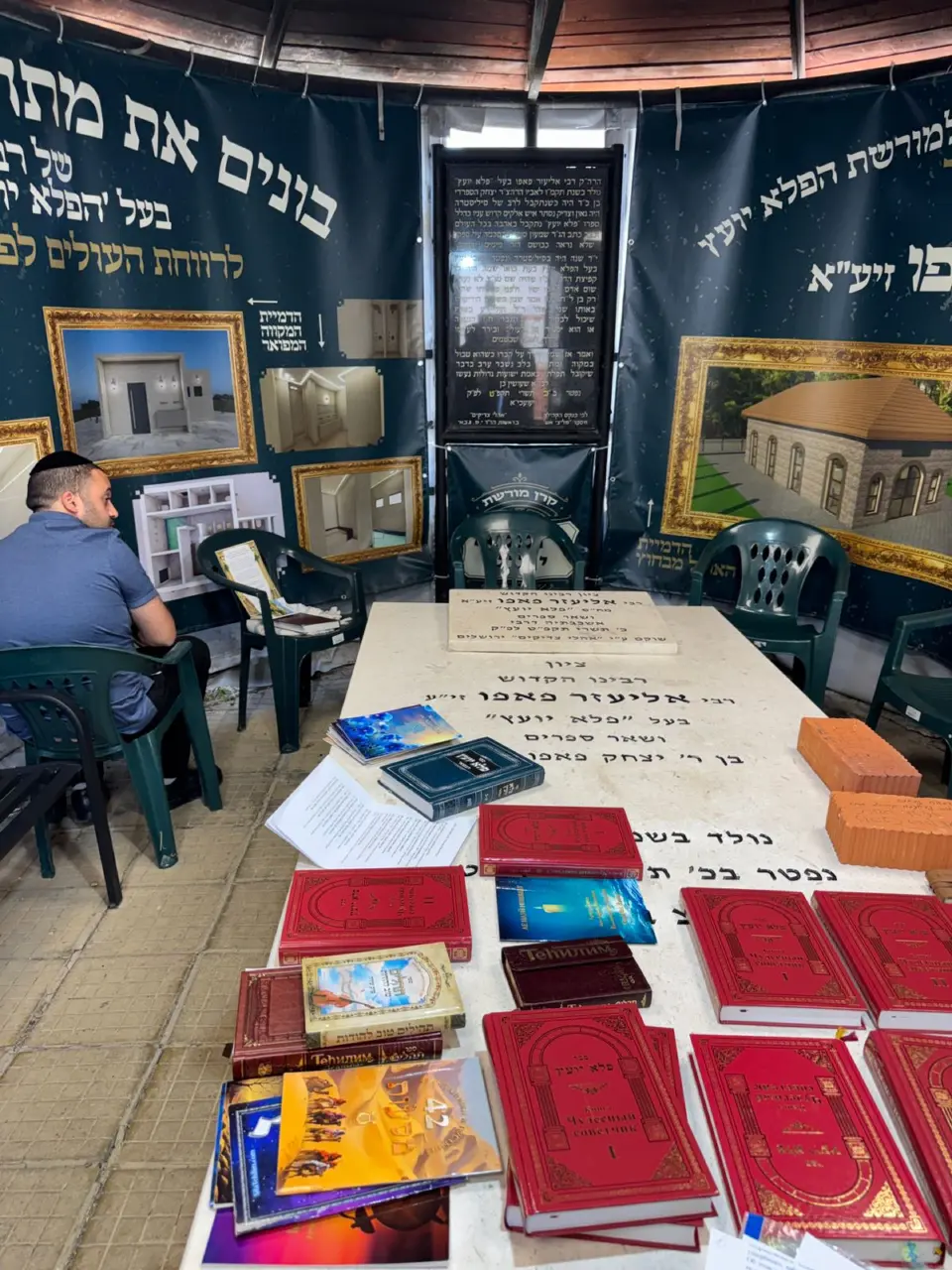
Rabbi Eliezer Papo – “Pele Yoetz”
Yahrzeit – 20 Tishrei
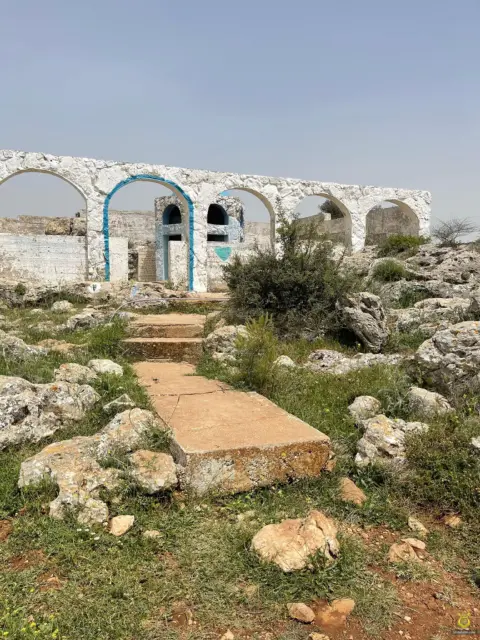
Burial place – Silistra, Bulgaria
Rabbi Eliezer Papo was born in Bosnia, in the city of Sarajevo, to Rabbi Yitzhak and Blanka Papo, members of an old Sephardic family.
He studied under Rabbi Eliyahu Hayun and Rabbi Moshe Danon, and later became the rabbi and Av Beit Din of Silistra.
He is described not only as a great talmid chacham, but also as a person of extraordinary chesed: he organized a communal charity fund, reconciled couples, and sought to put an end to disputes between people and talmidei chachamim.
In 1827, when he became seriously ill, the name Yechezkel was added to his name.
His son, Rabbi Yehuda, describes in the preface to his father’s book “Chesed LeAlafim” (חסד לאלפים) Rabbi Eliezer Papo’s extraordinarily rigorous work on himself: he exhausted himself with fasts, administered malkot (lashes) at night, when Tachanun is recited, used sackcloth and ashes, immersed numerous times in a mikveh, and even performed “tevilat shelagim” (immersion or washing in snow) as part of his tikkunim.
Rabbi Yehuda was so proud of his father’s spiritual legacy that he later signed his name not simply “Yehuda Papo,” but “Yehuda ben Pele.” He connected his own name with the title of his father’s famous book “Pele Yoetz,” explaining: “for a good name and renown, for my joy and honor, that Hashem deemed me worthy to descend from this righteous man.”
After his father’s death, Yehuda devoted himself in practice to preserving his Torah. He prepared and published “Chesed LeAlafim,” supplemented the book with his own notes and customs according to the Arizal, and later translated his father’s works into Ladino.
He then ascended to Jerusalem and became one of the sages associated with the kabbalists’ yeshivah, Beit El.
Among them was one of the spiritual leaders of Religious Zionism, Rabbi Yehuda Shlomo Chai Alkalai (1798–1878).
For nearly 20 years, while Papo remained in Sarajevo, Rabbi Alkalai was one of his most gifted students. Half a century before Theodor Herzl, he wrote in his works that until the Jews gathered in the land of their forefathers, they would have no peaceful life in the world. He was the one who appealed to Sir Moses Montefiore and the Rothschild bankers, calling on them to direct funds toward the development of the Holy Land. He was also the first to predict the revival of Hebrew as the spoken language of the Jewish people. Together with Rabbi Shmuel Mohilever of Mogilev, he became one of the leaders of the religious wing of the settlement movement.
At the age of 30, Rabbi Eliezer Papo accepted an invitation from the Jewish community of Silistra and moved to the city. He served as its rabbi for seven years.
Rabbi Eliezer Papo left behind a rich philosophical and literary legacy. Unfortunately, however, he lived to see only one of his books published – “Pele Yoetz” (“The Wonderful Counselor”). The book consists of two parts: the first was published in Istanbul in 1824, and the second two years later in Bucharest.
“Pele Yoetz” remains to this day a Mussar masterpiece for all Jewish communities.
“Constant study of Jewish ethics serves as the ladder by which a person can ascend the mountain of G-d and attain spiritual purity.” (“Mussar”)
“A person’s life in this world is fleeting and illusory, whether he is favored by fortune or experiencing difficult days, for a person does not know what is truly good for him.” (“Geulah”)
In 1826, Eliezer Papo moved to the opposite bank of the Danube and began working in Romania. There he received news of a cholera epidemic in Silistra. The first patients appeared in the camp of Russian troops besieging the city after the outbreak of another Russo-Turkish war. The epidemic quickly spread, claiming dozens of lives among both the Russian troops and the civilian population. By that time, history had already seen cases in which another outbreak of cholera turned a once-prosperous city into a deserted wasteland. Professional medical assistance was needed, above all the intervention of an experienced epidemiologist. And such a person appeared. It was Eliezer bar Yitzhak Papo, who by then was serving as the chief rabbi of Bucharest.
Papo arrived in Silistra at a most opportune time. No one had invited him; the Turkish authorities were completely indifferent to what would become of the city’s Christian and Jewish populations, and even more so of the Russian soldiers. Papo came to the center of the epidemic, driven solely by the noble desire to help those who were suffering, fully aware of the danger to which he was exposing himself. He quickly determined the source of the disease: the infection was in the waters of the Danube.
Papo immediately established “quarantine belts” and ensured that all water used by both the troops and civilians was boiled. Field hospitals were set up, and the sick began receiving timely care. The Russian army’s medical service was weak, and its doctors were mostly young and inexperienced, so Papo’s assistance proved invaluable. The spread of the infection was halted. The city was saved. Eliezer himself, however, could not escape the deadly infection: in 1828, he contracted it from the patients he treated and died. He was only 43 years old.
May the zechut of the tzadik protect Am Yisrael!
Segulot:
1. Kivrei Tzadikim
Rabbi Eliezer Papo transmits a tradition from earlier generations of mekubalim that one should travel to the kever of a tzadik and pray for what is hidden in one’s heart, for whatever causes great suffering, with tears in one’s eyes and from the depths of one’s heart, revealing all the pain of one’s troubles to the Almighty. Then, with the right hand (wiping away the tears), one should move across the forehead from right to left, as if erasing the sins imprinted on the forehead. Sincere tears of repentance erase a person’s sins.
This is also a good segulah for Rosh Hashanah, Yom Kippur, and the Ten Days of Repentance.
2. A Segulah for Refuah Sheleimah
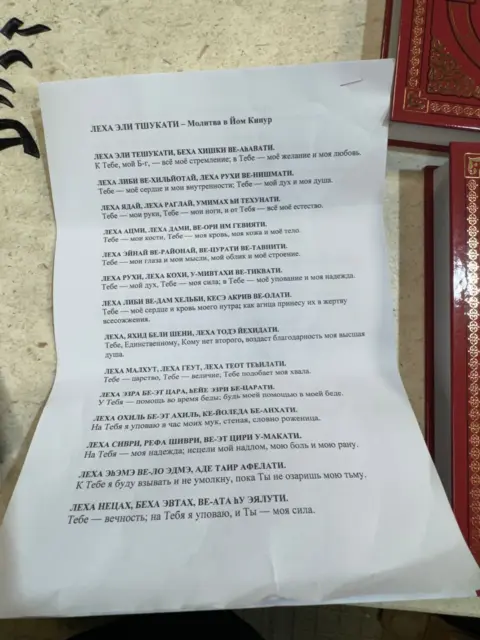
Rabbi Eliezer Papo transmitted the tradition of his father, Rabbi Yitzhak Papo: whenever his father was ill, he would recite Rabbi Avraham ibn Ezra’s piyyut “Lecha E-li Teshukati,” which is recited on Yom Kippur, followed by Vidui. However, many Sages emphasized that this prayer itself functions as Vidui.
The prayer can be found here:
Taanit Raavad – A Sin-Offering in Our Time
After the destruction of the Temple, the Sages of the Talmud compared the table at which Jews eat a meal to an altar. (Tosefot Sotah 15:11)
In Rabbeinu Yonah’s book “Yesod HaTeshuvah,” it is taught that the Raavad – Rabbi Avraham ben David HaLevi – taught that when a person abstains from a favorite dish for the sake of atoning for his sins, it is counted as though he fasted and brought a sin-offering. Thus, a wise person who eats only as much as necessary receives a reward as though he had fasted. One who eats for the sake of Heaven will not eat food that is tasty but harmful to the body; instead, he will eat wholesome food, even if he does not particularly enjoy its taste.
This same subject is continued in the Mishnah Berurah, as the Tikkun of the Raavad:
“Make it a permanent practice to know how to stop eating while you are not yet full, before you have completely satisfied your desire for pleasure.”
The Sages said of this: “Avoid a meal with dishes that you especially enjoy, for in this way you will bring your yetzer hara to its knees and break the power of desire.”
One should conduct oneself similarly with regard to all pleasures that exist in the world.
Maran Rabbi Yosef Karo, in his book “Maggid Meisharim” (the messenger of truth), describes the instructions given to him and his students by an angel sent by the Creator to teach him Torah:
“When, in the middle of a meal, you still want to eat or drink, push the food away from you and do not continue the meal. If you learn to do this consistently, every meal will be counted for you as a sacrifice, and your table as an altar.”
Segulot for Obsessive Negative Thoughts (Vol. 2, p. 138)
The evil inclination in a person is very powerful, and no one can control the thoughts that enter his mind.
Nevertheless, every person must strengthen himself, replace thoughts that are evil and foreign to the Torah with pure thoughts, and cause the good inclination to prevail over the evil inclination even a thousand times a day.
His reward will be help from Heaven.
Whenever a person realizes that he is occupied with idle or evil thoughts, he should do the following:
Imagine or say aloud:
קרע שטן – “Kera Satan” (tear apart Satan);
Recite the verse from Leviticus (6:6):
אֵ֗שׁ תָּמִ֛יד תּוּקַ֥ד עַל־הַמִּזְבֵּ֖חַ לֹ֥א תִכְבֶּֽה
– “Esh tamid tukad al-hamizbe’ach lo tikhbeh” – (“A perpetual fire shall burn on the altar; it shall not go out”;
Recite the verse from Tehillim (119:113):
סֵעֲפִ֥ים שָׂנֵ֑אתִי וְֽתוֹרָתְךָ֥ אָהָֽבְתִּי
– “Se’afim saneti, veTorat’cha ahavti” – (“I hate divided minds, but I love Your Torah”);
Then one should pass one’s hand over the forehead three times and, with G-d’s help, this will be effective.
To overcome the evil inclination, one should hold the name “Tarniel” in mind (without pronouncing it). Its gematria is 300, the same as the gematria of the word יצר “yetzer,” meaning the evil inclination.
In the book “Reshit Chochmah,” Rabbi Eliyahu de Vidas writes that if a person immediately drives away evil or sinful thoughts and does not retain them in his mind, he will not be punished, for the Almighty does not seek to trap a person in wrongdoing.
But if a person allows such a thought to remain, he will be punished, since such a thought causes harm. (Part 2, “Thought”)
Crying
There are times when one should cry, for example during prayer. When asking G-d for forgiveness and confessing one’s sins, one should weep from the depths of one’s heart. This is especially appropriate during the solemn days of the month of Elul and the Ten Days of Repentance, when the King judges the entire earth. The Sages said: “From the day the Temple was destroyed, the gates of prayer have been locked, but the gates of tears have not been locked.” (Berachot 32b)
In the holy book the “Zohar” (Tikkun 11), the verse “And she opened it, and saw the child, and behold, the boy was crying” (Exodus 2:6) is explained as referring to the people of Israel, as it is said: “And Israel is a boy.” And as soon as Israel cries, immediately: “And she had compassion on him.”
The disciples of the Ari wrote that the morning prayer should be recited with joy, while the evening prayer should be recited with tears. They found an indication of this in the verse: “In the evening there may be weeping, but in the morning there is joyful song.” (Tehillim 30:6)
Although one should serve the Creator with joy, during prayer one should combine the joy of the heart with bitter tears in the eyes.
Since tears are especially precious, one should make an effort to cry at the appropriate moments. And if one cannot shed a tear, this testifies against the person, as it is written: “Depart from me, all you evildoers, for G-d has heard the sound of my weeping” (Tehillim 6:9)
A person must mourn the deceased for three days in order to fulfill the enactment of the Sages: “One must cry for three days, no more and no less.” (Moed Katan 27b)
If the deceased is a small child, one should arouse oneself to cry for him, saying: “The fruit of my womb died because of my sins!” It is known that young children die because of the sins of their fathers and mothers—the parents are responsible for their deaths, and G-d judges each person for all his deeds.
The mourner should pass a hand wet with tears over his forehead to erase his guilt; this will serve as an atonement for him.
Meat and Wine
The pious should eat meat only on Shabbat and on days when Tachanun is not recited. For it is written in the book “Chesed LeAvraham”:
“Know that a person receives the punishment of ‘chibut ha-kever’ (the suffering of the grave) for delighting himself at a time not intended for pleasure. Meat and wine delight a person.
Meat and wine purchased in honor of Shabbat are permitted, and what remains after Shabbat is also permitted. But if they were not purchased for this purpose, the person awaits the punishment of ‘chibut ha-kever.’
The words of the Sages should properly be understood as explaining the verse, “When G-d gives you meat to eat in the evening, and bread in the morning” (Exodus 16:8), as follows: “The Torah teaches us proper conduct: it is proper for a person to eat meat in the evening.” (Yoma 75b)
One should eat less than what one has available and should not eat until completely full; one should also refrain from eating large quantities of meat. In this way, a person will remain healthy.
Gilgulim
A soul may be returned to this world even for transgressions that seem insignificant to people:
– For slander, a soul may be reincarnated into a dog.
An indication of this is: “And he called her ‘la’ Noah.” (Numbers 32:42)
The word לה “la” is an abbreviation of לשון הרע – lashon hara (slander).
“Noah” – (no’ah) – barks.
The soul of one who gazes at women forbidden to him will return to this world in the body of a bird called ra’ah – ראה:
“Do not follow your heart and your eyes, after which you stray.” (Numbers 15:39)
The holy Ari once saw the soul of a pious man that had been reincarnated into a goat because he had engaged in intimate relations with his wife by candlelight, which caused a defect in his children. There are many other examples of reincarnation cited in the books of Kabbalah.
If a person is righteous and sinless in this life, it means that his suffering has been sent to him for what he did in previous lives. The suffering of the righteous Job was sent to him for sins he had committed in a previous life, when he was Terach, the father of Abraham’s father.
Guests (Vol. 1, p. 179)
A person must be careful not to burden another. Let him heed the wise words of King Solomon: “Keep your foot from your neighbor’s house.”
Derech eretz – rules of ethical conduct.
Haircuts
According to Kabbalah, hair is associated with the attribute of judgment. It is improper to have one’s hair cut by an idolater; one who does so removes from himself the likeness of G-d. One should have one’s hair cut on Friday before Shabbat, before noon (after noon, the influence of the kelipot intensifies).
There is a danger in having one’s hair cut on Rosh Chodesh. If Friday falls on Rosh Chodesh, the haircut should be moved to Thursday. (Yehuda HaChassid)
One should have kavanah for the Name of G-d, Elokim א-להים
א ,אל ,אלו ,א-לוהי ,א-לוהים – “E, El, Elo, Elohai, Elokim.”
Before the haircut, one should say: “And G-d created man in His likeness; in the likeness of G-d He created him.” (Genesis 1:27)
After the haircut, one should perform netilat yadayim.
According to Kabbalah, a person’s hair should fall onto the ground, because then the impure spiritual forces will be unable to overcome him. Hair is not cut only during the Counting of the Omer, from Pesach to Shavuot.
The Lips of Those Who Have Departed (Vol. 1, p. 221)
– “Dovev siftei yeshenim” (making the lips of those who sleep speak). (Song of Songs 7:10)
Our Sages explained: when the words of a deceased Torah scholar are uttered in this world, his lips move and speak those words in the grave (Berachot 31b). He derives pleasure from the fact that his words are being spoken, and it is as pleasing to him as aged wine. The kindness a person can do for righteous people in the World to Come is to study their words, and their merits will protect him. It is written in “Shem HaGedolim” that once, during persecutions of the Jews, the deceased Rav Moshe Alshich appeared to a man in a waking vision and saved him, because that man constantly studied his book.
A person does an even greater kindness for deceased Torah scholars if he takes the trouble to explain their words, for this is very important to them.
In the book “Maggid Meisharim,” it is related that it was revealed to Rav Yosef Karo that Maimonides was defending him in Heaven, because the author of “Beit Yosef” had labored to explain his words; and when the time came for Rabbi Yosef Karo to die, the soul of Maimonides came out to greet his soul.
It is brought in the preface to the book “Maginei Shlomo” that because its author had labored to explain Rashi’s words and answer the questions that the Tosafot authors had raised about them, he merited that when he was dying, Rashi himself appeared to escort him to Heaven. It is therefore important and beneficial to study and explain the words of the Tannaim, Amoraim, and other sages of earlier generations, for their merits only increase.
Preparing for Shabbat (Vol. 1, p. 242)
Preparing for Shabbat is a very important mitzvah.
We know from Tractate Shabbat that the greatest Jewish sages engaged in this themselves.
It is said in the name of the holy Ari that the sweat a person sheds while preparing for Shabbat helps rectify Pegam HaBrit.
It was related about Rav Avraham HaLevi, may his memory be a blessing, that he walked extensively in order to purchase each item needed for Shabbat separately, because a reward is granted for every step. He did everything himself, since it is a greater mitzvah to do something oneself than through an agent.
The disciples of the holy Ari wrote that, according to the secrets of the Torah, it is specifically the man who should prepare the Shabbat candles for lighting.
In general, preparing for any mitzvah is itself the performance of a mitzvah. Thus, a person who does everything for the sake of Heaven spends his entire life fulfilling mitzvot.
Haggadah (Vol. 1, p. 264)
Haggadah is one of the things that wondrously contribute to the forgiveness of sin.
When a sage delivers a lesson explaining the Haggadah and then recites Kaddish, during which the congregation responds, “Amen, yehei Shemei Rabba…,” the Almighty forgives the Jews’ sins.
Of course, this is on the condition that the person has repented of his previous wrongdoings and resolved not to commit them again, for only then does G-d accept his repentance.
At the same time, one should attend Haggadah lessons and then respond, “Amen, yehei Shemei Rabba,” with great fervor.
In this way, he brings pleasure to the Creator, for our Sages, may their memory be a blessing, said: “The world is sustained in the merit of reciting Kaddish after studying Haggadah.”
Although none of us knows what we should have in mind at that time, everyone should do whatever he can, and G-d will send blessing and forgiveness. Therefore, in all Jewish communities it is customary, after every study session of the Oral Torah, to recite “Rabbi Chananya ben Akashya…,” which is a Haggadah passage, so that Kaddish can then be recited.
The name Haggadah is connected with the fact that it draws a person’s heart, and derives from the words: “nagid u-nafek min kodmohi” (it extends and enters before him). (Daniel 7:10)
The Holy Zohar (Vol. 1, p. 320)
Studying the Sefer HaZohar greatly contributes to the purification and sanctification of the soul. Even if a person does not understand everything he recites and makes mistakes, it still has great value in G-d’s eyes, as it is written:
“And his banner (diglo) over me was love.” (Song of Songs 2:4)
Our Sages read “digo” (banner) instead as “dilugo” (skipping).
This is like the babbling of a baby: a baby does not yet know how to speak properly and distorts words, but the parents are still delighted by his speech. So too, the Creator rejoices when a Jew, even without understanding everything, pleases the Creator by reciting difficult passages.
When studying Mishnah or Tanakh, one should at least understand what is being discussed. But when a person reads Tehillim or the holy book of the Zohar, the Almighty is pleased with his study even if he understands nothing. Therefore, everyone should acquire a Sefer Zohar and read it every week.
Chiddushim (Vol. 1, p. 342)
Everything new that a person discovers in Torah should be written down. He should not treat this dismissively. Let him record everything new that he has learned, for the Sages wrote that in our times, when there is no Temple and there are no sacrifices, new insights into Torah atone for a person’s sin as though he had brought a sacrifice.
One who finds a new explanation in Torah is greatly valued in Heaven. The holy book “Zohar” even says that such a person builds new heavens, and that the following verse refers to him: “To build the heavens, and establish the earth, and say to Zion: ‘You are My people.’
“To build the heavens and establish the earth” means clarifying the law;
“My people” – do not read “ami”, but rather “imi” – this person becomes a partner with the Creator. Everyone should find new understanding in Torah according to his abilities. The main thing is to devote all his strength to it: to ask questions and seek answers in Tanakh and Talmud, or to comment on various passages of Tanakh and Talmud on the level of Pardes.
This serves as a rectification for any sin, especially “pegam ha-brit,” for seminal emission begins in the mind, and its rectification is to exert the mind in understanding something new in Torah. It is especially important to discover new insights in Torah on Shabbat. Much praise is given in the holy book “Zohar” to those who do so. It describes in detail the reward a person receives for this and the honor shown in the World to Come to the souls of his parents after their death.
One who is unable to find new explanations in Torah independently can instead study new interpretations from books. Everything new that he learns will be counted as his own discovery. Therefore, everyone who is capable of studying should try to learn something new at least on Shabbat. Anyone unable to study Torah independently should try to attend classes where matters he does not yet know are explained.
Studying the holy book “Zohar,” even without understanding what is written there, is also considered the study of something new. Everyone should make an effort according to his abilities; the main thing is that it be done for the sake of Heaven.
This is learned from the following:
“You did not desire a burnt offering olah or a sin offering chatat; then I said: ‘Behold, I have come with a scroll of a book written for me.’” (Tehillim 40:7–8)
After death, a person will have to answer for the new Torah insights revealed to him from Above that he failed to write down—for they were revealed to him so that he would write them and everyone could study them. It would also benefit him personally, for when Torah is studied, the lips of the already-deceased sage who explained those words are, as it were, speaking them in the grave.
If a person wrote down everything new in Torah that he heard from childhood, it would be of tremendous benefit, for the words of Torah are sweeter than honey and more precious than gold.
Arieh (Lion) (Vol. 2, p. 231)
The prophet Amos said (3:4):
– “Does a lion roar in the forest when he has no prey?!”
The Sages understand the word “arieh” (lion) as an acronym:
אריה – אלול, ראש השנה, יום כיפור, הושעמה רבה
Elul, Rosh Hashanah, Yom Kippur, Hoshana Rabbah
and explained it as follows: if a person cries out during these days, he should cry out about the “forest,” which is what the “Temple” is called, because it has no prey: sacrifices are no longer brought there because of our sins. Everyone should reflect on the fact that on Rosh Hashanah he will stand in judgment before the Great King, who judges the entire world. On that day, the Book of Life and the Book of Death are open before Him. The very thought of this should fill a person with awe.
(Based on the book “Pele Yoetz” by Rabbi Eliezer Papo)
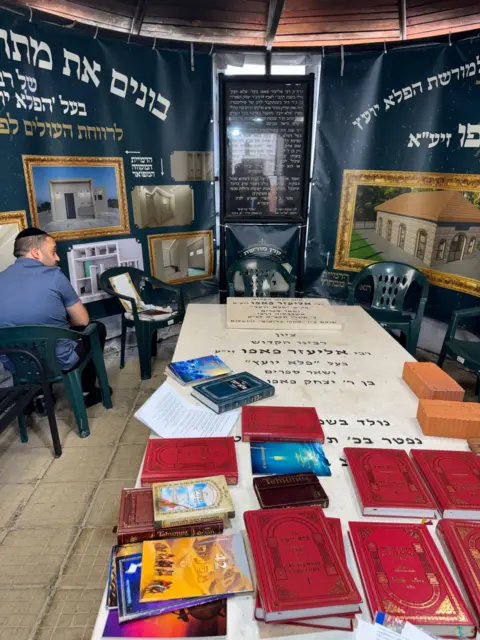
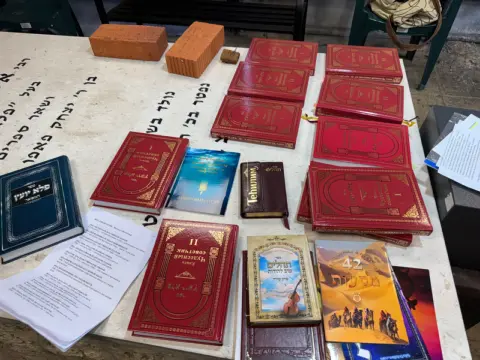
Gallery





Other graves



Source: https://silatehilim.com/en/kivrei_tsadikim/рабби-элиэзер-папо-пеле-йоэц/
Material from our site may be copied for the purpose of spreading Torah, provided a link to Silatehilim.com is included. Any use of the site's material in print publications or for commercial purposes is prohibited without the rights holder's consent.