

9 Nisan · Yahrzeit
Rav Aryeh Levin - The Rabbi of the Prisoners
Rav Aryeh Leib ben Binyamin Beinish Levin - The Tzadik of Jerusalem - The Rabbi of the Prisoners - (1885 - 1969)
Yahrzeit – 9 Nissan;
Resting place – Sanhedria, Jerusalem;
Rabbi Aryeh Levin, known as Reb Aryeh, was an Orthodox rabbi who was nicknamed the "Father of the Prisoners" for his visits to members of the Jewish underground held in Jerusalem's Central Prison. He was also known as the "Tzadik ("holy one") of Jerusalem" for his work on behalf of the poor and the sick.
Reb Aryeh was born near the village of Orla, near Bialystok, in the Russian Empire (now Poland), to Binyamin Beinish and Etel Levin. He had two older sisters, Miriam and Feige. From his father, Aryeh inherited a love of Torah study. Until the age of 12 he was taught by local teachers, after which he left home to attend the great yeshivas of Slonim, Slutsk, Volozhin, and Brisk. In 1905 he immigrated to Ottoman Palestine. Shortly after moving to Jerusalem, he married Tzipora Chana, the daughter of Rabbi David Shapiro.
Father of the Prisoners
In 1931, at the request of the British Mandate authorities, Chief Rabbi Avraham Yitzchak Kook appointed Reb Aryeh Levin as the official chaplain of the Jewish prison, a position he had unofficially held since 1927. He agreed on the condition that he would not receive a salary. He would walk from his home in Nachlaot to visit Jewish prisoners held in the Russian Compound on charges of possessing weapons or smuggling. Most of the prisoners were members of the Palmach, the Haganah, the Irgun, or Lehi. Levin prayed with the prisoners and carried messages to their families. Room 29 in Jerusalem's Central Prison (now the Museum of Underground Prisoners) was used as a synagogue on Shabbat and holidays. The prisoners were captivated by the rabbi's warmth and sincerity, and by the honor and respect with which he treated them. Matityahu Shmuelevitz, whose death sentence had been commuted to life imprisonment, wrote in a letter to a friend: "And yet there is one person to whom I am especially grateful above all; a dear, precious Jew about whom you told me nothing; but it was he who stormed heaven and earth for me; and above all, it was he who drew me closer to my Creator in those fateful days... He left, and we remained in prison. He could not take us with him into the free world, but he always brought the outside world to us."
"Reb Aryeh's eyes radiated love, and he spoke gentle, comforting words of encouragement to the prisoners. Even the most stubborn prisoners were won over by his simple, unblemished love for his fellow man, including prisoners sentenced to death. Rav Aryeh made every effort to appeal their sentences and have their punishments commuted. Once he even threw himself in front of the High Commissioner's moving limousine in order to hand him his petition. Regarding those he was unable to save, such as Dov Gruner, Moshe Barazani, and Meir Feinstein, Rav Aryeh said: "None of us has the slightest conception of how lofty the spiritual level of these martyrs truly is."
In 1965 (5725), Rabbi Levin was honored at a ceremony organized by veterans of the underground resistance of the Mandate period. Held in honor of his eightieth birthday, it took place in the courtyard of the old Central Prison at the Russian Compound. Reb Aryeh stood up to speak. He declared: "The importance of this gathering is that it has brought friends together. Moreover, this kind gathering is taking place on the other side of the prison bars... My heart rejoices especially when I see the families of the prisoners, especially the little children, for I have always loved little children." He then added: "I do not know whether I will have the honor of being with you like this again. All I ask of you is this: tell your children that in Jerusalem there once lived an old Jew who loved us so very much!"
At this he burst into tears, and among the thousands of people present, there was not one who was not moved.
Visiting the Sick
Rabbi Aryeh Levin was also known for his visits to the sick, especially patients who had no family of their own. "Reb Aryeh made a practice of going to the hospitals of Jerusalem every Friday to visit the patients confined there. He would always first go and speak with the nurses to find out which patients tended not to receive visitors. At the bedsides of these forgotten souls, whom no relatives came to see, he would linger, caressing each hand and speaking words of comfort and encouragement; he would sit for hours at the bedsides of the sick, especially at the Bikur Cholim Hospital in Jerusalem."
"He was also a frequent visitor to leper hospitals, including one in Bethlehem where most of the patients were Arab. Reb Aryeh began this holy practice after he found a woman weeping bitterly at the Western Wall. Reb Aryeh asked her what had made her cry so bitterly. She told him that her child was incurably ill and was in a leper hospital in Jerusalem. He immediately decided to visit the little child, and when he arrived, all the patients burst into tears.
Segula
A beautiful segula for children at the Kever Tzadik [Red tiles at a Kever are a segula associated with Challah].
The segula is to write the children's names on a clay tile or any other heat-resistant stone, place it at the bottom of the oven while baking Challah, and after the Challah is baked, remove the stone and say: "Ribono Shel Olam, just as this stone has been fired during a mitzvah, so may my (name) also be tempered and strengthened in Torah and in faith in You. And guard and protect my child, just as I strive to guard and keep Your mitzvot."
One should bring this stone and place it on the Kever Tzadik of Rav Aryeh Levin and ask for the well-being of the children!!!
Segula with Challah at the Kever Tzadik of Rabbi Aryeh Levin
https://silatehilim.com/сгула-с-халой-на-кевер-цадик-арье-левин/
Sipurei Tzadikim
Gravestone
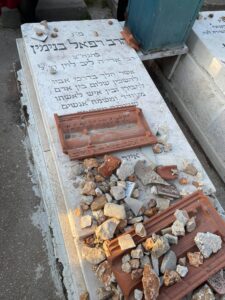 Reb Aryeh passed away six days after his 84th birthday. He and his wife Tzipora are buried in the Sanhedria cemetery, Jerusalem.
On his gravestone the following instruction is inscribed for visitors: "I ask all who come to my grave to say: 'I firmly believe that there will be a resurrection of the dead, at the time when it shall please the Creator, blessed be His name.'"
The Lot of the Vilna Gaon
Rav Chaim Berlin taught Rav Aryeh the method of the Vilna Gaon's Goral (lot), which is used to obtain an answer to particularly difficult and fateful questions. The Gaon's lot is performed by leafing through a Tanach in a specific order. The verse one arrives at in this way contains a hint at the answer to the question asked. In addition to teaching him exactly how to do this, Rav Berlin gave Rav Aryeh a special edition of the Tanach with two columns of text per page, which is used for the Vilna Gaon's lot.
Rav Aryeh became renowned as an expert in the Vilna Gaon's lot because of the following incident.
In 5708 (1948), during the bloody War of Independence, twelve soldiers were buried in haste, with no markers left on the graves, and it was unclear which soldier was buried in which grave. Rav Aryeh's brother-in-law, Rav Tzvi Pesach Frank, sent the families of the fallen to him, and Rav Aryeh, using the Vilna Gaon's lot, determined the grave of each of the soldiers. The verses of the Tanach through which the soldiers' names were conclusively identified were published. It was a miracle!
Beloved Grandfather of Rabbanit Batsheva Kanievsky
Rabbanit Batsheva Kanievsky received from her grandfather Rav Aryeh Levin a segula, which had in turn come down to him from the "Baal HaLeshem." This is the well-known segula of Rabbeinu Chida – reciting 11 saving verses that begin and end with the letter "nun."
The full prayer can be found here:
https://silatehilim.com/11-спасающих-псуким-на-букву-нун-кен/
Sipurei Tzadikim
Rav Aryeh was so poor that he had no way to buy his bride a gift to present to her, as was customary, after the chuppah, in the yichud room.
"I very much wanted to buy you a gift," he apologized to his young wife, "but I did not have the means for it. Instead, I have decided to give you a different kind of gift. I promise you that for my entire life I will defer to you and fulfill all your wishes!"
The bride's eyes filled with tears, and she answered:
"I also wanted to give you a gift, and I also had no way to do so. And so I too promise to defer to you in everything."
Rav Aryeh kept his promise and honored his wife greatly his whole life.
My mother loved to tell the well-known story of how Rav Aryeh came with his wife to the doctor and said: "Doctor, our leg hurts..."
In response to the doctor's astonishment, he replied: "When my wife is in pain, I am in pain too."
"Your Eyes Are Like Doves"
"It is impossible to finish this chapter about the life of my great-grandfather Rav Aryeh without mentioning the following story. My mother loved to tell it again and again, and every time there were tears in her eyes...
Rav Aryeh used to tell this story as he had heard it from Rav Chaim Berlin. When they read Shir HaShirim together on the eve of Shabbat, Rav Aryeh noticed that whenever Rav Chaim came to the words "Your eyes are like doves," he would begin to weep. One day he could not restrain himself and asked what the matter was, and this is what Rav Chaim told him:
— When I was the Chief Rabbi of Moscow, a man secretly approached me who was thought to be a non-Jew, who traded in Christian religious objects, and he told me the following about himself: "I am a Jew. A son has been born to me. I want you to give him a brit milah."
I circumcised the infant. No one but his father was present.
I asked him: "You do not live a Jewish life. You don't even look like a Jew. Why did you need to have your son circumcised?"
And this is how the Jew answered me: "I have left my Jewishness behind. I doubt I will ever return to it… But I grew up among Jews, I know what it is. My son, however, will grow up among non-Jews, and will know nothing of his Jewishness. Perhaps when he grows up, he will want to become a real Jew… I want to give him that possibility…"
— And then I understood, said Rav Chaim through his tears, what is meant by the verse praising the Jewish people: "How beautiful you are, my beloved, how beautiful you are. Your eyes are like doves." Our sages, of blessed memory, explain the repetition of the words "how beautiful you are" by saying that the first time it refers to the Jewish people before the sin, and the second time, after it. And it is hard to understand what beauty of the Jewish people could be spoken of after it had sinned. "Your eyes are like doves." It is in the nature of a dove not to fly far from its nest; it always keeps the nest within sight. So it is with the Jewish people. They sin, they stray from their Jewishness, but they keep it within sight. They make sure not to stray too far from the Almighty, so that the possibility of returning to Him always remains…
(from a trip to the Kever Tzadik of Rav Aryeh Levin, https://dailyzohar.com/tzadikim/323-Rabbi-Aryeh-Levin)
Reb Aryeh passed away six days after his 84th birthday. He and his wife Tzipora are buried in the Sanhedria cemetery, Jerusalem.
On his gravestone the following instruction is inscribed for visitors: "I ask all who come to my grave to say: 'I firmly believe that there will be a resurrection of the dead, at the time when it shall please the Creator, blessed be His name.'"
The Lot of the Vilna Gaon
Rav Chaim Berlin taught Rav Aryeh the method of the Vilna Gaon's Goral (lot), which is used to obtain an answer to particularly difficult and fateful questions. The Gaon's lot is performed by leafing through a Tanach in a specific order. The verse one arrives at in this way contains a hint at the answer to the question asked. In addition to teaching him exactly how to do this, Rav Berlin gave Rav Aryeh a special edition of the Tanach with two columns of text per page, which is used for the Vilna Gaon's lot.
Rav Aryeh became renowned as an expert in the Vilna Gaon's lot because of the following incident.
In 5708 (1948), during the bloody War of Independence, twelve soldiers were buried in haste, with no markers left on the graves, and it was unclear which soldier was buried in which grave. Rav Aryeh's brother-in-law, Rav Tzvi Pesach Frank, sent the families of the fallen to him, and Rav Aryeh, using the Vilna Gaon's lot, determined the grave of each of the soldiers. The verses of the Tanach through which the soldiers' names were conclusively identified were published. It was a miracle!
Beloved Grandfather of Rabbanit Batsheva Kanievsky
Rabbanit Batsheva Kanievsky received from her grandfather Rav Aryeh Levin a segula, which had in turn come down to him from the "Baal HaLeshem." This is the well-known segula of Rabbeinu Chida – reciting 11 saving verses that begin and end with the letter "nun."
The full prayer can be found here:
https://silatehilim.com/11-спасающих-псуким-на-букву-нун-кен/
Sipurei Tzadikim
Rav Aryeh was so poor that he had no way to buy his bride a gift to present to her, as was customary, after the chuppah, in the yichud room.
"I very much wanted to buy you a gift," he apologized to his young wife, "but I did not have the means for it. Instead, I have decided to give you a different kind of gift. I promise you that for my entire life I will defer to you and fulfill all your wishes!"
The bride's eyes filled with tears, and she answered:
"I also wanted to give you a gift, and I also had no way to do so. And so I too promise to defer to you in everything."
Rav Aryeh kept his promise and honored his wife greatly his whole life.
My mother loved to tell the well-known story of how Rav Aryeh came with his wife to the doctor and said: "Doctor, our leg hurts..."
In response to the doctor's astonishment, he replied: "When my wife is in pain, I am in pain too."
"Your Eyes Are Like Doves"
"It is impossible to finish this chapter about the life of my great-grandfather Rav Aryeh without mentioning the following story. My mother loved to tell it again and again, and every time there were tears in her eyes...
Rav Aryeh used to tell this story as he had heard it from Rav Chaim Berlin. When they read Shir HaShirim together on the eve of Shabbat, Rav Aryeh noticed that whenever Rav Chaim came to the words "Your eyes are like doves," he would begin to weep. One day he could not restrain himself and asked what the matter was, and this is what Rav Chaim told him:
— When I was the Chief Rabbi of Moscow, a man secretly approached me who was thought to be a non-Jew, who traded in Christian religious objects, and he told me the following about himself: "I am a Jew. A son has been born to me. I want you to give him a brit milah."
I circumcised the infant. No one but his father was present.
I asked him: "You do not live a Jewish life. You don't even look like a Jew. Why did you need to have your son circumcised?"
And this is how the Jew answered me: "I have left my Jewishness behind. I doubt I will ever return to it… But I grew up among Jews, I know what it is. My son, however, will grow up among non-Jews, and will know nothing of his Jewishness. Perhaps when he grows up, he will want to become a real Jew… I want to give him that possibility…"
— And then I understood, said Rav Chaim through his tears, what is meant by the verse praising the Jewish people: "How beautiful you are, my beloved, how beautiful you are. Your eyes are like doves." Our sages, of blessed memory, explain the repetition of the words "how beautiful you are" by saying that the first time it refers to the Jewish people before the sin, and the second time, after it. And it is hard to understand what beauty of the Jewish people could be spoken of after it had sinned. "Your eyes are like doves." It is in the nature of a dove not to fly far from its nest; it always keeps the nest within sight. So it is with the Jewish people. They sin, they stray from their Jewishness, but they keep it within sight. They make sure not to stray too far from the Almighty, so that the possibility of returning to Him always remains…
(from a trip to the Kever Tzadik of Rav Aryeh Levin, https://dailyzohar.com/tzadikim/323-Rabbi-Aryeh-Levin)
Reb Aryeh passed away six days after his 84th birthday. He and his wife Tzipora are buried in the Sanhedria cemetery, Jerusalem.
On his gravestone the following instruction is inscribed for visitors: "I ask all who come to my grave to say: 'I firmly believe that there will be a resurrection of the dead, at the time when it shall please the Creator, blessed be His name.'"
The Lot of the Vilna Gaon
Rav Chaim Berlin taught Rav Aryeh the method of the Vilna Gaon's Goral (lot), which is used to obtain an answer to particularly difficult and fateful questions. The Gaon's lot is performed by leafing through a Tanach in a specific order. The verse one arrives at in this way contains a hint at the answer to the question asked. In addition to teaching him exactly how to do this, Rav Berlin gave Rav Aryeh a special edition of the Tanach with two columns of text per page, which is used for the Vilna Gaon's lot.
Rav Aryeh became renowned as an expert in the Vilna Gaon's lot because of the following incident.
In 5708 (1948), during the bloody War of Independence, twelve soldiers were buried in haste, with no markers left on the graves, and it was unclear which soldier was buried in which grave. Rav Aryeh's brother-in-law, Rav Tzvi Pesach Frank, sent the families of the fallen to him, and Rav Aryeh, using the Vilna Gaon's lot, determined the grave of each of the soldiers. The verses of the Tanach through which the soldiers' names were conclusively identified were published. It was a miracle!
Beloved Grandfather of Rabbanit Batsheva Kanievsky
Rabbanit Batsheva Kanievsky received from her grandfather Rav Aryeh Levin a segula, which had in turn come down to him from the "Baal HaLeshem." This is the well-known segula of Rabbeinu Chida – reciting 11 saving verses that begin and end with the letter "nun."
The full prayer can be found here:
https://silatehilim.com/11-спасающих-псуким-на-букву-нун-кен/
Sipurei Tzadikim
Rav Aryeh was so poor that he had no way to buy his bride a gift to present to her, as was customary, after the chuppah, in the yichud room.
"I very much wanted to buy you a gift," he apologized to his young wife, "but I did not have the means for it. Instead, I have decided to give you a different kind of gift. I promise you that for my entire life I will defer to you and fulfill all your wishes!"
The bride's eyes filled with tears, and she answered:
"I also wanted to give you a gift, and I also had no way to do so. And so I too promise to defer to you in everything."
Rav Aryeh kept his promise and honored his wife greatly his whole life.
My mother loved to tell the well-known story of how Rav Aryeh came with his wife to the doctor and said: "Doctor, our leg hurts..."
In response to the doctor's astonishment, he replied: "When my wife is in pain, I am in pain too."
"Your Eyes Are Like Doves"
"It is impossible to finish this chapter about the life of my great-grandfather Rav Aryeh without mentioning the following story. My mother loved to tell it again and again, and every time there were tears in her eyes...
Rav Aryeh used to tell this story as he had heard it from Rav Chaim Berlin. When they read Shir HaShirim together on the eve of Shabbat, Rav Aryeh noticed that whenever Rav Chaim came to the words "Your eyes are like doves," he would begin to weep. One day he could not restrain himself and asked what the matter was, and this is what Rav Chaim told him:
— When I was the Chief Rabbi of Moscow, a man secretly approached me who was thought to be a non-Jew, who traded in Christian religious objects, and he told me the following about himself: "I am a Jew. A son has been born to me. I want you to give him a brit milah."
I circumcised the infant. No one but his father was present.
I asked him: "You do not live a Jewish life. You don't even look like a Jew. Why did you need to have your son circumcised?"
And this is how the Jew answered me: "I have left my Jewishness behind. I doubt I will ever return to it… But I grew up among Jews, I know what it is. My son, however, will grow up among non-Jews, and will know nothing of his Jewishness. Perhaps when he grows up, he will want to become a real Jew… I want to give him that possibility…"
— And then I understood, said Rav Chaim through his tears, what is meant by the verse praising the Jewish people: "How beautiful you are, my beloved, how beautiful you are. Your eyes are like doves." Our sages, of blessed memory, explain the repetition of the words "how beautiful you are" by saying that the first time it refers to the Jewish people before the sin, and the second time, after it. And it is hard to understand what beauty of the Jewish people could be spoken of after it had sinned. "Your eyes are like doves." It is in the nature of a dove not to fly far from its nest; it always keeps the nest within sight. So it is with the Jewish people. They sin, they stray from their Jewishness, but they keep it within sight. They make sure not to stray too far from the Almighty, so that the possibility of returning to Him always remains…
(from a trip to the Kever Tzadik of Rav Aryeh Levin, https://dailyzohar.com/tzadikim/323-Rabbi-Aryeh-Levin)
Pilgrimage site:
Grave: Aryeh Levin