

6 Iyar · Yahrzeit
Rabbi Levi ben Gershon - Ralbag
Rabbi Levi ben Gershon - Ralbag (1288 - 1344)
Yahrzeit - 6 Iyar
Burial place - Perpignan, France
According to Abraham Zacuto, Ralbag was the son of the well-known scholar and Talmudist, a follower of Maimonides, Gershon ben Shlomo of Béziers, author of the three-volume encyclopedia "Gate of Heaven" (1547), devoted to physics, metaphysics, and astronomy. Ralbag's brother, Solomon, was the personal physician of Pope Benedict XII in Avignon and helped translate Levi's writings into Latin. It seems that Levi's maternal grandfather was Levi ben Abraham ben Chaim, author of "The Diadem of Grace," who became a favorite target of attacks by Jewish opponents of philosophy.
Rabbi Levi lived in Orange and Avignon, places untouched by the expulsion of the Jews from France in 1306 by order of King Philip the Fair. He seems to have maintained good relations with the papal court — the Latin translations of De sinibus, chordis et arcubus and Tractatus Instrumenti Astronomiae were dedicated to Clement VI in 1342 — as well as with prominent French and Provençal figures: his Luhot and De harmonicis numeris were written at the request of a group of Jews and Christian nobles, and at the request of Philippe de Vitry, Bishop of Meaux. There were unfounded suggestions that he had converted to Christianity. He may have practiced medicine, though there is little evidence of this. He apparently knew neither Arabic nor Latin, and so had to base his work on the Hebrew translations available to him.
In 1321, Rabbi Levi completed "Sefer HaMispar" ("Book of Numbers"), also known as "Maaseh Choshev" ("The Work of the Reckoner"). It deals with the general principles of arithmetic and algebra and their applications to computation: the summation of series and combinatorial analysis (permutations and combinations). He used mathematical induction earlier than Francesco Maurolico and Pascal. In his theory, instead of digits he uses Hebrew letters according to their numerical value, as well as sexagesimal fractions - 1/60.
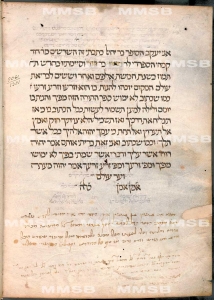 In 1342, Rabbi Levi wrote "On the Number of Harmonics," of which only a Latin translation survives. His goal was to demonstrate that, with the exception of the pairs 1-2, 2-3, 3-4, and 8-9, two consecutive numbers cannot both be composed solely of factors of 2 and 3.
Rabbi Levi's trigonometric work is found in De sinibus, chordis et arcubus (dated 1343), based on the Hebrew text of his Sefer Tekunah. He uses chords, sines, versed sines, and cosines, but not tangents (known in Europe since 1126). Following Ptolemy's methods, he calculated tables of sines with great precision. He also formulated the Law of Sines for plane triangles; this theorem had been known in the East since the late tenth century, but it is unclear whether Levi discovered it independently or learned of it through Jabir ibn Aflah (12th century).
Levi wrote two works on geometry: a commentary on Books I–V of Euclid's Elements, based on the Hebrew translation by Moses ibn Tibbon (Montpellier, 1270) — an attempt to construct geometry without axioms — and the treatise "Hibbur Chochmat ha-Tishboret" ("The Science of Geometry"), of which only a fragment survives.
Ralbag's greatest work is philosophical in nature. It is called "Milchamot Ha-L-rd" ("The Wars of the L-rd") and consists of six books.
The fifth book is devoted to astronomy and consists of three treatises, the first of which is known as "Sefer Tekunah" ("The Book of Astronomy"). Completed in 1328 and revised in 1340, it was translated into Latin in the fourteenth century.
It is divided into 136 chapters and includes two works that are often found separately in manuscripts: the Luhot (chapter 99), astronomical tables calculated for the meridian of Orange in 1320, and his description of the construction and use of an instrument called Jacob's Staff (chapters 4-11).
Rabbi Levi discusses this instrument not only in the chapters mentioned (which were translated into Latin by Peter of Alexandria in 1342), but also in two Hebrew poems.
In these versions it is called "keli" (instrument) and "megaleh amukkot" (revealer of secrets; Job 12:22); on the other hand, one of these two poems is subtitled "al ha-makel" ("On the Staff"), referring to Jacob's staff (Genesis 32:10). This is the origin of the expression baculus Jacobi used in some Latin manuscripts, and of the misunderstanding that he wished to attribute his invention to someone named Jacob. The instrument is also called the geometric baculus, the astronomical baculus, or the balestilla. It consists of a graduated rod and a plate that slides along the rod perpendicular to it. To measure an angle, the observer must sight both ends of the plate. The angle α is determined by solving triangle ABC. This instrument helped Levi in his attempts to determine the center of vision in the eye; unfortunately, the experiment was not precise enough, and Levi concluded that the center of vision lies in the lens, thereby agreeing with Galen and Ibn al-Haytham.
May the merit of the tzadik protect Am Yisrael!
https://dailyzohar.com/tzadikim/359-Rabbi-Levi-ben-Gershon-Ralbag
In 1342, Rabbi Levi wrote "On the Number of Harmonics," of which only a Latin translation survives. His goal was to demonstrate that, with the exception of the pairs 1-2, 2-3, 3-4, and 8-9, two consecutive numbers cannot both be composed solely of factors of 2 and 3.
Rabbi Levi's trigonometric work is found in De sinibus, chordis et arcubus (dated 1343), based on the Hebrew text of his Sefer Tekunah. He uses chords, sines, versed sines, and cosines, but not tangents (known in Europe since 1126). Following Ptolemy's methods, he calculated tables of sines with great precision. He also formulated the Law of Sines for plane triangles; this theorem had been known in the East since the late tenth century, but it is unclear whether Levi discovered it independently or learned of it through Jabir ibn Aflah (12th century).
Levi wrote two works on geometry: a commentary on Books I–V of Euclid's Elements, based on the Hebrew translation by Moses ibn Tibbon (Montpellier, 1270) — an attempt to construct geometry without axioms — and the treatise "Hibbur Chochmat ha-Tishboret" ("The Science of Geometry"), of which only a fragment survives.
Ralbag's greatest work is philosophical in nature. It is called "Milchamot Ha-L-rd" ("The Wars of the L-rd") and consists of six books.
The fifth book is devoted to astronomy and consists of three treatises, the first of which is known as "Sefer Tekunah" ("The Book of Astronomy"). Completed in 1328 and revised in 1340, it was translated into Latin in the fourteenth century.
It is divided into 136 chapters and includes two works that are often found separately in manuscripts: the Luhot (chapter 99), astronomical tables calculated for the meridian of Orange in 1320, and his description of the construction and use of an instrument called Jacob's Staff (chapters 4-11).
Rabbi Levi discusses this instrument not only in the chapters mentioned (which were translated into Latin by Peter of Alexandria in 1342), but also in two Hebrew poems.
In these versions it is called "keli" (instrument) and "megaleh amukkot" (revealer of secrets; Job 12:22); on the other hand, one of these two poems is subtitled "al ha-makel" ("On the Staff"), referring to Jacob's staff (Genesis 32:10). This is the origin of the expression baculus Jacobi used in some Latin manuscripts, and of the misunderstanding that he wished to attribute his invention to someone named Jacob. The instrument is also called the geometric baculus, the astronomical baculus, or the balestilla. It consists of a graduated rod and a plate that slides along the rod perpendicular to it. To measure an angle, the observer must sight both ends of the plate. The angle α is determined by solving triangle ABC. This instrument helped Levi in his attempts to determine the center of vision in the eye; unfortunately, the experiment was not precise enough, and Levi concluded that the center of vision lies in the lens, thereby agreeing with Galen and Ibn al-Haytham.
May the merit of the tzadik protect Am Yisrael!
https://dailyzohar.com/tzadikim/359-Rabbi-Levi-ben-Gershon-Ralbag
In 1342, Rabbi Levi wrote "On the Number of Harmonics," of which only a Latin translation survives. His goal was to demonstrate that, with the exception of the pairs 1-2, 2-3, 3-4, and 8-9, two consecutive numbers cannot both be composed solely of factors of 2 and 3.
Rabbi Levi's trigonometric work is found in De sinibus, chordis et arcubus (dated 1343), based on the Hebrew text of his Sefer Tekunah. He uses chords, sines, versed sines, and cosines, but not tangents (known in Europe since 1126). Following Ptolemy's methods, he calculated tables of sines with great precision. He also formulated the Law of Sines for plane triangles; this theorem had been known in the East since the late tenth century, but it is unclear whether Levi discovered it independently or learned of it through Jabir ibn Aflah (12th century).
Levi wrote two works on geometry: a commentary on Books I–V of Euclid's Elements, based on the Hebrew translation by Moses ibn Tibbon (Montpellier, 1270) — an attempt to construct geometry without axioms — and the treatise "Hibbur Chochmat ha-Tishboret" ("The Science of Geometry"), of which only a fragment survives.
Ralbag's greatest work is philosophical in nature. It is called "Milchamot Ha-L-rd" ("The Wars of the L-rd") and consists of six books.
The fifth book is devoted to astronomy and consists of three treatises, the first of which is known as "Sefer Tekunah" ("The Book of Astronomy"). Completed in 1328 and revised in 1340, it was translated into Latin in the fourteenth century.
It is divided into 136 chapters and includes two works that are often found separately in manuscripts: the Luhot (chapter 99), astronomical tables calculated for the meridian of Orange in 1320, and his description of the construction and use of an instrument called Jacob's Staff (chapters 4-11).
Rabbi Levi discusses this instrument not only in the chapters mentioned (which were translated into Latin by Peter of Alexandria in 1342), but also in two Hebrew poems.
In these versions it is called "keli" (instrument) and "megaleh amukkot" (revealer of secrets; Job 12:22); on the other hand, one of these two poems is subtitled "al ha-makel" ("On the Staff"), referring to Jacob's staff (Genesis 32:10). This is the origin of the expression baculus Jacobi used in some Latin manuscripts, and of the misunderstanding that he wished to attribute his invention to someone named Jacob. The instrument is also called the geometric baculus, the astronomical baculus, or the balestilla. It consists of a graduated rod and a plate that slides along the rod perpendicular to it. To measure an angle, the observer must sight both ends of the plate. The angle α is determined by solving triangle ABC. This instrument helped Levi in his attempts to determine the center of vision in the eye; unfortunately, the experiment was not precise enough, and Levi concluded that the center of vision lies in the lens, thereby agreeing with Galen and Ibn al-Haytham.
May the merit of the tzadik protect Am Yisrael!
https://dailyzohar.com/tzadikim/359-Rabbi-Levi-ben-Gershon-Ralbag