

5 Nisan · Yahrzeit
Rabbi Avraham Yehoshua Heschel of Apta - the "Ohev Yisrael"
Rabbi Avraham Yehoshua Heschel of Apta - the "Ohev Yisrael"
Yahrzeit - 5 Nissan
Resting place - Medzhibozh
The Apter Rebbe was one of the four spiritual heirs of Rebbe Elimelech of Lizhensk. In 1800 he became Rav of the town of Apta, one of the oldest and most important Jewish communities in Poland.
In honor of their new Rav, the town's synagogue changed its nusach from Ashkenaz to Sfard. It was in Apta that thousands of people began flocking to him for a bracha [blessing], and he soon became renowned as a miracle-worker, in addition to being a posek [halachic authority].
For nine years he served as Rav in Apta, and then, to the astonishment and dismay of his townspeople, he accepted a rabbinic post in the distant city of Iasi, Romania. The people of Apta had formed a remarkable bond with their Rav, and he too held a special affection for them. He promised the townspeople that he would always be called the "Apter Rav," and for the rest of his life, whenever he signed his name, he added "of Apta." To this day, the Jews of Apta have the merit that the name of this great tzadik remains forever linked to their town.
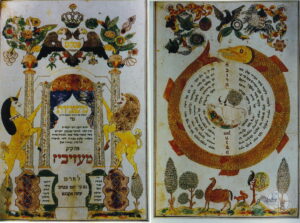
Cover of the pinkas of the Mishnah study group at the Apter Rebbe's synagogue, Medzhibozh
 The Move to Iasi
According to Rabbi Yissachar Dov of Belz, the Apter Rav heard a voice from Shamayim [Heaven] proclaiming that HaRav Meir ben Shmuel was to become Rav of Apta. Rebbe Avraham Yehoshua Heschel understood that, since a town can have only one Rav, this meant that either he would move to another town or he would leave this world. It was then that he decided to move to Iasi. Soon afterward, the author of "Or LaShamayim," Rabbi Meir HaLevi of Apta, became Rav of Apta.
According to the Munkatcher Rebbe, author of the sefer "Darkei Teshuva", when the Apter Rav agreed to take the position in Apta, he insisted on a large salary. As he was leaving, he told them the following story:
"My father, Reb Shmuel, was a poor melamed in a small town. His older brother, a very wealthy man, lived in Apta. Because of various misfortunes, my father and his brother were separated from each other when they were eight and ten years old, and neither knew the other's whereabouts. My uncle died childless, leaving his young widow very little information about his brother. Since she was childless, she was obligated to receive chalitza from this unknown brother - but how was she to find him?
"The Rav of Apta at the time suggested that she send letters to all the rabbis in all the neighboring countries, informing them that there was a widow in Apta seeking a certain man so that he could give her chalitza. She was also to announce that when the brother came and fulfilled his obligation, she would give him half of what she had inherited from her husband.
She followed his advice, and one such letter arrived in the town where my father lived. The Rav summoned him and said: 'I know you have no money to travel to Apta, but seeing that you are about to become a very wealthy man upon your return, I will lend you money for the journey - pay me back when you return.'
"My father went home and told this story to my mother. She said: 'A great mitzvah has come to you. This is one mitzvah that most people never get the chance to perform. Now that you have the opportunity to fulfill this exceptional mitzvah, you must do it for its own sake, not for the money - in fact, you must not take any money for it at all.'
"My father agreed, but my mother was not satisfied. 'The yetzer hara [evil inclination] for money is very powerful. You may agree with me now, but when you are faced with such a huge sum of money, who knows whether you will be able to overcome this yetzer hara? So take my Korban Mincha siddur in your hands and promise that you will not take a single penny.'
He then went back to the Rav and told him that he did not want to borrow money from him. 'Who says I am the right man?' he objected. 'Perhaps I merely fit the description - how then would I be able to repay you? I will go there on foot and see what happens.'
"My father took his sack and staff and set out for Apta. He came to the Rav of Apta, and it turned out that he was indeed the man they were looking for. When the chalitza was completed, the woman insisted that my father take half of his brother's inheritance, but my father insisted on keeping the promise he had made to my mother and stubbornly refused to take the money.
The widow insisted that she had no desire to keep this money, and that if he would not accept it, it should remain the property of the community.
My father's actions caused a great stir in Heaven. It was decided to reward him, and so, although my parents were already very old, they were blessed with a son. I am that son," concluded the "Ohev Yisrael." "Now you know why I agreed to come here and be your rabbi, but only for a large salary. I have now received the full amount, and I can leave here and go to Iasi."
For four years the Apter Rebbe served as Rebbe in Iasi. While many in the community recognized the great privilege of having a tzadik among them, others did not; the Apter Rav was subjected to fierce persecution by a portion of the Jewish community.
It is told that when members of his family saw how much the Rebbe was suffering from the actions of these individuals, they asked him why he did not curse those who wronged him.
"In my youth I asked the Almighty that any curse I uttered should be turned into a blessing," the Rebbe replied. "My request was granted. If I were to curse these people, I would in fact be blessing them."
On 18 Kislev 1811, Rebbe Reb Baruch of Medzhibozh ascended to the Heavenly Yeshiva. The Jews of Medzhibozh were accustomed to having a venerable tzadik among them. Just half a century earlier, the Baal Shem Tov had lived there. For the last twelve years it had been his grandson, Rebbe Baruch, and for twelve years before that, Rebbe Baruch's older brother, Rebbe Moshe Chaim Ephraim of Sudilkov, author of "Degel Machaneh Ephraim," had served as their guide.
The community decided to invite the Apter Rav to move to Medzhibozh, and in 5573 he left Romania and became Rebbe in the Baal Shem Tov's town.
Two years later his close friends, the Chozeh of Lublin, the Kozhnitzer Maggid, and Rebbe Menachem Mendel of Rimanov, passed away within a few months of one another. As the last surviving member of this unique group, the Apter Rav was now regarded as the elder statesman among the Chassidic Rebbes of the time.
All important decisions were brought to him for arbitration, and his word was held in awe throughout Eastern Europe and even as far as Eretz Yisrael. Like the two tzadikim who had lived in Medzhibozh before him, Rebbe Baruch and the "Degel Machaneh Ephraim," the Apter Rav lived there for 12 years.
Shortly before his passing, he bid farewell to the table at which he studied, to the bookcase full of sefarim, and to the mezuzah on the doorpost. He returned to his bed and began to say: "HaAderet VeHaEmunah LeChai Olamim" (Might and faithfulness are His, Who lives forever), and with these words he left this world on 5 Nissan 1825.
Teaching
Shabbat and Guests
"Shabbat has an additional holiness that sets it apart from the other days of the week. But wherever true greatness is found, genuine humility can be found there as well. In Shabbat's case, this is expressed in the honor it shows to guests.
When Rosh Chodesh falls on Shabbat, Shabbat gives it the Mussaf prayer.
If the guest is a Yom Tov [festival], Shabbat yields to it all of its prayers.
It happens that Yom Kippur itself honors Shabbat with its presence, and then Shabbat gives it not only the prayers but the meals as well.
However, this rule applies only to worthy guests. For instance, if the Ninth of Av comes, Shabbat tells it: today is not your day. Go away and come back tomorrow."
May the merit of this tzadik protect Am Yisrael!
http://heichalhanegina.blogspot.com/2007/03/why-did-ohev-yisrael-leave-apta.html
The Move to Iasi
According to Rabbi Yissachar Dov of Belz, the Apter Rav heard a voice from Shamayim [Heaven] proclaiming that HaRav Meir ben Shmuel was to become Rav of Apta. Rebbe Avraham Yehoshua Heschel understood that, since a town can have only one Rav, this meant that either he would move to another town or he would leave this world. It was then that he decided to move to Iasi. Soon afterward, the author of "Or LaShamayim," Rabbi Meir HaLevi of Apta, became Rav of Apta.
According to the Munkatcher Rebbe, author of the sefer "Darkei Teshuva", when the Apter Rav agreed to take the position in Apta, he insisted on a large salary. As he was leaving, he told them the following story:
"My father, Reb Shmuel, was a poor melamed in a small town. His older brother, a very wealthy man, lived in Apta. Because of various misfortunes, my father and his brother were separated from each other when they were eight and ten years old, and neither knew the other's whereabouts. My uncle died childless, leaving his young widow very little information about his brother. Since she was childless, she was obligated to receive chalitza from this unknown brother - but how was she to find him?
"The Rav of Apta at the time suggested that she send letters to all the rabbis in all the neighboring countries, informing them that there was a widow in Apta seeking a certain man so that he could give her chalitza. She was also to announce that when the brother came and fulfilled his obligation, she would give him half of what she had inherited from her husband.
She followed his advice, and one such letter arrived in the town where my father lived. The Rav summoned him and said: 'I know you have no money to travel to Apta, but seeing that you are about to become a very wealthy man upon your return, I will lend you money for the journey - pay me back when you return.'
"My father went home and told this story to my mother. She said: 'A great mitzvah has come to you. This is one mitzvah that most people never get the chance to perform. Now that you have the opportunity to fulfill this exceptional mitzvah, you must do it for its own sake, not for the money - in fact, you must not take any money for it at all.'
"My father agreed, but my mother was not satisfied. 'The yetzer hara [evil inclination] for money is very powerful. You may agree with me now, but when you are faced with such a huge sum of money, who knows whether you will be able to overcome this yetzer hara? So take my Korban Mincha siddur in your hands and promise that you will not take a single penny.'
He then went back to the Rav and told him that he did not want to borrow money from him. 'Who says I am the right man?' he objected. 'Perhaps I merely fit the description - how then would I be able to repay you? I will go there on foot and see what happens.'
"My father took his sack and staff and set out for Apta. He came to the Rav of Apta, and it turned out that he was indeed the man they were looking for. When the chalitza was completed, the woman insisted that my father take half of his brother's inheritance, but my father insisted on keeping the promise he had made to my mother and stubbornly refused to take the money.
The widow insisted that she had no desire to keep this money, and that if he would not accept it, it should remain the property of the community.
My father's actions caused a great stir in Heaven. It was decided to reward him, and so, although my parents were already very old, they were blessed with a son. I am that son," concluded the "Ohev Yisrael." "Now you know why I agreed to come here and be your rabbi, but only for a large salary. I have now received the full amount, and I can leave here and go to Iasi."
For four years the Apter Rebbe served as Rebbe in Iasi. While many in the community recognized the great privilege of having a tzadik among them, others did not; the Apter Rav was subjected to fierce persecution by a portion of the Jewish community.
It is told that when members of his family saw how much the Rebbe was suffering from the actions of these individuals, they asked him why he did not curse those who wronged him.
"In my youth I asked the Almighty that any curse I uttered should be turned into a blessing," the Rebbe replied. "My request was granted. If I were to curse these people, I would in fact be blessing them."
On 18 Kislev 1811, Rebbe Reb Baruch of Medzhibozh ascended to the Heavenly Yeshiva. The Jews of Medzhibozh were accustomed to having a venerable tzadik among them. Just half a century earlier, the Baal Shem Tov had lived there. For the last twelve years it had been his grandson, Rebbe Baruch, and for twelve years before that, Rebbe Baruch's older brother, Rebbe Moshe Chaim Ephraim of Sudilkov, author of "Degel Machaneh Ephraim," had served as their guide.
The community decided to invite the Apter Rav to move to Medzhibozh, and in 5573 he left Romania and became Rebbe in the Baal Shem Tov's town.
Two years later his close friends, the Chozeh of Lublin, the Kozhnitzer Maggid, and Rebbe Menachem Mendel of Rimanov, passed away within a few months of one another. As the last surviving member of this unique group, the Apter Rav was now regarded as the elder statesman among the Chassidic Rebbes of the time.
All important decisions were brought to him for arbitration, and his word was held in awe throughout Eastern Europe and even as far as Eretz Yisrael. Like the two tzadikim who had lived in Medzhibozh before him, Rebbe Baruch and the "Degel Machaneh Ephraim," the Apter Rav lived there for 12 years.
Shortly before his passing, he bid farewell to the table at which he studied, to the bookcase full of sefarim, and to the mezuzah on the doorpost. He returned to his bed and began to say: "HaAderet VeHaEmunah LeChai Olamim" (Might and faithfulness are His, Who lives forever), and with these words he left this world on 5 Nissan 1825.
Teaching
Shabbat and Guests
"Shabbat has an additional holiness that sets it apart from the other days of the week. But wherever true greatness is found, genuine humility can be found there as well. In Shabbat's case, this is expressed in the honor it shows to guests.
When Rosh Chodesh falls on Shabbat, Shabbat gives it the Mussaf prayer.
If the guest is a Yom Tov [festival], Shabbat yields to it all of its prayers.
It happens that Yom Kippur itself honors Shabbat with its presence, and then Shabbat gives it not only the prayers but the meals as well.
However, this rule applies only to worthy guests. For instance, if the Ninth of Av comes, Shabbat tells it: today is not your day. Go away and come back tomorrow."
May the merit of this tzadik protect Am Yisrael!
http://heichalhanegina.blogspot.com/2007/03/why-did-ohev-yisrael-leave-apta.html
The Move to Iasi
According to Rabbi Yissachar Dov of Belz, the Apter Rav heard a voice from Shamayim [Heaven] proclaiming that HaRav Meir ben Shmuel was to become Rav of Apta. Rebbe Avraham Yehoshua Heschel understood that, since a town can have only one Rav, this meant that either he would move to another town or he would leave this world. It was then that he decided to move to Iasi. Soon afterward, the author of "Or LaShamayim," Rabbi Meir HaLevi of Apta, became Rav of Apta.
According to the Munkatcher Rebbe, author of the sefer "Darkei Teshuva", when the Apter Rav agreed to take the position in Apta, he insisted on a large salary. As he was leaving, he told them the following story:
"My father, Reb Shmuel, was a poor melamed in a small town. His older brother, a very wealthy man, lived in Apta. Because of various misfortunes, my father and his brother were separated from each other when they were eight and ten years old, and neither knew the other's whereabouts. My uncle died childless, leaving his young widow very little information about his brother. Since she was childless, she was obligated to receive chalitza from this unknown brother - but how was she to find him?
"The Rav of Apta at the time suggested that she send letters to all the rabbis in all the neighboring countries, informing them that there was a widow in Apta seeking a certain man so that he could give her chalitza. She was also to announce that when the brother came and fulfilled his obligation, she would give him half of what she had inherited from her husband.
She followed his advice, and one such letter arrived in the town where my father lived. The Rav summoned him and said: 'I know you have no money to travel to Apta, but seeing that you are about to become a very wealthy man upon your return, I will lend you money for the journey - pay me back when you return.'
"My father went home and told this story to my mother. She said: 'A great mitzvah has come to you. This is one mitzvah that most people never get the chance to perform. Now that you have the opportunity to fulfill this exceptional mitzvah, you must do it for its own sake, not for the money - in fact, you must not take any money for it at all.'
"My father agreed, but my mother was not satisfied. 'The yetzer hara [evil inclination] for money is very powerful. You may agree with me now, but when you are faced with such a huge sum of money, who knows whether you will be able to overcome this yetzer hara? So take my Korban Mincha siddur in your hands and promise that you will not take a single penny.'
He then went back to the Rav and told him that he did not want to borrow money from him. 'Who says I am the right man?' he objected. 'Perhaps I merely fit the description - how then would I be able to repay you? I will go there on foot and see what happens.'
"My father took his sack and staff and set out for Apta. He came to the Rav of Apta, and it turned out that he was indeed the man they were looking for. When the chalitza was completed, the woman insisted that my father take half of his brother's inheritance, but my father insisted on keeping the promise he had made to my mother and stubbornly refused to take the money.
The widow insisted that she had no desire to keep this money, and that if he would not accept it, it should remain the property of the community.
My father's actions caused a great stir in Heaven. It was decided to reward him, and so, although my parents were already very old, they were blessed with a son. I am that son," concluded the "Ohev Yisrael." "Now you know why I agreed to come here and be your rabbi, but only for a large salary. I have now received the full amount, and I can leave here and go to Iasi."
For four years the Apter Rebbe served as Rebbe in Iasi. While many in the community recognized the great privilege of having a tzadik among them, others did not; the Apter Rav was subjected to fierce persecution by a portion of the Jewish community.
It is told that when members of his family saw how much the Rebbe was suffering from the actions of these individuals, they asked him why he did not curse those who wronged him.
"In my youth I asked the Almighty that any curse I uttered should be turned into a blessing," the Rebbe replied. "My request was granted. If I were to curse these people, I would in fact be blessing them."
On 18 Kislev 1811, Rebbe Reb Baruch of Medzhibozh ascended to the Heavenly Yeshiva. The Jews of Medzhibozh were accustomed to having a venerable tzadik among them. Just half a century earlier, the Baal Shem Tov had lived there. For the last twelve years it had been his grandson, Rebbe Baruch, and for twelve years before that, Rebbe Baruch's older brother, Rebbe Moshe Chaim Ephraim of Sudilkov, author of "Degel Machaneh Ephraim," had served as their guide.
The community decided to invite the Apter Rav to move to Medzhibozh, and in 5573 he left Romania and became Rebbe in the Baal Shem Tov's town.
Two years later his close friends, the Chozeh of Lublin, the Kozhnitzer Maggid, and Rebbe Menachem Mendel of Rimanov, passed away within a few months of one another. As the last surviving member of this unique group, the Apter Rav was now regarded as the elder statesman among the Chassidic Rebbes of the time.
All important decisions were brought to him for arbitration, and his word was held in awe throughout Eastern Europe and even as far as Eretz Yisrael. Like the two tzadikim who had lived in Medzhibozh before him, Rebbe Baruch and the "Degel Machaneh Ephraim," the Apter Rav lived there for 12 years.
Shortly before his passing, he bid farewell to the table at which he studied, to the bookcase full of sefarim, and to the mezuzah on the doorpost. He returned to his bed and began to say: "HaAderet VeHaEmunah LeChai Olamim" (Might and faithfulness are His, Who lives forever), and with these words he left this world on 5 Nissan 1825.
Teaching
Shabbat and Guests
"Shabbat has an additional holiness that sets it apart from the other days of the week. But wherever true greatness is found, genuine humility can be found there as well. In Shabbat's case, this is expressed in the honor it shows to guests.
When Rosh Chodesh falls on Shabbat, Shabbat gives it the Mussaf prayer.
If the guest is a Yom Tov [festival], Shabbat yields to it all of its prayers.
It happens that Yom Kippur itself honors Shabbat with its presence, and then Shabbat gives it not only the prayers but the meals as well.
However, this rule applies only to worthy guests. For instance, if the Ninth of Av comes, Shabbat tells it: today is not your day. Go away and come back tomorrow."
May the merit of this tzadik protect Am Yisrael!
http://heichalhanegina.blogspot.com/2007/03/why-did-ohev-yisrael-leave-apta.html