

28 Cheshvan · Yahrzeit
Rabbi Ohr Shraga of Iran
Mekubal Rabbi Molla Ohr Shraga of Iran - Baal Mofet (miracle worker)
Yahrzeit - 28 Cheshvan
Place of burial - Jewish cemetery of Yazd, Iran
He was born in the early 18th century in Iran, and passed away on November 3, 1793, in Yazd.
About 300 years ago, Rabbi Gias moved from Mashhad to Yazd. One of his descendants, Rav Ohr Shraga, became a highly respected kabbalist. It is well known that the Shraga family is considered to be descendants of King David.
His wisdom and humility were so immense that even the Muslims of Yazd, including its ruler, treated him with great respect.
Moreover, spreading the knowledge of Torah was the purpose of Ohr Shraga's life; he sent his children to different cities across Iran to serve as scholars and teachers.
Rav Ohr Shraga was the first to establish a yeshiva open to both the wealthy and the poor. He asked the well-to-do members of the community to contribute toward scholarships for those who could not afford to study. The structure of that yeshiva has survived to this day.
The legend of Rav Ohr Shraga extends far beyond his educational achievements. His mystical influence has continued long after his passing on 28 Cheshvan 5553 (November 13, 1792). Many believe he continues to watch over them even after leaving this world.
His legacy has come down to us thanks to one of his eight descendants, Moshe Barshalom, who founded an institution in Jerusalem called "Ohr HaShalom" in memory of Rav Ohr Shraga. "Ohr HaShalom" remains to this day a thriving yeshiva, kollel, kindergarten, and center of communal learning.
In memory of Rav Ohr Shraga, Jewish communities around the world observe his yahrzeit. In Israel, a grand annual memorial ceremony is organized by the "Ohr HaShalom" Yeshiva. In Iran, thousands of followers from various cities travel to visit his resting place in Yazd. This memorial is also held every year in Los Angeles, New York, and wherever Jewish communities exist.
His name Ohr Shraga means two kinds of light in two languages: "ohr" in Hebrew means "light," and "shraga" means "candle" in Aramaic.
He learned Torah from the mouth of Eliyahu HaNavi.
He was called "Molla" - an acronym for the phrase - מי לה’ אלי (Whoever is with Ha-Shem is with me).
Yet in complete humility he would say: "I am nothing but a 'Shraga' [a small candle flame]."
Although the Baal Shem Tov never met him, he would often say: "I have a friend far away, Rabbi Ohr Shraga."
Sipurei Tzadikim
Once the Shah of Persia was granted the merit of seeing a pillar of light rising from the head of Rabbi Molla Ohr Shraga up to the heavens. He then sent a royal carriage to bring him to the palace, seated him on the Council of Ministers, gave him a monthly salary, and a royal robe.
Rabbi Ohr Shraga, not wishing to be suspected of arrogance, cut the sleeves of the magnificent robe. One of the king's ministers noticed that the sleeves of the robe had been cut and demanded that the defiant Rav be punished. He approached and raised his hand to strike him, but his hand immediately became paralyzed and withered. The Shah had to beg Rabbi Ohr Shraga to heal the minister. The Shah gave him an additional cloak for Shabbat, and from then on he was also called - מולא פוסטינו [גלימה].
In 2015 he returned his soul to its Maker; at his grave, Jews and non-Jews alike lit candles or oil and prayed, and during the memorial the members of the Yazd community sang a song composed by his son (Rabbi Shmuel).
His kabbalistic writings were lost over time. The Sipurim about this Tzadik in Hebrew were collected by his descendant, Rabbi Baruch Shraga.
On his yahrzeit, and indeed at any other time, many pilgrims hasten to his grave seeking miracles.
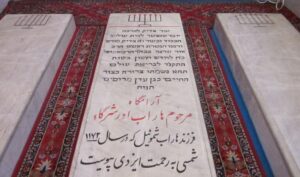 May the merit of the Tzadik protect our people!
https://dailyzohar.com/tzadikim/277-Rabbi-Ohr-Shraga
May the merit of the Tzadik protect our people!
https://dailyzohar.com/tzadikim/277-Rabbi-Ohr-Shraga
May the merit of the Tzadik protect our people!
https://dailyzohar.com/tzadikim/277-Rabbi-Ohr-Shraga