

22 Iyar · Yahrzeit
Rabbi Shlomo Eliezer Alfandari - Saba Kadisha of Constantinople
Rabbi Shlomo Eliezer ben Yaakov Alfandari - Saba Kadisha of Constantinople (1826–1930)
Yahrzeit - 22 Iyar
Resting place - Har HaZeitim
Saba Kadisha was an outstanding rabbi, kabbalist, and Rosh Yeshiva in his native Constantinople. He later served as chief rabbi of Damascus and Tzfat. He was known for his strict interpretation of halacha and his uncompromising devotion to Orthodox Judaism.
Saba Kadisha was born in Ottoman-controlled Constantinople into a distinguished family of Torah scholars. His father, Rabbi Yaakov, was a Talmudic scholar; his grandfather, Rav Chaim ben Yaakov Alfandari, wrote "Maggid Meireishit," and his great-grandfather, Rabbi Yaakov ben Chaim Alfandari, wrote "Mutzal Mei'Eish." His mother, Chana, also came from a distinguished family.
A Descendant of Betzalel
Rav Gaon Ben Tzion Mutzafi writes that Saba Kadisha of Constantinople was born into a family of geniuses, the Alfandari family, which produced great leaders renowned for their many holy works.
According to "yichus ben achar ben ad" (the genealogy of Jewish heritage), his lineage traces back to Betzalel ben Uri ben Chur, who built the Tabernacle. His famous grandfather was Rav Chaim Alfandari, whom the Chida remembered with great admiration.
In his youth, Saba Kadisha was distinguished by his sharp understanding of Torah subjects. Nevertheless, he refused to accept the position of rabbi or wear the customary garb of the city's sages. He agreed to join the "Vaad HaRuchani" (spiritual council) of Constantinople and accepted the position of Rosh Yeshiva, which the local Jews established for him. He trained many outstanding Torah scholars, among his students being Rabbi Chaim Chizkiyahu Medini - the "Sdei Chemed".
The Military Draft
Saba Kadisha demonstrated his readiness to take a firm stand in an extremely tense political situation, in which he challenged the views of his entire community.
The issue concerned the drafting of Jewish soldiers into the Sultan's army, a decree fraught with spiritual danger. Originally, Jews who had fled the Spanish Inquisition to the Ottoman Empire were exempted from the army by the Sultan. However, in Saba Kadisha's time, the new Sultan Abdul Hamid II issued a decree requiring all non-Muslims to enlist in the army.
The city's rabbis tried unsuccessfully to have the decree revoked. In the end, they decided to accept the decree rather than provoke the authorities. The Vaad HaRuchani issued a directive calling on the region's Jews to go and enlist in military service.
Saba Kadisha was the only one who protested against this. At a meeting of the Vaad, he declared: "Since service in the Turkish army involves the desecration of Shabbat and defiling oneself with non-kosher food, joining the army is considered Chillul Hashem. We must not give in to Sultan Abdul Hamid. If we stand firm, the Almighty will help us."
After making this statement, he burst into tears. One of the wealthy members of the community had some influence at the Sultan's court. But this Jew, too, supported the draft decree. One day, when this man visited the palace, he lost consciousness and died.
The next day, an enormous crowd gathered for the wealthy man's funeral. At that time, it was customary for Saba Kadisha to deliver the first eulogy at every funeral, and no one dared to go before him. But that day Saba Kadisha stayed home. Community representatives begged him to speak, or at least to allow others to speak without him, but he refused. The wealthy man's sons came to offer him a large sum of money that he could spend on tzedakah, but he still refused. "Yesterday I went to your father and asked him not to cooperate with the Sultan," the rabbi explained. "But he defied me. Therefore I cannot honor him." Sultan Abdul Hamid became furious when he learned of Saba Kadisha's efforts to have the draft decree revoked. He summoned the rabbi to the palace, intending to punish him for turning the Jews against him. But when the Sultan met the rabbi and heard his position, he was deeply impressed by him. He even granted him the title of Chacham Bashi, with the right to issue decrees within the Jewish community.
In the end, the draft was never carried out due to internal conflicts within the royal court.
In 1897, Saba Kadisha decided to leave Constantinople to take up the position of chief rabbi of Damascus. There he established a yeshiva, from which dozens of students went on to serve as rabbis and dayanim in the Sephardic communities of the region.
In 1904, at nearly 90 years of age, he immigrated to Israel. He first lived for several years in the city of Haifa, but then accepted an invitation from the Torah leaders of Tzfat to become their chief rabbi, a position he held until 1918.
Birkat Levana
It is told that when Saba Kadisha went out into the street to bless the new moon with his congregants at the beginning of the month of Nisan 5674 (April 1914), he lifted his eyes after completing the blessing, clapped his hands, and wept loudly. He explained: "I see that a large-scale war will soon break out." Four months later, World War I began.
Saba Kadisha was able to relieve the shortage of water and food faced by the Jews of Tzfat during World War I, as a result of another encounter with a Turkish official. This time, a Turkish pasha rode into the city on a white horse, dressed in a flashy uniform, accompanied by an entourage of Turkish soldiers. When Saba Kadisha came out to greet him, the pasha was impressed by the rabbi's dignified appearance and asked him for a blessing.
"Only the humble can receive blessings," the rabbi replied. "I will bless you once you dismount from your horse."
The pasha complied, and the rabbi blessed him: "May G-d help you in your efforts to meet the needs of the oppressed Jewish people." As a result of this meeting, the pasha arranged for food and water to be delivered to the Jewish residents of Tzfat.
In 1918, Rabbi Yisroel Ber Odesser, a Breslov chasid, became Saba Kadisha's personal assistant while the rabbi was living in Tiberias. However, after seeing Odesser reciting Tikkun Chatzot one night, Saba Kadisha refused to let him continue attending to him and instead treated him as a young colleague.
A street in Jerusalem where Saba Kadisha lived is named after him.
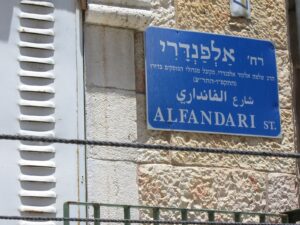 In the final years of his life, he suffered from many illnesses, for which he was treated in Jerusalem. Although he tried to travel incognito, many Torah leaders wanted to meet him whenever they learned he was in their city. One such gadol was Rabbi Ezra Attia, who later became Rosh Yeshiva of "Porat Yosef." Saba Kadisha held Rav Attia in very high esteem.
In 1925, Saba Kadisha became seriously ill while in Tiberias. He refused to be treated at the local hospital, where the rules of tzniut (modesty) were not strictly observed, and was instead brought to Shaare Zedek Hospital in Jerusalem. After he recovered, the sages of Jerusalem begged him to remain in their city. He rented an apartment in the Ruchama neighborhood (today Mekor Baruch).
There he held meetings with many outstanding Torah scholars who came to consult and speak with him. Among them: Rav Tzvi Pesach Frank, chief rabbi of Jerusalem; Rabbi Velvel Mintzberg, leader of the Ashkenazi community of the Old Yishuv; Rabbi Avraham Weinberg of Slonim, author of "Birkat Avraham"; and Rabbi Yitzchak Abuchatzeira, brother of the Baba Sali. Shortly before Saba Kadisha's passing, Rav Chaim Elazar Spira of Hungary - the Munkacher Rebbe, came specially to meet him. Their meeting was regarded as a historic encounter between two worlds: the Sephardic genius of the Middle East and the chassidic tradition of Eastern Europe.
Saba Kadisha contracted pneumonia in May 1930 and was treated by Dr. Moshe Wallach of Shaare Zedek Hospital. However, his condition worsened, and he ascended to the Heavenly Yeshiva on May 20, 1930 (22 Iyar 5690).
The Earthquake
Rabbi Alfandari lived nearly to one hundred and twenty years and was the greatest figure of his generation. The great men of Torah were like garlic peels before him. He rarely honored even great sages with praise. Rabbi Alfandari was extremely strict and showed deference to no one. Once he was in Italy, where there was a graduation ceremony for young men studying Gemara. A few days earlier, an earthquake had struck Italy. Young yeshiva students sitting near the Tzadik were discussing how earthquakes occur in nature. As soon as Saba Kadisha heard the word "nature," he began pounding hard on the table, saying: "Nature?! What nature?! If G-d wants there to be an earthquake right now, there will be an earthquake right now" - and at that very moment the ground shook, tremors were felt... This illustrates the greatness of Saba Kadisha's personality.
The Baba Sali and Saba Kadisha of Constantinople
When the Baba Sali was 34 years old, he came to Jerusalem from Morocco and went straight to the holy Rav Shlomo Eliezer Alfandari.
At that time, Rabbi Alfandari was 94 years old, a giant among the geniuses of Torah! When the Baba Sali approached him, Saba Kadisha stood up before him to his full height! "Stand up, stand up fully before the Baba Sali," he called out to his students.
The Baba Sali was frightened. The Baba Sali was extremely humble; seeing before him the greatest figure of the generation, he did not know how to act. They spoke together the entire evening, and when the Baba Sali was about to leave, Rabbi Alfandari asked him: "Bless me." The Baba Sali was alarmed and said to him: "No, how could I? How could I, a young man who came for a blessing, give a blessing? Heaven forbid." The Baba Sali refused as much as he could.
Then Saba Kadisha said: "It is written in Tehillim: 'Behold, the G-d-fearing man will be blessed' - meaning that a blessing from a G-d-fearing person is accepted in Heaven, and know that in all these regions there is no one as G-d-fearing as you, so how could I not receive a blessing from you?"
The Baba Sali tried his utmost to decline, but Rabbi Alfandari would not let up until he blessed him, and the rabbi added his own blessing to it.
This story became the talk of Jerusalem! All over Jerusalem people spoke of how Saba Kadisha had stood up in honor of the Baba Sali, and everyone rushed to the Baba Sali to receive his blessing. This made the Baba Sali feel uncomfortable, since at that time there were great tzadikim in Jerusalem who were older than him, yet people went specifically to him for a blessing.
May the merit of the Tzadik protect Am Yisrael!
https://dailyzohar.com/tzadikim/386-Rabbi-Solomon-Eliezer-Alfandari
In the final years of his life, he suffered from many illnesses, for which he was treated in Jerusalem. Although he tried to travel incognito, many Torah leaders wanted to meet him whenever they learned he was in their city. One such gadol was Rabbi Ezra Attia, who later became Rosh Yeshiva of "Porat Yosef." Saba Kadisha held Rav Attia in very high esteem.
In 1925, Saba Kadisha became seriously ill while in Tiberias. He refused to be treated at the local hospital, where the rules of tzniut (modesty) were not strictly observed, and was instead brought to Shaare Zedek Hospital in Jerusalem. After he recovered, the sages of Jerusalem begged him to remain in their city. He rented an apartment in the Ruchama neighborhood (today Mekor Baruch).
There he held meetings with many outstanding Torah scholars who came to consult and speak with him. Among them: Rav Tzvi Pesach Frank, chief rabbi of Jerusalem; Rabbi Velvel Mintzberg, leader of the Ashkenazi community of the Old Yishuv; Rabbi Avraham Weinberg of Slonim, author of "Birkat Avraham"; and Rabbi Yitzchak Abuchatzeira, brother of the Baba Sali. Shortly before Saba Kadisha's passing, Rav Chaim Elazar Spira of Hungary - the Munkacher Rebbe, came specially to meet him. Their meeting was regarded as a historic encounter between two worlds: the Sephardic genius of the Middle East and the chassidic tradition of Eastern Europe.
Saba Kadisha contracted pneumonia in May 1930 and was treated by Dr. Moshe Wallach of Shaare Zedek Hospital. However, his condition worsened, and he ascended to the Heavenly Yeshiva on May 20, 1930 (22 Iyar 5690).
The Earthquake
Rabbi Alfandari lived nearly to one hundred and twenty years and was the greatest figure of his generation. The great men of Torah were like garlic peels before him. He rarely honored even great sages with praise. Rabbi Alfandari was extremely strict and showed deference to no one. Once he was in Italy, where there was a graduation ceremony for young men studying Gemara. A few days earlier, an earthquake had struck Italy. Young yeshiva students sitting near the Tzadik were discussing how earthquakes occur in nature. As soon as Saba Kadisha heard the word "nature," he began pounding hard on the table, saying: "Nature?! What nature?! If G-d wants there to be an earthquake right now, there will be an earthquake right now" - and at that very moment the ground shook, tremors were felt... This illustrates the greatness of Saba Kadisha's personality.
The Baba Sali and Saba Kadisha of Constantinople
When the Baba Sali was 34 years old, he came to Jerusalem from Morocco and went straight to the holy Rav Shlomo Eliezer Alfandari.
At that time, Rabbi Alfandari was 94 years old, a giant among the geniuses of Torah! When the Baba Sali approached him, Saba Kadisha stood up before him to his full height! "Stand up, stand up fully before the Baba Sali," he called out to his students.
The Baba Sali was frightened. The Baba Sali was extremely humble; seeing before him the greatest figure of the generation, he did not know how to act. They spoke together the entire evening, and when the Baba Sali was about to leave, Rabbi Alfandari asked him: "Bless me." The Baba Sali was alarmed and said to him: "No, how could I? How could I, a young man who came for a blessing, give a blessing? Heaven forbid." The Baba Sali refused as much as he could.
Then Saba Kadisha said: "It is written in Tehillim: 'Behold, the G-d-fearing man will be blessed' - meaning that a blessing from a G-d-fearing person is accepted in Heaven, and know that in all these regions there is no one as G-d-fearing as you, so how could I not receive a blessing from you?"
The Baba Sali tried his utmost to decline, but Rabbi Alfandari would not let up until he blessed him, and the rabbi added his own blessing to it.
This story became the talk of Jerusalem! All over Jerusalem people spoke of how Saba Kadisha had stood up in honor of the Baba Sali, and everyone rushed to the Baba Sali to receive his blessing. This made the Baba Sali feel uncomfortable, since at that time there were great tzadikim in Jerusalem who were older than him, yet people went specifically to him for a blessing.
May the merit of the Tzadik protect Am Yisrael!
https://dailyzohar.com/tzadikim/386-Rabbi-Solomon-Eliezer-Alfandari
In the final years of his life, he suffered from many illnesses, for which he was treated in Jerusalem. Although he tried to travel incognito, many Torah leaders wanted to meet him whenever they learned he was in their city. One such gadol was Rabbi Ezra Attia, who later became Rosh Yeshiva of "Porat Yosef." Saba Kadisha held Rav Attia in very high esteem.
In 1925, Saba Kadisha became seriously ill while in Tiberias. He refused to be treated at the local hospital, where the rules of tzniut (modesty) were not strictly observed, and was instead brought to Shaare Zedek Hospital in Jerusalem. After he recovered, the sages of Jerusalem begged him to remain in their city. He rented an apartment in the Ruchama neighborhood (today Mekor Baruch).
There he held meetings with many outstanding Torah scholars who came to consult and speak with him. Among them: Rav Tzvi Pesach Frank, chief rabbi of Jerusalem; Rabbi Velvel Mintzberg, leader of the Ashkenazi community of the Old Yishuv; Rabbi Avraham Weinberg of Slonim, author of "Birkat Avraham"; and Rabbi Yitzchak Abuchatzeira, brother of the Baba Sali. Shortly before Saba Kadisha's passing, Rav Chaim Elazar Spira of Hungary - the Munkacher Rebbe, came specially to meet him. Their meeting was regarded as a historic encounter between two worlds: the Sephardic genius of the Middle East and the chassidic tradition of Eastern Europe.
Saba Kadisha contracted pneumonia in May 1930 and was treated by Dr. Moshe Wallach of Shaare Zedek Hospital. However, his condition worsened, and he ascended to the Heavenly Yeshiva on May 20, 1930 (22 Iyar 5690).
The Earthquake
Rabbi Alfandari lived nearly to one hundred and twenty years and was the greatest figure of his generation. The great men of Torah were like garlic peels before him. He rarely honored even great sages with praise. Rabbi Alfandari was extremely strict and showed deference to no one. Once he was in Italy, where there was a graduation ceremony for young men studying Gemara. A few days earlier, an earthquake had struck Italy. Young yeshiva students sitting near the Tzadik were discussing how earthquakes occur in nature. As soon as Saba Kadisha heard the word "nature," he began pounding hard on the table, saying: "Nature?! What nature?! If G-d wants there to be an earthquake right now, there will be an earthquake right now" - and at that very moment the ground shook, tremors were felt... This illustrates the greatness of Saba Kadisha's personality.
The Baba Sali and Saba Kadisha of Constantinople
When the Baba Sali was 34 years old, he came to Jerusalem from Morocco and went straight to the holy Rav Shlomo Eliezer Alfandari.
At that time, Rabbi Alfandari was 94 years old, a giant among the geniuses of Torah! When the Baba Sali approached him, Saba Kadisha stood up before him to his full height! "Stand up, stand up fully before the Baba Sali," he called out to his students.
The Baba Sali was frightened. The Baba Sali was extremely humble; seeing before him the greatest figure of the generation, he did not know how to act. They spoke together the entire evening, and when the Baba Sali was about to leave, Rabbi Alfandari asked him: "Bless me." The Baba Sali was alarmed and said to him: "No, how could I? How could I, a young man who came for a blessing, give a blessing? Heaven forbid." The Baba Sali refused as much as he could.
Then Saba Kadisha said: "It is written in Tehillim: 'Behold, the G-d-fearing man will be blessed' - meaning that a blessing from a G-d-fearing person is accepted in Heaven, and know that in all these regions there is no one as G-d-fearing as you, so how could I not receive a blessing from you?"
The Baba Sali tried his utmost to decline, but Rabbi Alfandari would not let up until he blessed him, and the rabbi added his own blessing to it.
This story became the talk of Jerusalem! All over Jerusalem people spoke of how Saba Kadisha had stood up in honor of the Baba Sali, and everyone rushed to the Baba Sali to receive his blessing. This made the Baba Sali feel uncomfortable, since at that time there were great tzadikim in Jerusalem who were older than him, yet people went specifically to him for a blessing.
May the merit of the Tzadik protect Am Yisrael!
https://dailyzohar.com/tzadikim/386-Rabbi-Solomon-Eliezer-Alfandari