

 Sila Tehilim
כוחה של תהילים
silatehilim.com
Sila Tehilim
כוחה של תהילים
silatehilim.com
18 Cheshvan · Yahrzeit
Rabbi Yisroel Dov Ber Odesser
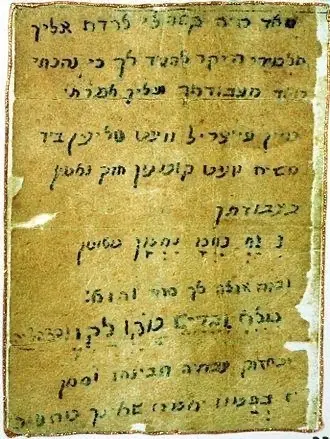
Rabbi Yisroel Dov Ber Odesser (1888 - 1994), also known as Reb Odesser or Saba - was a Breslov chosid and rabbi who claimed to have received a "Letter from Heaven," sent to him directly by Rabbi Nachman of Breslov, who had passed away 112 years earlier, revealing to him a new remedy for the suffering and illness of the world.
This remedy is the song and the name Na Nach Nachma Nachman Meuman, which he revealed to new followers throughout Israel. His followers became the Na Nach movement. There are known disagreements connected with the origin of the Letter, Rabbi Odesser's bold claims regarding Na Nach Nachma Nachman Meuman, and his standing within the Breslov movement.
Odesser was born in Tiberias, when Israel was under Ottoman rule, into a family that had been Karliner chassidim for generations. (His great-great-grandfather, Rabbi Yekutiel Zalman-Leib, was a close disciple of Rabbi Avraham of Kalisk, the chief disciple of the Baal Shem Tov.) In his youth Odesser also followed the Karliner path, but felt it did not suit his soul.
Odesser first became acquainted with the teachings of Rabbi Nachman of Breslov while a young yeshiva student in Tiberias. Someone had torn the cover off a holy Hebrew book and thrown it in the trash. Orthodox Judaism forbids desecrating a holy book in this way, so Odesser rescued it, intending to bury it properly in a Genizah. However, before disposing of it, he decided to read it. This book was called "Ishtafchut HaNefesh" ("The Outpouring of the Soul") by Alter Teplikker, and contained excerpts from the writings of Rabbi Nachman on meditation and personal prayer. Since the cover was missing, Odesser did not know who the author was, but the teaching affected him deeply. Only later did he learn what book it had been.
The first Breslov chosid he met in person was Rabbi Yisroel Halperin (also known as Yisroel Karduner), who once came to buy bread from Odesser's parents. The young man immediately sensed that he had found his teacher, but his parents were fiercely opposed to the Breslov path. Eventually his father threw him out of the house and tried to prevent his upcoming wedding. This did not stop him, and he continued to study with Halperin. The wedding took place as planned. Odesser's wife, Esther, supported him through much suffering and mockery from the local residents.
In those days, it was commonly believed among Jews that anyone who became a Breslov chosid would eventually go mad. This was likely because Breslover chassidim try to spend at least an hour a day in hitbodedut, personal communion with G-d, which they often did alone in a forest or field, frequently at night, meditating and calling out to G-d. At the time, this was not a common Jewish practice, and it was regarded with great suspicion. Jews typically prayed indoors with a minyan, not alone in the woods. Moreover, when Odesser prayed in the synagogue, he did so with such intense fervor that he would often clap, dance, and spin ecstatically for hours.
When the British entered Tiberias during World War I, a plague broke out in the city. Halperin fell seriously ill and eventually died, along with most of his family. After Halperin's death in 1918, Odesser became the personal attendant of Rabbi Shlomo Eliezer Alfandari, a great Sephardic rabbi and kabbalist known as Saba Kadisha, who was living in Tiberias at the time. However, one night, after seeing Odesser reciting Tikkun Chatzot ("the Midnight Lament") over the destruction of the Beit HaMikdash, Saba Kadisha refused to let him accompany him any further and instead began treating him as a young colleague.
After this, Odesser went to Jerusalem, where he studied with the elders of the city's Breslov community.
Correspondence with Zalman Shazar
On a rainy night of Tu B'Shvat in 1957, Zalman Shazar (the future third President of Israel) was with a friend in Meron. There they saw the Odesser chosid, who was reciting Tikkun Chatzot ("the Midnight Lament") with great fervor. They were deeply moved by this, and when the chosid finished, they asked him who he was. Thus began a lifelong friendship between Shazar and Odesser. Over the years, Odesser wrote Shazar many letters explaining the Breslov way of personal prayer and devotion and urging him to return to G-d (Shazar was not religious at the time). Shazar was deeply inspired by these letters and indeed became more religious. Later, he published the letters together with a brief biography of Odesser in a Hebrew book titled "Ibei HaNachal." In 1995, this book was translated into English.
The word "ibei" (אבי), meaning "buds," in the Hebrew title of the book, is a reversed acronym of Odesser's name (ישראל בער אדסר). Thus, the Hebrew title "Ibei HaNachal" carries a double meaning: "Yisroel Odesser, the stream/river" and "the young buds of the stream."
When he was about 24 years old, Odesser received a document, later published as the "Letter from Heaven" (popularly known as the Petek).
According to Odesser, during the fast of the Seventeenth of Tammuz, he gave in to the urge to eat and ate something. As a result, he became deeply distressed. For six days he suffered greatly and felt like a dead man. He prayed, and a "powerful thought" came to him: "Go to your room and open the bookcase, take any book... and open it to whatever page it opens to... and there you will find things that will bring you back to life, there you will find healing for your soul!"
Acting on this thought, he chose a book, opened it, and found inside a letter containing words of greeting and encouragement, as well as a Hebrew phrase based on the four letters of the name Nachman (Rebbe Nachman of Breslov).
Another chosid named Yoel later claimed that he himself had written the letter to Odesser, having seen him in distress over having to break his fast. Odesser insisted in response that his room had been locked and that he alone had the key, and maintained that this document had been miraculously delivered to him.
Odesser's publication of Na Nach Nachma Nachman Meuman was rejected by mainstream Breslover chassidim for many decades. Around 1984, when he was about 86 years old and living in a nursing home in Ra'anana, Israel, a group of baalei teshuva discovered Odesser and became interested in his teachings. He eventually became their spiritual leader. The name and song Na Nach Nachma Nachman Meuman were adopted by this subgroup of Breslov chassidim and have since appeared on billboards, bumper stickers, and knitted yarmulkes, as well as in this group's musical compositions.
 Meeting with Rabbi Moshe Feinstein
In the early 1980s, Rabbi Odesser met with Rabbi Moshe Feinstein, who had seen the petek and wanted to meet its owner. At the meeting, Rabbi Feinstein asked Rabbi Odesser for a blessing, and Rabbi Feinstein also called his wife over to receive a blessing from Rabbi Odesser. Rabbi Feinstein gave Rabbi Odesser the following endorsement:
"I am writing on behalf of a very extraordinary man, Rabbi Yisroel Dov Odesser, shlita, of Israel. This man is a gaon in Torah. I recently had the pleasure of meeting him. I saw the secret document he possesses; it is something truly wondrous.
Rabbi Odesser is raising funds to print the sefarim of Rabbi Nachman, and helping him in this is a great mitzvah. The Almighty will reward all who help him."
Those who doubt the authenticity of the petek downplay Rabbi Feinstein's endorsement, saying that he was known for his loving-kindness and his desire to help people. It is said that all Rabbi Feinstein wrote was that the petek was wondrous, but that he did not verify its authenticity.
Odesser passed away on October 23, 1994, and was buried on Har HaMenuchot in Jerusalem. Engraved on his gravestone are the words: "Rabbi Yisroel Dov Ber Odesser, [who] said: 'I am Na Nach Nachma Nachman Meuman.'"
Many people claim to have experienced salvation after visiting his grave and praying there.
May the merit of the tzadik protect Am Yisrael!
(https://dailyzohar.com/tzadikim/734-Rabbi-Yisroel-Ber-Odesser
Meeting with Rabbi Moshe Feinstein
In the early 1980s, Rabbi Odesser met with Rabbi Moshe Feinstein, who had seen the petek and wanted to meet its owner. At the meeting, Rabbi Feinstein asked Rabbi Odesser for a blessing, and Rabbi Feinstein also called his wife over to receive a blessing from Rabbi Odesser. Rabbi Feinstein gave Rabbi Odesser the following endorsement:
"I am writing on behalf of a very extraordinary man, Rabbi Yisroel Dov Odesser, shlita, of Israel. This man is a gaon in Torah. I recently had the pleasure of meeting him. I saw the secret document he possesses; it is something truly wondrous.
Rabbi Odesser is raising funds to print the sefarim of Rabbi Nachman, and helping him in this is a great mitzvah. The Almighty will reward all who help him."
Those who doubt the authenticity of the petek downplay Rabbi Feinstein's endorsement, saying that he was known for his loving-kindness and his desire to help people. It is said that all Rabbi Feinstein wrote was that the petek was wondrous, but that he did not verify its authenticity.
Odesser passed away on October 23, 1994, and was buried on Har HaMenuchot in Jerusalem. Engraved on his gravestone are the words: "Rabbi Yisroel Dov Ber Odesser, [who] said: 'I am Na Nach Nachma Nachman Meuman.'"
Many people claim to have experienced salvation after visiting his grave and praying there.
May the merit of the tzadik protect Am Yisrael!
(https://dailyzohar.com/tzadikim/734-Rabbi-Yisroel-Ber-Odesser
Meeting with Rabbi Moshe Feinstein
In the early 1980s, Rabbi Odesser met with Rabbi Moshe Feinstein, who had seen the petek and wanted to meet its owner. At the meeting, Rabbi Feinstein asked Rabbi Odesser for a blessing, and Rabbi Feinstein also called his wife over to receive a blessing from Rabbi Odesser. Rabbi Feinstein gave Rabbi Odesser the following endorsement:
"I am writing on behalf of a very extraordinary man, Rabbi Yisroel Dov Odesser, shlita, of Israel. This man is a gaon in Torah. I recently had the pleasure of meeting him. I saw the secret document he possesses; it is something truly wondrous.
Rabbi Odesser is raising funds to print the sefarim of Rabbi Nachman, and helping him in this is a great mitzvah. The Almighty will reward all who help him."
Those who doubt the authenticity of the petek downplay Rabbi Feinstein's endorsement, saying that he was known for his loving-kindness and his desire to help people. It is said that all Rabbi Feinstein wrote was that the petek was wondrous, but that he did not verify its authenticity.
Odesser passed away on October 23, 1994, and was buried on Har HaMenuchot in Jerusalem. Engraved on his gravestone are the words: "Rabbi Yisroel Dov Ber Odesser, [who] said: 'I am Na Nach Nachma Nachman Meuman.'"
Many people claim to have experienced salvation after visiting his grave and praying there.
May the merit of the tzadik protect Am Yisrael!
(https://dailyzohar.com/tzadikim/734-Rabbi-Yisroel-Ber-OdesserSource: https://silatehilim.com/en/events/18-хешвана-йорцайт-илула-рава-исроэль-до/
Material from our site may be copied for the purpose of spreading Torah, provided a link to Silatehilim.com is included. Any use of the site's material in print publications or for commercial purposes is prohibited without the rights holder's consent.