

14 Shevat · Yahrzeit
Rabbi Daniel Frisch - "Matok Mi'Dvash"
Rabbi Daniel ben Naftali Frisch - "Matok Mi'Dvash"
Yahrzeit - 14 Shevat
Burial place - Har HaZeitim, Jerusalem
Rabbeinu Chida (Rabbi Chaim Yosef David Azulai) wrote in his "Avodat HaKodesh" (siman 44): "The study of the Zohar surpasses all other forms of Torah study — even in the mysteries that no one understands — for it is a great rectification of the soul."
In "Pele Yoetz," Rabbi Eliezer Papo says: "The study of the Zohar is the highest way to purify and sanctify the soul. Even if one often does not understand it, it is still precious before the Holy One, Blessed be He."
The Baal HaTanya wrote in his book "Meah Shearim" that if one's heart is filled with foolishness and becomes a "heart of stone," the best remedy "is the study of the Zohar, for the word Zohar means a shining light that illuminates a dark place…"
Rabbi Yisrael Dov Ber of Vlednik adds in his "Sheerit Yisrael" that "the words and expressions of the Holy Zohar themselves bind a person to G-d."
The Zohar HaKadosh itself tells us that through its study Israel will merit both a great blessing in our present reality and the hastening of Mashiach's coming: "Israel is destined in the future to taste from the Tree of Life, which is the Zohar, and through its study they will be redeemed from their exile." (Zohar II, 124b)
"The children of Israel below, in this world, will receive sustenance and spiritual rectification through the study of the Holy Zohar… and through this our righteous Mashiach will come and blow the great shofar, proclaiming our freedom!" (Tikunei Zohar 23b)
Over the centuries, many profound commentaries have been written on the Zohar HaKadosh. But most people are unable to penetrate this deeply mystical work. Among our Sages there was always a longing for a commentary on the Zohar HaKadosh that would be simple and understandable for everyone. In the introduction to "Damesek Eliezer," Rabbi Eliezer Tzvi of Komarno wrote in the name of his father, Rabbi Yitzchak of Komarno, that the greatest wish of the Chozeh of Lublin was that someone would compose a simple (peshat) commentary on the Zohar. This would allow every Jew to cling to its holy words and thereby connect with the Almighty, since it is well known among the Mekubalim that the primary way a person connects with the Almighty is through the study of the Zohar.
It seems that the wishes of the tzadikim made an impression in Heaven, and our generation — the generation of "chevlei Mashiach" — has merited such a commentary. This is the great and wondrous commentary "Matok Mi'Dvash," written on the entire Holy Zohar and set forth in a clear and simple form, accessible and understandable to everyone. Now every Jew has the opportunity to truly understand the secrets of the Almighty and the secrets of the Holy Torah.
The righteous emissary who merited to carry out this holy task be'Siyata d'Shmaya was a holy man, the Mekubal Rabbi Daniel Frisch.
Drawing on the holy commentaries of earlier sages, Rabbi Frisch devoted many years to creating a new, simplified commentary on the Zohar, understandable to everyone.
His commentary "Matok Mi'Dvash" was extraordinarily successful, arousing enormous interest throughout the Jewish world, both in the Holy Land and in the Diaspora, in synagogues and yeshivot. It was received with great gratitude and admiration, and its author earned high praise from the Gedolei Yisrael.
He also wrote commentaries (pirushim) on other seforim, and there are wonderful siddurim based on "Matok Mi'Dvash", which cite passages from the Zohar HaKadosh and the Writings of the Arizal relevant to prayer, without going into deep kavanot, such as the Siddur HaRashash.
Rav Avraham Yitzchok Kahan, the previous Toldos Aharon Rebbe, told Rav Daniel Frisch that he had a tradition from the Chozeh of Lublin stating that before the coming of Mashiach there would be someone who would write a commentary according to the peshat on the Zohar HaKadosh. He said he wanted Rav Daniel to do this, and thus "Matok Mi'Dvash" came into being.
There is a well-known saying from the "Zohar HaKadosh" that with the "Sefer HaZohar" we will go out of Galut. Rav Daniel Frisch made a great contribution toward making the Zohar accessible to all of us, which will help bring about the Geulah.
Rebbe Nachman of Breslov revealed that the secret of Rashbi's name, Shimon, is alluded to in the verse that appears in the Book of Daniel (4:10): עיר וקדיש מן שמיא נחת – "a holy angel who came down from heaven." The first letters of these words spell out שמעון. One might suggest that perhaps there is a connection between this and the author of "Matok Mi'Dvash", whose name is Daniel.
Describing the Exodus of Am Yisrael from Egypt, the verse states: ובני ישראל יצאים ביד רמה. Targum Onkelos translates - ביד רמה as בריש גלי.
Rabbi Moshe Chaim Ephraim of Sudylkov writes that the letters בריש are the initials of רבי שמעון בר יוחאי, hinting at the role that the teachings of Rashbi in the Zohar HaKadosh will play in the final redemption.
The word ביד is an acronym for י”ד ב‘שבט, the date of the Yahrzeit of Rav Daniel Frisch, who made the Zohar HaKadosh so much more accessible to us. The parsha in which this verse appears, Beshalach, is read on the last Shabbat of the Tzadik in this world.
The last two verses of Daniel: אשרי המחכה, ויגיע: לימים–אלף, שלש מאות שלשים וחמשה. ואתה, לך לקץ; ותנוח ותעמד לגרלך, לקץ הימין – "Happy is he who waits and reaches the thousand three hundred and thirty-five days. But you, go your way till the end; you shall rest, and rise to your destiny at the end of days."
The entire Book of Daniel is quite enigmatic and contains many secrets of the end of days. But here is something amazing: the gematria of the verse:
"Happy is he who waits and reaches the thousand three hundred and thirty-five days" - רבי דניאל בן נפתלי הירצקא is exactly equal to 1335.
The last word of Daniel is הימין, which, counting ן as 700 (Rashi on Sukkah 52b), equals the gematria of תשס”ה, the year Rav Daniel Frisch left this world. The gematria of this year is exactly equal to the words רבי שמעון בן יוחאי.
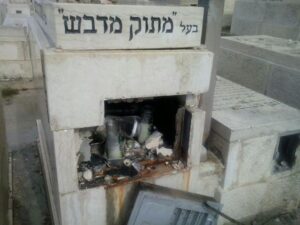 Rabbi Daniel Frisch was also Rosh Yeshiva of "Shaarei Gan Eden". He had influence on "Toldos Aharon Chassidus," and later on "Toldos Avraham Yitzchok Chassidus."
Rabbi Daniel Frisch was born in the town of Nanash in Hungary, to Sara and Rabbi Naftali Hirtzka. In the title of his book, Rav Daniel immortalized his mother's name - "Dvash" (דבש) - the initials of Daniel ben Sara.
At the age of three he lost his mother, and his father married Fradel, who raised him. He was nine years old when the Nazis occupied Hungary; he survived the events of the Holocaust.
He made aliyah to Israel in 1952, and studied with Rabbi Yochanan Sofer of Erlau.
After the events of the split within the Chassidut, and the subsequent passing of the Admor Rabbi Avraham Yitzchak Kahan, he stepped down, moved to "Toldos Avraham Yitzchok," and became one of the leaders of the community.
Rabbi Frisch gave many lessons daily.
In the morning he gave lessons in educational institutions at "Mishkan Binyamin Anshei Mamad," and in the afternoon at the Mekubalim Yeshiva "Shaarei Gan Eden."
"Matok Mi'Dvash"
Rabbi Daniel Frisch was also Rosh Yeshiva of "Shaarei Gan Eden". He had influence on "Toldos Aharon Chassidus," and later on "Toldos Avraham Yitzchok Chassidus."
Rabbi Daniel Frisch was born in the town of Nanash in Hungary, to Sara and Rabbi Naftali Hirtzka. In the title of his book, Rav Daniel immortalized his mother's name - "Dvash" (דבש) - the initials of Daniel ben Sara.
At the age of three he lost his mother, and his father married Fradel, who raised him. He was nine years old when the Nazis occupied Hungary; he survived the events of the Holocaust.
He made aliyah to Israel in 1952, and studied with Rabbi Yochanan Sofer of Erlau.
After the events of the split within the Chassidut, and the subsequent passing of the Admor Rabbi Avraham Yitzchak Kahan, he stepped down, moved to "Toldos Avraham Yitzchok," and became one of the leaders of the community.
Rabbi Frisch gave many lessons daily.
In the morning he gave lessons in educational institutions at "Mishkan Binyamin Anshei Mamad," and in the afternoon at the Mekubalim Yeshiva "Shaarei Gan Eden."
"Matok Mi'Dvash"
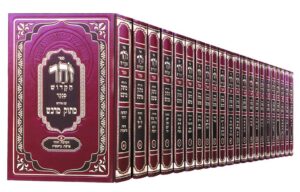 His main work is "Matok Mi'Dvash" – a commentary on the Zohar HaKadosh.
In it, each day consists of two parts. One part describes three ways to improve a person's relationship with the Almighty, based on that day's sefirah.
The second part describes three ways in which the sefirot relate to conduct Bein Adam LeChaveiro.
34 pages provide depth and understanding of the work of the days of each sefirah, and the importance of Tikkun HaMiddot.
He also wrote a small booklet in Hebrew, "Usfartem Lachem," containing a daily guide for the Sefirah period, based on 49 combinations of the seven sefirot. His "Otzar HaZohar" is a 4-volume index of subjects in the Zohar. His book "Kavanot HaBrachot" is a guide for focusing on each blessing.
He also wrote a guide on the relationship between husband and wife, "Kedusha Ve'Tznius," as well as a spiritual guide and mussar for young boys who have reached Bar Mitzvah, to help them rise higher, called "Yemei HaBacharut VeBar Mitzvah."
He passed away at the age of 70, on 14 Shevat.
The Shoah and the Tzadik's Fingers
Rav Yeshayahu Pinto relates that he and his wife did not have children for a long time, and he turned to Rabbi Daniel Frisch, the Baal Matok Mi'Dvash with a request to bless them, and two months later his wife became pregnant.
And the Rav relates that Rabbi Daniel Frisch's fingers were disfigured after being tortured by the Nazis. Rav Yeshaya Pinto says that the Tzadik's book "Matok Mi'Dvash" is a great segula for salvation, written by a man who survived the catastrophe.
May the merit of the Tzadik protect Am Yisrael!
Segula of Rabbi Daniel Frisch - Psalm 13 on the 13th day –
https://silatehilim.com/теилим-13-каждое-13-число-еврейского-меся/
(https://www.queensjewishlink.com/index.php/local/26-community-corner/3027-the-tremendous-importance-of-studying-the-zohar; https://dailyzohar.com/tzadikim/282-Rabbi–Daniel–Frisch)
His main work is "Matok Mi'Dvash" – a commentary on the Zohar HaKadosh.
In it, each day consists of two parts. One part describes three ways to improve a person's relationship with the Almighty, based on that day's sefirah.
The second part describes three ways in which the sefirot relate to conduct Bein Adam LeChaveiro.
34 pages provide depth and understanding of the work of the days of each sefirah, and the importance of Tikkun HaMiddot.
He also wrote a small booklet in Hebrew, "Usfartem Lachem," containing a daily guide for the Sefirah period, based on 49 combinations of the seven sefirot. His "Otzar HaZohar" is a 4-volume index of subjects in the Zohar. His book "Kavanot HaBrachot" is a guide for focusing on each blessing.
He also wrote a guide on the relationship between husband and wife, "Kedusha Ve'Tznius," as well as a spiritual guide and mussar for young boys who have reached Bar Mitzvah, to help them rise higher, called "Yemei HaBacharut VeBar Mitzvah."
He passed away at the age of 70, on 14 Shevat.
The Shoah and the Tzadik's Fingers
Rav Yeshayahu Pinto relates that he and his wife did not have children for a long time, and he turned to Rabbi Daniel Frisch, the Baal Matok Mi'Dvash with a request to bless them, and two months later his wife became pregnant.
And the Rav relates that Rabbi Daniel Frisch's fingers were disfigured after being tortured by the Nazis. Rav Yeshaya Pinto says that the Tzadik's book "Matok Mi'Dvash" is a great segula for salvation, written by a man who survived the catastrophe.
May the merit of the Tzadik protect Am Yisrael!
Segula of Rabbi Daniel Frisch - Psalm 13 on the 13th day –
https://silatehilim.com/теилим-13-каждое-13-число-еврейского-меся/
(https://www.queensjewishlink.com/index.php/local/26-community-corner/3027-the-tremendous-importance-of-studying-the-zohar; https://dailyzohar.com/tzadikim/282-Rabbi–Daniel–Frisch)
Rabbi Daniel Frisch was also Rosh Yeshiva of "Shaarei Gan Eden". He had influence on "Toldos Aharon Chassidus," and later on "Toldos Avraham Yitzchok Chassidus."
Rabbi Daniel Frisch was born in the town of Nanash in Hungary, to Sara and Rabbi Naftali Hirtzka. In the title of his book, Rav Daniel immortalized his mother's name - "Dvash" (דבש) - the initials of Daniel ben Sara.
At the age of three he lost his mother, and his father married Fradel, who raised him. He was nine years old when the Nazis occupied Hungary; he survived the events of the Holocaust.
He made aliyah to Israel in 1952, and studied with Rabbi Yochanan Sofer of Erlau.
After the events of the split within the Chassidut, and the subsequent passing of the Admor Rabbi Avraham Yitzchak Kahan, he stepped down, moved to "Toldos Avraham Yitzchok," and became one of the leaders of the community.
Rabbi Frisch gave many lessons daily.
In the morning he gave lessons in educational institutions at "Mishkan Binyamin Anshei Mamad," and in the afternoon at the Mekubalim Yeshiva "Shaarei Gan Eden."
"Matok Mi'Dvash"
His main work is "Matok Mi'Dvash" – a commentary on the Zohar HaKadosh.
In it, each day consists of two parts. One part describes three ways to improve a person's relationship with the Almighty, based on that day's sefirah.
The second part describes three ways in which the sefirot relate to conduct Bein Adam LeChaveiro.
34 pages provide depth and understanding of the work of the days of each sefirah, and the importance of Tikkun HaMiddot.
He also wrote a small booklet in Hebrew, "Usfartem Lachem," containing a daily guide for the Sefirah period, based on 49 combinations of the seven sefirot. His "Otzar HaZohar" is a 4-volume index of subjects in the Zohar. His book "Kavanot HaBrachot" is a guide for focusing on each blessing.
He also wrote a guide on the relationship between husband and wife, "Kedusha Ve'Tznius," as well as a spiritual guide and mussar for young boys who have reached Bar Mitzvah, to help them rise higher, called "Yemei HaBacharut VeBar Mitzvah."
He passed away at the age of 70, on 14 Shevat.
The Shoah and the Tzadik's Fingers
Rav Yeshayahu Pinto relates that he and his wife did not have children for a long time, and he turned to Rabbi Daniel Frisch, the Baal Matok Mi'Dvash with a request to bless them, and two months later his wife became pregnant.
And the Rav relates that Rabbi Daniel Frisch's fingers were disfigured after being tortured by the Nazis. Rav Yeshaya Pinto says that the Tzadik's book "Matok Mi'Dvash" is a great segula for salvation, written by a man who survived the catastrophe.
May the merit of the Tzadik protect Am Yisrael!
Segula of Rabbi Daniel Frisch - Psalm 13 on the 13th day –
https://silatehilim.com/теилим-13-каждое-13-число-еврейского-меся/
(https://www.queensjewishlink.com/index.php/local/26-community-corner/3027-the-tremendous-importance-of-studying-the-zohar; https://dailyzohar.com/tzadikim/282-Rabbi–Daniel–Frisch)