
14 Av · Yahrzeit
Rabbi Tzvi Hirsh of Liska
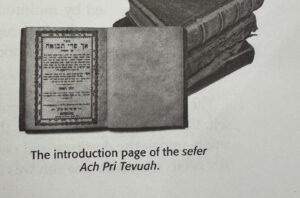
Rabbi Tzvi Hirsh ben Aharon Friedman of Liska (1808-1874), talmid of Rabbi Chaim of Sanz, and Rebbe of Rav Shaya'le of Kerestir. He wrote "Ach Pri Tevuah" and "Ha-Yashar ve Ha-Tov."
Yahrzeit - 14 AvRabbi Tzvi Hirsh of Liska lost his father at the age of 8 and was raised by his widowed mother – Sarah de-Berekin (Sarah the baker). His mother did everything possible so that her boy could study with tzadikim. Eventually the boy was sent to study at the yeshiva of Rav Avraham of Dembitz. During this period he met tzadikim of the generation - Rav Meir of Apta and Rav Naftali of Ropshitz, who during their visits to the town noticed the child from Ihel and predicted a brilliant future for him.
In Ihel he became the closest student of Rabbi Moshe Teitelbaum. Hershele then studied at the yeshiva in Bonyhád under the guidance of Rav Tzvi Hirsh Heller-Harif, author of "Tiv Gittin.""It's a shame you have the same name as me," the Rosh Yeshiva once remarked to his beloved student, meaning that he had wanted to take Hershele as a son-in-law — were it not for the ruling of Rav Yehuda HaChasid forbidding a father-in-law and son-in-law from sharing the same name.
After his marriage, the Lisker Rav went to study in Ungvár under the guidance of the famous Maharam Ash. Eventually, he returned to Liska, studying under Rav Menachem Ash, the son of his Rebbe, and earned the respect of the townspeople.
The townspeople asked Hershele to become their Av Beit Din.
Later, fate led him to the Chassidic courts of the great Rebbes – Rabbi Tzvi Hirsh of Rimanov and Rav Meir of Premishlan.
When Rav Hershele first came to meet the Rebbe of Premishlan, Rav Meir came out to greet the guest, declaring that he had been waiting years for this visit.
"Shalom aleichem, Lisker Rav," said Reb Meir, "I heard it announced in Heaven that you are a Rebbe with Yirat Shamayim."
Later, the Rebbe of Premishlan gave semicha to Rebbe Hershele, and when another young tzadik visited Rav Meir and asked for semicha, Rabbi Meir apologized: "I cannot give it to you, because we have already given the 'shlissel Hungary' (key to Hungary) to Reb Hershele Lisker."
The Rebbe of Liska dreamed of meeting Rabbi Yisrael of Ruzhin, but he did not have the means to make the trip. When his contemporary, the Yitav Lev of Sighet, set out for Ruzhin, Reb Hershele included himself in the general kvitel (note with names).
The Yitav Lev handed the paper to the holy Ruzhiner, who looked over the list, then paused thoughtfully on one name. "Who is this?" the Rav asked.
"Tzvi ben Sarah - Hershele, son of Sarah the baker."
The Ruzhiner had foreseen his wish to come, and he prayed for mercy so that Reb Hershele would merit making the journey. The Rebbe's prayer worked. Reb Hershele managed to gather money for the trip to the Ruzhiner's royal court. When he arrived, he presented a kvitel with a request for parnasa.
"Wait a little while," said the Ruzhiner. The Rav of Liska understood that in time his situation would improve.
Later Rav Hershele also traveled to other tzadikim, including Sar Shalom of Belz, Rav Asher Yeshaya of Ropshitz, Rav Menachem Mendel of Vizhnitz, Rav Eizikel of Zhidachov, and others.
Before his passing he said:
"How wonderful it is to be able to say: I was with this tzadik, and also with that tzadik."
The Lisker Rav often traveled to Sanz. Once, when he arrived in the town, the "Divrei Chaim" sent Chassidim to bring the visitor's kvitel. Rav Hershele refused to have his kvitel read in a town where such a great tzadik served as rabbi.
In his will, Reb Hershele asked his children to make it a rule to visit tzadikim for at least one Shabbat or Yom Tov every year.
When the "Yismach Moshe" - Rav of Ihel, passed from this world, the people asked Rav Hershele to lead them, but he refused, feeling unworthy.
The pressure grew, and the Rabbi of Liska sought advice from three tzadikim (the Rebbes of Premishlan, Ruzhin, and Rimanov), who convinced him to take the position as a Chassidic rabbi.
Rav Hershele chose feeding Jews as the main work of his life, while he himself led an ascetic lifestyle.
"The local Beit Midrash is such a simple structure, really just a collection of wood and stones gathered by local peasants, yet the Jews bestow honor upon it. However simple I may be, I am like these stones, without any inherent value, filled only with what the Jews put into me through their pure faith," he once said.
In 1870, Rav Hershele had the opportunity to meet the "Ktav Sofer" - son of the Chatam Sofer.
After their conversation, the Ktav Sofer was very impressed, and when he returned to his yeshiva in Pressburg, he joked: "When Chazal instruct us to be 'swift as a tzvi (deer)' - they mean to be like Reb Tzvi Hershele Lisker."
Candles
Once a wealthy chassid from Liska arrived, carrying boxes of candles, each one a gift for the Rebbe. He entered the Rebbe's room, and Reb Hershele gratefully accepted the gift. "Baruch Hashem, we will have candles for Shabbat!" he exclaimed. The chassid looked with surprise at the neatly stacked piles of money on the table. The Rebbe noticed the chassid's confusion: "You are certainly wondering how it is that I had no candles for Shabbat when there is so much money on the table. It is because the Al-mighty made me a gabbai tzedakah, and I must account for every kopek received – this is for pidyon shvuyim, this is for bikur cholim. There is a specific merchant who needs a new horse, and a farmer whose dairy cow died. Every kopek has its purpose... so I remained without candles until you came."
When Shaya'le of Kerestir appeared at Rebbe Hershele's yeshiva – he immediately singled him out among the other students.
He valued young Shaya'le's noble character and entrusted him with various tasks. He understood that with Shaya'le he did not need to worry that money would be taken from the poor and used for court expenses.
The steady stream of visitors to Liska quickly noticed that Shaya'le had earned the Rebbe's unconditional trust, and they asked the tender-hearted bochur to speak on their behalf before the Rebbe.
Often the Rebbe would consult his young assistant: "Shaya'le, what do you think about this matter?"
Once on Shabbat an unusually large crowd gathered in Liska. When it was time for Seudah Shlishit, Reb Shaya'le walked through the entire Beit Midrash with a huge sack, handing out rolls to the guests.
Rebbe Hershele, instead of immediately washing for Seudah Shlishit, stood by his place, watching his Shaya'le intently. The gabbai hinted to the Rebbe about the time, but he did not move. "I am watching how well Shaya'le is handing out the rolls." "But Shaya'le hands out rolls every Shabbat!" the gabbai remarked. "Yes," answered the Rebbe, "but today he is handing out rolls from an empty sack!"
The chassidim overheard the Rebbe's words and hurried to check them by looking into the sack. It was indeed empty, just as the Rebbe had said. However, as soon as they noticed this, Shaya'le stopped handing out rolls.
The remarkable nature of the relationship between the Rebbe and his assistant became clear many years later, when Reb Shaya'le went to Sanz for the yahrzeit of the Divrei Chaim.
He met Rav Avraham Shalom of Stropkov, and the two tzadikim began discussing Eliyahu HaNavi.
The Rebbe of Stropkov asked Rebbe Shaya'le whether he had ever seen Eliyahu HaNavi. Reb Shaya'le recalled how one night, as a bochur, while attending his Rebbe, he was overcome with a desire to observe his Rebbe's night prayer. He set up his bed in Rebbe Hershele's room and pretended to be asleep. Deep in the night, the Rebbe of Liska came up to Reb Shaya'le with a candle in hand and made sure he was truly asleep before welcoming a guest into the room.
"I saw a Jew enter," Reb Shaya'le recalled, "and it was Eliyahu HaNavi."
After the visitor left, Reb Hershele came over and checked whether Shaya'le was asleep. "Who could sleep at a time like this?" Shaya'le answered with a question, letting the Rebbe know what he had seen.
 Limud
Limud
G-d and Nature (from "Ach Pri Tevuah")
"It is well known that the Divine Name 'Elokim' and the word 'ha-teva' (nature), meaning nature, have the same numerical value of 86, and can therefore be equated. Indeed, nature is a manifestation of G-d, for He conceals His actions in the garment of nature. G-d does this so that man may have 'bechira,' free choice. He may choose to believe that events and phenomena in the universe are dictated by nature, or he may recognize G-d as the Power that rules and directs everything that exists. Since G-d clothes Himself in the mantle of nature, how can He be recognized? You can recognize His Presence by observing how He administers justice, measure for measure. This understanding is illustrated by Yitro, who, upon hearing of the miracles of the Exodus, declared: 'Now I know that G-d is greater than all gods, for in the very matter in which they conspired, [He was] above them.' (Yitro 18:11)
Moreover, adds the Lisker Rav, the gematria of 'Elokim,' whose value is 86 - carries the meaning of strict Divine judgment, while the gematria of 'Ani Hashem' (I am G-d) equals 87. If a person adds the One (1) to his life and understands that everything comes from Him, then even strict judgment will be transformed into mercy and deliverance.
May the merit of the tzadik protect Bnei Yisrael! (translated from the book "Reb Shaele")