

12 Elul · Yahrzeit
Yahrzeit/Hillula of Rabbi Simcha Bunim of Peshischa
Rabbi Simcha Bunim of Peshischa
Yahrzeit - 12 Elul
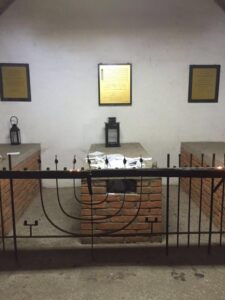
Resting place - Poland
In his youth, Rabbi Simcha Bunim studied in the yeshivot of Mattersdorf and Nikolsburg, where his teacher was Rabbi Mordechai Banet.
He became acquainted with Chassidus thanks to his father-in-law and became a follower of the Maggid of Kozhnitz.
After working as a manager at a lumber mill, and then at a pharmacy, he met, came under the influence of, and became a close friend of Rabbi Chozeh of Lublin. When Rabbi Yaakov Yitzchak, the "Yid HaKadosh" (the Holy Jew), left the Chozeh's circle to establish his own court in Peshischa, Rabbi Bunim followed him there and became his follower, continuing his work after the passing of the "Yid HaKadosh."
The main principle of this teaching was self-knowledge and self-observation.
This path was continued by the Kotzker Rebbe, the Vorker Rebbe, and the Chiddushei HaRim of Ger (may his merit shield us).
His teachings were collected in the books "Kol Simcha," "Ramatayim Tzofim," and "Chedvat Simcha."
Rabbi Simcha Bunim once said: "I learned the meaning of the word 'love' when I overheard a conversation between Polish peasants in a tavern. One says to the other: 'Do you love me?' The other answers: 'Of course.' The first one persists: 'Then tell me, where does it hurt?'"
"I don't know" - the second one answered.
"Then how can you say that you love me? To love, to be a friend - is to know where it hurts."
Love of One's Fellow
Rabbi Simcha Bunim of Peshischa was once returning home from Danzig when he came upon a settlement where Rabbi Zalman the Chassid lived. Rabbi Zalman was great in Torah and good deeds, but was extremely poor. When Rabbi Simcha Bunim arrived at the inn, he immediately sent for Rabbi Zalman. He saw that he was dressed in rags and worn-out clothing, even though it was winter and bitterly cold.
"Go," Rabbi Simcha Bunim told him, "and prepare food for me, food for the Chassidim. Here is some money." And he gave him a full handful of coins, without counting them.
Rabbi Zalman went to the market and spent generously on everything needed for the meal: meat, fish, and various drinks, and he still had money left over.
While Rabbi Zalman was away, Rabbi Simcha Bunim sent for a furrier and bought a beautiful fur coat from him. He sent for shoes, fabric for suits, and other articles of clothing.
Before the meal, he instructed the inn's caretaker to bring all the new clothing he had bought to Rabbi Zalman the Chassid's house. He himself also went to Rabbi Zalman's house, sent everyone out of the house, and dressed Rabbi Zalman from head to toe. Then he noticed Rabbi Zalman's family, also dressed in rags and worn-out clothing. He sent fabric for all the family members. The house was filled with light and joy, and they sat, ate, and rejoiced.
As he prepared to set off, Rabbi Simcha Bunim went to Rabbi Zalman to receive his blessing. Rabbi Simcha Bunim gave him a gold dinar, which Rabbi Zalman refused to accept.
"Rebbe," he said, "I still have change left over from buying the food, aside from the clothing that you bought for me and my family members."
"Let me tell you," Rabbi Simcha Bunim answered, "one who gives charity out of pity, because he feels sorry for the poor man and cannot bear to see him in his pitiful state, is not fulfilling the mitzvah of giving charity. He is showing mercy not to the poor man, but to himself. The point is not to 'give willingly with all one's heart,' but rather to give out of a feeling of pity. What I gave you until now was only because pity was awakened in me, and I could not bear to see you and your family in such a pitiful state, in rags. But now that you are dressed in beautiful new clothing, I am ready to fulfill the mitzvah of charity."
All My Bones
When Rabbi Bunim's opponents asked why he was late for prayer every morning, he would answer: "A person has bones that continue to sleep even after he himself has woken up."
It is said in Tehillim (35:10): "All my bones shall say: G-d, who is like unto You?"
That is why a person should wait to pray until all his bones have awakened."
David and Us
Rabbi Bunim was once asked:
"We repent for our sins many times over on Yom Kippur. Why then do we never find out whether our sins have been forgiven?"
After all, David had barely finished saying: "I have sinned against the L-rd," when he was told: "the L-rd has removed your sin." "And David said to Nathan: I have sinned against the L-rd... And Nathan said to David: the L-rd has removed your sin - you shall not die."
Rabbi Bunim answered:
"When David said, 'I have sinned against the L-rd,' he meant: 'Deal with me according to Your will, and I will accept it with love, for You, L-rd, are just.' But when we say, 'We have sinned,' we assume that it is G-d's nature to forgive us; and when right after that we add, 'We have betrayed You,' we assume that now, having already forgiven us, He will continue to be favorable toward us."
 May the merit of the tzadik protect Am Yisrael!
(Tzadikim.com, "Chassidic Tales. Later Masters" by Martin Buber)
May the merit of the tzadik protect Am Yisrael!
(Tzadikim.com, "Chassidic Tales. Later Masters" by Martin Buber)
May the merit of the tzadik protect Am Yisrael!
(Tzadikim.com, "Chassidic Tales. Later Masters" by Martin Buber)
Pilgrimage site:
Grave: Simcha Bunim of Peshischa