

11 Tammuz · Yahrzeit
Rabbi Tzvi Hirsh of Zhidachov
Rabbi Tzvi Hirsh Eichenstein of Zhidachov - "Sar Beit HaZohar" (Prince of the Zohar)
Yahrzeit - 11 Tammuz Resting place - ZhidachovThe 11th of Tammuz, according to many Mekubalim, is as great as Lag BaOmer — a day when our prayers have tremendous power to annul harsh decrees, according to the Holy Zohar. In the past it was customary to travel to Meron on the 11th of Tammuz.
About 200 years ago there lived the great Rabbi Tzvi Hirsh of Zhidachov. He was born in the Galician town of Safrin, then belonging to Hungary, in 1763, to Rabbi Yitzchak Isaac and Rebbetzin Hinda.
Rabbi Tzvi Hirsh was a disciple of Rabbi Moshe of Sassov, Menachem Mendel of Rimanov, the Maggid of Kozhnitz, and above all he studied under the great Seer, Rabbi Yaakov Yitzchak of Lublin — the Chozeh of Lublin.
His disciples — the great Rabbi Yitzchak Isaac of Komarno, Rabbi Tzvi Elimelech of Dinov (the "Bnei Yissaschar"), and Rabbi Yitzchak Isaac of Zhidachov — used to say of him: "his holy mouth has spoken."
The great Malbim also studied under the Admor of Zhidachov. Rabbi Tzvi Hirsh was called "Sar Beit HaZohar" — Prince of the Zohar, to whose commentary his most famous work is devoted: "Ateret Tzvi" (Crown of the Deer).
Rabbi Yitzchak Isaac of Komarno wrote that his teacher's soul was part of the soul of the great Kabbalist, disciple of the Arizal — Rabbi Chaim Vital, "which in turn is close to the soul of Rabbi Akiva."
Rabbi Tzvi Hirsh told his brother Rabbi Moshe that in previous incarnations his soul had been that of one of the High Priests of the Second Temple period — Rabbi Yishmael.
Other Kabbalists claimed that within Rabbi Tzvi Hirsh lived the soul of the sage Yanuka (the child), mentioned in the book of the Zohar.
The Brothers of Rabbi Tzvi Hirsh Reb Tzvi Hirsh of Zhidachov, Reb Moshe of Sambor, Reb Alexander Sender of Komarno, Reb Yissachar Berish of Zhidachov, and Reb Lipa of Sambor. The eldest son, Reb Tzvi Hirsh, said of his father: "I am like vinegar, the son of wine," indicating how great he considered his father to be. Once, when Reb Yitzchok was already quite elderly, he let out a long, loud sigh. His wife asked what was troubling him. He answered that he was worried whether they were worthy of going to Gan Eden. His wife responded with two words from that week's Torah portion, Chukat (20:19): בַּמְסִלָּה נַעֲלֶה, "by the highway we shall go up." What she actually meant by these words was: "נַעֲלֶה — we shall rise to Gan Eden — בַּמְסִלָּה contains the first letters of the names of our sons: Berish, Moshe, Sender, Lipa, and Hirsh. Through the merit of our great sons, we shall merit Gan Eden."Purim
It was customary to appoint special "Purim" rabbis, "judges," and "guards" for the holiday. Once in Zhidachov, Rebbe Tzvi Hirsh's nephew Koppel was chosen for the role of Purim "minister of justice." Already quite drunk and absurdly dressed, he showed up with his friends at his uncle's house and was received with honor and seated in the Admor's place. The "minister" sprawled in the chair, demanded wine for himself and his "advisors," and the Admor himself served him. Satisfied, the "minister" hiccupped and asked: "What is your request?" — "Would Your Excellency be so kind as to cancel the candle tax introduced by the treasury since the beginning of this year?" After consulting with his "advisors," the "minister" approved the cancellation. They drank to it. "And would Your Excellency, if I have found favor in your eyes, also be willing to cancel the unjust tax on kosher meat?" Another consultation, another cancellation, more toasts. "May I be so bold as to ask the minister for one more favor? — Go ahead! — Please order the decree conscripting Jewish youths into the army to be revoked."
"What?" — roared the "minister" — "not for anything, let them serve the Emperor!" "Koppel, it's me, your uncle Tzvi, revoke the decree, today you can do so much for your people!" — "I serve the Emperor, not relatives."
The next day, when Koppel — who remembered nothing — was told by the chassidim everything that had happened in the Rebbe's house, he shrank into a far corner of the synagogue out of shame. "It is all from Him, Koppel, the Almighty guided your hand and placed the words in your mouth." That year, the candle tax and the kosher meat tax were unexpectedly canceled, but the military draft remained in effect.
A Kapara for His People Once, while he was in the synagogue, still wrapped in his tallit and tefillin, he was told about Jews nearby who had suffered from an epidemic. The news distressed the tzadik, and he wanted to help. He was ready to give his own life to save his fellow Jews. After the Shacharit prayer, he placed his hand on the mezuzah, closed his eyes, and prayed to the Almighty. He asked that the Almighty take him as a kapara for the Jews. Rabbi Tzvi Hirsh wanted to sacrifice his life for Am Yisrael. That very day the tzadik fell ill, and the next day he passed away — and the epidemic ended. Before his death, the "Sar Beit HaZohar" — the sage and Kabbalist who had done so much for his people — searched anxiously: "With what shall I go before the Judgment?" And finally he remembered: "I arranged weddings for 40 orphan couples — this is what I can bring before the Judge." From the Depths Rabbi Tzvi Hirsh of Zhidachov used to tell this story: "On the day before Shabbat I was expelled from the city of Brody, and I was in great disgrace. I walked and walked without stopping, and when I reached home toward evening, already on the eve of Shabbat, I went straight to the house of prayer just as I was, in my weekday clothes, and I only had strength enough to pray. But the next morning, before the morning prayer, I turned to the L-rd: 'Master of the world, You see the humiliation of those who have been humiliated, and You see my broken heart. Send me light, so that I may pray to You.' And then my heart caught fire. My prayer was like a torch. Never before had such a thing happened to me, and it will never happen again.'" A Twofold Answer Rabbi Hirsh once told his chassidim: "It happens that when a person comes to me and asks me to pray for help in some ordinary, worldly matter — one asks about renting something, another about a small shop — at that very moment that person's soul is pleading with me for salvation in the higher world. And it is my duty to give an answer to both pleas in a single response."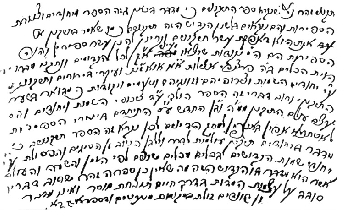 Not by Numbers…
Once, entering the house of prayer, Rabbi Tzvi Hirsh of Zhidachov said to the chassidim gathered there: "My children, it is written: 'A king is not saved by a great army.' If a tzadik has many chassidim, that does not make him greater in the eyes of G-d."
Suspicion and Apprehension
The Rabbi of Komarno, Rabbi Hirsh's nephew, used to tell:
"It was on Shavuot. Dawn had just broken when I entered my uncle and teacher's room — but he did not notice me. He was pacing back and forth across the room, pouring out his heart to the L-rd. For this holiday, some four or five hundred people had come to him. And he said: 'Has Samael sent this whole crowd to me to distract me from communing with You? Have mercy on my poor soul and do not deprive me of Your presence!'"
Every Rabbi Has His Own Merits
Once, on Shabbat, Rabbi Tzvi Hirsh interrupted his teachings during the third meal and said:
"There are chassidim who, upon coming to their Rebbe, declare that there is no other teacher in the world besides him. This is idolatry. What should they say instead? They should say this: 'Every Rebbe is good for his own chassidim, but for us, our Rebbe is the best of all.'"
Radiating Light
Rabbi Moshe of Sambor, Rabbi Tzvi Hirsh's younger brother, in his youth used to walk through the surrounding villages peddling goods. When he returned home and recited the afternoon prayer, he felt that his entire body was literally radiating light.
This is what Rabbi Moshe himself related: "Once I asked my brother and teacher: 'Why does this happen — when I come home after a whole day of trading and begin to pray, I feel that my body radiates light, as though the Shechinah has descended upon me?'
My brother's answer was, as always, clear and direct: 'And why does this surprise you so? When a traveler walks in the way of the L-rd, then sometimes, without his even noticing, all the holy sparks from the field grasses and the trees of the forest attach themselves to that person, illuminating him with great light.'"
Not Yet the Time!
On his way to Munkács (Mukachevo), Rabbi Hirsh used to stop in at old Rabbi Moshe's in the town of Ujhely, and Rabbi Moshe would lament, as usual, that Mashiach still had not come. "You see," said Rabbi Hirsh, "I try not to overlook anyone, even the weakest in faith, and I trace the roots of his backsliding, discovering that the basis of his sinfulness is need or desire. And in such cases I manage to rescue him from trouble. And what would you say — should all these souls be considered hopelessly lost? Yet if Mashiach came today, they would indeed be lost."
A Change
Returning from his wife's funeral, Rabbi Hirsh went to his room, and the household heard him say: "Until this day, I achieved holy union through marriage here on earth, and now I must try to achieve holy union through a heavenly marriage."
Two weeks later, he passed away.
Seudat Rosh Chodesh – Serach bat Asher and Salvation from 903 Kinds of Death
https://silatehilim.com/сеудат-рош-ходеш-и-серах-бат-ашер-как-с/
May the merit of the tzadik Rabbi Tzvi Hirsh of Zhidachov protect our people!
(https://fil.wikireading.ru/96253)
Not by Numbers…
Once, entering the house of prayer, Rabbi Tzvi Hirsh of Zhidachov said to the chassidim gathered there: "My children, it is written: 'A king is not saved by a great army.' If a tzadik has many chassidim, that does not make him greater in the eyes of G-d."
Suspicion and Apprehension
The Rabbi of Komarno, Rabbi Hirsh's nephew, used to tell:
"It was on Shavuot. Dawn had just broken when I entered my uncle and teacher's room — but he did not notice me. He was pacing back and forth across the room, pouring out his heart to the L-rd. For this holiday, some four or five hundred people had come to him. And he said: 'Has Samael sent this whole crowd to me to distract me from communing with You? Have mercy on my poor soul and do not deprive me of Your presence!'"
Every Rabbi Has His Own Merits
Once, on Shabbat, Rabbi Tzvi Hirsh interrupted his teachings during the third meal and said:
"There are chassidim who, upon coming to their Rebbe, declare that there is no other teacher in the world besides him. This is idolatry. What should they say instead? They should say this: 'Every Rebbe is good for his own chassidim, but for us, our Rebbe is the best of all.'"
Radiating Light
Rabbi Moshe of Sambor, Rabbi Tzvi Hirsh's younger brother, in his youth used to walk through the surrounding villages peddling goods. When he returned home and recited the afternoon prayer, he felt that his entire body was literally radiating light.
This is what Rabbi Moshe himself related: "Once I asked my brother and teacher: 'Why does this happen — when I come home after a whole day of trading and begin to pray, I feel that my body radiates light, as though the Shechinah has descended upon me?'
My brother's answer was, as always, clear and direct: 'And why does this surprise you so? When a traveler walks in the way of the L-rd, then sometimes, without his even noticing, all the holy sparks from the field grasses and the trees of the forest attach themselves to that person, illuminating him with great light.'"
Not Yet the Time!
On his way to Munkács (Mukachevo), Rabbi Hirsh used to stop in at old Rabbi Moshe's in the town of Ujhely, and Rabbi Moshe would lament, as usual, that Mashiach still had not come. "You see," said Rabbi Hirsh, "I try not to overlook anyone, even the weakest in faith, and I trace the roots of his backsliding, discovering that the basis of his sinfulness is need or desire. And in such cases I manage to rescue him from trouble. And what would you say — should all these souls be considered hopelessly lost? Yet if Mashiach came today, they would indeed be lost."
A Change
Returning from his wife's funeral, Rabbi Hirsh went to his room, and the household heard him say: "Until this day, I achieved holy union through marriage here on earth, and now I must try to achieve holy union through a heavenly marriage."
Two weeks later, he passed away.
Seudat Rosh Chodesh – Serach bat Asher and Salvation from 903 Kinds of Death
https://silatehilim.com/сеудат-рош-ходеш-и-серах-бат-ашер-как-с/
May the merit of the tzadik Rabbi Tzvi Hirsh of Zhidachov protect our people!
(https://fil.wikireading.ru/96253)