

 Sila Tehilim
כוחה של תהילים
silatehilim.com
Sila Tehilim
כוחה של תהילים
silatehilim.com
10 Shevat · Yahrzeit
Rabbi Shalom Shabazi
Rabbi Shalom ben Yosef Shabazi was a kabbalist, the greatest Yemenite poet (1619-1720)
Yahrzeit - 10 Shevat
Resting place - Ta'izz, Yemen
Shabazi was born in 1619 in the city of Al-Sa'id. His family lineage traces back to Zerach, son of Yehuda ben Yaakov, who is called Israel. After the death of his father, Rabbi Yosef, Shalom moved to the small town of Shabbez, near the city of Ta'izz. Shortly afterward, he moved again and settled in Ta'izz, where he built a house of prayer and a mikveh outside the city, beneath Jebel Sabir. Near the synagogue he found a cave with a small spring, in whose waters, through the merit of Rabbi Shalom, many people were healed.
In his time there lived a non-Jew named Evan Aluan, who drew many people to himself through his wonders, and who also practiced divination and healed the sick, and many Jews followed him. Rabbi Shalom felt it necessary to stand against him, so that the idolaters would not draw away the hearts of the Israelites, and through his holiness and wisdom, Rabbi Shalom succeeded in winning back the hearts of his brethren from the idolaters. He was a source of salvation for oppressed and sick Jews. Rabbi Shalom's prayer bore visible fruit, and many were saved by him. Even after Rabbi Shalom's passing, people came and prostrated themselves on his grave in Ta'izz.
Rabbi Yaakov Sapir wrote in his book "Chambers of Yemen":
"At his burial site there is a large tziyun, and a cave beside it, and a well of water. On his grave I light a candle which, the locals say, never goes out. I asked people who came there, and they told me wondrous things - that if a sick person feared G-d and believed in the wonder-worker Rabbi Shabazi, then after prostrating himself on the grave, he would enter the cave to bathe and draw water, and if he was healed, water would appear before him, and on the living water he would see an omen - a blade of grass, which he would take with joy; but if the person was not G-d-fearing, he would not receive healing, and no living water with the little leaf would appear before him. They say that every evening he would rise and perform 'kefitzat ha-derech' (the shortening of the way) - once he fasted in Jerusalem, once in Safed, once in Tiberias, once in Hebron, and then returned home to Yemen. I read of this in his book." (Rav Yaakov Sapir)
His father, Yosef ben Avigad ben Halfon, was also a rabbi and a poet. Rabbi Shalom had two sons, Rabbi Shimon and Rabbi Yehuda, and some of his poems begin with the names of his sons.
Rabbi Shalom also had a daughter - Shima. She was known for her wisdom and righteousness.
The Daughter of Rabbi Shalom Shabazi
Rabbi Shalom's daughter died young. It is told that the son of the King of Yemen was seized with desire for Shima Shabazi. He ordered her father to arrange the match. The king summoned Rabbi Shabazi and said: "Give your daughter to my son." Rabbi Shabazi answered him: "How can I give my daughter to your son? We do not belong to the same faith." "There is nothing wrong with this. I want your daughter to become my daughter-in-law. My son loves her. That is enough." "But, my lord the King, is this even possible?"
"What do you mean, impossible?" - answered the enraged King - "Are you more holy than I am?"
Understanding that arguing with the King would lead to nothing good, Rabbi Shabazi agreed. At home, he explained everything to his daughter and prepared her for the wedding. He dressed his daughter in white garments and mourned her with a wedding melody. He accompanied his daughter in the bridal procession until they met the groom's procession. At the moment the two processions met, the bride fell down and died. "What have you done?" cried the King. "I told you this wedding was impossible. We belong to different religions." The King asked Rabbi Shabazi's forgiveness. And from then on, he was held in even greater honor and esteem.
Rabbi Shabazi wrote a commentary on the Torah called "Chemdat Yamim" (Pleasant Days). His guidance played an important role in helping the Jews of Yemen survive some of the most terrible persecutions in their history. He was called "Mori" (Yemenite Jews often call their spiritual leaders "Mori," meaning "my master" or "my teacher"). Shabazi wrote a kinah (lament) to be read on the Ninth of Av, recalling the terrible exile of the Jews during his lifetime (known as the Mawza Exile) from all the towns and cities of Yemen into the inhospitable desert called Mawza, during which about 20% of the Jews perished. Mori Shabazi refers not only to this terrible event of 1679, but also to the Headwear Decree of 1667.
Shabazi's surviving poetic collection, comprising about 550 poems, was first published by the Ben-Zvi Institute in 1977. He wrote in Hebrew, Aramaic, and Arabic. Scholars today consider him the "Yemenite Shakespeare." The piyyutim of Rabbi Shalom Shabazi expressed the Jewish people's longing for the day of redemption: "May G-d look out from His holy dwelling and strike / all the enemies of His people in the blink of an eye. With this G-d arises and takes His stand to judge the oppressors / He will give them a cup of poison to drink, not wine. The angels of destruction will hasten to them to strike / them with heavenly arrows and weapons of war. Turn, O Zion, and behold the comfort of your son / when Cain shall be given over to destruction. My Redeemer, summon the day when I shall unsheathe my sword and strike / them, all who are fair and pleasant to look upon."
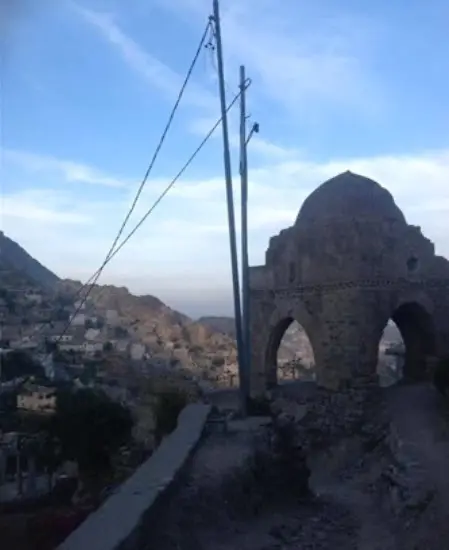
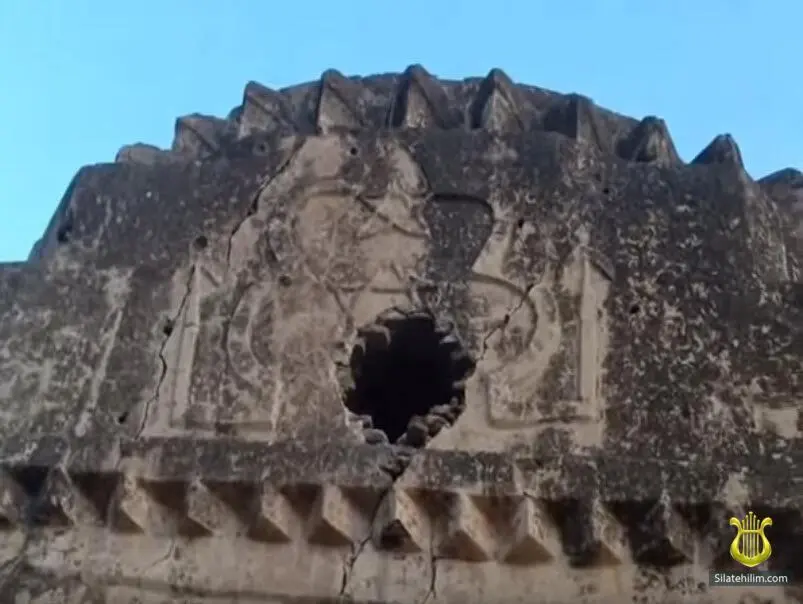 In the photo below, you can make out a "Magen David."
One of his piyyutim gave rise to a song famous in Israel today: "Im Nin'alu Daltei Nedivim" - אם ננעלו דלתי נדיבים.
There is a street in Jerusalem named in honor of Rabbi Shalom Shabazi.
May the merit of this tzadik protect Am Yisrael!
(https://dailyzohar.com/tzadikim/257-Rabbi-Shalom-ben-Yosef-Shabazi)
In the photo below, you can make out a "Magen David."
One of his piyyutim gave rise to a song famous in Israel today: "Im Nin'alu Daltei Nedivim" - אם ננעלו דלתי נדיבים.
There is a street in Jerusalem named in honor of Rabbi Shalom Shabazi.
May the merit of this tzadik protect Am Yisrael!
(https://dailyzohar.com/tzadikim/257-Rabbi-Shalom-ben-Yosef-Shabazi)
Source: https://silatehilim.com/en/events/10-швата-йорцайт-рабби-шалом-шабази/
Material from our site may be copied for the purpose of spreading Torah, provided a link to Silatehilim.com is included. Any use of the site's material in print publications or for commercial purposes is prohibited without the rights holder's consent.