

10 Shevat · Yahrzeit
Maharam of Padua
Rabbi Meir ben Yitzchak Katzenellenbogen - Maharam of Padua (1482-1565)
Yahrzeit - 10 Shevat Resting place - Padua, Italy Rabbi Meir, who was usually called after his hometown, was the founder of the Katzenellenbogen family. After studying in Prague under the renowned Rav Yaakov Pollack, he traveled to Padua and entered the yeshiva of Rabbi Yehuda Minz, whose granddaughter, Chana, he later married. He succeeded his father-in-law, Rabbi Avraham Minz, as chief rabbi of Padua, and held this position until his death on January 12, 1565. He was the father of Shmuel Yehuda Katzenellenbogen. Rabbi Meir of Padua also served as nominal rabbi of Venice, where he traveled several times a year, but his permanent residence remained in Padua. His contemporaries regarded Meir as a great authority in Talmudic and rabbinic matters, and many rabbis consulted with him, including Moshe Alashkar, Ovadia Sforno, and his relative Rabbi Moshe Isserles - the Rema, who addressed him as "the rabbi of Venice." From his responsa (ninety of them, published by himself together with the responsa of Yehuda Minz under the title "Sheelot u-Teshuvot," Venice, 1553), as well as from the responsa of Isserles, it is evident that he was inclined to be lenient in his rulings. Further evidence of his leaning toward leniency was his use, in his responsa (Nos. 38, 49, 72), of the civil names of the months - something other rabbis of his time did not do. Yosef ben Mordechai Gershon relates (Sheerit Yosef, No. 1) that Rabbi Meir, in one of his responsa, advised him not to rely on his own opinion at that time, because he was unable to verify his ruling against the Talmud - due to the mass burning of Talmuds. This burning is mentioned by David Gans (Tzemach David, p. 56, Warsaw, 1890) and by Heilprin (Seder ha-Dorot, i.245, ed. Maskileison) as having taken place in 1553 or 1554 under Pope Julius III, incited by certain baptized Jews. Rabbi Meir added to the edition of his father-in-law's responsa the "Seder Gittin ve-Chalitza" and a detailed index. He also edited Maimonides' "Yad" with certain commentaries, to which he added his own notes (Venice, 1550; see Isserles). Cecil Roth ("History of the Jews in Venice," p. 256) relates that in 1549 Katzenellenbogen became embroiled in a dispute over the publication of a printed edition of Maimonides' Mishneh Torah. Since Jews at that time were not permitted to own printing presses, the presses belonged to Venetian nobles and were operated by Jews under the patronage of the non-Jewish owner. Rabbi Katzenellenbogen edited the printed edition of the Mishneh Torah to be published by the Bragadini press. This work was soon undercut by the rival Giustiniani press. The Giustiniani faction denounced the competing publishers to the non-Jewish censors, which led to the mass burning of volumes of the Talmud and other Jewish works throughout the Venetian Republic. Three centuries after the passing of the Maharam of Padua, the 10th of Shevat became widely recognized as an important date in Judaism. It is also the anniversary of the passing of the great Rashash - Rabbi Shalom Sharabi (1777), considered the father of all modern Sephardic kabbalists.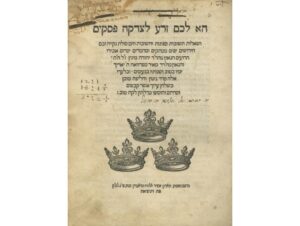 May the merit of the tzadik the Maharam of Padua protect Am Yisrael!
(https://dailyzohar.com/tzadikim/940-Rabbi-Meir-ben-Isaac-Katzenellenbogen)
May the merit of the tzadik the Maharam of Padua protect Am Yisrael!
(https://dailyzohar.com/tzadikim/940-Rabbi-Meir-ben-Isaac-Katzenellenbogen)