86 Pesukim of Parashat Naso
The Sefer “Chemdat Yamim” describes the importance of reading Parashat Naso during the 13 days from Rosh Chodesh Nissan until Pesach.
In addition, there is a powerful segula to read the 86 pesukim from Parashat Naso about the offerings of the tribes, in order to elevate a person’s mazal.
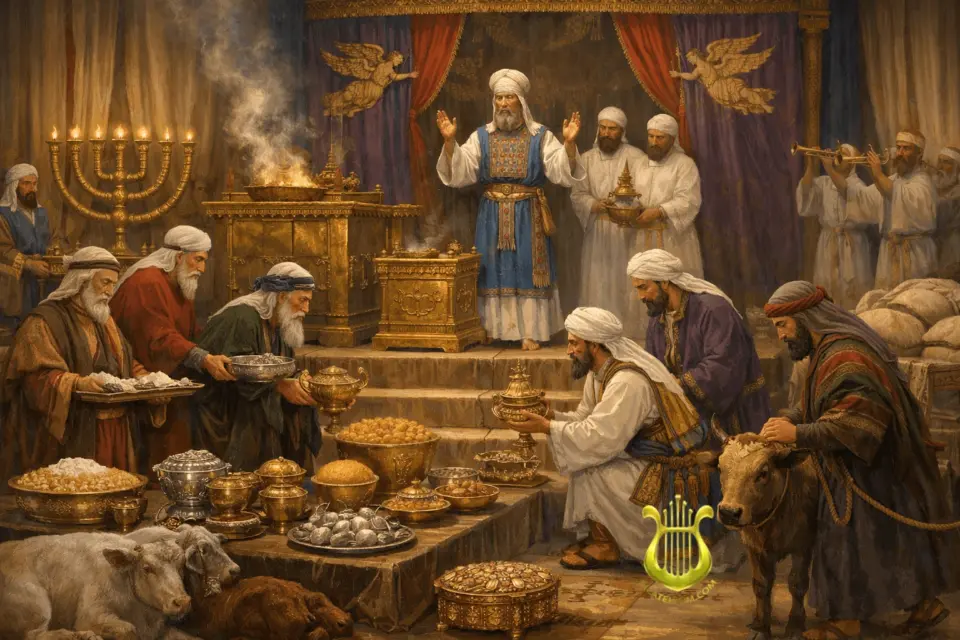
Parashat Naso lists the order of the offerings brought by each tribe.
Since in our time prayer takes the place of sacrifices, when we recite the offering of each tribe, we mentally ask the Almighty to regard our reading of the order of that tribe’s offering as though we had brought the actual sacrifice.
We also ask the Almighty to grant us an understanding of all the hidden meanings contained in these passages of Parashat Naso.
Moreover, today we do not know with certainty which tribe each of us belongs to. Yet, by reading the passage of each tribe from Parashat Naso, we connect, as it were, to that tribe’s channel and ask Hashem that reading the passage about that tribe awaken its mazal for us, since each tribe had its own mazal and its own merit.
By reading the offering of a particular tribe, a person receives shefa from that shevet’s (tribe’s) offerings—from the gifts brought by the heads of those tribes, the nesi’im. It is known, for example, that Issachar had a special merit in Torah study, Zevulun in earning a livelihood and parnassah, Dan had special abilities in warfare, Judah in leading and governing the nation, Gad had the mazal of success in all endeavors, Asher had the mazal of abundance and rich sustenance, and so on.
The description of the tribes’ offerings consists of exactly 83 verses, followed by 3 concluding verses.
The mekubalim teach that reading the 86 pesukim of the seventh chapter of Parashat Naso (from the first through the 86th verse) can reveal a person’s destiny and mazal, so that good fortune arrives at the proper time, without delay.
We know that 86 is the gematria of one of the Almighty’s Names, symbolizing strict judgment—Elokim.
At the same time, 86 is also the gematria of the word “Halleluyah” (praise the Almighty), hinting that through praising Hashem, even the harshest judgments can be nullified.
Reading the chapter about the offerings of the tribes is a channel for renewing a person’s mazal and revealing each individual Jew’s personal “Yam Suf.”
1-86
1. Vayehi beyom kalot Moshe lehaqim et ha-Mishkan vayimshach oto vayekadesh oto ve-et kol kelav vayimshachem vayekadesh otam. 2. Vayakrivu nesi’ei Yisrael rashei beit avotam hem nesi’ei ha-matot hem ha-omdim al ha-pequdim. 3. Vayavi’u et qorbanaṃ lifnei Adonai shesh eglot tzav usheney asar baqar agalah al shenei ha-nesi’im vesho r le-echad vayakrivu otam lifnei ha-Mishkan. 4. Vayomer Adonai el Moshe lemor: 5. Qach me-ittam vehayu la’avod et avodat Ohel Mo’ed venatata otam el ha-Leviyyim ish kef i avodato. 6. Vayiqach Moshe et ha-agalot ve-et ha-baqar vayitten otam el ha-Leviyyim. 7. Et shtei ha-agalot ve-et arba’at ha-baqar natan livnei Gershon kef i avodatam. 8. Ve-et arba ha-agalot ve-et shemonat ha-baqar natan livnei Merari kef i avodatam beyad Itamar ben Aharon ha-Kohen. 9. Velivnei Kehat lo natan ki avodat ha-qodesh aleihem bakatef yisa’u. 10. Vayakrivu ha-nesi’im et chanukat ha-mizbe’ach beyom himashach oto vayakrivu ha-nesi’im et qorbanaṃ lifnei ha-mizbe’ach. 11. Vayomer Adonai el Moshe: nasi echad layom, nasi echad layom, yaqrivu et qorbanaṃ le-chanukat ha-mizbe’ach.(And it came to pass when Moses finished setting up the Tabernacle, that he anointed it and sanctified it, together with all its furnishings, and the altar and all its vessels; he anointed them and sanctified them. The leaders of Israel, the heads of their fathers’ houses, who were the leaders of the tribes and stood over those who were counted, came forward. They brought their offering before the L-rd: six covered wagons and twelve oxen—one wagon from every two leaders and one ox from each—and presented them before the Tabernacle. And the L-rd said to Moses: Take these from them, and let them be used for the service of the Tent of Meeting; give them to the Levites, each according to his service. Moses took the wagons and the oxen and gave them to the Levites. He gave two wagons and four oxen to the sons of Gershon, according to their service. He gave four wagons and eight oxen to the sons of Merari, according to their service, under the supervision of Itamar, son of Aaron the priest. But to the sons of Kehat he did not give any, because the sacred service was theirs; they were to carry it on their shoulders. The leaders brought offerings for the dedication of the altar on the day it was anointed, and the leaders presented their offerings before the altar. And the L-rd said to Moses: Let one leader bring his offering each day for the dedication of the altar.)
12. Vayehi ha-maqriv bayom ha-rishon et qor bano Nachshon ben Aminadav le-mateh Yehudah. 13. Veqorbano: ka‘arat kesef achat sheloshim u-me’ah mishqalah, mizraq echad kesef shiv‘im sheqel besheqel ha-qodesh, sheneihem mele’im solet belulah vashemen le-minchah. 14. Kaf achat asarah zahav mele’ah qetoret. 15. Par echad ben baqar, ayil echad, keves echad ben shenato le-olah. 16. Se‘ir izzim echad le-chatat. 17. Ule-zevach ha-shelamim: baqar shenayim, eilim chamishah, atudim chamishah, kevasim benei shanah chamishah. Zeh qorban Nachshon ben Aminadav. (On the first day, Nachshon son of Aminadav, of the tribe of Judah, brought his offering. His offering was: one silver dish weighing one hundred and thirty (shekels), one silver basin weighing seventy shekels, according to the sacred shekel; both were filled with fine flour mixed with oil for a meal offering; one gold ladle weighing ten (shekels), filled with incense; one young bull, one ram, and one yearling lamb for a burnt offering; one goat for a sin offering; and for a peace offering: two cattle, five rams, five goats, and five yearling lambs. This was the offering of Nachshon son of Aminadav.) 18. Bayom ha-sheni hiqriv Netanel ben Tzuar, nasi Yissachar. 19. Hiqriv et qorbano: ka‘arat kesef achat sheloshim u-me’ah mishqalah, mizraq echad kesef shiv‘im sheqel besheqel ha-qodesh, sheneihem mele’im solet belulah vashemen le-minchah. 20. Kaf achat asarah zahav mele’ah qetoret. 21. Par echad ben baqar, ayil echad, keves echad ben shenato le-olah. 22. Se‘ir izzim echad le-chatat. 23. Ule-zevach ha-shelamim: baqar shenayim, eilim chamishah, atudim chamishah, kevasim benei shanah chamishah. Zeh qorban Netanel ben Tzuar. (On the second day, Netanel son of Tzuar, leader of the tribe of Issachar, brought his offering. He brought his offering: one silver dish weighing one hundred and thirty (shekels), one silver basin weighing seventy shekels, according to the sacred shekel; both were filled with fine flour mixed with oil for a meal offering; one gold ladle weighing ten (shekels), filled with incense; one young bull, one ram, and one yearling lamb for a burnt offering; one goat for a sin offering; and for a peace offering: two cattle, five rams, five goats, and five yearling lambs. This was the offering of Netanel son of Tzuar.) 24. Bayom ha-shelishi nasi livnei Zevulun Eliav ben Chelon. 25. Qorbano: ka‘arat kesef achat sheloshim u-me’ah mishqalah, mizraq echad kesef shiv‘im sheqel besheqel ha-qodesh, sheneihem mele’im solet belulah vashemen le-minchah. 26. Kaf achat asarah zahav mele’ah qetoret. 27. Par echad ben baqar, ayil echad, keves echad ben shenato le-olah. 28. Se‘ir izzim echad le-chatat. 29. Ule-zevach ha-shelamim: baqar shenayim, eilim chamishah, atudim chamishah, kevasim benei shanah chamishah. Zeh qorban Eliav ben Chelon. (On the third day, the leader of the sons of Zebulun, Eliav son of Chelon, brought his offering. His offering was: one silver dish weighing one hundred and thirty (shekels), one silver basin weighing seventy shekels, according to the sacred shekel; both were filled with fine flour mixed with oil for a meal offering; one gold ladle weighing ten (shekels), filled with incense; one young bull, one ram, and one yearling lamb for a burnt offering; one goat for a sin offering; and for a peace offering: two cattle, five rams, five goats, and five yearling lambs. This was the offering of Eliav son of Chelon.) 30. Bayom ha-revi‘i nasi livnei Reuven Elitzur ben Shedeur. 31. Qorbano: ka‘arat kesef achat sheloshim u-me’ah mishqalah, mizraq echad kesef shiv‘im sheqel besheqel ha-qodesh, sheneihem mele’im solet belulah vashemen le-minchah. 32. Kaf achat asarah zahav mele’ah qetoret. 33. Par echad ben baqar, ayil echad, keves echad ben shenato le-olah. 34. Se‘ir izzim echad le-chatat. 35. Ule-zevach ha-shelamim: baqar shenayim, eilim chamishah, atudim chamishah, kevasim benei shanah chamishah. Zeh qorban Elitzur ben Shedeur. (On the fourth day, the leader of the sons of Reuben, Elitzur son of Shedeur, brought his offering. His offering was: one silver dish weighing one hundred and thirty (shekels), one silver basin weighing seventy shekels, according to the sacred shekel; both were filled with fine flour mixed with oil for a meal offering; one gold ladle weighing ten (shekels), filled with incense; one young bull, one ram, and one yearling lamb for a burnt offering; one goat for a sin offering; and for a peace offering: two cattle, five rams, five goats, and five yearling lambs. This was the offering of Elitzur son of Shedeur.) 36. Bayom ha-chamishi nasi livnei Shimon Shelumiel ben Tzurishaddai. 37. Qorbano: ka‘arat kesef achat sheloshim u-me’ah mishqalah, mizraq echad kesef shiv‘im sheqel besheqel ha-qodesh, sheneihem mele’im solet belulah vashemen le-minchah. 38. Kaf achat asarah zahav mele’ah qetoret. 39. Par echad ben baqar, ayil echad, keves echad ben shenato le-olah. 40. Se‘ir izzim echad le-chatat. 41. Ule-zevach ha-shelamim: baqar shenayim, eilim chamishah, atudim chamishah, kevasim benei shanah chamishah. Zeh qorban Shelumiel ben Tzurishaddai. (On the fifth day, the leader of the sons of Simeon, Shelumiel son of Tzurishaddai, brought his offering: one silver dish weighing one hundred and thirty (shekels), one silver basin weighing seventy shekels, according to the sacred shekel; both were filled with fine flour mixed with oil for a meal offering; one gold ladle weighing ten (shekels), filled with incense; one young bull, one ram, and one yearling lamb for a burnt offering; one goat for a sin offering; and for a peace offering: two cattle, five rams, five goats, and five yearling lambs. This was the offering of Shelumiel son of Tzurishaddai.) 42. Bayom ha-shishi nasi livnei Gad Elyasaf ben Deuel. 43. Qorbano: ka‘arat kesef achat sheloshim u-me’ah mishqalah, mizraq echad kesef shiv‘im sheqel besheqel ha-qodesh, sheneihem mele’im solet belulah vashemen le-minchah. 44. Kaf achat asarah zahav mele’ah qetoret. 45. Par echad ben baqar, ayil echad, keves echad ben shenato le-olah. 46. Se‘ir izzim echad le-chatat. 47. Ule-zevach ha-shelamim: baqar shenayim, eilim chamishah, atudim chamishah, kevasim benei shanah chamishah. Zeh qorban Elyasaf ben Deuel. (On the sixth day, the leader of the sons of Gad, Elyasaf son of Deuel, brought his offering: one silver dish weighing one hundred and thirty (shekels), one silver basin weighing seventy shekels, according to the sacred shekel; both were filled with fine flour mixed with oil for a meal offering; one gold ladle weighing ten (shekels), filled with incense; one young bull, one ram, and one yearling lamb for a burnt offering; one goat for a sin offering; and for a peace offering: two cattle, five rams, five goats, and five yearling lambs. This was the offering of Elyasaf son of Deuel.) 48. Bayom ha-shevi‘i nasi livnei Ephraim Elishama ben Amihud. 49. Qorbano: ka‘arat kesef achat sheloshim u-me’ah mishqalah, mizraq echad kesef shiv‘im sheqel besheqel ha-qodesh, sheneihem mele’im solet belulah vashemen le-minchah. 50. Kaf achat asarah zahav mele’ah qetoret. 51. Par echad ben baqar, ayil echad, keves echad ben shenato le-olah. 52. Se‘ir izzim echad le-chatat. 53. Ule-zevach ha-shelamim: baqar shenayim, eilim chamishah, atudim chamishah, kevasim benei shanah chamishah. Zeh qorban Elishama ben Amihud. (On the seventh day, the leader of the sons of Ephraim, Elishama son of Amihud, brought his offering: one silver dish weighing one hundred and thirty (shekels), one silver basin weighing seventy shekels, according to the sacred shekel; both were filled with fine flour mixed with oil for a meal offering; one gold ladle weighing ten (shekels), filled with incense; one young bull, one ram, and one yearling lamb for a burnt offering; one goat for a sin offering; and for a peace offering: two cattle, five rams, five goats, and five yearling lambs. This was the offering of Elishama son of Amihud.) 54. Bayom ha-shemini nasi livnei Menashe Gamliel ben Pedatzur. 53. Qorbano: ka‘arat kesef achat sheloshim u-me’ah mishqalah, mizraq echad kesef shiv‘im sheqel besheqel ha-qodesh, sheneihem mele’im solet belulah vashemen le-minchah. 54. Kaf achat asarah zahav mele’ah qetoret. 55. Par echad ben baqar, ayil echad, keves echad ben shenato le-olah. 56. Se‘ir izzim echad le-chatat. 57. Ule-zevach ha-shelamim: baqar shenayim, eilim chamishah, atudim chamishah, kevasim benei shanah chamishah. Zeh qorban Gamliel ben Pedatzur. (On the eighth day, the leader of the sons of Manasseh, Gamliel son of Pedatzur, brought his offering: one silver dish weighing one hundred and thirty (shekels), one silver basin weighing seventy shekels, according to the sacred shekel; both were filled with fine flour mixed with oil for a meal offering; one gold ladle weighing ten (shekels), filled with incense; one young bull, one ram, and one yearling lamb for a burnt offering; one goat for a sin offering; and for a peace offering: two cattle, five rams, five goats, and five yearling lambs. This was the offering of Gamliel son of Pedatzur.) 60. Bayom ha-teshi‘i nasi livnei Binyamin Avidan ben Gidoni. 61. Qorbano: ka‘arat kesef achat sheloshim u-me’ah mishqalah, mizraq echad kesef shiv‘im sheqel besheqel ha-qodesh, sheneihem mele’im solet belulah vashemen le-minchah. 62. Kaf achat asarah zahav mele’ah qetoret. 63. Par echad ben baqar, ayil echad, keves echad ben shenato le-olah. 64. Se‘ir izzim echad le-chatat. 65. Ule-zevach ha-shelamim: baqar shenayim, eilim chamishah, atudim chamishah, kevasim benei shanah chamishah. Zeh qorban Avidan ben Gidoni. (On the ninth day, the leader of the sons of Benjamin, Avidan son of Gideoni, brought his offering: one silver dish weighing one hundred and thirty (shekels), one silver basin weighing seventy shekels, according to the sacred shekel; both were filled with fine flour mixed with oil for a meal offering; one gold ladle weighing ten (shekels), filled with incense; one young bull, one ram, and one yearling lamb for a burnt offering; one goat for a sin offering; and for a peace offering: two cattle, five rams, five goats, and five yearling lambs. This was the offering of Avidan son of Gideoni.) 66. Bayom ha-asiri nasi livnei Dan Achiezer ben Amishaddai. 67. Qorbano: ka‘arat kesef achat sheloshim u-me’ah mishqalah, mizraq echad kesef shiv‘im sheqel besheqel ha-qodesh, sheneihem mele’im solet belulah vashemen le-minchah. 68. Kaf achat asarah zahav mele’ah qetoret. 69. Par echad ben baqar, ayil echad, keves echad ben shenato le-olah. 70. Se‘ir izzim echad le-chatat. 71. Ule-zevach ha-shelamim: baqar shenayim, eilim chamishah, atudim chamishah, kevasim benei shanah chamishah. Zeh qorban Achiezer ben Amishaddai. (On the tenth day, the leader of the sons of Dan, Achiezer son of Amishaddai, brought his offering: one silver dish weighing one hundred and thirty (shekels), one silver basin weighing seventy shekels, according to the sacred shekel; both were filled with fine flour mixed with oil for a meal offering; one gold ladle weighing ten (shekels), filled with incense; one young bull, one ram, and one yearling lamb for a burnt offering; one goat for a sin offering; and for a peace offering: two cattle, five rams, five goats, and five yearling lambs. This was the offering of Achiezer son of Amishaddai.) 72. Bayom ashtei-asar yom nasi livnei Asher Pagiel ben Ochran. 73. Qorbano: ka‘arat kesef achat sheloshim u-me’ah mishqalah, mizraq echad kesef shiv‘im sheqel besheqel ha-qodesh, sheneihem mele’im solet belulah vashemen le-minchah. 74. Kaf achat asarah zahav mele’ah qetoret. 75. Par echad ben baqar, ayil echad, keves echad ben shenato le-olah. 76. Se‘ir izzim echad le-chatat. 77. Ule-zevach ha-shelamim: baqar shenayim, eilim chamishah, atudim chamishah, kevasim benei shanah chamishah. Zeh qorban Pagiel ben Ochran. (On the eleventh day, the leader of the sons of Asher, Pagiel son of Ochran, brought his offering: one silver dish weighing one hundred and thirty (shekels), one silver basin weighing seventy shekels, according to the sacred shekel; both were filled with fine flour mixed with oil for a meal offering; one gold ladle weighing ten (shekels), filled with incense; one young bull, one ram, and one yearling lamb for a burnt offering; one goat for a sin offering; and for a peace offering: two cattle, five rams, five goats, and five yearling lambs. This was the offering of Pagiel son of Ochran.) 78. Bayom shneim-asar yom nasi livnei Naftali Achira ben Enan. 79. Qorbano: ka‘arat kesef achat sheloshim u-me’ah mishqalah, mizraq echad kesef shiv‘im sheqel besheqel ha-qodesh, sheneihem mele’im solet belulah vashemen le-minchah. 80. Kaf achat asarah zahav mele’ah qetoret. 81. Par echad ben baqar, ayil echad, keves echad ben shenato le-olah. 82. Se‘ir izzim echad le-chatat. 83. Ule-zevach ha-shelamim: baqar shenayim, eilim chamishah, atudim chamishah, kevasim benei shanah chamishah. Zeh qorban Achira ben Enan. (On the twelfth day, the leader of the sons of Naphtali, Achira son of Enan, brought his offering: one silver dish weighing one hundred and thirty (shekels), one silver basin weighing seventy shekels, according to the sacred shekel; both were filled with fine flour mixed with oil for a meal offering; one gold ladle weighing ten (shekels), filled with incense; one young bull, one ram, and one yearling lamb for a burnt offering; one goat for a sin offering; and for a peace offering: two cattle, five rams, five goats, and five yearling lambs. This was the offering of Achira son of Enan.) 84. Zot chanukat ha-mizbe’ach beyom himashach oto me’et nesi’ei Yisrael: ka’arot kesef shteim-esreh, mizreqei kesef shneim-asar, kapot zahav shteim-esreh. 85. Sheloshim u-me’ah ha-ke’arah ha-achat kesef, ve-shiv‘im ha-mizraq ha-echad; kol ha-kelim alpayim ve-arba-me’ot be-sheqel ha-qodesh. 86. Kapot zahav shteim-esreh mele’ot qetoret; asarah asarah ha-kaf be-sheqel ha-qodesh; kol zehav ha-kapot esrim u-me’ah. (These were the gifts for the dedication of the altar on the day it was anointed, from the leaders of Israel: twelve silver dishes, twelve silver basins, and twelve gold ladles. Each silver dish weighed one hundred and thirty shekels, and each basin seventy shekels; the total silver in these vessels was two thousand four hundred shekels, according to the sacred shekel. There were twelve gold ladles filled with incense, each ladle weighing ten sacred shekels; the total gold of the ladles was one hundred and twenty shekels.)