The 23rd of Sivan - A Special Segula Against Heavenly Judgments
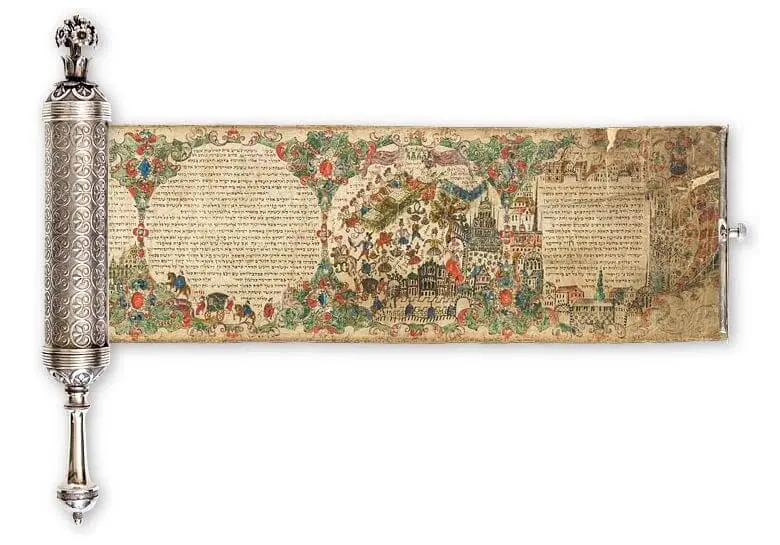
The 23rd of Sivan is a special day - on this day the Megillat Esther was written.
It is said in the Megillat Esther: "The king's scribes were summoned at that time - in the third month, that is the month of Sivan, on its twenty-third day - and it was written exactly as Mordechai commanded concerning the Jews."
And Mordechai wrote in the name of King Achashverosh that the King had given permission to all the Jews in every city to rise up and defend their lives: "And the city of Shushan rejoiced and was glad... The Jews had light and gladness... and many of the peoples of the land became Jews, for the fear of the Jews had fallen upon them."
It was on this very day - the 23rd of Sivan - that the decree against the Jewish people was annulled.
On this very day, it is written in the Megillat Esther:
"Itbatla ha-gezeira shel Haman: le'ashmid, le'harog, u'le'abed et kol ha-Yehudim" - the decree of Haman to destroy, kill, and wipe from the face of the earth the enemies of Israel was annulled (in Jewish tradition, one may not speak of the destruction of the Jews themselves). All the king's scribes were summoned to write a new decree about this day.
On this day it is a powerful segula to pray for protection from all Heavenly judgments (dinim ve-gezeirot), from all decrees and harsh verdicts, by lit candles le'chvod (in honor of) Mordechai ha-Yehudi ha-Tzadik and Esther ha-Malka bat Avichayil.
One may pray until the onset of the 24th of Sivan. These 24 hours are a time of unprecedented yeshuot (salvations) and the annulment of judgments.
According to all the kabbalists, this is the most powerful day of the year for annulling all dinim and gezeirot.
The mekubalim turned this day into a festive occasion - they hold a festive meal and do not recite Tachanun or Vidui.
The Lubavitcher Rebbe said that on this day, every Jew can bring salvation upon himself.
Just as a tzadik decrees and Heaven carries it out, so too every Jew (who on this day is like a tzadik) - whatever he wishes, Heaven carries out.
Why Psalm 22
The verse that Queen Esther recited at the most difficult moment for the Jewish people:
"Eli, Eli, lama azavtani, rachok mishuati divrei sha'agati" -
(My G-d! My G-d! Why have You forsaken me?). (Tehillim 22:2)
"Midrash Peliah" (The Wondrous Midrash) - a collection of midrashim that defy rational explanation and interpretation.
These midrashim are composed as riddles, ciphers, charades, and puzzles.
In one passage of the "Midrash Peliah" it is said that Queen Esther asked the Heavenly court a question:
"Why were the enemies of Israel sentenced to destruction?" (She meant Israel itself, but in Jewish tradition even the thought that the Chosen People could be destroyed is considered blasphemous.)
The answer that followed was: "Because Israel had become 'mach' ("mem" - "kaf" - "diminished") and 'rash' ("reish" - "shin" - "poor," "destitute")".
And Esther immediately began to recite the words of the psalm: "Eli, Eli, lama azavtani" - (My G-d! My G-d! Why have You forsaken me?). (Tehillim 22:2)
Rabbi Shimshon of Ostropol (zechuto yagen aleinu - may his merit protect us) gave the following explanation of this passage from the Midrash.
It is known that the names of angels are theophoric - meaning each one contains letters that spell out one of the Names of G-d. These letters give the angel the life-force by which it exists. And if the Divine energy within it runs dry, it cannot carry out the spiritual function appropriate to its place in the hierarchy of angels.
According to the Sefer Zohar, one of the highest angels - the angel Michael - the great protector of Israel - is always ready to speak a good word for us before the Heavenly court. His name in its full spelling consists of the letters מ "mem," י "yud," כ "kaf," א "alef," ל "lamed."
The letters א "alef," ל "lamed," י "yud" form the word "Eli" ("My G-d"). "El" is one of the 7 holy Names of the Creator, which, according to Kabbalah, indicates His kindness.
It happens that people's sinful deeds cause the angel Michael to lose the energy imparted by the letters "alef," "lamed," "yud"; only the letters מ "mem" and כ "kaf" remain of his name. Then he becomes "mach" (diminished).
In the name "Yisrael", by which the whole Jewish people is called, there are also the letters א "alef," ל "lamed," י "yud."
But when the Jews behave unworthily, the Divine light contained within them fades, and of the name "Yisrael" only the letters ש "shin" and ר "reish" remain, forming the word "rash" (poor).
And this is the meaning of the answer Esther received from Heaven. That is why, upon hearing this, she immediately began the prayer (in which the word "Eli" is mentioned twice): "Eli, Eli! Why have You forsaken me?" - in order to restore the light contained in the letters א "alef," ל "lamed," י "yud," to the angel Michael and to Israel.
Prayer for the 23rd of Sivan:
1. Light 2 candles le'chvod (in honor of) Mordechai ha-Yehudi ha-Tzadik and Esther ha-Malka bat Avichayil;
2. Recite Tehillim 22 - 7 times with kavanot.
Psalm 22 - recited 7 times - to open the 7 Gates of Shamayim (Heaven).
It is best to recite it at the moment of "Ayelet HaShachar" (the goal is to catch the moment before dawn when darkness turns into the color "techelet" - the blue found on tallitot).
While reciting Psalm 22, one should have kavana on the twice-repeated Name of Hashem - "Eli, Eli" (giving strength to the words YisraEl and MichaEl);
We ask Hashem, be'zchut tzadikim (in the merit of the tzadikim) Mordechai and Esther, to remove from our people and from every Jew all gezeirot and dinim.
In the text of Tehillim 22 the places for kavana are marked:
2) "Eli, Eli" (IsraEl, MichaEl);
21) "hAtzila mecherev nafshi" (the roshei teivot form the name Haman);
25) "Ki lo vazah velo shikatz enut ani velo histir panav" - (the name Esther);
Tehillim 22
"Lamnatzeach al ayelet ha-shachar mizmor le-David.
Eli, Eli, lama azavtani, rachok mishuati, divrei sha'agati.
Elohai, ekra yomam ve'lo ta'aneh, ve'laila ve'lo dumiyah li.
Ve'atah kadosh, yoshev tehilot Yisrael.
Becha batchu avoteinu, batchu vate'faltemo.
Eleicha za'aku venimlatu, becha vatchu ve'lo voshu.
Ve'anochi to'la'at ve'lo ish, cherpat adam u'vezuy am.
Kol ro'ai yal'igu li, yaftiru vesafa yaniu rosh.
Gol el Ado-nai yefalte'hu, yatzile'hu ki chafetz bo.
Ki atah gochi mibaten, mavtichi al shedei imi.
Aleicha hoshlachti merachem, mibeten imi Eli atah.
Al tirchak mimeni, ki tzara kerovah, ki ein ozer.
Sevavuni parim rabim, abirei Vashan kitruni.
Patzu alai pihem, aryeh toref vesho'eg.
Kamayim nishpachti ve'hitparedu kol atzmotai, hayah libi kadonag, names betoch me'ai.
Yavesh kacheres kochi, u'leshoni mudbak malkochai, ve'la'afar mavet tishpeteni.
Ki sevavuni klavim, adat mere'im hikifuni, ka'ari yadai veraglai.
Asaper kol atzmotai, hemah yabitu yir'u vi.
Yechalku vegadai lahem, ve'al levushi yapilu goral.
Ve'atah Ado-nai al tirchak, eyaluti le'ezrati chushah.
hAtzila mecherev nafshi, miyad kelev yechidati.
Hoshi'eni mipi aryeh, u'mikarnei re'emim anitani.
Asapra shimcha le'echai, betoch kahal ahalelekah.
Yir'ei Ado-nai halelu'hu, kol zera Ya'akov kabeduhu, veguru mimenu kol zera Yisrael.
Ki lo vazah ve'lo shikatz enut ani, ve'lo histir panav mimenu, u've'shav'o elav shamea.
Me'itcha tehilati bekahal rav, nedarai ashalem neged yere'av.
Yochlu anavim veyisba'u, yehalelu Ado-nai doreshav, yechi levavchem la'ad.
Yizkeru veyashuvu el Ado-nai kol afsei aretz, ve'yishtachavu lefaneicha kol mishpechot goyim.
Ki l'Ado-nai ha-melucha, u'moshel bagoyim.
Achlu vayishtachavu kol dishnei eretz, lefanav yichre'u kol yordei afar, venafsho lo chiyah.
Zera ya'avdenu, yesupar l'Ado-nai lador.
Yavo'u veyagidu tzidkato, le'am nolad ki asah.
3. Tehillim 30 - The Prayer of Mordechai and Esther
Mordechai (as he mounted the horse) recited (Tehillim 30:2-4):
- "Aromimcha Ado-nai ki dilitani, ve'lo simachta oyvai li.
Ado-nai Elohai, shivati eleicha vatirpa'eni.
Ado-nai he'elita min she'ol nafshi, chiyitani miyorde vor" -
(I will extol You, O L-rd, for You have lifted me up and have not let my enemies rejoice over me. O L-rd my G-d, I cried out to You, and You healed me. O L-rd, You brought up my soul from the grave; You kept me alive, that I should not go down to the pit).
The children (Mordechai's 22,000 students) recited (Tehillim 30:5-6):
- "Zamru l'Ado-nai chasidav, ve'hodu le'zecher kodsho. Ki rega be'apo, chayim birtzono, ba'erev yalin bechi, ve'laboker rinah" -
(Sing to the L-rd, you His devout ones, and give thanks to His holy Name; for His anger endures but a moment, His favor is for a lifetime - weeping may linger for the night, but joy comes in the morning).
Haman ha-rasha (the wicked) recited (Tehillim 30:7-8):
- "Va'ani amarti veshalvi, bal emot le'olam. Ado-nai birtzoncha he'emadta le'harri oz, histarta fanecha hayiti nivhal" -
(And I said in my complacency: I shall never be shaken. O L-rd, by Your favor You made my mountain stand strong; You hid Your face, and I was terrified).
Esther recited (Tehillim 30:9-10):
- "Eleicha Ado-nai ekra, ve'el Ado-nai etchanan. Mah betza bedami beridti el shachat, ha'yodcha afar ha'yagid amitecha" -
(To You, O L-rd, I called, and to the L-rd I made supplication. What profit is there in my blood, if I go down to the pit? Will the dust praise You? Will it declare Your truth)?
The Community of Israel recited (Tehillim 30:11-12)
- "Shema Ado-nai vechaneni, Ado-nai heyeh ozer li. Hafachta mispedi lemachol li, pitachta saki, ute'azreni simcha" -
(Hear, O L-rd, and be gracious to me; [O L-rd, be my helper]. You turned my mourning into dancing; [You loosened my sackcloth and girded me with gladness).
The Divine Spirit (Ruach HaKodesh) proclaimed (Tehillim 30:13):
- "Lema'an yezamercha chavod ve'lo yidom, Ado-nai Elohai le'olam odecha" - (So that my glory may sing praise to You and not be silent - O L-rd my G-d, I will thank You forever)!
4. Read the "Megillat Esther", Chapter 8, verses 9-14
9. "Vayikaru sofrei ha-melech ba'et ha-hi ba-chodesh ha-shlishi hu chodesh Sivan, bi-shlosha ve'esrim bo, vayikatev ke'chol asher tzivah Mordechai el ha-Yehudim ve'el ha'achashdarpanim ve'ha'pachot ve'sarei ha-medinot asher me'Hodu ve'ad Kush sheva ve'esrim u'meah medinah, medinah u'medinah ki'ketavah ve'am va'am ki'leshono; ve'el ha-Yehudim ki'ketavam ve'chi'leshonam".
(And the king's scribes were summoned at that time, in the third month, that is, the month of Sivan, on its twenty-third day, and it was written exactly as Mordechai commanded, to the Jews, the satraps, the governors, and the princes of the provinces from India to Ethiopia - a hundred twenty-seven provinces - to every province in its own script and to every people in its own language, and to the Jews in their own script and language).
10. "Vayichtov beshem ha-melech Achashverosh, vayachtom be'taba'at ha-melech, vayishlach sefarim beyad ha-ratzim ba-susim rochvei ha-rechesh ha-achashteranim benei ha-ramachim".
(And he wrote in the name of King Achashverosh, and sealed it with the king's signet ring, and sent letters by mounted couriers riding the royal steeds bred from the royal stud).
11. "Asher natan ha-melech la'Yehudim asher bechol ir va'ir le'hikahel ve'la'amod al nafsham, le'hashmid ve'la'harog u'le'abed et kol cheil am u'medinah ha-tzarim otam, taf ve'nashim, u'shlalam lavoz".
(That the king had given the Jews of every city permission to gather and defend their lives: to destroy, kill, and annihilate any armed force of any people or province that might attack them - along with their children and wives - and to plunder their property).
12. "Beyom echad be'chol medinot ha-melech Achashverosh, bi'shlosha asar la'chodesh shneim asar hu chodesh Adar".
(On one day, in all the provinces of King Achashverosh, on the thirteenth day of the twelfth month, that is, the month of Adar).
13. "Patshegen ha-ktav le'hinaten dat be'chol medinah u'medinah, galui le'chol ha'amim; ve'liheyot ha-Yehudim atudim la-yom ha-zeh, le'hinakem me'oyveihem".
(A copy of this decree was to be issued as a law in every province, proclaimed to all the peoples, so that the Jews would be ready on that day to avenge themselves upon their enemies).
14. "Ha-ratzim rochvei ha-rechesh ha-achashteranim yatz'u mevohalim u'dechufim bidvar ha-melech; ve'ha-dat nitnah be-Shushan ha-birah".
(The couriers, riding on the royal steeds, went out in haste, urged on by the king's command; and the decree was given in Shushan the capital);
5. The Segula of the Great Mekubal, the Ramaz - Rabbi Moshe Zacuto - for Annulling Decrees:
From the Midrash "Esther Rabbah" we learn that after Mordechai heard of Haman's plan to destroy all the Jews, at the most difficult moment for the Jewish people, he decided to perform a "she'elat be'hakitz" - (a waking inquiry) after praying to Hashem, and approached three boys in the street who were returning from cheder, asking them what they had learned that day.
Upon hearing pesukim from Tanach, Mordechai rejoiced: he understood that G-d, through the mouths of Jewish children, was sending him a sign - that one need fear no one but G-d, and then salvation would come. There is a well-known golden rule in Judaism: the deeds of the fathers are a sign for their descendants. This act of Mordechai's became a Sephardic minhag, preserved to this day, transmitted through the generations from the great kabbalist Rabbi Moshe Zacuto - the teacher of the Ramchal.
These 3 pesukim, recited 3 times each (chazakah), have since been a segula for annulling the harshest and most severe decrees against the Jewish people:
אל תירא מפחד פתאום ומשואת רשעים כי תבוא
- "Al tira mi-pachad pit'om, u'mishoat resha'im ki tavo" - [3 times]
(Do not fear sudden terror, or the ruin of the wicked when it comes); (Mishlei 3:25)
עוצו עצה ותופר, דברו דבר ולא יקום כי עמנו א-ל
- "Utzu eitzah ve-tufar, dabru davar ve-lo yakum, ki imanu El" - [3 times]
(Devise a plan, and it will be foiled; speak a word, and it will not stand - for G-d is with us); (Yeshayahu 8:10)
ועד זקנה אני הוא, ועד שיבה אני אסבול, אני עשיתי ואני אשא, ואני אסבול ואמלט
- "Ve-ad ziknah ani hu, ve-ad seivah ani esbol, ani asiti va'ani esa, va'ani esbol va'amalet" - [3 times]
(Even to your old age I am He, and even to your gray hairs I will bear with you - I have made you, and I will carry you, and I will bear with you and I will save you). (Yeshayahu 46:4)
6. Tehillim 119 according to the letters of one's own name, and then the letters of the word "yeshua" (salvation) - ישועה
Yud - י
73. Yadecha asuni vayechonenuni, havineni ve'elmeda mitzvotecha.
74. Yer'eicha yir'uni veyismachu, ki lidvarcha yichalti.
75. Yadati Ado-nai ki tzedek mishpatecha, ve'emunah initani.
76. Yehi na chasdecha lenachameni, ke'imratcha le'avdecha.
77. Yevo'uni rachamecha ve'echyeh, ki toratcha sha'ashu'ai.
78. Yevoshu zedim ki sheker ivtuni, ani asiach befikudecha.
79. Yashuvu li yer'eicha, veyod'ei edotecha.
80. Yehi libi tamim bechukecha, lema'an lo evosh.
Shin - שׁ
161. Sarim redafuni chinam, u'midvarcha pachad libi.
162. Sas anochi al imratecha, ke'motzei shalal rav.
163. Sheker saneiti va'ata'eiva, toratcha ahavti.
164. Sheva bayom hilalticha, al mishpetei tzidkecha.
165. Shalom rav le'ohavei toratecha, ve'ein lamo michshol.
166. Sibarti lishuatcha Ado-nai, u'mitzvotecha asiti.
167. Shamra nafshi edotecha, va'ohavem me'od.
168. Shamarti fikudecha ve'edotecha, ki chol derachai negdecha.
Vav - ו
41. Vivo'uni chasadecha Ado-nai, teshuatcha ke'imratecha.
42. Ve'e'eneh chorfi davar, ki vatachti bidvarecha.
43. Ve'al tatzel mipi devar emet ad me'od, ki le'mishpatecha yichalti.
44. Ve'eshmera toratecha tamid le'olam va'ed.
45. Ve'ethalcha varchavah, ki fikudecha darashti.
46. Va'adabra ve'edotecha neged melachim, ve'lo evosh.
47. Ve'eshta'asha be'mitzvotecha asher ahavti.
48. Ve'esa chapai el mitzvotecha asher ahavti, ve'asicha vechukecha.
Ayin - ע
121. Asiti mishpat vatzedek, bal tanicheni le'oshkai.
122. Arov avdecha letov, al ya'ashkuni zedim.
123. Einai kalu lishuatecha, u'le'imrat tzidkecha.
124. Aseh im avdecha kechasdecha, vechukecha lamdeni.
125. Avdecha ani havineni, ve'eda'ah edotecha.
126. Et la'asot l'Ado-nai, heferu toratecha.
127. Al ken ahavti mitzvotecha, mizahav u'mipaz.
128. Al ken kol pikudei kol yisharti, kol orach sheker saneiti.
Hei - ה
33. Horeni Ado-nai derech chukecha, ve'etzrena ekev.
34. Havineni ve'etzra toratecha, ve'eshmerena vechol lev.
35. Hadricheni bintiv mitzvotecha, ki vo chafatzti.
36. Hat libi el edvotecha, ve'al el batza.
37. Ha'aver einai mer'ot shav, bidrachecha chayeni.
38. Hakem le'avdecha imratecha, asher le'yir'atecha.
39. Ha'aver cherpati asher yagorti, ki mishpatecha tovim.
40. Hineh ta'avti lefikudecha, betzidkatcha chayeni.
6. Personal Prayer
"Ribono Shel Olam, just as it is written in "the Megillat Esther" regarding the 23rd of Sivan: "Itbatla ha-gezeira shel Haman: le'ashmid, le'harog, u'le'abed et kol ha-Yehudim" - (and the decree of Haman was annulled) - so too, in Your great mercy, annul today all decrees and judgments against me and my loved ones!
(Compiled from a lesson by Rabbi Refael Avitan and Rabbi Yisrael Yakobov, based on Midrash Rabbah [Esther Rabbah] 10:5; and from an article by Nachum-Ze'ev Rapoport)
Please note: some articles on our site contain the holy Names of the Almighty. If you print these articles, they may not be thrown away or destroyed. Please handle printed copies with care and respect.