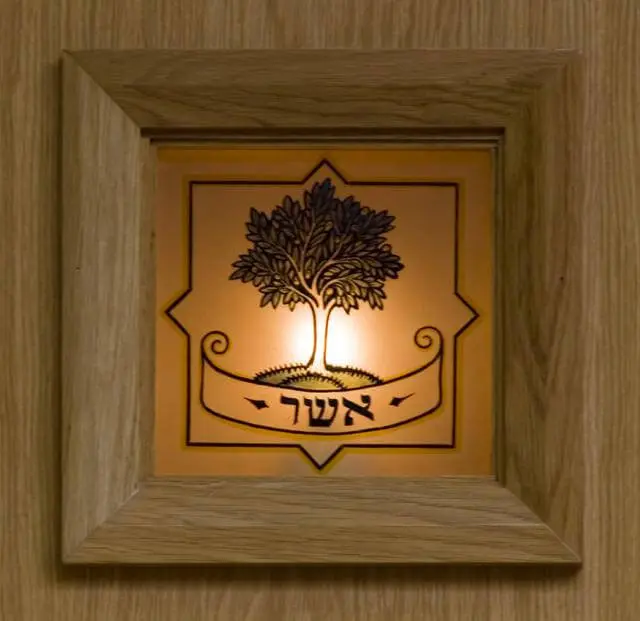
Asher son of Jacob Our Forefather and his Segula for Parnassah
The blessing Jacob gave to his eighth son is connected with sustenance and livelihood:
מֵאָשֵׁר שְׁמֵנָה לַחְמוֹ וְהוּא יִתֵּן מַעֲדַנֵּי מֶלֶךְ - "Me-Asher sh'menah lachmo v'hu yiten ma'adanei melech" -
(From Asher will come rich bread, and he will provide royal delicacies.)
(Bereishit 49:20)
The segula is to recite this bracha 10 times in the morning and 10 times in the evening.
The birth of Asher — Jacob's eighth son — was also associated with blessing and happiness.
«וַתֹּאמֶר לֵאָה - בְּאָשְׁרִי, כִּי אִשְּׁרוּנִי בָּנוֹת; וַתִּקְרָא אֶת-שְׁמוֹ, אָשֵׁר» -
«And Leah said: “I am happy, for the daughters will call me happy.” And she named him Asher.» (Bereishit 30:13)
The name Asher is derived from the word ashrei (“happy”). He was entrusted with the material provisions for the Temple. Olive oil for the Menorah lamps, sacrifices, and the anointing of the High Priest came from olives that grew in Asher's territory. The chilazon snail, from which the blue dye for tzitzit and the High Priest's garments was prepared, also came ashore within his territory. (Midrasha.net)
Of all Jacob's sons, Asher received a special and, at first glance, unusual blessing from his father: “From Asher will come rich bread, and he will provide royal delicacies.” (Bereishit 49:20)
“Rich,” in the original text, is sh'menah — from the root shemen, olive oil. The word shmoneh, meaning eight, is also derived from this root. It is interesting that Asher was the eighth son.
In Midrash Bereishit Rabbah (chapter 98), it is explained that the word “sh'menah” in this context hints that this “rich bread” establishes the garments of the High Priest, which consist of eight parts. The expression “royal delicacies” hints at a particularly exquisite dish, akin to the dishes called “kafliot” and “anifkiot.”
From the Talmud (tractate Shabbat 80), we learn that anifkiot also refers to an anointing oil made with a special herbal seasoning called mor. We may add that the word “kafliot” comes from the word “keifel,” meaning double.
The tribe of Asher was always a tribe that brought peace among our people (as stated in the Midrash Sifrei on the Torah book of Devarim).
It was the bearer of knowledge of the higher worlds (symbolized by the number eight), bringing us “royal delicacies,” that is, knowledge, including an understanding of the nature of the “double letters” (kafliot) of the alphabet in which the Torah was given.
The Zohar on Vayechi says that Asher's blessing testifies to his potential to connect the higher worlds with our world, reveal to us the essence of Shabbat (as a window into the higher worlds), and point to the connection with the Creator's Plan.
This also explains the teaching of the great Rabbeinu HaKadosh, Rabbi Yehudah HaNasi, who said that the essence of the script “k'tav Ashuri” is me'ushar — in other words, imbued with the essence of Asher.
(Rav Eliyahu Esses, evrey.com)
Asher's daughter Serach is the only granddaughter of Jacob mentioned in the Torah: “The sons of Asher: Imnah, Ishvah, Ishvi, Beriah — and their sister Serach.” (Bereishit 46:17) She is also mentioned in the Book of Bamidbar (26:46): “And the name of Asher's daughter was Serach.” She is also mentioned in the Talmud.
Was this helpful?
95% of readers found this article helpful (39 votes).
Please note: some articles on our site contain the holy Names of the Almighty. If you print these articles, they may not be thrown away or destroyed. Please handle printed copies with care and respect.