The Order of "Pitum HaKetoret" According to the Arizal - Prayer Text with Transliteration
The Order of "Pitum HaKetoret" According to the Arizal - Prayer Text with Transliteration
According to the Arizal (may his merit protect us), "Ketoret" should be recited 3 times a day ("Shaar HaKavanot" - Drushei Tefilat HaShachar):
1. the first time - before the morning prayer, together with the "Order of Sacrifices";
2. the second time - at the end of the morning prayer, before "Aleinu LeShabeach";
3. the third time - before Mincha prayer.
The "Ketoret" prayer according to the Arizal ends before the words:
"Ve'arva la-Ado-nai minchat Yehuda ve-Yerushalayim kimei olam u'chshanim kadmoniyot."
Pitum HaKetoret
אַתָּה הוּא יְיָ אֱלוֹקינוּ שֶׁהִקְטִירוּ אֲבוֹתֵינוּ לְפָנֶיךָ אֶת קְטֹרֶת הַסַּמִּים בִּזְמַן שֶׁבֵּית הַמִּקְדָּשׁ קַיָּם, כַּאֲשֶׁר צִוִּיתָ אוֹתָם עַל-יַד מֹשֶׁה נְבִיאָךְ, כַּכָּתוּב בְּתוֹרָתָךְ
Ata hu Ado-nai Eloheinu she-hiktiru avoteinu lefanecha et-Ketoret hasamim bizman she-Beit ha-Mikdash kayam ka'asher tzivita otam al yad Moshe nevi'ach ka-katuv be-Toratach.
You, HaShem, our G-d and G-d of our fathers, before Whom our fathers burned the incense of spices in the days when the Temple stood, as You commanded them through Moshe Your prophet, as it is written in Your Torah:
וַיּאמֶר יְיָ אֶל-מֹשֶׁה קַח-לְךָ סַמִּים נָטָף | וּשְׁחֵלֶת וְחֶלְבְּנָה סַמִּים וּלְבֹנָה זַכָּה בַּד בְּבַד יִהְיֶה: וְעָשִׂיתָ אֹתָהּ קְטֹרֶת רֹקַח מַעֲשֵׂה רוֹקֵחַ, מְמֻלָּח טָהוֹר קדֶשׁ: וְשָׁחַקְתָּ מִמֶּנָּה הָדֵק וְנָתַתָּה מִמֶּנָּה לִפְנֵי הָעֵדֻת בְּאֹהֶל מוֹעֵד אֲשֶׁר אִוָּעֵד לְךָ שָׁמָּה, קֹדֶשׁ קָדָשִׁים תִּהְיֶה לָכֶם: וְנֶאֱמַר: וְהִקְטִיר עָלָיו אַהֲרֹן קְטֹרֶת סַמִּים בַּבֹּקֶר בַּבֹּקֶר, בְּהֵיטִיבוֹ אֶת-הַנֵּרֹת יַקְטִירֶנָּה: וּבְהַעֲלֹת אַהֲרֹן אֶת-הַנֵּרֹת בֵּין הָעַרְבַּיִם יַקְטִירֶנָּה קְטֹרֶת תָּמִיד לִפְנֵי יְיָ לְדֹרֹתֵיכֶם
Vayomer Ado-nai el Moshe, kach lecha samim nataf ush'chelet ve-chelbena, samim u-levona zaka, bad bevad yihye.
Ve'asita ota Ketoret rokach ma'ase rokeach memulach tahor kodesh. Ve-shachakta mimena hadek, ve natata mimena lifnei ha-edut be-ohel Moed asher iva'ed lecha shama, Kodesh Kodashim tihye lachem. Ve-ne'emar: Ve-hiktir alav Aharon Ketoret samim, ba-boker ba-boker be-heitivo et-hanerot yaktirena. Uv'ha'alot Aharon et-hanerot bein ha'arbaim yaktirena, Ketoret tamid lifnei Ado-nai le-doroteichem.
And HaShem said to Moshe: "Take spices: balsam, and onycha, and galbanum, and pure frankincense - in equal amounts - and other spices. And make of these a compounded incense, expertly blended, well mixed, pure and holy. And grind part of it very fine, and put some of it before the Ark of the Testimony in the Tent of Meeting, where I will meet with you; it shall be most holy to you."
And it is further said: "And Aharon shall burn on the altar an incense of spices; every morning, when he tends the lamps, he shall burn it. And when Aharon lights the lamps at twilight, he shall burn it - a regular incense-offering before HaShem throughout your generations."
תָּנוּ רַבָּנָן: פִּטּוּם הַקְּטֹרֶת כֵּיצַד? שְׁלֹשׁ מֵאוֹת וְשִׁשִּׁים וּשְׁמוֹנָה מָנִים הָיוּ בָהּ, שְׁלֹש מֵאוֹת וְשִׁשִּׁים וַחֲמִשָּׁה כְּמִנְיַן יְמוֹת הַחַמָּה, מָנֶה בְּכָל-יוֹם, מַחֲצִיתוֹ בַּבֹּקֶר וּמַחֲצִיתוֹ בָּעֶרֶב. וּשְׁלֹשָׁה מָנִים יְתֵרִים, שֶׁמֵּהֶם מַכְנִיס כֹּהֵן גָּדוֹל, וְנוֹטֵל מֵהֶם מְלֹא חָפְנָיו בְּיוֹם הַכִּפּוּרִים, וּמַחֲזִירָן לַמַּכְתֶּשֶׁת בְּעֶרֶב יוֹם הַכִּפּוּרִים, כְּדֵי לְקַיֵּם מִצְוַת דַּקָּה מִן הַדַּקָּה. וְאַחַד עָשָׂר סַמֲמָנִים הָיוּ בָהּ. וְאֵלּוּ הֵן:הַצֳּרִי.וְהַצִּפּוֹרֶן.וְהַחֶלְבְּנָה.וְהַלְּבוֹנָה. מִשְׁקַל שִׁבְעִים שִׁבְעִים מָנֶה. מוֹר.וּקְצִיעָה.וְשִׁבּוֹלֶת נֵרְדְּ.וְכַרְכּוֹם. מִשְׁקַל שִׁשָּׁה עָשָׂר, שִׁשָּׁה עָשָׂר מָנֶה. קוֹשְׂטְ שְׁנֵים עָשָׂר.קִלּוּפָה שְׁלֹשָׁה.קִנָּמוֹן תִּשְׁעָה. בּוֹרִית כַּרְשִׁינָא תִּשְׁעָה קַבִּין. יֵין קַפְרִיסִין סְאִין תְּלָת וְקַבִּין תְּלָתָא, וְאִם לֹא מָצָא יֵין קַפְרִיסִין מֵבִיא חֲמַר חִיוָר עַתִּיק. מֶלַח סְדוֹמִית רוֹבַע, מַעֲלֶה עָשָׁן כָּל שֶׁהוּא. רִבִּי נָתָן הַבַּבְלִי אוֹמֵר: אַף כִּפַּת הַיַּרְדֵּן כָּל-שֶׁהִיא. אִם נָתַן בָּהּ דְּבַשׁ פְּסָלָהּ, וְאִם חִסֵּר אַחַת מִכָּל-סַמֲמָנֶיהָ חַיָּב מִיתָה
Tanu Rabanan: "Pitum ha-Ketoret keitzad? - Shlosh me'ot ve-shishim u-shmona manim hayu va. Shlosh me'ot ve-shishim va-chamisha ke-minyan yemot ha-chama, mane ve-chol yom, machatzito vaboker umachatzito va'erev. U-shlosha manim yeterim, sheme'hem machnis Kohen Gadol venotel mehem melo chofnav be-Yom ha-Kipurim - machaziran la-machteshet be'erev Yom ha-Kipurim, kedei lekayem mitzvat daka min hadaka. Ve'achad asar samanim hayu va, ve'elu hen:
(count by bending the fingers of the right hand)
1) hatzori,
2) veha'tziporen,
3) veha'chelbena,
4) veha'levona - mishkal shiv'im, shiv'im mane,
5) mor,
6) uk'tzia,
7) veshibolet nerd,
8) vecharkom - mishkal shisha asar, shisha asar mane,
9) hakosht - shneim asar,
10) kilufa - shlosha,
11) kinamon - tish'a.
Borit karshina - tish'a kabin, yein-kafrisin - se'in telat vekabin telata, ve'im lo matza yein-kafrisin, mevi chamar chivar atik. Melach sedomit - rova, ma'ale ashan - kol shehu.
Ribbi Natan ha-Bavli omer: Af kipat ha-Yarden kol shehi im natan be-devash - pesala ve'im chiser achat mikol-samemaneha - chayav mita.
The Sages taught: how was the incense mixture prepared? The annual quantity of the mixture was three hundred sixty-eight "maneh." Three hundred sixty-five - corresponding to the number of days of the solar year, a "maneh" for each day: half was burned in the morning, half in the afternoon; and three additional "maneh," from which the High Priest would take a double handful and bring it into the Holy of Holies on Yom Kippur.
Before this, on the eve of Yom Kippur, these three "maneh" were placed once more in the mortar and ground thoroughly into the finest powder.
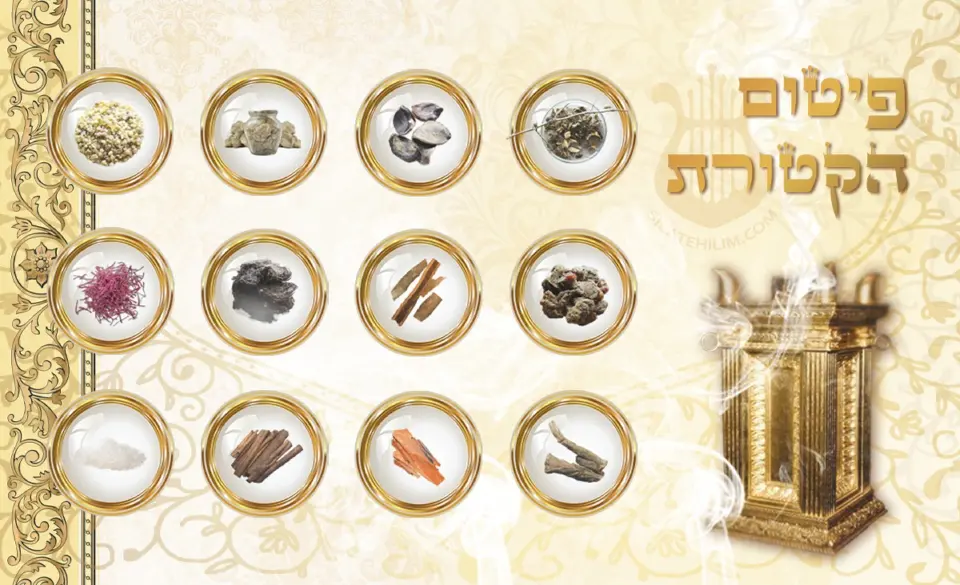
And this mixture contained 11 kinds of spices, and these are they: balsam and onycha, galbanum and frankincense - 70 "maneh" of each; myrrh and cassia, spikenard and saffron - 16 "maneh" of each; costus - 12 "maneh"; an aromatic bark - 3 "maneh," cinnamon - 9 "maneh." Lye made from vetch - 9 "kabin"; Cyprus wine - 3 "se'ah" and 3 "kabin"; and if Cyprus wine was not available, any aged white wine was brought. A quarter "kav" of Sodom salt, and a small amount of a certain herb that produces a great deal of smoke when burned.
Rabbi Natan of Babylon says:
"One should also add a small amount of Jordan amber, but if fruit honey is added to the mixture, it becomes unfit. And whoever burns a mixture lacking one of its components is liable to death."
רַבָּן שִׁמְעוֹן בֶּן גַּמְלִיאֵל אוֹמֵר: הַצֳּרִי אֵינוֹ אֶלָּא שְׁרָף הַנּוֹטֵף מֵעֲצֵי הַקְּטָף. בּוֹרִית כַּרְשִׁינָא לְמָה הִיא בָאָה? כְּדֵי לְשַׁפּוֹת בָּהּ אֶת הַצִּפּוֹרֶן כְּדֵי שֶׁתְּהֵא נָאָה. יֵין קַפְרִיסִין לְמָה הוּא בָא? כְּדֵי לִשְׁרוֹת בּוֹ אֶת הַצִּפּוֹרֶן, כְּדֵי שֶׁתְּהֵא עַזָּה. וַהֲלֹא מֵי רַגְלַיִם יָפִין לָהּ? אֶלָּא שֶׁאֵין מַכְנִיסִין מֵי רַגְלַיִם בַּמִּקְדָּשׁ מִפְּנֵי הַכָּבוֹד:
Raban Shimon ben Gamliel omer: hatzori eino ela seraf hanotef me'atzei haktaf. Borit karshina, lema hi va'a? Kedei leshapot ba et-ha'tziporen, kedei shet'he na'a. Yein-kafrisin lema hu va? - Kedei lishrot bo et-ha'tziporen, kedei shet'he aza. Vahalo mei-raglaim yafin la? Ela she'ein machnisin mei-raglaim be-Mikdash mipnei hakavod.
Raban Shimon ben Gamliel says: "Balsam is nothing but the sap that drips from balsam trees. Why was lye made from vetch used? To rub the onycha clean. Why was Cyprus wine used? To soak the onycha in it, so as to strengthen its scent. And although urine would serve better for this, urine is not brought into the Temple, out of respect for it."
תַּנְיָא, רִבִּי נָתָן אוֹמֵר: כְּשֶׁהוּא שׁוֹחֵק אוֹמֵר: הָדֵק הֵיטֵב,הֵיטֵב הָדֵק, מִפְּנֵי שֶׁהַקּוֹל יָפֶה לַבְּשָׂמִים. פִּטְּמָהּ לַחֲצָאִין כְּשֵׁרָה. לְשָׁלִישׁ וּלְרָבִיעַ לֹא שָׁמַעְנוּ. אָמַר רִבִּי יְהוּדָה: זֶה הַכְּלָל: אִם כְּמִדָּתָהּ כְּשֵׁרָה לַחֲצָאִין. וְאִם חִסֵּר אַחַת מִכָּל-סַמֲמָנֶיהָ חַיָּב מִיתָה:
Tanya Ribbi Natan omer: Keshehu shochek omer: hadek heitev, heitev hadek, mipnei shehakol yafe labesamim. Pitma lachatza'in - keshera, leshalish ulravia lo shamanu.
Amar Ribbi Yehuda: Ze haklal: Im kemidata keshera lachatza'in, ve'im chiser achat mikol samemaneha - chayav mita.
Here is Rabbi Natan's teaching: he said: "While grinding, one should say: 'Grind fine, fine, grind,' since the rhythmic sound aids in grinding the spices. If the mixture is prepared in half the specified amount, it is fit for burning. Cases where the amount is one-third or one-fourth less than specified are unknown to us."
Rabbi Yehuda said: "The rule is this: if the proportions are kept, the mixture is fit even if prepared in half the specified amount; but whoever burns a mixture lacking one of its components is liable to death."
תָּנֵי בַר קַפָּרָא: אַחַת לְשִׁשִּׁים אוֹ לְשִׁבְעִים שָׁנָה הָיְתָה בָאָה שֶׁל שִׁירַיִם לַחֲצָאִין. וְעוֹד תָּנֵי בַר קַפָּרָא: אִלּוּ הָיָה נוֹתֵן בָּהּ קָרְטוֹב שֶׁל דְּבַשׁ, אֵין אָדָם יָכוֹל לַעֲמוֹד מִפְּנֵי רֵיחָהּ. וְלָמָּה אֵין מְעָרְבִין בָּהּ דְּבַשׁ? מִפְּנֵי שֶׁהַתּוֹרָה אָמְרָה: כִּי כָל-שְׂאֹר וְכָל-דְּבַשׁ לֹא-תַקְטִירוּ מִמֶּנּוּ אִשֶּׁה לַיְיָ
Tanya Bar Kappara: achat leshishim o leshiv'im shana ha'eta va'a shel shirayim lachatza'in. Ve'od tane Bar Kappara: Ilu haya notein ba kartov shel devash, ein adam yachol la'amod mipnei reicha. Velama ein me'arevin ba devash? Mipnei sheha-Torah amra: Ki chol-se'or vechol devash, lo-taktiru mimenu ishe la-Ado-nai.
Here is Bar Kappara's teaching. He said: "Once every sixty or seventy years, the accumulated leftover from those three 'maneh,' from which the High Priest took his double handful, amounted to half the quantity prepared for the whole year." And Bar Kappara further taught: "Had they added a small amount of fruit honey, no one could have withstood the fragrance of this mixture; so why is honey not mixed into it? Because the Torah says: 'You shall not burn any leaven or any honey as an offering by fire to HaShem.'"
יי צְבָא׳׳וֹת עִמָּנוּ מִשְׂגָּב לָנוּ אֱלֹקי יַעֲקֹב סֶלָה
Ado-nai Tzeva'ot imanu, misgav-lanu Elohei Ya'akov sela.
HaShem of Hosts is with us; the G-d of Yaakov is our stronghold forever.
יי צְבָא׳׳וֹת אַשְׁרֵי אָדָם בֹּטֵחַ בָּךְ
Ado-nai Tzeva'ot, ashrei adam bote'ach Bach.
HaShem of Hosts! Happy is the man who trusts in You!
יי הוֹשִׁיעָה הַמֶּלֶךְ יַעֲנֵנוּ בְיוֹם קָרְאֵנוּ
Ado-nai hoshia, ha-Melech ya'anenu ve-yom kor'enu.
HaShem, save us! O King, answer us on the day we call!
[According to the Arizal, the "Ketoret" prayer ends here]
וערבה ליי מנחת יהודה וירושלים כימי עולם ועשנים קדמוניות
Ve'arva la-Ado-nai minchat Yehuda ve-Yerushalayim kimei olam u'chshanim kadmoniyot.
May the offering of Yehuda and Yerushalayim be pleasing to HaShem, as in days of old and as in years gone by.
The Prayer Ana BeKoach (the 42-Letter Name of Ha-Shem)
1. Ana Be-koach Gedulat Yeminecha Tatir Tzerura!
2. Kabel Rinat Amcha, Sagvenu Taharenu, Nora!
3. Na Gibor Dorshei Yichudecha Kevavat Shomrem!
4. Barchem Taharem Rachamei Tzidkatecha Tamid Gomlem!
5. Chasin Kadosh Berov Tuvecha Nahel Adatecha!
6. Yachid, Ge'eh, Le'amcha Pneh, Zochrei Kedushatecha!
7. Shav'atenu Kabel Ushma Tza'akatenu, Yodea Ta'alumot!
(Baruch Shem Kevod Malchuto Le'olam Va'ed).
Prayer after Reciting Pitum HaKetoret (when it is recited as a segula)
"Yehi ratzon milfanecha A-do-nai E-loheinu ve-E-lohei avoteinu, shetitmale rachamim aleinu,
ve-tatzilenu lanu ulechol benei veiteinu ulechol Yisrael, me'ayin ra'a umikol minei kishuf.
Vetavriach ha-yetzer hara ve-hasatan mimenu. Uchshem shepar'asta kenafecha al avoteinu
bamidbar vehitzaltam me'eina visha de-Bil'am hara'sha,
ken tifros kenafecha aleinu berachamecha ha-rabim venihye mechusim bemichseh uva'anhaga bishmotecha ha-kdoshim, Amen Netzach Sela Va'ed."
"Pitum HaKetoret" according to the sefer "Mi-Zahav umi-Paz" by Rav Pinchas Zabihi
https://silatehilim.com/сила-кеторет-по-книге-ми-заав-уми-па/
(Nusach of the Arizal according to the book "Mi-Zahav umi-Paz" by Rav Pinchas Zabihi, published by "Beit Malkiel," text according to the siddur "Tefilat Moshe" by Rav Baruch Malaev)
Was this helpful?
99% of readers found this article helpful (872 votes).
Please note: some articles on our site contain the holy Names of the Almighty. If you print these articles, they may not be thrown away or destroyed. Please handle printed copies with care and respect.
Tags: Молитва, Кторет, Питум а-Кторет, Молитва Питум а-Кторет, Молитва «Питум а-Кторет» по Зоар а-Кадош, Текст Молитвы Питум а-Кторет, Транслит молитвы Питум а-Кторет, Порядок «Питум а-Кторет» по Аризалю - текст молитвы с транслитирацией, «Ми-Заав уми-Паз» Рав Пинхас Забихи