40 Segulot and Kavanot for Chanukah
1. Menorah — (beautification of the mitzvah) — it is important to acquire a beautiful Menorah for Chanukah, to show Ha-Shem how grateful you are for everything you have and for all the miracles that happen to you on a daily basis. It is preferable to acquire a silver Menorah.
2. Setting up the Chanukiah 3 days before the holiday - this is a protection for the members of the household.It is written in the book "Zecher David" that setting up the Chanukiah in its place (where the candles will be lit) 3 days before the holiday, and leaving it in place for another 3 days after the holiday, is a great segula.
The mekubalim derive this from the fact that if a harsh decree was issued against a person, it would be annulled within 3 days, and the same applies going forward — our troubles will not last long. For the Holy One, Blessed be He, does not leave the righteous in distress for more than 3 days, as it is written: "Vayesof otam el-mishmar shloshet yamim" - (And he put them under guard for 3 days). (Bereishit 42:17)
3. The place for the Chanukiah - a hint from the Torah as to where to place the Chanukiah: "And it came to pass at the end of two full years, that Pharaoh dreamed a dream." (Bereishit 41:1) Since the parsha "Miketz" always falls on Chanukah, the sages found a hint to this holiday in the text of the Torah. This hint is hidden in the word שנתים"shnatayim" (two years).The first letters of each word in this verse:
"shin" — smol (left), "nun" — ner (candle), "tav" — tadlik (light),
"yud" - yamin (right), "mem" — mezuzah" — (light the candle on the left, and the mezuzah is on the right) — spell out the word "shnatayim" (2 years).
Here is a hint not only to Chanukah, but also to where the Chanukiah should be placed. And this is what it means: dark places, also called the "left side", must be illuminated with spiritual light.
And then Ha-Shem will protect us and "stand at our right", just as the mezuzah stands on the right side at the entrance to the house — always guarding us. ("Ahavat Chaim" on Miketz)
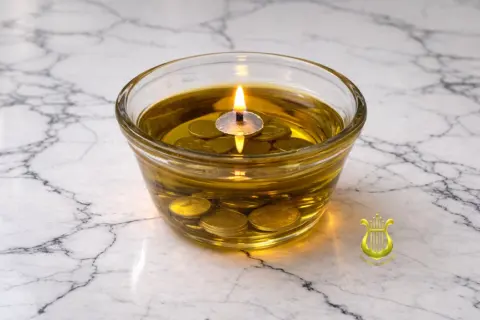
4. A segula for memory - use olive oil for the Chanukiah. Chazal advise lighting the Chanukiah candles with olive oil.The reason for this is that olive oil is a more refined and perfect material for the candles. Olive oil was used specifically for the Menorah in the Temple. Olive oil is also a segula for rising in wisdom (olive oil rises above water).
5. A segula for memory and eyesight - looking at the flame of the candles. For those who have seen immodest things (which, unfortunately, is almost unavoidable nowadays) — looking at the flame of the Chanukiah candles is a segula to erase them from memory; (the Slonimer Rebbe)This is also a segula for:
— banim tzadikim (that children be wise and great in Torah);
— for good memory for the whole family;
— for good eyesight;
6. A segula - light the Chanukah candles in your own home. Rebbe Nachman of Breslov says that when you light candles in your home — this brings more blessing and light into the home. Ha-Shem Himself descends and visits your home and grants you all the blessings and miracles that you desire; 7. Special Prayer — it is a segula to recite before lighting the candles the Special Prayer of Rabbi Tzvi Elimelech of Dinov - "Bnei Yissaschar". (We began our Seder Tefillot with it)https://silatehilim.com/особая-молитва-перед-зажиганием-хану
8. Order of reciting Tehillim – for all 8 days of Chanukah, 8 chapters of Tehillim are read by the lit candles – corresponding to the 8 days of Chanukah:91, 30, 33, 67, 19, 100, 133, 80 – conclude the reading with the prayer "Ana Be-Koach".
9. The Baal Shem Tov advised reciting by the lit Chanukiah, twice, "Vihi Noam" (Tehillim 90:17) and "Yoshev BeSeter Elyon" - Tehillim 91 - 7 times.This is a segula for protection from many troubles.
The Ramban taught to say each word 7 times, but nowadays the whole psalm is said 7 times.
Psalm 91 should be said 7 times aloud and 1 time quietly.
If you cannot recite these psalms throughout all 8 days of Chanukah, then read them at least on the 1st night, the 8th night, and on Rosh Chodesh.
10. A segula to recite Tikkun Chatzot during Chanukah.
This is a segula for the rebuilding of the Beit Ha-Mikdash.
Many holy books call Chanukah a particularly auspicious time for the rebuilding of the Beit Ha-Mikdash. During the days of Chanukah, Tachanun is not said — the special prayer for G-d's merciful forgiveness of our sins, which we often do not deserve. But there is a beautiful custom – a segula – to recite Tikkun Chatzot during these days – the midnight rectification, but not the whole Tikkun, only a part of it — Tikkun Leah. Because Leah represents Geulah (redemption), and Rachel represents Galut (exile). Tikkun Leah corresponds to David (of the tribe of Yehuda, a descendant of Leah) — Mashiach, while Tikkun Rachel corresponds to Yosef (a descendant of Rachel).
https://silatehilim.com/теилим-в-хацот-лайла-хануки-сгула-для/
David Ha-Melech established Tikkun Chatzot: "chatzot layla akum le'odot lach" — (at midnight I arise to give thanks to You). (Tehillim 119:62)
Tikkun Leah is the thanksgiving part of Tikkun Chatzot, and it is about this that David speaks when he says he rises at midnight to give thanks to Ha-Shem. Tikkun Rachel is the mourning part – for Yosef wept on the necks (plural) of Binyamin, and Rashi explains that Yosef wept over the 2 Batei Mikdash that would stand in the territory of Binyamin.
Tikkun Leah consists of the following chapters of Tehillim:
42, 43, 20, 24, 67, 111, 51, and 126.
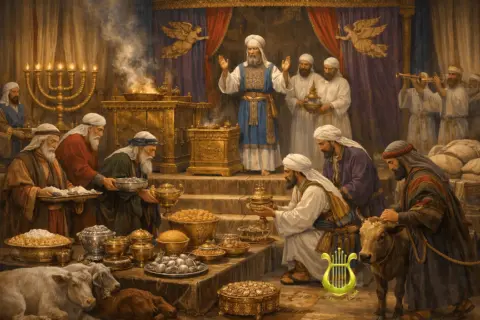
Chanukah is a special time to look into the building of the Beit Ha-Mikdash, where the Menorah burned, illuminating the whole world. And through our prayers we can bring that day closer; (website "Zchut Avot")
11. A segula - light a candle Le-Ilui Nishmat Rabbi Meir Baal Ha-Nes. It is a great segula - during the days of Chanukah, to light a candle in front of the Chanukah candles, le-ilui nishmat Rabbi Meir Baal Ha-Nes, every day, saying 3 times: "Eloha De-Meir Aneni". Save all the wicks and, after the holiday, place them in a plastic bag under a pillow for 3 days — and this is a Segula Le-Kol Yeshuot. (Rabbi Meir Mazuz - Yeshivat "Kisei Rachamim") 12. A segula - give tzedakah in the merit of Rabbi Meir Baal Ha-Nes. Rabbi Chaim Palagi of Izmir taught that during Chanukah, and especially on Rosh Chodesh Tevet, it is fitting to give tzedakah in honor of Rabbi Meir Baal Ha-Nes and, after the holiday, to send the money to the chachamim and rabbanim in Tiberias (where Rabbi Meir Baal Ha-Nes is buried). And whoever does this will see miracles from Ha-Shem – this has been tested many times. (Moed Le-Kol Chai 27:76) 13. A segula - the Chanukah meal. The "Shulchan Aruch" (570, 2) states that the Chanukah meal is a seudat harshut, an optional meal. Chazal (Berachot 60a) say that Ha-Shem gave reshut (permission) for doctors to heal. This is what seudat harshut alludes to; therefore, the sages conclude, the special meal in honor of Chanukah is a particularly auspicious time for healing and can bring about a cure. (Shaar Yisaschor, Yimei Orah 72) 14. A segula for the eyes — looking at the Chanukah candles for 5-10 minutes every day is a segula for good eyesight. (Ben Ish Chai) 15. Sitting by the lit candles for up to 30 minutes — a segula for healing the soul and one's fears. Rebbe Nachman of Breslov teaches that after you have lit the Chanukah candles, it is a good segula to sit before the candles and pray for half an hour to an hour. This will allow your prayers to be answered much more quickly.Rabbi Yair Chaim Bacharach (17th century) taught that women who sit by the Chanukah candles for 30 minutes and gaze at the flame of the candles will merit peace for the entire year, since this is an especially auspicious time for prayer – during this time, angels sit above the candles and carry the prayers directly up to Heaven.
This is all because the light of the Chanukah candles is connected to the Light that G-d created at the moment of Creation, which was hidden and will only be revealed at the end of days — because this unique light was created before the first sin changed the nature of the world.
By looking at the lights of the Chanukiah, you can free yourself from all your fears;
16. A segula for women too to light the Chanukiah.It is known that any opening of gates occurs through the word זאת "zot" (this), as it is said: "Open for me the gates of righteousness…". (Tehillim 118:19)
This is why the mitzvah of lighting the Shabbat candles was given to women, for "this" זאת will be called a woman: "This came from Ha-Shem." (Tehillim 118:23)
This is a hint that the gates are opened precisely because the woman lights the candles. (Zohar 2,37) And also, thanks to the lighting of the Chanukah candles, light is revealed above. In other words, the light of the candles lit below brings about the revelation of the light from above. This is why women are forbidden to work while the Chanukah candles are burning, for the revelation of the light from above occurs through the word "zot" (this) and a woman is also called "zot" (this) - and try to delve deeply into this. (Rabbi Levi Yitzchak of Berditchev, "Kedushat Levi")
17. A segula - do not speak lashon hara during the days of Chanukah — Ha-Shem visits every home in which the Chanukah candles are lit; 18. A segula - to be spared from Gehinnom."Bnei Yissaschar" teaches that the Light of the Chanukah candles saves one from Gehinnom;
19. A segula to merit sons who are talmidei chachamim. The Gemara (Shabbat 23b) says that whoever lights the candles will have sons who are talmidei chachamim. Rashi explains that the verse (Mishlei 6:23) says כִּי נֵר מִצְוָה וְתוֹרָה אוֹר — "for the mitzvah is a candle, and the Torah is light." By lighting the mitzvah candles, the Shabbat candles, and the Chanukah Menorah, one can merit what the Gemara speaks of. 20. A segula on Chanukah - starting something new. Rabbi Levi Yitzchak of Berditchev teaches that if you are planning to start something new — start it on Chanukah — you will have blessing. ("Kedushat Levi", Rabbi L.Y. of Berditchev) 21. A segula to receive Healing. Chanukah is connected to the sefirah "Hod", because there are 10 sefirot, and the 8th is Hod, which is connected to Chanukah, that is, the 8th day.In the blessing "Yotzer Ha-Meorot" before Shema (Shacharit), according to the nusach of the Arizal, which includes Nusach Sephard and Edot Ha-Mizrach, 10 praises of Ha-Shem are listed:
1) Marom (exalted), 2) ve-Kadosh (and Holy), 3) Poel Gevurot (performs mighty deeds), 4) Oseh Chadashot (creates new things), 5) Baal Milchamot (master of wars), 6) Zorea Tzedakot (sows righteousness), 7) Matzmiach Yeshuot (causes salvation to sprout), 8) Boreh Refuot (creates healing), 9) Nora Tehilot (awesome in praises), 10) Adon Ha-Niflaot (Master of wonders).
According to the kavanot in the siddur, each of these praises of Ha-Shem corresponds to a particular sefirah: 1 — Keter, 2 — Chochmah, 3 — Binah, 4 — Chesed, 5 — Gevurah, 6 — Tiferet, 7 — Netzach, 8 — Hod, 9 — Yesod, 10 — Malchut. In the 8th praise, בּורֵא רְפוּאות — "Creates healing," we address the sefirah of Hod. This makes Chanukah an auspicious time for healing.
22. A segula for Refuah - the blessing recited when lighting the Chanukiah.The book "Kaf Ha-Chaim" explains that we say the blessing over the Chanukiah, "Lehadlik Ner Chanukah", without the word "shel", as we do on Shabbat, because the first blessing has 13 words, and by saying them, we awaken the 13 Attributes of Mercy of Ha-Shem.
The second blessing, "she'asah nisim la'avoteinu", also has 13 words. And it has its own kavanah. Together — 26 words, which equals the gematria of the four-letter Name of Ha-Shem that expresses Rachamim (mercy). Through the light of these candles and these blessings, the Mercy of Ha-Shem descends to us, if we omit the word "shel". (Rav Yaakov Doktor)
Rav Ovadia Yosef, of blessed memory, stated in the book "Maran Rishon LeTzion", explained that the number of letters in the first blessing — "…to light the Chanukah candle" — is 13, and this should be understood in connection with the 13 breaches that the wicked Greek kings made in the Temple, against which the sages of that generation instituted 13 bowings. Similarly, the number of letters in the second blessing — "…who performed miracles…" — is 13. Together they make 26, like the Name of Ha-Shem, blessed be He, who performed all the miracles for us in those days and saved us from the wicked, religion-hating Greeks. (And so it is written in the book "Yomin D'Chanukah", to be precise, according to the rulings of the Rid, the Riz, and the Rashal. 26)
23. A segula for Rachamim and Yeshuot - the blessing when lighting the Chanukiah. In the blessing recited when lighting the Chanukah candles, it is customary not to say the word "shel", as we do when lighting the Shabbat candles: "Lehadlik Ner Shel Shabbat", but rather it is customary to say – "Lehadlik Ner Chanukah".
The first letters of these words: "lamed", "nun", and "chet" — spell out the phrase: "Notzer Chesed La'alafim" – (He who remembers the good deeds of the fathers for thousands of generations of their descendants) — and this is the 9th of the 13 Names corresponding to the 13 Attributes of Mercy.
These three letters also form the word "Nachal" (stream) — this is also an abbreviation for "Nafsheinu Chikta La-Hashem" (Tehillim 33:20) — (our souls have waited for Ha-Shem) — the Jewish people were always saved because they believed in G-d and awaited Yeshuot from Him. And therefore this word contains a matrix of Salvation. (Ben Ish Chai, Chanukah)
24. A segula for a surgical examination. If a woman must undergo surgical procedures or a medical examination, then, on the advice of the Ben Ish Chai, she should take upon herself, on one of the days of Chanukah (not including Shabbat), to do no work (neither housework nor professional work) — but rather to remain at home and recite Tehillim for the success of the operation. One may pray at home, at the Kotel, or at the graves of tzadikim — if a woman does this, she will have great success. 25. A segula for Parnasa. A segula for Parnasa for the entire year — frying sufganiyot (donuts) in a large amount of oil; (Ben Ish Chai) 26. A segula - give tzedakah on Chanukah. After lighting the candles — it is a great segula to give tzedakah — and this will help your prayers to be answered; 27. A segula for teshuvah. Rabbi Tzvi Elimelech of Dinov, in "Sefer Divrei Nechemdim" (Chanukah, 4), brings proof from the Zohar that Chanukah is a time of Teshuvah mi-Ahavah (repentance out of love), repentance out of love for Ha-Shem; 28. The 4th candle - a segula for women's happiness. The 4th candle corresponds to the 4 Imahot — the matriarchs: Rachel, Leah, Bilhah, Zilpah — for women's happiness within their own 4 walls; 29. The 5th candle of Chanukah - a segula for miracles. On the 5th night, the Menorah is illuminated with great light, but at the same time, the 5th candle never falls on Shabbat, so on this day mitzvot are added. Rav Chaim Kanievsky (shlita) and the Rabbanit Kanievsky (zt"l) gave out Chanukah gelt (Chanukah money) specifically on this day. 30. The 6th night of Chanukah — Erev Rosh Chodesh Tevet - the most fitting time to pray by the Chanukah candles for someone whom we would like to bring back to faith. Rosh Chodesh Tevet is the yahrzeit of Avraham Avinu, and before he departed from this world, he saw that his son Yishmael had begun to do teshuvah;The 6th night - Simcha. You can have everything and still be sad, so on this night we pray for Simcha;
31. Erev Rosh Chodesh Tevet - an auspicious time to pray by the Chanukah candles for those Jews who are involved with non-Jews (that they leave them and return to Judaism);
32. Erev Shabbat Chanukah - also a segula for the shidduchim of daughters. First, the father lights the Chanukah candles: (the shamash of the Menorah symbolizes the mother, while the burning candles symbolize the children). After lighting the Menorah, the Shabbat candles are lit, which symbolize "Shamor ve-Zachor" - husband and wife.
It is precisely at this time that one should pray to find one's zivug (symbolized by the Shabbat candles) and pray for building a family (symbolized by the Chanukah candles);
The 7th night - Chanukah Shabbat - Zemirot and Divrei Torah are sung at the meal; Shabbat is the source of all blessings.
33. A segula on Zot Chanukah - the 8th day of Chanukah - is a segula for an easy birth and having children. The power of the 8th day of Chanukah is such that what the most G-d-fearing people could not obtain through the Ne'ilah prayer on Yom Kippur — any simple person can obtain on the 8th day of Chanukah. (Rabbi Rodzin)
34. A segula on Zot Chanukah of Rabbi Shimshon of Ostropol, of blessed memory, the tzadik - on the 8th day of Chanukah, when the Chanukiah is full — on "Zot Chanukah" — a woman who wishes to have children can merit this. Looking at all 8 lit candles of the Chanukiah, one should recite Tehillim 80, in which the vine — "gefen" — is mentioned: "G-d of Hosts, restore us; cause Your face to shine, and we shall be saved; You brought a vine out of Egypt — You drove out nations to plant it."
"The vine" applies to a woman who wishes to be as fruitful as a vine. When you pray, you should picture a cluster of grapes and ask Ha-Shem to fill you with children, just as a cluster of grapes is filled with individual grapes;
"Ribono Shel Olam! I had the merit of lighting all 8 candles of the Chanukiah, and I beseech You to also grant me the merit of making a Brit for my son on the 8th day from his birth."
After this, one should give tzedakah and recite the "Prayer of Chana".
This is a very powerful segula, which on this day influences the Attribute of Mercy of Ha-Shem.
The 8th night is also a segula for childless women, because the number 8 is above nature — what is not given by nature will be given through prayer;
35. A segula on Zot Chanukah for childless women in — Chanukah, and especially the last day, Zot Chanukah, is an auspicious time to remember women who pray for children. A hint to this is that the name מתתיהו "Matityahu", whose name is connected to Chanukah, has the same gematria as "Rosh Ha-Shanah" ראש השנה, and it is known that it was specifically on Rosh Ha-Shanah that Ha-Shem blessed our matriarchs with children. (Bnei Yissaschar, Chanukah 2,10)
36. Zot Chanukah – the last day of Chanukah – the last day of Judgment. As mentioned in many sefarim, Zot Chanukah is the final period of judgment from Rosh Ha-Shanah, and, due to the Torah reading of that day, Zot Chanukah is the final day of judgment;
Rabbi Yisrael of Ruzhin, according to his son Rabbi Avraham Yaakov of Sadigura, says that a simple Jew can receive from Ha-Shem on Zot Chanukah what tzadikim were able to receive on Rosh Ha-Shanah and Yom Kippur. (Ner Yisrael 2, 18)
Rabbi Eliezer of Zhikov says, in the name of Rabbi Eliezer of Lizhensk (son of the Noam Elimelech), that Zot Chanukah is a particularly auspicious time. (Reb Itzikel of Pshevorsk)
37. 36 candles over the 8 days of Chanukah we light 36 candles — 44 candles including the shamash. Chanoch reveals that both of these numbers are significant: 36 is the number of the 36 hidden tzadikim in every generation, and 44 is the gematria of "dam" — blood — the source of the energy of life force. It turns out that the tzadikim add life energy to a person's blood.
Rabbi Yisrael of Ruzhin once said: "Angels stand above them" (mima'al lo). The numerical value of "lo" (above them) is 36. Above the 36 candles of the Chanukiah stand angels, who carry every prayer said by the candles directly up to Heaven. 36 is also a hint to the 36 hours during which the hidden light (Or Ha-Ganuz) shone at the time of the creation of the world, and it is precisely on Chanukah that it can be drawn down.
The words "ner" (candle), "meor" (luminary), and "or" (light) are mentioned 36 times in the Torah.
38. A segula - collect the leftover oil from the candles. The leftover oil from the candles should be collected into a separate small jar and used for refuah shleimah (to anoint places of pain) — before Chanukah, one should state one's intention to use the oil this way; 39. A segula - save the wicks from the candles until Pesach — do not throw them away — put them away in a container until Pesach, to burn them together with the chametz. (Yeshivat "Kise Rachamim") 40. A segula to use olive oil left over from Sukkot — it is good on Chanukah to use olive oil that hung in the Sukkah for all 7 days and absorbed all the holiness of the Ushpizin and the prayers said in the Sukkah; 41. A segula for the coming of Mashiach - the 8th day of Chanukah. Chazal teach that the acronym (Roshei Tevot, first letters) of the word Mashiach stands for Madlikim Shmonat Yemei Chanukah (lighting the 8 days of Chanukah). (from a lesson by Anat Ben Ari)42. A note placed by the Chanukiah
On the 8th day of Chanukah - on Zot Chanukah, there is a segula, tested by many, of writing a note and placing it by the Chanukiah.
Begin the note with the words from Tehillim (18:5):
- "Min ha-metzar karati Yah, anani ba-merchav Yah" - (out of my distress I called upon the L-rd; the L-rd answered me with expansiveness). Then write down any important request of yours, ask Ha-Shem to fulfill it, and place the note under the Chanukiah until the following Chanukah. The next year, open it and check whether Ha-Shem has fulfilled your wish.
(All Segulot were compiled by silatehilim.com - with the support of Yeshivat "Kise Rachamim" (Yuri Plishtiev), as well as from holy books and websites - http://emunadaily.com/2014/12/16/segulos-for-chanukah/, http://zchusavos.blogspot.com/2007/12/chanuka-segulas.html; copying without a link to the site is prohibited)