The Prayer "Aleinu Leshabeach" and How the Walls of Jericho Fell on 28 Nisan
The Prayer "Aleinu Leshabeach" and How the Walls of Jericho Fell
The prayer "Aleinu Leshabeach" was instituted by Yehoshua bin Nun - this is stated in the book "Kol Bo" (16), written by one of the Rishonim.
Rabeinu Chida in "Moreh be-Etzba" (2:35) wrote: "It was instituted to be recited by Yehoshua bin Nun, and afterward Rabbi Yochanan ben Zakai ordained that it be recited after prayer, as Rabeinu Hai Gaon (11th century), may his memory be blessed, wrote in a handwritten responsum, and Rabeinu the Arizal revealed its secret."
The Power of "Aleinu Leshabeach"
The Meiri (one of the commentators on the Talmud, 13th century) writes: "Just as before prayer one must devote time to focusing one's intent, so too one should not end prayer abruptly; therefore it became customary to recite 'Aleinu' at the end, as if to say: 'We have finished the morning service, but it is our duty to praise the Creator every moment and every hour.'"
Therefore, in the Middle Ages, "Aleinu" was included in the daily prayers as the concluding prayer of the morning, afternoon, and evening services. Upon reciting the words "Va'anachnu kor'im" ("We bend the knee"), one bows (during Musaf on Rosh Hashanah, one kneels, as was done in the Temple).
It is stated in the book "Rokeach" by Rabbi Elazar of Worms: "One must recite 'Aleinu' with awe and trembling, for the entire Heavenly Host hears it, and the Almighty Himself, together with His entourage, stands and responds: 'Happy is the nation that has such a portion!'"
The prayer "Aleinu Leshabeach" consists of 2 parts.
The first four phrases of "Aleinu" begin with the four letters of the name Hoshea (Yehoshua bin Nun's original name) in reverse order. This first part of the prayer emphasizes that the Jewish people, unlike other nations, know the Almighty as the Creator of the universe (יוצר בראשית), the Maker of heaven and earth.
The first letters of the second part of the prayer spell out the name Achan, who uttered it before his execution. This part of the prayer focuses on the rectification of the world (תיקון העולם), which can come about in this world if all the nations turn together to the Almighty.
A Special Segula - Reciting "Aleinu Leshabeach" 7 Times
28 Nisan - A special segula is to recite the prayer "Aleinu Leshabeach" 7 times - it is on this very day that there is a special channel for this prayer - an "Eit Ratzon" - a time of greatest Heavenly favor, a time when wishes are granted. On 22 Nisan, near Jericho, the angel Michael appeared before Yehoshua bin Nun and conveyed to him the words of G-d: "I am giving Jericho into your hands."
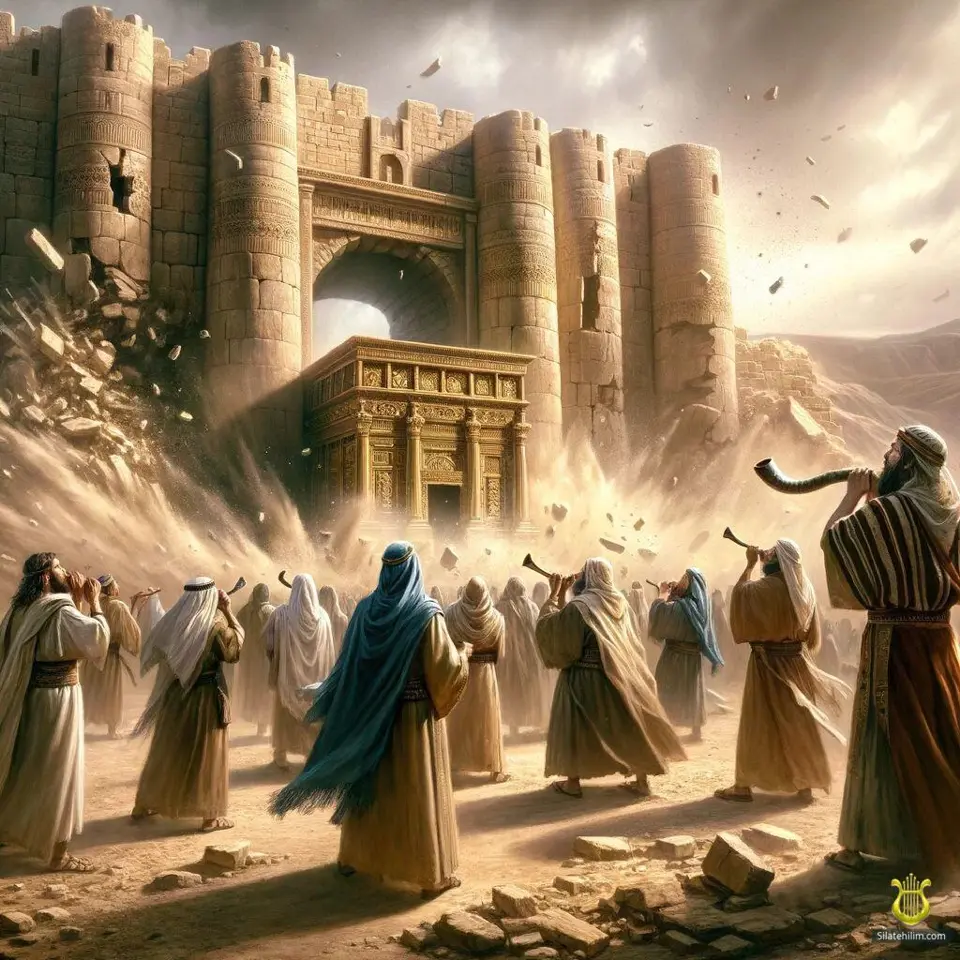
Following the command of the Creator, conveyed to Yehoshua by the angel, the Children of Israel walked around the walls of Jericho once a day for 6 days, and on the seventh day, 28 Nisan, on Shabbat, they made 7 circuits. In addition to the circuits and the blowing of the shofars, the Jews, led by Yehoshua bin Nun, recited the first half of "Aleinu Leshabeach" 7 times (both forward and backward) - the second half would later be composed by Achan before his execution.
And when, after the 7th circuit, the Kohanim blew the shofars, the impregnable walls of the city collapsed into the ground. Yehoshua sent Kalev and Pinchas to bring Rachav and her family out of the city. Then the Children of Israel destroyed the inhabitants of Jericho, as G-d had commanded regarding the former inhabitants of Canaan, and burned the city itself.
Recited with kavana, this prayer saves one from many misfortunes.
The Prayer:
[read normally - 7 times]
"Aleinu leshabeach la-Adon hakol latet gedula leyotzer bereishit. Shelo asanu kegoyei ha'aratzot velo samanu kemishpechot ha'adama. Shelo sam chelkeinu kahem vegoraleinu ke-chol hamonam shehem mishtachavim lehevel varik umitpalelim el el lo yoshia.
[recited while bowing]
Va'anachnu mishtachavim lifnei Melech Malchei hamelachim ha-Kadosh baruch hu.
Shehu note shamayim veyosed aretz. Umoshav yekaro bashamayim mima'al ushchinat uzo begovhei meromim. Hu Eloheinu ve'ein od acher. Emet malkeinu ve'efes zulato, kakatuv ba-Torah: "veyadata hayom vahashevota el levavecha Ado-nai ki hu ha-Elohim ba-Shamayim mima'al ve'al ha'aretz mitachat, ein od."
[read backward - 7 times]
"Od ein mitachat ha'aretz ve'al mima'al ba-Shamayim ha-Elohim hu Ado-nai ki levavecha el vahashevota hayom veyadata ba-Torah kakatuv zulato ve'efes malkeinu emet. Acher od ve'ein Eloheinu hu meromim begovhei uzo ushchinat mima'al bashamayim yekaro Umoshav, aretz veyosed shamayim note Shehu. Hu baruch ha-Kadosh hamelachim Malchei Melech Lifnei mishtachavim Va'anachnu. Yoshia lo el el umitpalelim varik lehevel mishtachavim shehem hamonam ke-chol vegoraleinu kahem chelkeinu sam Shelo. Ha'adama kemishpechot samanu velo ha'aratzot kegoyei asanu Shelo. Bereishit leyotzer gedula latet hakol la-Adon leshabeach Aleinu."
Translation:
"It is upon us to praise the Master of all the world, to proclaim the greatness of the Creator of the universe. For He has not made us like the nations of the world, nor placed us like the families of the earth. He has not made our portion like theirs, nor our destiny like all their multitudes. For they bow down to vanity and emptiness, and pray to a god that cannot save. But we bend the knee and bow down, and give thanks before the King of kings, the Holy One, blessed be He. He stretched out the heavens and established the earth, and the seat of His glory is in the heavens above, and the abode of His might is in the loftiest heights. He is our G-d, there is none else. Truly He is our King, there is nothing besides Him, as it is written in His Torah: "And you shall know this day, and take it to heart, that the L-rd is G-d in the heavens above and upon the earth below - there is none else."
Ana Be-koach
(אָנָּא, בְּכֹחַ גְדֻּלַּת יְמִינְךָ תַּתִּיר צְרוּרָה: (אב"ג ית»ץ
(קַבֵּל רִנַּת עַמְּךָ, שַׂגְּבֵנוּ, טַהֲרֵנוּ, נוֹרָא: (קר"ע שט»ן
(נָא גִבּוֹר, דוֹרְשֵׁי יִחוּדְךָ כְּבָבַת שָׁמְרֵם: (נג"ד יכ»ש
(בָּרְכֵם, טַהֲרֵם, רַחֲמֵי צִדְקָתְךָ תָּמִיד גָמְלֵם: (בט"ר צת»ג
(חֲסִין קָדוֹשׁ, בְּרוֹב טוּבְךָ נַהֵל עֲדָתְךָ: (חק"ב טנ»ע
(יָחִיד גֵּאֶה, לְעַמְּךְ פְּנֵה, זוֹכְרֵי קְדֻשָּׁתְךָ: (יג"ל פז»ק
(שַׁוְעָתֵנוּ קַבֵּל וּשְׁמַע צַעֲקָתֵנוּ, יוֹדֵעַ תַעֲלֻמוֹת: (שק"ו צי"ת
1. Ana Be-koach Gdulat Yeminecha Tatir Tzrura!
2. Kabel Rinat Amecha, Sagveinu Taharenu, Nora!
3. Na Gibor Dorshei Yichudecha Kevavat Shomrem!
4. Barchem Taharem Rachamei Tzidkatecha Tamid Gomlem!
5. Chasin Kadosh Berov Tuvecha Nahel Adatecha!
6. Yachid, Ge'e, Le'amecha Pneh, Zochrei Kdushatecha!
7. Shav'ateinu Kabel Ushma Tza'akateinu, Yodea Ta'alumot!
(Baruch Shem Kevod Malchuto Le'olam Va'ed).
"Aleinu Leshabeach" - a Segula of the Arizal for Rosh Chodesh
https://silatehilim.com/алейну-лешабеах-сгула-аризаля-для-р/
(Seder Olam Rabbah 11, Yemot Olam; Seder Adorot Hakatzar; Rabeinu Chida "Avodat ha-Kodesh," section "Shomer Yisrael," "Netivot Chaim" http://ru.dinonline.org, "Lechaim" magazine)
Was this helpful?
100% of readers found this article helpful (147 votes).
Please note: some articles on our site contain the holy Names of the Almighty. If you print these articles, they may not be thrown away or destroyed. Please handle printed copies with care and respect.
Tags: Молитва, Рабейну Хида, Сгула, Эт Рацон, 28 Нисана, Алейну лешабеах, Молитва «Алейну Лешабеах» или как пали стены Йерихона