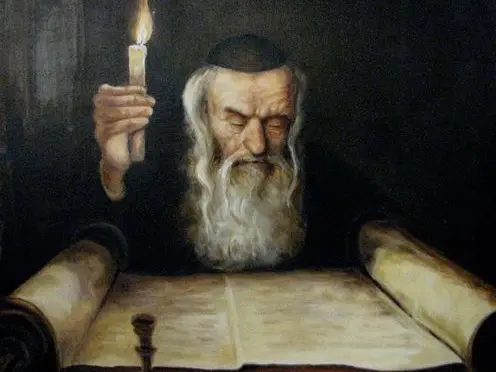
The Prophet Ahijah the Shilonite and Rabbi Elimelech of Lizhensk
The Prophet Ahijah the Shilonite and Rabbi Elimelech of Lizhensk
Ahijah the Shilonite—the most mysterious of the prophets—“revealed himself” to the Baal Shem Tov on 18 Elul, his 26th birthday, and taught him the secrets of the Torah.
It is known that Rabbi Elimelech of Lizhensk was not acquainted with the Baal Shem Tov, but was a student of the Baal Shem Tov’s disciple, the Maggid of Mezeritch.
And there is a profound reason for this.
The Admor of Rachmastrivka explained that this could not have happened under any circumstances.
Rabbi Elimelech was the reincarnation in this world of the soul of the Prophet Ahijah (Ahiyahu) of Shiloh—Ahijah the Shilonite—while the Baal Shem Tov studied with this prophet for more than ten years. The prophet would come to him from the Upper World for their sessions together. A teacher—the giver of the soul—cannot learn from his student. Therefore, Divine Providence arranged matters so that they would not meet.
The tzadik Rabbi Yisrael of Ruzhin said:
“They say that stories about the Baal Shem Tov at the conclusion of Shabbat are a means of making a good living, while stories about Rabbi Elimelech and Rabbi Zusha are a means of attaining Yirat Shamayim (fear of Heaven) and blessing for children.”
The Prophet Ahijah the Shilonite
Many people ask why the Baal Shem Tov devoted ten years of secluded study in the Carpathian Mountains specifically to learning from the Prophet Ahijah the Shilonite, to whom Tanakh devotes only a few pages, unlike the other prophets.
There is an explanation for this as well.
Ahijah of Shiloh belonged to the tribe of Levi. According to the testimony of kabbalists, he was a reincarnation of Avraham Avinu. (Seder HaDorot 2387, 2892)
Ahijah of Shiloh prophesies in I Kings 11:9–13 that the kingdom of Israel will be divided into two kingdoms because of King Solomon. The account of Jeroboam son of Nebat’s meeting with the Prophet Ahijah is then related. Ahijah the Shilonite tears his new, freshly purchased garment—a hint to the very recent establishment of a unified kingdom—into twelve pieces and gives ten of them to Jeroboam. He then tells him that he will become king over ten tribes and explains the conditions under which his kingdom and the kingdom of his descendants will prosper: “If you heed all that I command you, walk in My ways, and do what is right in My eyes, keeping My statutes and My commandments, as My servant David did, then I will be with you and build you a lasting dynasty as I built for David, and I will give Israel to you.”
Nevertheless, Ahijah honestly warns Jeroboam that David’s lamp will not be extinguished, and that the scepter will not depart from his descendants forever.
Likewise, the Baal Shem Tov, the founder of Hasidism, brought about a profound division within European Jewry. The teachings of Hasidism met fierce opposition from the Mitnagdim and the Lithuanian rabbinic leadership. Hasidism emerged during a period of deep division in the religious life of the Jewish people and among its spiritual leaders. The Torah was not reaching the masses; the select scholars studied, while the simple people grew increasingly distant from spiritual life, laboring hard merely to survive. This was also on the eve of great upheavals, such as the Enlightenment, emancipation, and more. If the Prophet Ahijah the Shilonite took part in the division in order to preserve the Davidic kingdom, then the Baal Shem Tov did so to save the Jewish people spiritually. That is why the Baal Shem Tov had to receive lessons from the Prophet Ahijah.
(http://midrasha.net/baal-shem-tov-i-akhija-iz-shilo/)
Was this helpful?
100% of readers found this article helpful (48 votes).
Please note: some articles on our site contain the holy Names of the Almighty. If you print these articles, they may not be thrown away or destroyed. Please handle printed copies with care and respect.
Material from our site may be copied for the purpose of spreading Torah, provided a link to Silatehilim.com is included. Any use of the site's material in print publications or for commercial purposes is prohibited without the rights holder's consent.