Chassidut on Tehillim 69 – Shabbat Mincha – Et Ratzon
Chassidut on Tehillim 69 – Shabbat Mincha – Et Ratzon
Tehillim 69:14- “Va-ani tefilati Lecha A-donai et ratzon Elohim berov chasdecha aneini be-emet yishecha” - (but I pray to You, O G-d, at a time of favor; G-d, in Your abundant kindness, answer me with the truth of Your salvation).
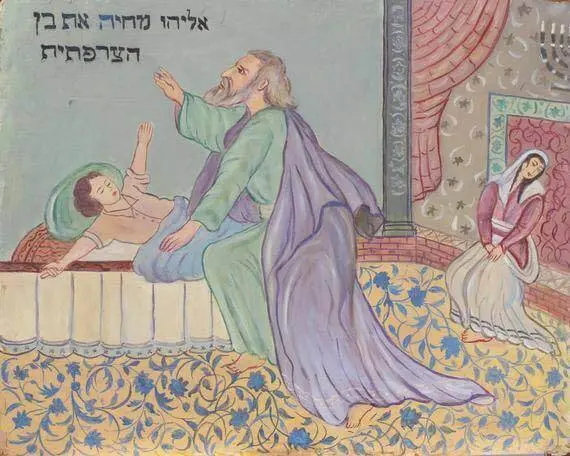
All the Mekubalim teach that Shabbat Mincha is a very special time for prayer—it is “et ratzon,” a time of favor and special Divine benevolence. The Sages explain that it was precisely during Mincha that Eliyahu HaNavi received an immediate answer to his prayer:
“And it came to pass at the time of the afternoon offering: Eliyahu HaNavi approached and said: L-rd, G-d of Abraham, Isaac, and Israel! Let it be known this day that You are G-d in Israel, and that I am Your servant, and that I have done all these things at Your word! Answer me, L-rd, answer me! And this people shall know that You, L-rd, are G-d, and You have turned their hearts back to You.” (I Kings 18:36)
The Rif (Rabbi Yitzchak al-Fasi) says that Eliyahu did not actually deserve an answer, since he offered a sacrifice outside the Beit HaMikdash, and his offering was performed as “the practices of the nations.” However, because he prayed Mincha, his prayer was accepted.
We find the very concept of “et ratzon” in a verse from Tehillim that is recited during Shabbat Mincha before the Torah is removed from the Ark:
“Va-ani tefilati Lecha A-donai et ratzon Elohim berov chasdecha aneini be-emet yishecha.”
Once, the disciples of Rabbi Menachem Mendel of Rimanov asked him:
“On Shabbat, when we recite the afternoon prayer, why do we say the words from the psalm: ‘but I pray to You, O G-d, at a time of favor’?
He replied: “Because the Almighty’s intention to create this world for the benefit of all G-d’s creatures already existed on Shabbat afternoon, before the first day of Creation.Each Shabbat, at that same time, this intention manifests itself again and again, and we pray that this time as well, when Shabbat is drawing to a close, the Almighty’s intention will remain unchanged.”The Power of Mincha Prayer
The holy Rabbi Yisrael of Ruzhin had a chassid who lived very far away, and every journey to the Rebbe entailed great hardship for him. One day, the chassid complained to the Rebbe about this, and the Rebbe told him: “Whenever you need something from me, write a kvitl—a note—and take it to such-and-such a house in your city.” The Rebbe described the address and the appearance of the house in detail. “Throw your kvitl inside the house through the door, the window, or even simply through a crack. It is just as if you had handed it to me.”
The chassid began doing exactly that. Whenever he needed a blessing for something or salvation, he would write a kvitl, throw it into that house, and the blessing would come. The chassid was very pleased. Once, when he came to Ruzhin, he asked the Rebbe what the secret of this unusual house was. “Once, Rebbe Elimelech of Lizhensk entered that house and prayed Mincha there,” the Rebbe replied.
(“Mi Yodea”; Martin Buber, From the Book of Hasidic Tales: The Later Masters, “Brothers,” R. Yaakov Doctor)
Was this helpful?
100% of readers found this article helpful (30 votes).
Please note: some articles on our site contain the holy Names of the Almighty. If you print these articles, they may not be thrown away or destroyed. Please handle printed copies with care and respect.
Material from our site may be copied for the purpose of spreading Torah, provided a link to Silatehilim.com is included. Any use of the site's material in print publications or for commercial purposes is prohibited without the rights holder's consent.