Tikkun Ha-Sheleg
There are two opposing forces in the world—Chesed (kindness and mercy) and Gevurah (judgment and strength).
It is important that these forces remain balanced.
The summer months, dominated by sunshine, rain, and warmth, represent the power of Chesed—kindness, the giving force.
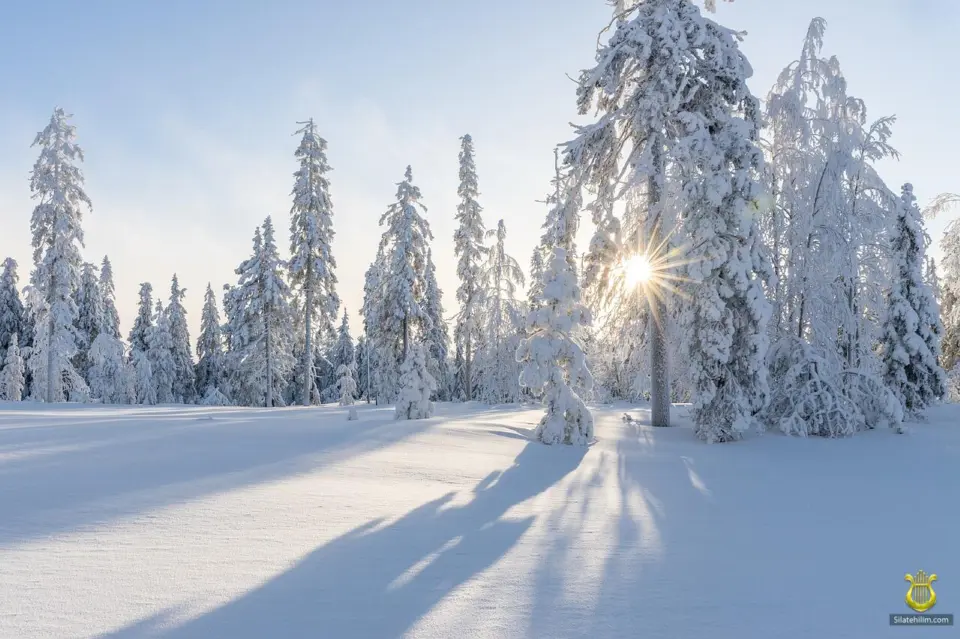
The winter months, characterized by snow and cold, represent the power of Gevurah, judgment.
Snow,
“sheleg”, hints that the quality of Din has increased in the world.
Where there is snow, the attribute of judgment is present.
10 Tevet – Yom Ha-Sheleg
The Tanakh contains the concept of
“Yom Ha-Sheleg” (the Day of Snow).
In the Book of
Shmuel (II, 23:20) and in
Divrei Ha-Yamim (I, 11:23), the
“Day of Snow” is mentioned in connection with
Benayahu ben Yehoyada, the commander of the armies of the two kings—David and Shlomo. (His kever in Birya is a remarkable place of spiritual power.)
It is written about him: “He went down and struck the lion in a pit on the day of snow.”
In Ketuvim, there is an interpretation by Rav Yosef, one of the greatest of the Amoraim, who says that
“Yom Ha-Sheleg” (the Day of Snow) is
10 Tevet—a day of fasting and mourning.
The
Zohar Ha-Kadosh offers a profound Kabbalistic explanation of this verse, teaching that the
“Day of Snow” is a day of
Higher Judgment.
Eshet Chayil
On Friday night, before Kiddush, we sing the hymn
“Eshet Chayil” in praise of a woman.
The simple meaning of the hymn is praise for all worthy women, but its deeper meaning is a hymn to the
Shechinah, the attribute of Malchut.
It contains the words: “She has no fear for her household because of snow, for her entire household is clothed.”
The
Vilna Gaon comments on this passage:
“sheleg” (snow) represents the Higher Judgment and Gehinnom.
There are two types of Gehinnom—the Gehinnom of fire and the Gehinnom of snow.
Both burning and freezing are terrifying punishments for the soul.
The great
Rokeach writes that a snowflake has six points.
Snow symbolizes judgment, and judgment is associated with the number six.
Snow begins to fall in the
month of Tevet—the month of cold, when the period of
“Shovavim” begins, a time of purification and spiritual cleansing.
Yet snow also has another aspect: it symbolizes purity through its white color, as it is written: “Though your sins be like scarlet, they shall become white as snow.” (Isaiah 1:18)
The Talmudic tractate Taanit teaches that snow is a special blessing for the mountains. In especially high places, where rainwater simply runs off, snow remains and nourishes the mountains. This is the special blessing it provides.
When we see snow, we should view it as a message from the Almighty about renewal: “I want to renew you and make you white; it does not matter what came before.”
When snow falls, it is a time for
tikkunim.
The
Arizal presents tikkunim corresponding to particular sins.
Tikkunim involving snow
1. Tikkun Ha-Brit with snow
In previous generations, people performed
tikkunim involving snow: a person rectified sins associated with violations of the Brit by rolling in the snow a certain number of times.
In recent generations, this tikkun is not recommended.
For later generations,
Ben Ish Chai proposed the following easier version of the snow tikkun: uncover the arms and pass snow over the entire arm nine times, asking Hashem to whiten one’s sins. (This should be done only after repentance.)
2. Tikkun with snow to eliminate forgetfulness (shikhah)
In the book
“Lidrosh Elokim” (p. 76),
Chacham Rabbi Avraham Hamoy of Syria cites the following in the name of
Rabbi Moshe Zacuto of Pano:
The gematria of the word
“sheleg” (snow)—שלג = 333.
When looking at snow, one should visualize (and pronounce) the letter
א three times.
The milui of the letter
א—“alef, lamed, pei”—
אלף —has a numerical value of
111.
Three miluim equal
333.
This is the gematria of the word
שכחה—“shikhah” (forgetfulness) =
333.
The
Arizal teaches that forgetfulness originated with the Sitra Achra; it came into effect after the sin of Adam Ha-Rishon, and before that there was no forgetfulness.
One should take freshly fallen snow in the right hand and pass it across the forehead from left to right.
Three times, one should have the intention of the milui of the letter
א— אלף —(alef, lamed, pei), bearing in mind that
333 is the gematria of the words
“sheleg” (snow) and
“shikhah” (forgetfulness).
Rabbi Shabtai of Rashkov, a great disciple of the Baal Shem Tov, taught that if a person studies but forgets everything, he should not abandon Torah study. According to Kabbalah, the Torah belongs to the feminine realm,
“alma denukva”, where forgetfulness is possible. In that case, he should rectify the feminine realm,
“alma denukva”, and he loses nothing by doing so, since this is what that realm requires. But so that he will not forget in the future and will be able to rectify the masculine realm,
“alma de-dukhra”, he should roll in the snow—
“sheleg”, whose gematria equals that of
שכחה—“shikhah” (forgetfulness) =
333—and then wash his forehead three times.
Segula for treating skin conditions
The sefer
“Zikhron Yaakov” writes that if children (and adults as well) develop skin problems, it is beneficial to take freshly fallen snow, melt it, and apply it to the skin twice a day.
A story about snow from the Talmud
The Talmud relates how
Hillel the Elder, who performed hard labor, earned very little. Nevertheless, he gave half his wages to the guard of the
Beit Midrash (study hall) so that the guard would let him attend Torah lessons.
One day, Hillel could not find work and had no money to pay for entry to the study hall.
Unwilling to miss a single word of Torah, Hillel climbed onto the roof so that he could listen to the lesson taught by the great
Shmaya and Avtalyon.
It was winter, on the eve of Shabbat. Snow began falling from Heaven…
Hillel listened to words of Torah throughout the entire Shabbat night. In the morning, when the first rays of dawn should already have illuminated the earth, Shmaya said to Avtalyon: “…Every morning, the Beit Midrash (study hall) becomes light. Why is it dark today? It must be a cloudy day.”
They looked upward and saw a person sitting on the roof, blocking the opening through which light normally entered the room. They climbed onto the roof and found Hillel buried beneath a five-foot snowdrift. After freeing Hillel from the snow, they brought him inside, washed him with warm water, rubbed him with oil, and seated him by the fire, even though it was Shabbat.
Snowball
Before the
Maggid of Mezeritch began teaching the two brothers, Shmelke and Pinchas, he told them how they should conduct themselves throughout the day, from waking until bedtime. In his instructions, the Maggid took all their habits into account, correcting or changing some of them, as though he had known them all their lives.
At the end, he said: “Before going to sleep, recall everything you did during the day. But bear this in mind: when a person reviews the hours of his life and sees that he did not spend a single minute in idleness, his heart begins to fill with pride—and then in Heaven they take all that person’s good deeds, shape them into a snowball, and cast it into the abyss.”
Snow for Kabbalists
Gaon Rabbi Yitzchak Batzri relates in the name of his grandfather,
Mekubal Rabbi Salman Mutzafi, that snowy days are holidays for Kabbalists.
The snow tikkun involves rolling in it
nine times, but he cautioned: “This is not permitted except for one who is holy and righteous. Entering the snow with one’s naked body causes extremely dangerous burns, and those who do so may lose their breath.”
Rabbi Yitzchak Batzri is also the son of
Mekubal Rabbi David Batzri, and he remembers his father carrying snow from Jerusalem in buckets for people who came to perform the tikkun. He added: “I see righteous people doing this without being harmed; they are healthy and strong like lions.”
Kabbalists explain that rolling naked in the snow is a segula for personal and communal Jewish rectification of four transgressions: the use of practical Kabbalah, sexual relations with a non-Jew, sexual relations with a niddah, and sexual relations between men.
The Sages teach that just as there is a hell of burning fire, there is also a hell of freezing snow, intended to rectify transgressions that require cooling the human body; one who rolls in the snow is saved from the hell of snow.
More about snow in Judaism:
Tehillim 147 – Snow and Wool
Tehillim 147 – Snow and Wool
10 Tevet – Yom Ha-Sheleg
10 Tevet – Yom HaSheleg (Day of Snow)
(Compiled from a lesson by Gaon Rav Yitzchak Batzri and Rav Yisrael Yakovov, and from the website: https://he.chabad.org/library/article_cdo/aid/2435876.)
Please note: some articles on our site contain the holy Names of the Almighty. If you print these articles, they may not be thrown away or destroyed. Please handle printed copies with care and respect.