
The Mountain Jewish Language
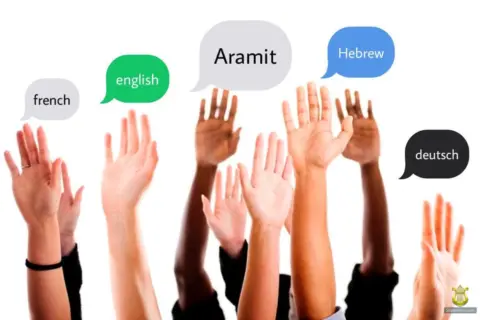
The language of the Mountain Jews—Juhuri—is interesting because it has absorbed four languages: Hebrew, Aramaic, Persian, and Turkic.
During a discussion with Rabbi Yaniv Assuri, Gaon and Rosh Yeshivah of Yodei Binah, we concluded that only two diasporas—the Mountain Jews and the Yemenite Jews—have preserved the ancient pronunciation of the letter ע (a deep guttural sound).
Only two diasporas pronounce the letter ג in two ways: “d” and “j,” as it was pronounced in the era of the Rishonim and Amoraim.For example, “Gehenom” is pronounced “Jeendam.”
When comparing words, it is important to remember that the Mountain Jews are descendants of those who, after the destruction of the First Temple, did not return to Eretz Yisrael from the Babylonian exile, but settled in Persia. Consequently, the Hebrew words that have been preserved date from the time of the First Temple.Connection with Hebrew
1. neshumo — neshamah 2. nefes — nefesh3. mirobo (jam) — riba (jam)
4. z ruzuri (quickly) — zarzir (fast)
5. hayil (victory, good fortune) — oseh hayil (achieving victory)
6. sus biri (neighs like a horse) – sus (horse)
7. halaf (infant) – halavi (dairy)
8. ayil (child—the ram from the Akeidah that replaced the child)
9. havur (friend) — haver (friend)
10. hasirut (one of the Pesach simanim) — haroset11. hisob (counting) — heshbon (alternating sh/s sounds)
12. arsi, arus (wedding, bride) — erusin (betrothal)
13. kyursi (chair) – kise (chair)
14. kyuf (pocket) – kis (pocket)
15. fyul-fyul (pepper) — pilpel (pepper)
16. veshti (loose woman) — named after Vashti (the queen in the Purim story);17. parpar (butterfly) — “parpar bir em” (restlessness, like a butterfly beating its wings)
18. inison — nisayon (a person of moral character who rises through trials)
19. ayvoy — oyev (enemy)
20. asmu — Hashem/shamayim (heaven) (alternating sh/s sounds)
21. govre — kever (grave)
22. mito — mitah (deceased person)
23. ovul – evel (in mourning)
24. meid (holiday) — moed; also, “meid,” to testify: “meid ani” (I testify) (from the introduction to “Perek Shirah”: “Tanya Rabbi Eliezer Ha-Gadol omer”)
25. ser (head) — sar (prince, leader)
26. ser (head) — se'ir (hair)
27. oni — ani (poor)
28. oshir — osher (wealthy)
29. hol (chu holi) — hole (ill person) — a state of health
30. ambar (much, many) — arbeh (much, many)
31. maani (song) — ma'ayan (spring); a song flows like a stream
32. aino — einayim (eyes)
33. gargasho “ez gargasho dur gerdosh” (farther away from gargasho) — “Girgashi,” one of the seven nations of Canaan: “And the Hittites, and the Perizzites, and the Rephaim. And the Amorites, and the Canaanites, and the Girgashites, and the Jebusites.” (Bereishit 15:20)
34. ilom — olam (world)
35. bereket — birkat/berachot (blessings)
36. gov – (the cows from Beit Shemesh in the wagons called out: “goah, goah”)
37. muvakh — moach (brain)
38. mar (snake) — mar (bitter)
39. der (door), diro (come in) — dirah (apartment)
40. perde (curtain), parkhol (mat) — parochet (curtain)
41. hayvon — heyvan (animal in Aramaic)
42. hayot (courtyard) – hayot (angels; Avraham met angels bachutz)
43. hamun (bathhouse) — ham (hot)
44. seudo — seudah (meal)
45. shori (joyous occasion where people sing) — shar (to sing)
46. kitab (book) — ketubah (marriage contract)
47. syufre (meal around a table with books) — sefer
48. godo — odu (gratitude)
49. gurbun — korban (sacrifice)
50. dor (tree) — dor (generation) — a genealogical tree, roots
51. tov-tov, sertovi (completely) — “tov” (good)
52. nidir — neder (vow)
53. shav'o — shvuah (oath)
54. narne — na'ari (young man)
55. sifot (face) – siftei (lips on the face)
56. sheker (sugar) – sheker (lie) – a sweet lie
57. sha'ar (city) – sha'arei (gates)
58. hok (sand) – hok (law)
59. yatim (orphan) – Itom (a name), yatom
60. sinet hinami — sinat chinam (baseless hatred)
61. sine (chest) – sin'ah (hatred) — it comes from the heart
62. bil'og (faucet) – “palgei mayim” (streams of water — Tehillim 119:136);
63. hapi (to support someone with one's hands behind their back) – “nafshi vechapi” — I shield my soul with my hands (Tehillim 119:109);
64. astar (inside out) – estir (hidden): “I will utterly hide (haster astir) My face from him” (Devarim 31:18)
65. rah (road) – derachim, derachecha
66. masale (story) – mashal (parable)
67. gidushi (betrothal) — kiddushin (betrothal) 68. avun - “ovune ser” (sinner) — avon (sin) 69. adot (custom) — adat (law) 70. be'er (fruit) — pri 71. ini (here, behold) — hineh 72. bine (foundation) — Binah (foundation, a sefirah) 73. rush (beard) — rosh (head) 74. daam chi (taste), e-taaminirovo (with taste) — taam (taste) 75. govlei (salvation) — geulah 76. sur — “sur surgum,” “sur bosh” (disappear, move away) — “sur mi-ra” (keep away from evil) (Tehillim 34:15) 77. sokit (calm) — sheket (quiet) 78. taharut (abyss) — “mi-tachat ein od” (beneath the earth's depths there is no one) (from the prayer “Aleinu Leshabe'ach”) 79. tiyon (cauldron) — te'on (teapot) 80. taanit (fast) — taanit/tzom 81. sa'at (hour) — she'at/sha'ah 82. shilhon (low table) — shulchan 83. gusht (meat) — guf (body) 84. gereki (necessary) — hechrechi (necessary) 85. be-razi (dissatisfied) — be-ratzon (unwanted) 86. achir - “acharei kor” (end, at the end of the matter) — achar, acharai (after) 87. ez-zehut (for the sake of) — be-zechut (in honor of) 88. keshire (to worry) — “e dul hushte ede keshire” (the soul feels heavy) — kashe (difficult, heavy) 89. halg (people) — “ki chelek Hashem amo” (for the L-rd's portion is His people) (Devarim 32:9) 90. tanur (oven) — “eser nashim lachmechem betanur echad” (Bechukotai 26:26) 91. guvot (strength) — gevurot (the Divine attribute of judgment) 92. hastaim (they grew tired) — hista'em (to close, come to an end) 93. taraf (side) — “al teref” (do not abandon) (Tehillim 138:8); “ach taraf toraf” (surely he has been torn apart) (Bereishit 44:28). In Aramaic, “taraf” means to tear apart—the word “treifah” derives from it (obviously, what may not be eaten is set aside). (“Ein Yaakov,” Shabbat 109b) 94. milo (brit) — Brit Milah 95. memizir (slippery, crafty) — mamzer (illegitimate child) 96. ses (voice) — “se'u” (raise up a song) Tehillim 81:13; “these will raise “isu” their voices” (Yeshayahu 24:14) 97. geroshti (passed over) — geresh (le-garesh) — to drive out, go into exile 98. tachl (bitter) — techelet (blue dye obtained from the mollusk chilazon) 99. gilgul — “e gilguli eniyo domundeym” (an idiom for gossiping about someone) — legalgel (to turn, rotate) 100. hasroti — “e hasroti domundem” (the soul longs for something and suffers) — chaser, chaserot (incomplete, lacking), Chatzerot (one of the 42 encampments in the Wilderness, symbolizing deficiency) 101. zemuno (times) — zman (time) 102. bazu (burden) — “e ser bazu” (an idiom implying that some burden hangs around one's neck and weighs one down) — baz (hustle, active activity) 103. evele (in olden times, formerly) — aval (but) 104. achir (ultimately, at the end) — acharei (after, behind) 105. beor (a careless, foolish person) — Beor — Bilaam's father 106. zen (wife) — zan (sustenance; a wife's sustenance for her husband) 107. shuver (husband) — shever (food, sustenance) — “ki yesh shever be-Mitzrayim” (for there is food in Egypt) (Bereishit 42:2) 108. bushi (empty) — busha (shame) 109. shaage (loud laughter) — sha'agat (roar) — “Sha'agat Aryeh” (The Roar of the Lion) — a sefer by Rabbi Aryeh Leib Ginzburg 110. sholiakh (a messenger from Heaven) — shaliach (messenger) 111. misi (a piece of bread for the blessing during a seudah) — ha-motzi (the blessing recited over bread during a seudah) 112. rachmoni, rachmedul (merciful) — rachamim 113. melikh (king) — melech 114. Gan Idim — Gan Eden 115. Jaandem — Gehinom (the letter ג was pronounced as “d” and “j”; today this pronunciation survives only among the Mountain Jews and Yemenite Jews) 116. homon (careful) — hamon (commotion) “hamon me'echa verachamecha” (your inner turmoil) (Eichah, chapter 5) 117. benafshe (a curse associated with danger) — “benafshenu navi lachmenu” (in danger, we obtain our bread) (Eichah, chapter 5)176. lugme (a sip) — legimah (a sip)
177. niki (good fortune, purity) — “e-nikirovo” — “mi-tachat yadecha ha-nekiyah” (from Your pure hand) (from the concluding prayer for “Parashat Ha-Man”) 178. hilet (a melancholic, perpetually dissatisfied person) — hilet (to confiscate, take away—apparently joy) 179. filon — filon-kes (someone, somebody) — ploni ben ploni (so-and-so, son of so-and-so) 180. harim (forbidden, unfit) — haram (devastation and annihilation) — “beyadi veha'aramti” (I will deliver them into your hands for destruction). 181. lecha (sediment) — The Midrash Talpiyot, in “Chut Shel Chesed,” says that when a child cries a great deal, “licha” (unnecessary foam, sediment) comes out of his brain.Connection with Aramaic
1. aino (eyes) — eineha 2. chori (earth) — “they were called the Horites (Chori) because they smelled (merichim) the earth” (“Ein Yaakov,” Shabbat 85a) 3. shivit (dill) — shevet (a plant used as a seasoning in the time of the Talmud and Mishnah) (“Ein Yaakov,” Shabbat 119a) 4. gundog (wrapping oneself) — gunda (cloak) 5. meng (moon) — mangir (Rabbi Nehorai illuminated the eyes of the sages in halachah) (Ein Yaakov, Eruvin 13b) 6. laglag (chatterbox) — lahag (mockery, ridicule) 7. geristi, me geris (cried, do not cry) — “one of them will be called Ir Ha-Geres” (city of destruction) (Yeshayahu 19:18) 8. lachme (piece, portion) — lachma (piece of bread) 9. yavosh (quiet—to lower one's voice, an action) — yavesh (to dry up, lose vitality) — “Yavesh chatzir” (Yeshayahu 40:6–8) 10. neve (grandson) — in Aramaic, “naveh sha'anan” (a tranquil dwelling) (“Sifra de-Tzniuta,” chapter 2) 11. dog (trouble, ordeal) — in Aramaic, “daga” In Mountain Jewish, all words from Aramaic contain the deep guttural ע Ya(ע)ni (for example) A(ע)il (child) Ya(ע)gni (chickpea soup, a precursor of cholent) Ma(ע)ni (song) Bachil — miserNames among the Mountain Jews
In addition to traditional names—Avraham, Sarah, and so on—rare names from Tanakh are also found:
Zulpo (a girl's name) — Zilpah
Bilgo (a girl's name) — Bilgah
Humor (a girl's name) — Chumrah (stringency)
Tirso (a girl's name) — Tirtzah
Bekyul (a girl's name) — Bakol
Khavaserut (a girl's name) — Chavatzelet
Avshag (a girl's name) — Avishag
Batushva (a girl's name) — Batsheva
Elishva (a girl's name) — Elisheva
Isko (a girl's name) — Yiskah
Ruspo (a girl's name) — Ritzpah
Sivyo (a girl's name) — Tzvia
Edeso (a girl's name) — Hadassah
Teilo (a girl's name) — Tehillah
Sarah (a girl's name) — Serach
Yalto — YaltaIstir, Svira (a girl's name) — Esther
Libo (a girl's name) — “my heart” in Aramaic
Nitzbet (a girl's name)— an angel — Nitzavet (David's mother)Senem (a girl's name) — Shunam
Ovgoil (a girl's name) — Avigail
Purim (a girl's name) — the holiday itself is called “Omunu” among the Mountain Jews, after Haman, thereby fulfilling the mitzvah of remembering what Amalek did
Hiv it (a girl's name) — from Chavah (a diminutive form)
Chagit (a girl's name) — from chag Yersho — Yerushalayim Dovro — Devorah Naamo — Naomi Hagei — (the prophet Haggai)Zimro — zimrah (song, Tehillim)
Siin — Tzion Sevi — Tzvi Efrot (a girl's name) — sand Divyo (a boy's name) — bear of G-d Betush (a girl's name) — from the Zohar HaKadosh — a Divine blow Betul (a girl's name) — maiden; in Tehillim 148:12, “bachurim ve-gam betulot” (young men and maidens) Salmi (a girl's name) — al-salma (garment) (Shemot 22:8) Peris — Peretz Zerach — Zerach Boaz — Boaz(This material is periodically updated)