Sefer “Zera Shimshon” on Mishpatim—and a segula for having children
Sefer “Zera Shimshon” on Mishpatim—and a segula for having children
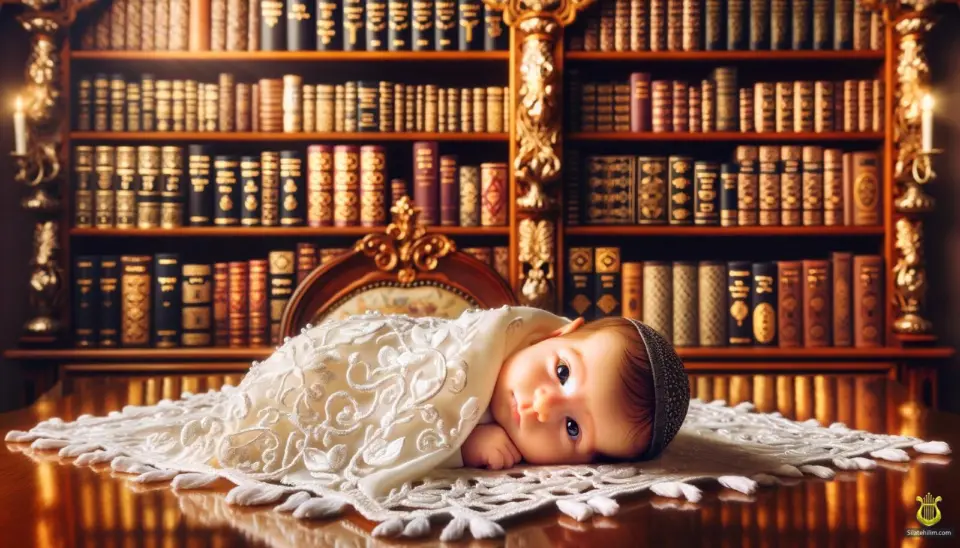
Rabbeinu Chida wrote that Rabbi Shimshon Chaim Nachmani possessed extensive knowledge of Kabbalah and was well versed in its practical aspects. He instructed that his Kabbalistic writings be buried in his grave. (Shem HaGedolim, section “Ma'arechet Sefarim,” entry 46)Rabbi Shimshon Chaim Nachmani is known for his primary work, “Zera Shimshon.” His book “Zera Shimshon” is a segula for having children. He promised that anyone who studied it would see miracles, be freed from troubles, and merit all kinds of blessings in three areas—children, parnasa, and briut.
In the introduction, he explains that, since his only son had passed away, he wrote his sefarim to perpetuate his memory after his death.
He had only one request: that people study his works: “I beseech you with ten measures of supplication—to choose from my chidushim a work that finds favor in your eyes, because your study will bring peace to my soul, and so on. This righteousness will remain with you forever—‘nourishing’ you in this world so that you may be satiated in the next. Through this merit, Ha-Shem will bless you with children, health, and sustenance. And now, my brothers and friends, do true kindness, and ‘your eyes will see your children and grandchildren, like olive trees around your table, wise and perceptive, and homes filled with every good thing, wealth and honor, and your children will not leave you until they see G-d.’
“Zera Shimshon” on Mishpatim
The Gemara (Moed Katan 28a) notes that the three most important aspects of life—longevity, children, and financial success—depend not on a person's merits, but solely on his mazal, his destiny and heavenly predestination.
Tosafot (Shabbat 156a) tells us that a person can change his mazal if he possesses great merits.
Zera Shimshon points out that, when it comes to matters of longevity and parnasa, mazal generally does not change.
However, when it comes to the blessing of having children, the merit of living in Eretz Yisrael can help a person.
Even if a person was not destined to have children according to his mazal, he may merit children through the zechut of living in Eretz Yisrael.
Why is this so?
Zera Shimshon explains that living in Eretz Yisrael itself grants a person such tremendous zechut that it can change his mazal for the better, even without his doing anything else!
But if living in Eretz Yisrael is such a great merit that it can even change a person's mazal and help him have children, can it also help him with longevity and parnasa?
Zera Shimshon answers that the Almighty rewards a person for his good in accordance with his actions—measure for measure.
The Gemara (Ketubot 110b) tells us that anyone who lives in Eretz Yisrael lives as though he has a G-d, whereas one who lives outside Eretz Yisrael lives as though there is no Almighty in his life.
Moreover, the Gemara (Yevamot 64a) asserts that anyone who does not wish to have children causes the Shechinah to depart from Klal Yisrael, as it is written:
“And I will establish My covenant between Me and you, and between your offspring after you throughout their generations as an everlasting covenant: to be a G-d for you and for your offspring after you.” (Genesis 17:7)
When a person leaves children after his death, the Shechinah has a place to rest. But if he leaves no children, upon what will the Shechinah rest—on trees and stones?
In short, a home with children provides a place for the Shechinah to dwell.
“Why do people live in Eretz Yisrael?” asks Zera Shimshon.
They live there because they wish to draw inspiration from the Shechinah, and the Shechinah's inspiration reaches a person through his children.
Ribono Shel Olam will change for the better the mazal of a person living in Eretz Yisrael and send him children, so that he can strengthen his connection with the Shechinah—which is the true reason he is in Eretz Yisrael.
However, Zera Shimshon concludes, this specific intervention, and the fact that a person is in Eretz Yisrael, will apply only to children, not to the other two matters governed by a person's mazal—longevity and parnasa.
(Based on the book “Zera Shimshon,” edited by Rabbi Nachman Zeltser)
Was this helpful?
100% of readers found this article helpful (23 votes).
Please note: some articles on our site contain the holy Names of the Almighty. If you print these articles, they may not be thrown away or destroyed. Please handle printed copies with care and respect.
Material from our site may be copied for the purpose of spreading Torah, provided a link to Silatehilim.com is included. Any use of the site's material in print publications or for commercial purposes is prohibited without the rights holder's consent.