


Seder Chanukat HaBayit
Chanukat HaBayit is the Jewish housewarming ceremony. We learn of its importance from Tehillim (30:1): “Mizmor shir chanukat habayit le-David” — (A psalm, a song of David at the dedication of the House), in which David HaMelech speaks of the dedication of the Temple. This teaches us that a Jewish home is a miniature Temple, which we must likewise maintain in holiness.
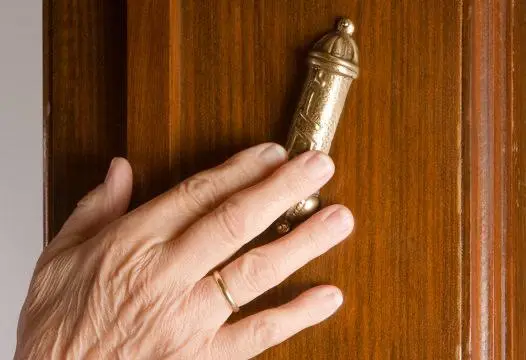
According to Jewish tradition, mezuzot are affixed on this day, so it is good to study the laws of mezuzah beforehand.
It is also advisable to acquire a Kupat Tzedakah in advance and to fill the home with sacred Jewish books.
The Sages teach that the most auspicious period for moving into a new home is between Pesach and Shavuot, and that the best day for moving in is Tuesday. (It is not advisable to move to a new place on Monday, Wednesday, or Shabbat.)
Chanukat HaBayit should be held with a small group of close relatives and friends, but a minyan is required.
Chanukat HaBayit is held both in one's own home and in a rented home.
Seder Chanukat HaBayit
One should stand at the entrance to the home and recite the following verses from the Torah:
- “Baruch atah bevo'echa” - (Blessed are you when you enter). (Devarim 28:6)
- “Vayehi Hashem et Yosef vayehi ish matzliach” - (And the L-rd was with Joseph, and he was a successful man). (Bereishit 39:2)
- “Vayehi David lechol derachav maskil, va-Hashem imo.” (And David was successful in all his endeavors, and the L-rd was with him). (Shmuel I, 18:14)
- “Vihi noam Adonai Eloheinu aleinu, umaaseh yadeinu konenah aleinu, umaaseh yadeinu konenehu.” And may the favor of [Your] L-rd, our G-d, rest upon us; establish for us the work of our hands—yes, establish the work of our hands. (Tehillim 90:17)
Anna BeKoach
1. Ana BeKoach Gedulat Yemincha Tatir Tzerurah
(אב׳׳ג ית׳׳ץ)
2. Kabel Rinat Amcha, Sagveinu Taha'reinu, Nora
(קר׳׳ע שט׳׳ן)
3. Na Gibor Dorshei Yichudcha Kevavat Shomrem
(נג׳׳ד יכ׳׳ש)
4. Barchem Taharem Rachamei Tzidkatecha Tamid Gomlem
(בט׳׳ר צת׳׳ג)
5. Chasin Kadosh Berov Tuvecha Nahel Adatecha
(חק׳׳ב טנ׳׳ע)
6. Yachid, Ge'eh, LeAmcha Pneh, Zochrei Kedushatecha
(יג׳׳ל פז׳׳ק)
7. Shavateinu Kabel Ushma Tzaakateinu Yode'a Ta'alumot
(שק׳׳ו צי׳׳ת)
(Baruch Shem Kevod Malchuto LeOlam Va'ed). [whispered]
Translation
O [G-d], by the power of the greatness of Your right hand, release the captives.
Accept the joyful prayer of Your people; raise us up and purify us, O awesome [Sovereign].
O Almighty! Guard those who proclaim Your unity as the apple of Your eye.
Bless them, purify them, and continually grant them Your compassionate mercy. Unshakable, Holy One, in Your great goodness guide Your people.
Unique One, Exalted One, turn to Your people who remember Your holiness.
Accept our plea and heed our cries, You before whom the hidden is revealed.
Blessed is the Name of the glory of His kingdom forever and ever.
- “Vehineh anachnu me'almim alumim betoch hasadeh vehineh kamah alumati vegam nitzavah, vehineh tesubena alumoteichem vetishtachavena laalumati” - (And behold, we are binding sheaves in the field; and behold, my sheaf arose and also stood upright; and behold, your sheaves gathered around and bowed down to my sheaf). (Bereishit 37:7)
“Yehi ratzon milfanecha, Hashem Eloheinu ve-Elohei avoteinu, Melech rachum vechanun, shetitmale rachamim aleinu, uverov rachamecha uvizchut shemot hakdoshim hayotzim mipsukim elu, tatzlichenu lanu ulechol zar'enu bevayit zeh bichlal u-vifrat, venihyeh kulanu mutzlachim umevorachim bakol mikol kol, vetatzilenu meayin hara, umikol chet, umikol choli, umikol tzarah, veyihyu bateinu bechol makom batim mele'im kol tov, mutzlachim umevorachim lanu ulezar'enu, amen netzach sela va'ed!
Yehi chasdecha Hashem aleinu, kaasher yichalnu lach.”
Translation
May it be Your will, Hashem, our G-d and the G-d of our forefathers, compassionate and gracious King, to show us mercy; and through Your great compassion, and in the merit of the sacred Names mentioned in these verses of the Torah, grant success to us and to all our descendants in this home, both generally and in every particular.
May success and blessing accompany all of us in everything, from every source, and in every way. Protect us from the evil eye, from every sin, every illness, and every misfortune. May our homes everywhere be homes filled with every kind of goodness, success, and blessing, for us and for our descendants. Amen, may it be so forever! May Your kindness, Hashem, be upon us, as we place our hope in You. (Tehillim 33:22)
“Har'einu Hashem chasdecha, veyesh'acha titen lanu.
Va'ani bechasdecha vatachti, yagel libi bishuatecha, ashira la-Hashem, ki gamal alai.
Hineh El yeshuati, evtach velo efchad, ki ozi vezimrat Yah Hashem vayehi li lishuah.”
Show us, Hashem, Your kindness, and grant us Your salvation. (Tehillim 85:8)
But I trust in Your kindness; my heart will rejoice in Your salvation. I will sing to Hashem, for He has dealt kindly with me. (Tehillim 13:6)
Behold, G-d is my salvation; I will trust and not fear, for G-d the L-rd is my strength and song, and He has been my salvation. (Yeshayah 12:2)
[One should give generous tzedakah and pray that success in every area accompany the home.]
Tractates of the Torah Studied in Honor of Chanukat HaBayit
Tractate Berachot (Blessings) consists of 9 chapters,
Tractate Yom Tov (Festival) consists of 5 chapters,
Tractate Tamid (The continual [offering]) consists of 7 chapters.
Thus, the total number of chapters studied [of the Mishnah] is 21, corresponding to the gematria of the Name of the Almighty, אהי׳׳ה, meaning “I will be.”
These three tractates were chosen because the initial letters of their names—ב. י. ת.—form the word “bayit”—(home).
Tractate Berachot
Chapter 1
Mishnah 1
1. Me'eימatai קורין את שמע בערבית? משעה שהכהנים נכנסין לאכול בתרומתן, עד סוף האשמורה הראשונה, דברי רבי אליעזר. וחכמים אומרים, עד חצות.
When does the time for reciting the evening Shema begin? From the time when the kohanim [who had been impure and immersed in a mikveh] go to eat their terumah [after sunset]. And [it continues] until the end of the first watch (the first third of the night). These are the words of Rabbi Eliezer. The [other] Sages say [that it continues] until midnight.
Rabban Gamliel says, until dawn. It once happened that his sons returned from a banquet and said to him, “We have not yet recited the Shema.” He said to them: “If dawn has not yet risen, you are obligated to recite it.” And not only this: rather, everything that the Sages said [should be performed] by midnight, [is] initially commanded [to be performed] until dawn. The burning [on the altar] of the fats and innards [of the sacrificial animals] is commanded [to be performed] until dawn. And all [sacrifices that] are to be eaten on the same day are commanded [to be eaten] until dawn. If so, why did the Sages say [that all these and similar commandments should be performed] by midnight? In order to distance a person from [the danger of] sin.
Mishnah 2
2. Me'eימatai קורין את שמע בשחרית? משיכיר בין תכלת ללבן.
Rabbi Eliezer says, between tekhelet and white. And one completes it by sunrise.
Rabbi Yehoshua says, until the third hour, for such is the way of princes—to rise at the third hour.
One who recites it from then onward has not forfeited [the opportunity], like a person who reads from the Torah.
Mishnah 3
3. Beit Shammai say: In the evening, every person should recline and recite it, and in the morning they should stand, as it is stated: “when you lie down and when you rise.” And Beit Hillel say: Every person recites it in his usual manner, as it is stated: “when you walk on your way.” If so, why is it stated: “when you lie down and when you rise”?
At the time when people lie down and at the time when people stand. Rabbi Tarfon said: I was traveling on the road, and I reclined to recite [the Shema] in accordance with the words of Beit Shammai, and I endangered myself because of the bandits.
They said to him: You deserved to be liable for your own safety, because you acted against the words of Beit Hillel.
Mishnah 4
4. In the morning one recites two blessings before it and one afterward; in the evening, two before it and two afterward—one long and one short. Where they said to lengthen, one may not shorten; where they said to shorten, one may not lengthen. Where they established a concluding formula, one may not omit it; and where they did not establish a concluding formula, one may not add one.
In the morning [when reciting the Shema], one should say two [rabbinically ordained] blessings before it and one afterward; in the evening, two blessings before it and two afterward.
One [of these blessings] is long and one is short. Those [blessings that the Sages] established as long may not be shortened, and those [that the Sages] established as short may not be lengthened. Where [the Sages] established a concluding formula [at the end of a blessing], it may not be omitted; and where no concluding formula was established, one may not add one.
Mishnah 5
5. The Exodus from Egypt is mentioned at night. Rabbi Elazar ben Azariah said: I am like a seventy-year-old man, yet I did not merit [understanding how to derive] that the Exodus from Egypt should be mentioned at night, until Ben Zoma expounded it, as it is stated: “So that you may remember the day of your departure from the land of Egypt all the days of your life.” “The days of your life”—the days. “All the days of your life”—the nights. And the Sages say: “The days of your life”—in this world. “All the days of your life”—to include the days of Mashiach.
The Exodus from Egypt is mentioned [not only every day, but also every] night. Rabbi Elazar ben Azariah said: I am like a seventy-year-old [elder], yet I did not merit understanding [how it is derived that] the Exodus from Egypt should be mentioned at night, until Ben Zoma derived it from the verse: “So that you may remember the day of your departure from the land of Egypt all the days of your life.” Ben Zoma explained as follows: Had it said simply “the days of your life,” this would mean that the Exodus from Egypt should be remembered during the day; from the words “all the days of your life,” it follows that it should also be remembered at night.
But the [other] Sages [who disagree with Rabbi Elazar ben Azariah] say [that these words should be interpreted] as follows: Had it said simply “the days of your life,” [this would mean that the Exodus from Egypt should be remembered only] in this world.
From the words “all the days of your life” [it follows that the Exodus will also be remembered] after the coming of Mashiach [and the advent of the World to Come].
Tractate Berachot
Chapter 2
Mishnah 1
1. If one was reading the Torah and the time for the recitation [of the Shema] arrived, if he directed his heart [to fulfill the mitzvah], he has fulfilled his obligation; and if not, he has not fulfilled it.
In the breaks, one may greet another out of respect and respond [to greetings]; and in the middle, one may greet out of fear and respond—these are the words of Rabbi Meir. Rabbi Yehudah says: In the middle, one may greet out of fear and respond out of respect; in the breaks, one may greet out of respect and respond to every person.
If one who was reading from the Torah [the passage “Shema Yisrael”] did so when the time for reciting [the Shema] arrived, and intended [thereby to fulfill the mitzvah of reciting the Shema], he has fulfilled the mitzvah; if not, he has not fulfilled it.
In the intervals [of the Shema], one may greet someone out of respect and respond [to another's greeting]; in the middle, one may greet out of fear and respond—this is the opinion of Rabbi Meir. Rabbi Yehudah says: In the middle, one may greet out of fear and respond [to a greeting] out of respect; in the intervals, one may greet out of respect and respond to every person.
Mishnah 2
2. These are the breaks [in the recitation of the Shema]: between the first and second blessings; between the second [blessing] and Shema; between Shema and “Vehayah im shamoa”; between “Vehayah im shamoa” and “Vayomer”; and between “Vayomer” and “Emet veyatziv.” Rabbi Yehudah says: Between “Vayomer” and “Emet veyatziv,” one may not interrupt. Rabbi Yehoshua ben Korcha said: Why did “Shema” precede “Vehayah im shamoa”? So that one may first accept upon himself the yoke of the Kingdom of Heaven, and afterward accept the yoke of the commandments. And “Vehayah im shamoa” precedes “Vayomer” because “Vehayah im shamoa” applies by day and by night, whereas “Vayomer” applies only by day.
“In the intervals” refers to between the first and second blessings, between the second [blessing] and [the first section of the Shema beginning with the words] “Hear, O Israel...,” between [the first section of] the Shema and [its second section beginning with the words] “And it will be, if you obey...,” between “And it will be, if you obey...” and [the third section of the Shema beginning with the words] “And the L-rd said...,” and between “And the L-rd said...” and [the blessing instituted by the Sages after the Shema, which in the morning begins with the words] “True and certain....” Rabbi Yehudah says: Between “And the L-rd said...” and “True and certain...” one should not interrupt.
Rabbi Yehoshua ben Korcha said: Why does [the section beginning with the words] “Hear, O Israel...” precede [during the recitation of the Shema] the section beginning with the words “And it will be, if you obey...” ? So that [one reciting the Shema] first accepts upon himself the yoke of the Kingdom of Heaven, and only afterward accepts the yoke of the commandments.
“And it will be, if you obey...” precedes [the section beginning with the words] “And the L-rd said...” because [the section] “And it will be, if you obey...” applies both by day and by night, whereas [the section] “And the L-rd said...” applies only by day.
Mishnah 3
3. One who recites the Shema without making it audible to his ear has fulfilled his obligation. Rabbi Yose says: He has not fulfilled it. If he recited it without being precise in pronouncing its letters, Rabbi Yose says he has fulfilled his obligation, while Rabbi Yehudah says he has not fulfilled it. One who recites it out of order has not fulfilled his obligation. If one recited it and made a mistake, he must return to the place where he erred.
One who recited the Shema [so quietly] that he did not hear [his own recitation] is considered to have fulfilled [the mitzvah of reciting the Shema]. Rabbi Yose says: [In such a case] he has not fulfilled the mitzvah.
One who recited [the Shema] without clearly articulating the letters is considered by Rabbi Yose to have fulfilled the mitzvah, while according to Rabbi Yehudah he has not fulfilled it.
One who recited [the Shema] in reverse order has not fulfilled the mitzvah. One who recited [the Shema] and made a mistake [by omitting a word or one of the verses] must return to the place where he erred.
Mishnah 4
4. Laborers may recite [the Shema] atop a tree or atop a course of stones in a wall under construction, where they are not permitted to do so during prayer.
Workers may recite [the Shema] while standing at the top of a tree or on top of a wall under construction [standing on scaffolding]. But they may not pray there.
Mishnah 5
5. A bridegroom is exempt from reciting the Shema on the first night until the conclusion of Shabbat, if he has not consummated the marriage.
It happened that Rabban Gamliel recited the Shema on the first night after he married. His students said to him: “Our teacher, did you not teach us that a bridegroom is exempt from reciting the Shema on the first night?” He said to them: “I cannot listen to you and deprive myself of accepting the yoke of the Kingdom of Heaven even for one hour.”
A bridegroom is exempt from the obligation to recite the Shema on the first night [after the wedding and until the conclusion of Shabbat], if he [during this period] has not consummated the marriage.
It happened that Rabban Gamliel recited the Shema on the first night after his wedding. His students said to him: “Teacher, did you not [yourself] teach us that a bridegroom is exempt from the obligation to recite the Shema on the first night?” He replied to them: “I will not listen to you and deprive myself [of the awareness of] the Kingdom of Heaven [the sovereignty of the Almighty] contained in the Shema, even for one hour.”
Mishnah 6
6. He bathed on the first night after his wife died. His students said to him: “Our teacher, did you not teach us that a mourner is forbidden to bathe?” He said to them: “I am not like other people; I am delicate.”
[In addition, Rabban Gamliel] bathed on the first night after his wife died. His students said to him: “Teacher, did you not [yourself] teach us that a mourner is forbidden to bathe?” He replied to them: “[In this regard] I am not like most people, because I am very sensitive.”
Mishnah 7
7. And when his slave Tavi died, he accepted condolences for him. His students said to him: “Our teacher, did you not teach us that one does not accept condolences for slaves?” He said to them: “My slave Tavi was not like other slaves; he was a worthy man.”
And when his [Rabban Gamliel's] slave Tavi died, he accepted condolences [for him]. His students said to him: “Teacher, did you not [yourself] teach us that condolences are not offered for slaves?” He replied to them: “My slave Tavi was not like other slaves—he was righteous.”
Mishnah 8
If a bridegroom wishes to recite the Shema on the first night, he may recite it. Rabban Shimon ben Gamliel says: Not everyone who wishes to assume the reputation of a pious person may do so.
If a bridegroom wishes to recite the Shema on the first night [after the wedding], he may do so [even though he is not obligated]. Rabban Shimon ben Gamliel says: Not everyone who wishes to acquire a name [as such a pious person] can do so.
Tractate Berachot
Chapter 3
Mishnah 1
1. One whose dead [relative] lies before him is exempt from reciting the Shema, from prayer, and from tefillin. Those who carry the bier, and their replacements, and the replacements of their replacements—whether they are before the bier or behind the bier—those who are needed to carry the bier are exempt, and those who are not needed are obligated. Both these and those are exempt from prayer.
One before whom [a close relative who has not yet been buried and for whom he is obligated to mourn] lies dead is exempt from reciting the Shema, prayer, and tefillin.
Those who carry the funeral bier, as well as those who replace them and those who replace the replacements, whether they are in front of the bier or behind it—those who are needed for [carrying] the bier are exempt [from reciting the Shema], while those who are not needed for carrying it are obligated [to recite the Shema].
Mishnah 2
2. When those who buried the deceased return, if they can begin and complete [the reading of the first chapter of Shema] before they reach the [first] row [of mourners], they should begin [reading Shema]; otherwise, they should not begin. Those standing in the row [of mourners], if they are standing inside, are exempt [from reading Shema], but if they are standing outside, they are obligated [to read Shema].
After those who buried the deceased return, if they can begin and complete
[the reading of the first chapter of Shema] before they reach the [first] row [of mourners], they should begin [reading Shema]; otherwise, they should not begin. Those standing in the row [of mourners], if they are standing inside, are exempt [from reading Shema], but if they are standing outside, they are obligated [to read Shema].
Mishnah 3
3. Women, slaves, and minors are exempt from the recitation of Shema and from tefillin, but are obligated in prayer, mezuzah, and the recitation of Birkat HaMazon.
Women, slaves, and [minor] children are exempt from [performing the mitzvot of] Shema and tefillin, but are obligated [to perform the mitzvot of] prayer, mezuzah, and reciting the blessing after a meal.
Mishnah 4
4. One who experienced a seminal emission recites [Shema] silently, but does not recite the blessings, either before or after it. For Birkat HaMazon, he recites the blessing afterward, but does not recite the blessing beforehand. Rabbi Yehudah says: He recites the blessings both before and after them.
A man who has become impure through a seminal emission should recite [the words of Shema] silently, but should not recite the [rabbinically ordained] blessings either before or after Shema.
Regarding food, he should recite [only] the blessing afterward, but not beforehand. Rabbi Yehudah says: [such a man] also recites the blessing both before and after them [the reading of Shema and the meal].
Mishnah 5
5. One who was standing in prayer and remembered that he was a בעל קרי should not interrupt, but should shorten [the blessings]. If he went down to immerse and can ascend, cover himself, and recite [Shema] before sunrise, he should ascend, cover himself, and recite. If not, he should cover himself in the water and recite. However, he may not cover himself in foul water, nor in water in which flax was soaked, until water has been added to it. How far must he distance himself from them and from excrement? Four cubits.
If a person, while standing during the Amidah, remembered that he was impure because of a seminal emission, he should not interrupt [the prayer], but should shorten [each of its blessings]. If [one who had become impure] went in the morning to immerse [in a mikveh or natural body of water], then, if he can [manage to] emerge [from the water], get dressed, and recite Shema before sunrise, he should emerge, get dressed, and recite it; if not, he should cover himself with water [by remaining immersed in it] and recite [Shema while standing in the water].
However, one may not [recite Shema] while in foul-smelling water or in water in which flax was soaked [since such water has an unpleasant odor], until [clean] water has been added to it [in a sufficient quantity to neutralize the odor]. How far must one distance himself from them [foul-smelling liquids] and from excrement [in order to be permitted to recite Shema and pray]? Four cubits.
Mishnah 6
6. One who had a seminal emission after having already experienced one, a menstruating woman who emitted semen, and a woman who had intercourse and then saw blood, require immersion. Rabbi Yehudah exempts them.
A man who [had already] become impure through a seminal emission and then experienced another seminal emission, a menstruating woman who emitted semen, and a woman who, after intercourse, saw blood, are required to immerse in a mikveh [so that they may be permitted to study Torah and pray, in accordance with Ezra's enactment]. Rabbi Yehudah exempts [them from this obligation].
Tractate Berakhot
Chapter 4
Mishnah 1
1. The morning prayer may be recited until noon. Rabbi Yehudah says: Until the end of the fourth hour. The afternoon prayer may be recited until evening. Rabbi Yehudah says: Until the midpoint of the time for the afternoon offering. The evening prayer has no fixed time, and the additional prayer may be recited throughout the entire day. Rabbi Yehudah says: Until the seventh hour.
The time for the morning prayer lasts until noon. Rabbi Yehudah says: Until [the end of] the first four hours [of the day]. The time for the afternoon prayer lasts until evening. Rabbi Yehudah says: Until the midpoint of the time for offering [in the Temple] the evening tamid offering. The evening prayer has no [fixed] limit. The [time for] the additional prayer [extends throughout] the entire day. Rabbi Yehudah says: Until the seventh hour.
Mishnah 2
2. Rabbi Neḥunya ben HaKanah would pray upon entering the study hall and upon leaving it—a brief prayer. They said to him: What is the nature of this prayer? He said to them: Upon entering, I pray that no mishap should occur through me, and upon leaving, I offer thanks for my portion.
Rabbi Neḥunya ben HaKanah, when entering the beit midrash and when leaving it, would recite a short prayer. They asked him: What is this prayer? He replied: When I enter, I pray that no error should occur because of me, and when I leave, I give thanks [to the Almighty] for my portion.
Mishnah 3
3. Rabban Gamliel says: Every day a person should pray the Eighteen. Rabbi Yehoshua says: An abridged version of the Eighteen. Rabbi Akiva says: If his prayer is fluent in his mouth, he should pray the Eighteen; and if not, an abridged version of the Eighteen.
Rabban Gamliel says: Every day a person should pray [the prayer consisting of] eighteen [blessings]. Rabbi Yehoshua says: [He should recite a prayer] similar to [one consisting of] eighteen [blessings]. Rabbi Akiva says: If his prayer is fluent [and familiar] in his mouth, he should pray [the prayer consisting of] eighteen [blessings], but if not, [he should recite one] similar to [a prayer consisting of] eighteen [blessings].
Mishnah 4
4. Rabbi Eliezer says: One who makes his prayer fixed, his prayer is not supplication. Rabbi Yehoshua says: One who is traveling in a dangerous place should pray a short prayer. He should say: Save, O L-rd, Your people, the remnant of Israel; in every passage of the pregnancy, may their needs be before You. Blessed are You, O L-rd, Who hears prayer.
Rabbi Eliezer says: For one who makes prayer a fixed obligation, it ceases to be [directed to the Almighty as] a supplication. Rabbi Yehoshua says: One passing through a dangerous place should recite a short prayer. He says: “Save, O G-d, Your people—the remnant of Israel. Under all circumstances, may their needs be before You. Blessed are You, O L-rd, Who hears prayer!”
Mishnah 5
5. One who was riding on a donkey should dismount. If he cannot dismount, he should turn his face [toward Jerusalem]; and if he cannot turn his face, he should direct his heart toward the Holy of Holies.
One who was riding on a donkey [when the time for prayer arrived] should dismount [in order to pray]. If he [for any reason] cannot dismount, he should [while seated on the donkey] turn his face [toward the Temple in Jerusalem]. If he cannot [even] turn his face, he should direct his heart toward the Holy of Holies.
Mishnah 6
6. One who was sitting in a ship, in a wagon, or on a raft should direct his heart toward the Holy of Holies.
One who was sitting in a ship, a wagon, or on a raft [when the time for prayer arrived] should direct his heart toward the Holy of Holies.
Mishnah 7
7. Rabbi Elazar ben Azaryah says: The additional prayer is recited only with the community. The Sages say: Both with the community and without the community. Rabbi Yehudah says in his name: Wherever there is a community, an individual is exempt from the additional prayer.
Rabbi Elazar ben Azaryah says: The additional prayer is recited only with a congregation. The [other] Sages say: Both with a congregation and without a congregation. Rabbi Yehudah says in his name [in the name of Rabbi Elazar ben Azaryah]: Wherever there is a congregation [praying together], an individual [praying outside the congregation] is exempt from the additional prayer.
Tractate Berakhot
Chapter 5
Mishnah 1
1. One should stand to pray only in a state of reverence. The early pious ones would wait one hour and then pray, in order to direct their hearts toward the Omnipresent. Even if a king greets him, he should not answer him. And even if a snake is coiled around his heel, he should not interrupt.
When beginning to pray, one should be in a state of awe [before the Almighty]. The early pious ones would wait a full hour and [only then] pray, in order to direct their hearts toward the Almighty. Even if a king greets him [during prayer], he should not answer [the greeting]. Even if a snake is coiled around his heel, he should not interrupt [the prayer].
Mishnah 2
2. The power of rain is mentioned in the blessing of the Resurrection of the Dead, rain is requested in the blessing of the years, and Havdalah is recited in the blessing of knowledge. Rabbi Akiva says: Havdalah is a fourth blessing recited separately. Rabbi Eliezer says: In the blessing of thanksgiving.
We mention the power [of the Almighty, Who sends] rain in [the blessing concerning] the resurrection of the dead, request rain in the blessing [devoted to requests for fruitful] years, and recite [the words of] Havdalah in the blessing “Who grants knowledge.”
Rabbi Akiva says: Havdalah should be recited as a separate, fourth blessing. Rabbi Eliezer says: [Havdalah should be recited] in the [blessing devoted to] thanksgiving.
Mishnah 3
3. One who says, “Just as Your mercy extends to a bird's nest,” and “May Your Name be remembered for good,” or “We give thanks, we give thanks,” is silenced. One who passes before the ark and errs should be replaced by another, and he should not refuse at that moment. From where should he begin? From the beginning of the blessing in which the first one erred.
[One who, addressing the Almighty in prayer,] says: “Your mercy extends to a bird's nest,” or “May Your Name be remembered for good,” [or] “We give thanks, we give thanks!” is made to be silent.
[If one who] stood before the ark made an error [in the middle of the prayer], another should take his place; and he [the replacement] should not refuse at that moment. From where should he begin? From the beginning of the blessing in which [the first one] erred.
Mishnah 4
4. One who passes before the ark should not answer Amen after the blessing of the priests, lest he become confused. If there is no other priest there besides him, he should not raise his hands. But if he is certain that he can resume his prayer after raising his hands, he is permitted.
The one standing before the ark [the chazzan] should not answer “Amen” after [the blessing recited by] the kohanim, so that he does not become confused [in his prayer].
If there is no other kohen there besides him, he should not “raise his hands.” However, if he is certain that after “raising his hands” he [will be able to] resume his prayer, he is permitted [to perform the priestly blessing].
Mishnah 5
5. One who prays and errs—this is a bad sign for him. If he is the prayer leader, it is a bad sign for those who appointed him, for a person's messenger is like himself. They said about Rabbi Ḥanina ben Dosa that when he prayed for the sick, he would say: “This one will live, and this one will die.” They said to him: How do you know? He said to them: If my prayer is fluent in my mouth, I know that it has been accepted; and if not, I know that it has been rejected.
If one who was praying made an error [in the prayer], this is a bad sign for him.
If he is the representative of the congregation [leading the communal prayer as chazzan], it is a bad sign for the [entire] congregation that appointed him, because a person's messenger is considered as the person himself.
It was said about Rabbi Ḥanina ben Dosa that when he prayed for the sick, he would say [in advance]: “This one will live [and recover], and this one will die.”
They asked him: How do you know? He replied: If my prayer flows easily and without difficulty from my mouth, I know that it has been accepted; and if not, I know that it has been rejected.
Tractate Berakhot
Chapter 6
Mishnah 1
1. How are blessings recited over fruits? Over the fruit of a tree one says: “Who creates the fruit of the tree,” except over wine, for over wine one says: “Who creates the fruit of the vine.” Over the fruit of the earth one says: “Who creates the fruit of the earth,” except over bread, for over bread one says: “Who brings forth bread from the earth.” Over vegetables one says: “Who creates the fruit of the earth.” Rabbi Yehudah says: “Who creates various kinds of herbs.”
What blessings are recited over fruits [before eating them]? Over the fruit of a tree, one recites the blessing “Who creates the fruit of the tree.” The exception [to this rule] is wine, over which one recites the blessing “Who creates the fruit of the vine.” Over produce of the earth, one recites the blessing “Who creates the fruit of the earth.” The exception [to this rule] is bread, over which one recites the blessing “Who brings forth bread from the earth.” Over vegetables, one recites the blessing “Who creates the fruit of the earth,” while Rabbi Yehudah says: “Who creates various kinds of herbs.”
Mishnah 2
2. If one recited over the fruit of a tree, “Who creates the fruit of the earth,” he has fulfilled his obligation. But if over the fruit of the earth he recited, “Who creates the fruit of the tree,” he has not fulfilled his obligation. Over all things, if he said, “By Whose word all things came to be,” he has fulfilled his obligation.
One who [mistakenly] recited over fruit of a tree the blessing “Who creates the fruit of the earth” has [after the fact] fulfilled his obligation [to recite a blessing]. However, one who [mistakenly recited] over produce of the earth the blessing “Who creates the fruit of the tree” has not fulfilled his obligation [to recite a blessing]. The blessing “By Whose word all things came to be” [after the fact] suffices for everything.
Mishnah 3
3. Over anything that does not grow from the earth one says: “By Whose word all things came to be.” Over vinegar, fallen fruit, and locusts one says: “By Whose word all things came to be.” Over milk, cheese, and eggs one says: “By Whose word all things came to be.” Rabbi Yehudah says: Over anything that has an aspect of a curse, one does not recite a blessing.
Over a product that did not grow from the earth, one recites the blessing “By Whose word all things came to be.” [This same] blessing “By Whose word all things came to be” is recited over vinegar, fallen fruit, and [permitted species of] locusts. Over [such products as] milk, cheese, and eggs, one likewise recites the blessing “By Whose word all things came to be.” Rabbi Yehudah says: Over anything that contains an aspect of a curse, one does not recite a blessing [at all].
Mishnah 4
4. If several kinds [of food] were before him, Rabbi Yehudah says: If one of the seven species is among them, he recites the blessing over it. The Sages say: He recites the blessing over whichever of them he desires.
When various kinds [of food for which the same blessing is prescribed] were served to him, according to Rabbi Yehudah he should recite the blessing over one of the seven species [for which the Land of Israel is praised], if one is present; while the [other] Sages say that he may recite the blessing over whichever kind [of those before him] he wishes.
Mishnah 5
5. If one recited a blessing over wine before the meal, he has exempted the wine after the meal. If he recited a blessing over an appetizer before the meal, he has exempted the appetizer after the meal. If he recited a blessing over bread, he has exempted the appetizer; but if over the appetizer, he has not exempted the bread. Beit Shammai says: Nor [has it exempted] a cooked dish.
One who recited a blessing over wine before the meal has thereby exempted [himself from reciting a blessing over] wine [drunk] after the meal.
One who recited a blessing over an appetizer before the meal has thereby exempted [himself from reciting a blessing over] an appetizer [served] after the meal.
One who recited a blessing over bread has thereby exempted [himself from reciting a blessing over] the appetizer. [However, one who recited a blessing] over the appetizer has not thereby exempted [himself from reciting a blessing over] bread. Beit Shammai says: Nor does [the blessing over the appetizer] exempt [one from reciting a blessing over] cooked flour-based foods.
Mishnah 6
6. If they were sitting to eat, each one recites a blessing for himself. If they reclined, one recites a blessing for them all. If wine was brought to them during the meal, each one recites a blessing for himself. After the meal, one recites a blessing for them all. He also recites a blessing over the incense, although incense is brought only after the meal.
[If people] sat down to eat, each [recites] a blessing for [himself].
[If they] reclined [on special couches for a communal meal], one [of them recites] the blessing for everyone.
If wine was served to them during the meal, each [of them recites] the blessing “Who creates the fruit of the vine” for himself.
[However, if wine was served] after the meal ended, one recites [the blessing over it] for everyone. He [also] recites the blessing over incense, although incense is served only after [the end of] the meal.
Mishnah 7
7. If they brought before him a salted food first, with bread along with it, he recites the blessing over the salted food and exempts the bread, for the bread is secondary to the salted food. This is the general rule: Whenever there is something primary and something secondary, one recites the blessing over the primary, and it exempts the secondary.
If pickled food and bread with it were served to someone before the beginning of the [meal], he recites the blessing over the pickled food and thereby exempts [the need to recite a blessing over] the bread, since the bread [in this case] is secondary to the pickled food. This is the general rule: Whenever there is a primary food and a secondary food, one recites the blessing [only] over the primary food, and it exempts [one from reciting a blessing over] the secondary food.
Mishnah 8
8. If one ate figs, grapes, or pomegranates, he recites three blessings afterward—these are the words of Rabban Gamliel. The Sages say: One blessing comprising three. Rabbi Akiva says: Even if one ate cooked vegetables and they were his sustenance, he recites three blessings afterward. One who drinks water to quench his thirst says: “By Whose word all things came to be.” Rabbi Tarfon says: “Who creates numerous living beings and all that they require.”
One who ate figs, grapes, or pomegranates [as well as other fruits belonging to the “seven species” for which the Land of Israel is praised] recites three blessings after them—this is the opinion of Rabban Gamliel. The [other] Sages say: [After eating, he should recite] one blessing comprising three. Rabbi Akiva says: Even one who ate [only] cooked vegetables [without bread], but used them as his primary food, recites three blessings after them.
One who drinks water to quench his thirst recites the blessing “By Whose word all things came to be.” Rabbi Tarfon says: [One who is about to drink water recites the blessing] “Who creates numerous living beings and all that they require...”
Tractate Berakhot
Chapter 7
Mishnah 1
1. If three ate together, they are obligated to form a zimmun. One who ate demai, first tithe from which its terumah was separated, second tithe or consecrated property that was redeemed, a waiter who ate an olive's bulk, or a Samaritan, may be included in the zimmun. But one who ate tevel, first tithe from which its terumah was not separated, second tithe or consecrated property that was not redeemed, a waiter who ate less than an olive's bulk, or a gentile, may not be included in the zimmun.
Three [or more people] who ate together are obligated to recite the blessing after the meal jointly.
One who ate demai [produce regarding which it is uncertain whether maaser and terumah were separated], or first tithe from which terumah was separated, or second tithe or consecrated property that was redeemed, or a waiter who ate an olive's bulk, or a Samaritan, may be included in the communal blessing.
However, one who ate tevel, or first tithe from which terumah was not separated, or second tithe or consecrated property that was not redeemed, or a waiter who ate less than an olive's bulk, as well as a gentile, may not be included in the communal blessing.
Mishnah 2
2. Women, slaves, and minors may not be included in the zimmun. How much must one have eaten in order to be included in the zimmun? An olive's bulk. Rabbi Yehudah says: An egg's bulk.
Women, slaves, and minors may not be included in the communal blessing. How much [must a fellow diner eat in order to be] included in the communal blessing? At least an olive's bulk. Rabbi Yehudah says: At least an egg's bulk.
Mishnah 3
3. How does one form a zimmun? With three, one says: “Let us bless.” With three and himself, he says: “Bless.” With ten, he says: “Let us bless our G-d.” With ten and himself, he says: “Bless.” With eleven, he says: “Let us bless.” With one hundred, he says: “Let us bless the L-rd our G-d.” With one hundred and himself, he says: “Bless.” With one thousand, he says: “Let us bless the L-rd our G-d, the G-d of Israel.” With one thousand and himself, he says: “Bless.”
How is the communal blessing recited?
[If there are only] 3 [diners]—the leader says: “Let us bless.”
[If there are] 3 [diners] besides him, he says: “Bless.”
[If there are] 10 [diners]—the leader says: “Let us bless our G-d.”
[If there are] 10 [diners] besides him, he says: “Bless.”
[If there are] 100 [diners]—the leader says: “Let us bless the L-rd our G-d for the food we have eaten.”
[If there are] 100 besides him, he says: “Bless.”
[If there are] 1,000 [diners]—the leader says: “Let us bless the L-rd our G-d, the G-d of Israel, the G-d of Hosts, Who dwells above the cherubim, for the food we have eaten.”
[If there are] 1,000 besides him, he says: “Bless.”
With one hundred he says: Let us bless the L-rd our G-d, the G-d of Israel, the G-d of Hosts, Who dwells above the cherubim, for the food we have eaten. With one hundred besides him, he says: Bless. Just as the leader recites the blessing, so do those who respond after him: Blessed is the L-rd our G-d, the G-d of Israel, the G-d of Hosts, Who dwells above the cherubim, for the food we have eaten.
[If there are] 10,000 [diners]—the leader says: “Let us bless the L-rd our G-d, the G-d of Israel, the G-d of Hosts, Who dwells above the angels, for the food we have eaten.”
[If there are] 10,000 besides him, he says: “Bless.”
In accordance with the way he recites the blessing, the other diners respond after him: “Blessed is the L-rd our G-d, the G-d of Israel, the G-d of Hosts, Who dwells above the angels, for the food we have eaten.”
Rabbi Yosei Ha-Galili says: They bless according to the number of the congregation, as it is said (Psalms 68): “In assemblies bless G-d, the L-rd, you who spring from the source of Israel.” Rabbi Akiva said: What do we find in the synagogue? Whether there are many or few, one says: “Bless the L-rd.” Rabbi Ishmael says: “Bless the L-rd, Who is blessed.”
Rabbi Yosei Ha-Galili says: They bless according to the number [of diners], as it is said: “In assemblies bless G-d, the L-rd, you who spring from the source of Israel.”
Rabbi Akiva said: “Just as in the synagogue, whether there are many or few worshippers, the leader says, ‘Bless the L-rd,’ so too in the communal blessing after a meal.”
Rabbi Ishmael says: “Bless the L-rd, Who is blessed.”
Mishnah 4
4. Three who ate as one may not divide, and likewise four or five. Six may divide, up to ten. Ten may not divide until there are twenty.
Three who ate together may not separate [before reciting the blessing after the meal together].
The same applies to four and five.
Six [or more] may separate [forming two groups of three or more].
And so it remains until the number [of diners] reaches ten. Ten [or more] may not separate until the number [of diners] reaches twenty.
Mishnah 5
5. Two groups that ate in one house: if some of them can see one another, they join for the zimun. If not, these recite the zimun for themselves and those recite the zimun for themselves. One does not recite the blessing over wine until water has been added to it; these are the words of Rabbi Eliezer. But the Sages say: One recites the blessing.
If two groups [of diners] ate in one room, then if [at least] some [of the diners in both groups] can see one another, [the two groups] join together for the communal blessing.
If not, each group recites the blessing separately.
One does not recite the blessing over wine until water has been added to it—this is the opinion of Rabbi Eliezer. But the other Sages say: One recites the blessing.
Tractate Berakhot
Chapter 8
Mishnah 1
1. These are the matters concerning which Beit Shammai and Beit Hillel disagree at a meal. Beit Shammai says: One first recites the blessing over the day and afterward the blessing over the wine. Beit Hillel says: One first recites the blessing over the wine and afterward the blessing over the day.
The Sages of the schools of Shammai and Hillel disagree regarding the following matters concerning the laws of a meal. [During Kiddush,] according to Beit Shammai, one should first recite the blessing of the day and afterward the blessing over the wine. According to Beit Hillel, one should first recite the blessing over the wine and afterward the blessing of the day.
Mishnah 2
2. Beit Shammai says: One first washes the hands and afterward pours the wine into the cup.
Beit Hillel says: One first pours the wine into the cup and afterward washes the hands.
According to Beit Shammai, one should first wash the hands [before the meal] and afterward fill the cup [with wine].
According to Beit Hillel, one should first fill the cup and afterward wash the hands.
Mishnah 3
3. Beit Shammai says: One wipes his hands with a cloth and places it on the table. Beit Hillel says: On the cushion.
According to Beit Shammai, after wiping his hands with a towel, he places it on the table. According to Beit Hillel, he places it on the couch.
Mishnah 4
4. Beit Shammai says: One first sweeps the house and afterward washes the hands. Beit Hillel says: One first washes the hands and afterward sweeps the house.
According to Beit Shammai, [after the meal] one should first sweep the room [in which they ate] and afterward wash the hands [before reciting the blessing after the meal]. According to Beit Hillel, one should first wash the hands and afterward sweep the room.
Mishnah 5
5. Beit Shammai says: [The order is] lamp, food, spices, and Havdalah.
Beit Hillel says: [The order is] lamp, spices, food, and Havdalah.
Beit Shammai says: [The blessing is] “Who created the light of the fire.”
Beit Hillel says: [The blessing is] “Who creates the lights of the fire.”
[During Havdalah, when it is recited at the conclusion of the third Shabbat meal,] according to Beit Shammai, the order of the blessings is: over the candle, over the food, over the spices, and [then] Havdalah itself.
According to Beit Hillel, the order is: over the candle, over the spices, over the food, and [then] Havdalah itself. According to Beit Shammai, the blessing over the candle during Havdalah is “Who created the light of the fire,” while according to Beit Hillel it is “Who creates the lights of the fire.”
Mishnah 6
6. One does not recite the blessing over the lamp or over the spices of gentiles, nor over the lamp or spices of the dead, nor over a lamp or spices placed before idolatry. One does not recite the blessing over the lamp until one has benefited from its light.
One does not recite a blessing [during Havdalah at the conclusion of Shabbat] either over a lamp or over spices belonging to non-Jews, nor over a lamp or spices [prepared in memory of] the dead.
Similarly, one does not recite a blessing over a lamp or spices that are before idols [as offerings to them or kindled in their honor].
The blessing over a lamp is recited only after one has made use of its light [in some manner].
Mishnah 7
7. One who ate and forgot and did not bless: Beit Shammai says: He returns to his place and blesses.
Beit Hillel says: He blesses where he remembers. Until when may he bless? Until the food in his intestines has been digested.
One who ate and forgot to recite the blessing after the meal [and later, after leaving, remembered his omission], according to Beit Shammai, must return to the place [where he ate] and recite the blessing [there]. According to Beit Hillel, he may recite the blessing wherever he remembered [it].
Until when [may one who left without reciting the blessing] recite it?
Until the food [he consumed] has been digested in his stomach.
Mishnah 8
8. If wine was brought to them after the meal and there is no other cup there except this one, Beit Shammai says: One recites the blessing over the wine and afterward the blessing over the food. Beit Hillel says: One recites the blessing over the food and afterward the blessing over the wine.
One answers Amen after an Israelite who recites a blessing, but one does not answer Amen after a Kuti who recites a blessing until one hears the entire blessing.
If wine was brought to the table after the meal, and there is no other cup [of wine] there besides this one, according to Beit Shammai one should first recite the blessing over the wine [and drink it], and afterward the blessing after the meal. According to Beit Hillel, one should first recite the blessing after the meal and afterward the blessing over the wine.
One answers “Amen” after a blessing recited by a Jew, but one does not answer “Amen” after a blessing recited by a Kuti until one has heard the entire blessing.
Tractate Berakhot
Chapter 9
Mishnah 1
1. One who sees a place where miracles were performed for Israel says: Blessed is He Who performed miracles for our ancestors in this place. At a place from which idolatry was uprooted, one says: Blessed is He Who uprooted idolatry from our land.
One who sees a place where a miracle was performed [by the Almighty] for the people of Israel should recite the blessing: “Blessed are You, L-rd our G-d, King of the universe, Who performed miracles for our ancestors in this place.” Upon seeing a place [in the Land of Israel] where there was once a pagan shrine that was subsequently destroyed, one recites: “Blessed are You, L-rd our G-d, King of the universe, Who uprooted idolatry from our land.”
Mishnah 2
2. For meteors, earthquakes, lightning, thunder, and storms, one says: Blessed is He whose strength and might fill the world. For mountains, hills, seas, rivers, and deserts, one says: Blessed is He Who makes the work of creation.
Rabbi Judah says: One who sees the Great Sea says: Blessed is He Who made the Great Sea, when he sees it periodically. For rain and good tidings one says: Blessed is He Who is good and does good; for bad tidings one says: Blessed is the true Judge.
Upon seeing a comet, experiencing an earthquake, seeing lightning, hearing thunder, or during a storm, one recites: “Blessed are You, L-rd our G-d, King of the universe, whose strength and might fill the world.” Upon seeing mountains, hills, seas, rivers, or deserts [if one has not seen them for more than thirty days], one recites: “Blessed are You, L-rd our G-d, King of the universe, Who makes the work of creation.”
Rabbi Judah says: One who sees the Great Sea [the Mediterranean Sea is called great because it reflects the greatness of the Land of Israel, which it borders to the west] should recite: “Blessed are You, L-rd our G-d, King of the universe, Who made the Great Sea,” if one sees it after an interval of thirty days or more. For rain and good tidings one recites: “Blessed are You, L-rd our G-d, King of the universe, Who is good and does good,” while upon receiving bad news one recites: “Blessed are You, L-rd our G-d, King of the universe, the true Judge.”
Mishnah 3
3. One who built a new house or acquired new vessels says: Blessed is He Who has given us life. For good that brings apparent harm, and for harm that may bring good, one recites a blessing. One who cries out over the past offers a vain prayer. How so? If his wife was pregnant and he said, “May it be Your will that my wife give birth to a male,” this is a vain prayer. If he was traveling and heard a cry of distress in the city and said, “May it be Your will that none of my household be involved,” this is a vain prayer.
One who built a new house or acquired new possessions recites the blessing: “Blessed are You, L-rd our G-d, King of the universe, Who has given us life [and sustained us and enabled us to reach this time].”
One recites a blessing for what appears to be evil, which may ultimately turn to good, and for what appears to be good, which may ultimately turn to evil.
One who cries out [to G-d] for help concerning something that has already happened is praying in vain. For example, if a man's wife is pregnant and he says, “May it be Your will, [O G-d,] that my wife give birth to a boy,” this is a vain prayer. [Likewise, if a person] was walking along the road [returning home] and heard [piercing] cries from the city, and [appealing to the Almighty] said, “May it be Your will, [O G-d,] that none of my family be involved,” this is a vain prayer.
Mishnah 4
4. One who enters a city recites two prayers: one upon entering and one upon leaving. Ben Azzai says: Four—two upon entering and two upon leaving—and he gives thanks for the past and cries out concerning the future.
One entering a [foreign] city recites two prayers—one upon entering and one upon leaving. Ben Azzai says: Four—two upon entering and two upon leaving—giving thanks [to the Almighty] for the past and asking for the future.
Mishnah 5
5. A person is obligated to bless for the evil just as he blesses for the good, as it is said (Deuteronomy 6): “You shall love the L-rd your G-d with all your heart, with all your soul, and with all your might.” “With all your heart”—with both your inclinations, the good inclination and the evil inclination. “With all your soul”—even if He takes your soul. “With all your might”—with all your wealth.
Another interpretation: “With all your might”—with every measure that He measures out to you, acknowledge Him exceedingly. A person must not behave frivolously opposite the eastern gate, because it is aligned with the Holy of Holies. One may not enter the Temple Mount with a staff, shoes, a money belt, or dust on one's feet, and one may not use it as a shortcut, nor may one spit there. At the conclusion of all the blessings recited in the Temple, they would say, “From eternity.” Once the heretics arose and claimed that there is only one world, the Sages ordained that they say, “From eternity to eternity.” They also ordained that people greet one another using the Name of G-d, as it is said: “Boaz came from Bethlehem and said to the reapers, ‘The L-rd be with you’; and they replied, ‘May the L-rd bless you.’” It is also said: “The L-rd is with you, mighty warrior,” and: “Do not despise your mother when she is old.” It is also said: “It is time to act for the L-rd; they have voided Your Torah.” Rabbi Natan says: “They have voided Your Torah”—it is time to act for the L-rd.
A person must bless [the Almighty] for evil just as [sincerely] as he blesses Him for good, as it is said: “You shall love the L-rd your G-d with all your heart, with all your soul, and with all your might.” (Deuteronomy 6:5) [The interpretation of these words is as follows:]
— “With all your heart”—with both your inclinations, the good [elevated] and the evil [earthly];
— “With all your soul”—[to love the Almighty] even to the point of being prepared to give one's life for Him [that is, to sacrifice one's life];
— “With all your might”—[that is,] with all that one possesses.
Another interpretation of “with all your might”: For everything He bestows upon you, thank Him with all the strength of your soul.
One may not behave frivolously opposite the eastern gate, because it is aligned with [the entrance to] the Holy of Holies. One may not enter the Temple Mount with a staff [in hand], shoes [on one's feet], a traveler's belt [around one's waist], or dust on one's feet.
One may not use [the Temple Mount] as a passageway [to shorten one's route], and certainly one may not spit there.
At the conclusion of all the blessings [that were formerly recited] in the Temple, they would say “from eternity.” However, after the heretics arose and claimed that there is no other world besides this one, [the Sages] ordained that [at the conclusion of the blessings recited in the Temple] one should say “from eternity to eternity.”
They also ordained that [people] greet one another [using] the Name of G-d, as it is said: “And Boaz came from Bethlehem and said to the reapers, ‘The L-rd be with you!’ And they replied, ‘May the L-rd bless you!’” (Ruth 2:4)
It is also said: “The L-rd is with you, mighty warrior!” (Judges 6:12) And it is said: “Do not despise your mother when she is old.” (Proverbs 23:22)
It is also said: “It is time to act for the L-rd—they have voided Your Torah!” (Psalms 119:126) Rabbi Natan, explaining these words, says: “‘They have voided Your Torah’—it is time to act for the L-rd.”
Tractate Beitzah
Chapter 1
Mishnah 1
1. An egg laid on a Festival: Beit Shammai says it may be eaten; Beit Hillel says it may not be eaten. Beit Shammai says: The measure for leaven is an olive-bulk and for leavened food a date-bulk. Beit Hillel says: Both this and that are an olive-bulk.
Regarding an egg laid on a Festival, Beit Shammai says that it may be eaten [on the Festival itself], while Beit Hillel says that it may not be eaten [until the Festival has ended]. Beit Shammai says: [On Passover, the measure for which] leaven must be destroyed is an olive-bulk, while leavened food is subject to destruction in the measure of a koto'vet [a date]. Beit Hillel says: Both this and that are measured by an olive-bulk.
Mishnah 2
2. One who slaughters an animal or bird on a Festival: Beit Shammai says he digs with a spade and covers [the blood]; Beit Hillel says he may not slaughter unless he had prepared earth before the Festival. But they agree that if he slaughtered, he digs with a spade and covers [the blood], for the ashes of a stove are prepared.
According to Beit Shammai, one who slaughtered a [kosher] animal or bird on a Festival [whose blood must be covered with earth after slaughter] must [if he had not prepared earth beforehand] loosen the ground with a spade and cover [the blood].
According to Beit Hillel, one may slaughter [an animal or bird] on a Festival only if earth was prepared beforehand. But they agree that if a person has already slaughtered, he should [after the fact] loosen the ground with a spade and cover [the blood].
Ashes from a stove [that was heated before the Festival] are considered prepared for use on the Festival.
Mishnah 3
3. Beit Shammai says: One may not move a ladder from one dovecote to another, but one may move it from one window to another. Beit Hillel permits it. Beit Shammai says: One may not take [a bird] unless one designated it before the Festival. Beit Hillel says: One stands and says, “I will take this one and that one.”
According to Beit Shammai, [on a Festival] one may not move a ladder from one dovecote to another [in order to take pigeons], but one may move it from one window [in the same dovecote] to another.
Beit Hillel permits this [moving the ladder from one dovecote to another].
According to Beit Shammai, [on a Festival] one may not take [the meat of pigeons or other domestic birds] if one did not designate them beforehand [before the Festival began] by touching each bird intended for food.
Beit Hillel says: It is sufficient to stand [before the dovecote before the Festival begins] and say, “I will take this one and that one [pigeon] on the Festival.”
Mishnah 4
4. If one designated black birds and found white ones, or designated white ones and found black ones; two and found three—they are forbidden. Three and found two—they are permitted. If he designated those inside the nest and found them before the nest, they are forbidden. If there are no others nearby, these are permitted.
If a person designated [for use on the Festival] black [pigeons] but [when he came for them] found white ones [in the dovecote], or conversely designated white ones but found black ones, or designated two but found three, he may not take them [for use on the Festival]. If, on the other hand, he designated three [pigeons] but found two, he may use them [on the Festival]. If he designated [for use on the Festival pigeons] that were in the nest [in the dovecote] but found them in front of the nest [outside the dovecote], he may not take them. But if there are no other [pigeons or dovecotes] nearby, he may take them.
Mishnah 5
5. Beit Shammai says: One may not remove shutters on a Festival, and Beit Hillel permits even replacing them. Beit Shammai says: One may not take the pestle to cut meat with it, and Beit Hillel permits it. Beit Shammai says: One may not place the hide before the trampler nor lift it, unless there is an olive-bulk of meat with it; and Beit Hillel permits it.
Beit Shammai says: One may not bring out a child, a lulav, or a Torah scroll into the public domain, and Beit Hillel permits it.
According to the School of Shammai, on a festival one may not remove [detachable] doors [from cabinets or drawers], whereas according to the School of Hillel one may even replace them.
According to the School of Shammai, one may not take a pestle in order to cut meat on it, whereas according to the School of Hillel this is permitted.
According to the School of Shammai, one may not place [the hide removed from an animal slaughtered on the festival] in a place where people will walk on it. [Moreover, in their view,] one may not move such a hide if it does not have at least a kezayit of meat attached to it, whereas according to the School of Hillel this is permitted.
According to the School of Shammai, on a festival one may not carry out a child, a lulav, or a Torah scroll into the public domain [where carrying objects is prohibited on Shabbat], whereas according to the School of Hillel this is permitted.
Mishnah 6
6. Beit Shammai say: One may not transport challah or gifts to the kohen on a festival, whether they were separated on the eve of the festival or on the festival itself; and Beit Hillel permit it. Beit Shammai said to them: A gezerah shavah: Challah and gifts are a gift to the kohen, and terumah is a gift to the kohen. Just as one may not transport terumah, so one may not transport the gifts.
Beit Hillel said to them: No. If you say with regard to terumah that one is not liable to separate it on the festival, can you infer that one is liable to separate the gifts on the festival?
According to the School of Shammai, on a festival one may not transport challah or the gifts [separated from the meat of a slaughtered animal] to a kohen, whether they were separated on the eve of the festival or on the festival itself.
According to the School of Hillel, this is permitted.
The sages of the School of Shammai said to the sages of the School of Hillel, explaining their position: Just as challah and [the animal] gifts are gifts to the kohen, so too terumah [separated from produce] is a gift to the kohen; and just as terumah is not transported to the kohen on a festival, so these gifts may not be transported.
The sages of the School of Hillel replied: No [we do not accept this inference, because these cases cannot be compared]. The obligation to separate terumah cannot arise on a festival, whereas the obligation to separate these gifts can arise on a festival.
Mishnah 7
Beit Shammai say: Spices may be ground with a wooden pestle. Salt may be ground with a clay pestle or with a wooden spoon. Beit Hillel say: Spices may be ground in the usual manner, with a stone pestle, whereas salt may be ground with a wooden pestle.
According to the School of Shammai, spices may be ground on a festival with a wooden [rather than stone] pestle, while salt may be ground only with a clay pestle or a wooden spoon. According to the School of Hillel, spices may be ground in the ordinary manner with a stone pestle, whereas salt may be ground with a wooden [rather than stone] pestle.
Mishnah 8
One who sorts legumes on a festival: Beit Shammai say, he selects the food and eats it.
And Beit Hillel say, he may sort in his usual manner, using his lap, a basket, or a dish, but not a table and not a sieve or a sifter. Rabban Gamliel says, he may even soak and remove the floating chaff.
One who sorts beans [or any small food] on a festival, according to the School of Shammai, must select the edible portion [from the inedible] and eat it immediately [without setting it aside for later, as is done on weekdays]. According to the School of Hillel, he may sort in the usual weekday manner [by removing the inedible portion from the edible] using his garment, a basket, or a bowl, but not a table [on which grain is sorted], and not a sieve or a sifter. Rabban Gamliel says that on a festival one may even soak the grain in water and remove the chaff that floats to the surface.
Mishnah 9
9. Beit Shammai say: One may send on a festival only portions. And Beit Hillel say: One may send cattle, wild animals, and birds, whether alive or slaughtered. One may send wines, oils, fine flour, and legumes, but not grain. Rabbi Shimon permits grain.
According to the School of Shammai, on a festival one may send one another [as gifts] only prepared dishes. According to the School of Hillel, one may send [even] livestock, wild animals, or birds, whether alive or slaughtered, as well as wine, oil, flour, and legumes, but not grain.
Rabbi Shimon permits sending [even] grain on a festival.
Mishnah 10
10. One may send utensils, whether sewn or not sewn, and even though they contain kilayim, provided that they are needed for the festival. But one may not send a nailed sandal or an unsewn shoe.
Rabbi Yehuda says: One may not even send a white shoe, because it requires a craftsman. This is the general rule: Whatever may be used on a festival may be sent on a festival.
[On a festival, one may send one another as gifts] clothing, whether sewn [that is, ready to wear on the festival] or unfinished [not ready to wear], even if it contains kilayim [sha'atnez], provided that it is sent for use on the festival itself.
However, one may not send a nailed sandal, nor an unstitched shoe, nor a white [undyed] shoe. The general rule is: Whatever may be used on a festival may be sent on a festival.
Chapter 2
Mishnah 1
1. When a festival occurs on the eve of Shabbat, a person may not begin cooking on the festival for Shabbat; however, he may cook for the festival itself, and if any food remains, he may use it for Shabbat. One prepares a cooked dish on the eve of the festival and relies on it to continue cooking for Shabbat. Beit Shammai say: Two cooked dishes. And Beit Hillel say: One cooked dish. And they agree that a fish roasted together with an egg is considered two cooked dishes. If he ate it or it was lost, he may not begin cooking with it. But if any amount remains of it, he may rely on it for Shabbat.
When a festival falls on the eve of Shabbat, one may not begin cooking food on the festival for Shabbat. However, one may cook [on the festival] for the festival itself, and if food remains, it may be used on Shabbat. [The Sages therefore ordained that when a festival falls on the eve of Shabbat,] one should prepare a cooked dish for Shabbat before the festival begins, enabling him to continue cooking for Shabbat on the festival itself.
According to the School of Shammai, at least two dishes should be prepared in advance, while according to the School of Hillel, one is sufficient. They agree that a fish roasted with an egg poured over it is considered two dishes. If [the dish constituting the eruv tavshilin] was eaten or lost [on the festival before the Shabbat food was prepared], one may not begin cooking [on the festival for Shabbat]. But if any amount of that dish remains, it permits cooking [on the festival] for Shabbat.
Mishnah 2
2. When the festival occurs after Shabbat, Beit Shammai say: One immerses everything before Shabbat, while Beit Hillel say: Utensils before Shabbat, but a person on Shabbat.
If a festival falls after Shabbat, according to the School of Shammai everything should be immersed [in a mikveh—both utensils and people] before Shabbat begins.
According to the School of Hillel, utensils should be immersed before Shabbat, whereas people may immerse themselves on Shabbat itself.
Mishnah 3
3. And they agree that impure water may be immersed in a stone vessel for purification, but one may not immerse [a vessel]. One may immerse from one group to another and from one association to another.
They agree that [drinkable] water that has become ritually impure may be poured into a stone vessel and briefly immersed together with it in a mikveh [whose water is not unfit for drinking], thereby purifying [the drinkable water contained in the stone vessel] from ritual impurity. However, this may not be done with a vessel that contracts ritual impurity.
One may immerse [in a mikveh] a vessel that is already ritually pure in order to raise its level of purity, or in order to transfer it from one group [with which it was intended to be used for the Paschal offering] to another.
Mishnah 4
4. Beit Shammai say: One brings peace offerings but does not rely on them, but not burnt offerings. And Beit Hillel say: One brings both peace offerings and burnt offerings and relies on them.
According to the School of Shammai, [on a festival in the Temple] one brings peace offerings without performing semikhah [laying one's hands] upon them. Burnt offerings, however, are not brought on a festival at all. According to the School of Hillel, [on a festival] one brings both peace offerings and burnt offerings and performs semikhah upon them.
Mishnah 5
5. Beit Shammai say: One may not heat water for his feet unless it is fit for drinking. And Beit Hillel permit it.
A person may make a fire and warm himself opposite it.
According to the School of Shammai, on a festival it is forbidden to heat water for washing one's feet if the water is not fit for drinking, whereas according to the School of Hillel this is permitted. [According to the School of Hillel, it is also permitted on a festival] to make a fire in order to warm oneself beside it.
Mishnah 6
6. Rabban Gamliel is stringent in accordance with the words of Beit Shammai in three matters: One may not insulate hot food from the festival for Shabbat, one may not set up a candelabrum on a festival, and one may bake only thin loaves, not thick loaves. Rabban Gamliel said: In the house of my father, they never baked thick loaves, only thin ones. They said to him: What should be done with your father's house? They were stringent for themselves but lenient for all Israel, allowing them to bake thick loaves and cakes.
In three matters Rabban Gamliel follows the more stringent ruling, in accordance with the opinion of the School of Shammai: [He holds] that one may not insulate [with a heat-preserving covering] hot food from the festival [which falls on the eve of Shabbat] for Shabbat; one may not assemble a [sectional] candelabrum on a festival; and on a festival one may bake not thick but only thin loaves. Rabban Gamliel said in support of his words: In the house of my father, they never baked thick loaves on a festival, only thin ones. The other sages replied: In your father's house they were stringent with regard to themselves, but lenient for the entire Jewish people, allowing them to bake thick loaves and cakes.
Mishnah 7
7. He also said three matters in which one should follow the lenient opinion: One may sweep between the beds, place incense on a festival, and make a whole roasted kid on the night of Passover. But the Sages prohibit all of these.
He [Rabban Gamliel] also ruled leniently in three matters: [He held that on a festival] one may sweep [even an earthen] floor between the beds [beside which people reclined while eating in those times]; one may place incense [on coals and burn it] on a festival; and one may serve [even nowadays, when there is no Temple] a whole roasted lamb at the Passover meal. The other sages prohibit all of these practices.
Mishnah 8
8. Rabbi Elazar ben Azariah permits three matters, while the Sages prohibit them: A cow may go out with a strap between its horns, one may comb an animal on a festival, and one may grind pepper in its mill. Rabbi Yehuda says: One may not comb an animal on a festival, because this causes a wound, but one may scratch it. And the Sages say: One may neither comb nor scratch.
Rabbi Elazar ben Azariah permits three things, while the other sages prohibit them: [That on Shabbat] a cow may go out [into the public domain, where carrying objects is prohibited on Shabbat] with a strap between its horns [which was hung there for adornment]; that domestic animals may be combed on a festival with [special] iron combs; and that pepper may be ground in the mill intended for it. Rabbi Yehuda says: One may not comb livestock with iron combs on a festival, because this may scratch it, but one may comb it with wooden combs.
The sages say: [On a festival,] livestock may be combed neither with iron nor with wooden combs.
Mishnah 9
9. A pepper mill is impure on account of three vessels: on account of a receptacle, on account of metal utensils, and on account of a sieve.
With regard to ritual impurity, a mill for grinding pepper is considered to consist of three parts: the lower wooden receptacle [into which the ground pepper falls], the upper metal millstones [which grind the pepper], and the [wooden] sieve situated between them.
Mishnah 10
10. A child's wagon contracts midras impurity, and it may be moved on Shabbat, but it may be dragged only over vessels. Rabbi Yehuda says: All vessels may not be dragged, except for the wagon, because it presses down.
A child's wagon [on which he leans while learning to walk] contracts midras impurity as an object intended to serve as support [for walking, sitting, or lying]. It may be handled on Shabbat and dragged from one place to another only over a paved surface [rather than loose earth, in which it might make a furrow, which is prohibited on Shabbat and a festival].
Rabbi Yehuda says: No object may be dragged over loose earth except the wagon, because it [does not plow the earth but] presses it down.
Chapter 3
Mishnah 1
1. One may not trap fish from fishponds on a festival, and one may not provide them with food. But one may trap animals and birds from enclosures, and one may provide them with food. Rabban Shimon ben Gamliel says: Not all enclosures are alike. This is the general rule: Any animal that requires trapping is prohibited, and any animal that does not require trapping is permitted.
On a festival, one may not trap [for food] fish from ponds in which they are raised, nor may one feed them. However, one may trap [kosher] birds and animals from enclosures in which they are kept, and one may feed them. Rabban Shimon ben Gamliel [explaining the above ruling] says: This depends on the [size of the] enclosure. The general rule is that an animal kept in an enclosure so large that it must be chased and caught [because it cannot be seized in a single motion] may not be trapped on a festival, whereas an animal that does not need to be trapped [and can be seized in a single motion] may be trapped on a festival.
Mishnah 2
2. With regard to traps for animals, birds, and fish that were set on the eve of a festival, one may not take anything from them on the festival unless he knows that they were caught on the eve of the festival. And it once happened that a gentile brought fish to Rabban Gamliel, and he said: They are permitted, but I do not wish to accept them from him.
From traps for animals, birds, and fish that were set on the eve of the festival, one may not take the catch on the festival unless [the person who set them] knew before the festival began that the catch had been caught in them.
It once happened that a gentile brought fish to Rabban Gamliel on a festival, and he said: These fish are permitted for use, but I do not wish to accept them from him.
Mishnah 3
3. A dangerously ill animal may not be slaughtered unless there is enough time in the day to eat from it a kezayit of roasted meat. Rabbi Akiva says: Even a kezayit of raw meat from the place of slaughter. If one slaughtered it in the field, he may not bring it on a pole or on a litter, but he may bring it by hand, limb by limb.
A mortally ill [but kosher] animal [which its owner wishes to slaughter for fear that it will die] may be slaughtered on a festival only if [before the festival ends] there remains enough time to dress its carcass, then prepare and eat [at least] a kezayit of roasted meat. Rabbi Akiva says: [This is permitted] even if enough time remains only to eat a kezayit of raw meat from the severed throat [without dressing the carcass or roasting the meat]. One who slaughtered [an animal] in the field may not carry [the entire carcass, suspended] on a pole or on a litter. However, he may carry the carcass in his hands, limb by limb.
Mishnah 4
4. With regard to a firstborn animal that fell into a pit, Rabbi Yehuda says: An expert descends and examines it. If it has a blemish, he may bring it up and slaughter it; if not, he may not slaughter it. Rabbi Shimon says: Any animal whose blemish was not recognizable before the day, this one is not prepared.
If a firstborn [of a kosher domesticated animal] fell [on a festival] into a pit [and there is concern that it has a blemish, while there is also a danger that it may die before the end of the festival], then according to Rabbi Yehuda, an expert may descend [into the pit] and examine it. If it is found to have a blemish [that disqualifies it from firstborn status], it may be brought up [from the pit] and slaughtered; if not, it may not be slaughtered. Rabbi Shimon [disputing this view] says: A firstborn whose blemish was not established [by an expert] on the eve of the festival is not prepared for the festival [and may not be shown to an expert on the festival].
Mishnah 5
5. An animal that died may not be moved from its place. They asked Rabbi Tarfon about it and about challah that became impure. He entered the study hall and asked, and they said to him: They may not be moved from their places.
If an animal [designated for sacrifice] dies on a festival, its carcass may not be moved from its place. Once Rabbi Tarfon was asked about such an animal and about challah that [on the festival] had become ritually impure. He entered the study hall and posed the question [to the sages there], and they told him: Neither may be moved from its place.
Mishnah 6
6. One may not initially designate partners for an animal on a festival, but one may designate partners for it on the eve of the festival, and they slaughter it and divide it among themselves. Rabbi Yehuda says: A person weighs meat against a flask or against a hatchet. And the Sages say: One does not pay attention to the pan of a scale; all that matters is the main thing.
On a festival, one may not agree to purchase an animal carcass jointly, but one may arrange this before the festival, and then on the festival slaughter the animal and divide the meat among themselves. Rabbi Yehuda says: On a festival one may weigh meat on a scale [without weights], using a vessel or a knife as the counterweight. The other sages [disagreeing with him] say: On a festival one may not use scales at all.
Mishnah 7
7. One may not sharpen a knife on a festival, but one may sharpen it against another knife. A person may not say to a butcher, “Sell me meat for a dinar,” but the butcher may slaughter an animal and divide it among them.
On a festival, one may not sharpen a knife [with a whetstone], but [one may hone] one knife against another. On a festival, one may not ask a butcher, “Give me meat for a dinar,” but the butcher may slaughter an animal and distribute its meat among them [his customers].
Mishnah 8
8. A person may say to his fellow, “Fill this vessel for me,” but not with a measure. Rabbi Yehuda says: If it is a measuring vessel, he may not fill it. It happened with Abba Shaul ben Botnit, who would fill his measures from the eve of the festival and give them to his customers on the festival. Abba Shaul says: He would do likewise even on the intermediate days, because of the clarity of the measures. And the Sages say: He would do so even on weekdays, because of the availability of the measures. A person who goes to a shopkeeper accustomed to serving him says to him: Give me eggs and nuts by count, for it is customary for a householder to count within his home.
On a festival, a person may say to his acquaintance: “Fill this vessel for me [with wine, oil, and the like],” but without asking him to measure a specific quantity. Rabbi Yehuda says: If it was a measuring vessel [a vessel designated for measuring], it may not be filled [even in this manner]. It is told of Abba Shaul ben Botnit, who [as an oil merchant] would fill his measuring vessels in advance, on the eve of the festival, in order to give them to his customers on the festival. Abba Shaul says: He did the same on the intermediate days of a festival [filling the vessels in advance, the previous night], so as not to have to spend time [on the associated] measuring. The Sages say: He did this even on weekdays, in order [by filling the customer's vessel slowly and carefully] to use the full measure and avoid giving short measure.
Chapter 4
Mishnah 1
1. One who brings jars of wine from place to place may not bring them in a basket or a box, but he may bring them on his shoulder or before him. And similarly, one who transports straw may not sling the basket behind him, but he may bring it in his hand. One may begin with the removal of straw, but not with wood that is set aside as muktzeh.
One who [on a festival] transports jars of wine from one place to another may not carry them in a pouch or basket, but he may carry [a jar] on his shoulder or in his hands. Similarly, one who carries a basket of straw [for kindling or animal feed],
should not carry the basket slung over his back, but may carry it in his hands.
And [on a festival] one may take straw [for kindling, even if it was not designated for this purpose before the festival], but not wood set aside for storage [and intended for construction].
Mishnah 2
2. One may take wood only from wood that is leaning against the sukkah, but not from wood that is part of it. One may bring wood from the field if it was gathered there beforehand, and from the woodpile even if it was scattered. What is considered a woodpile? According to Rabbi Yehudah, any area adjacent to the city. Rabbi Yose says: any area that one enters only by opening it with a key, even if it is within the Shabbat limit of the city.
One may not take [on a Festival] boards that are part of [any] structures, but one may take boards that are merely leaning against them.
One may bring wood [for kindling] from a field if it was gathered there beforehand, and from a courtyard, even if it was scattered. What is considered a courtyard in this regard? According to Rabbi Yehudah, it is any [area] adjacent to the city. According to Rabbi Yose, it also includes [an area enclosed by a fence and locked], which can be entered only by unlocking it with a key, even if it is as far from the city as one may travel on Shabbat [and Festivals]—that is, two thousand cubits.
Mishnah 3
3. One may not split wood, neither from beams nor from a beam that broke on a Festival.
One may not split it with an axe, a saw, or a sickle, but only with a cleaver. In a house filled with fruit whose entrance was sealed and then breached, one takes [the fruit] from the place of the breach. Rabbi Meir says: one may even initially break open the entrance and take [the fruit].
One may not [on a Festival] split wood [for kindling], neither from logs [designated for construction] nor from a beam that broke on the Festival. Nor may one split [pieces from a log designated for kindling] with an axe, saw, or sickle, but only with a cleaver.
If a building filled with fruit had its entrance sealed [with bricks], and some of the bricks subsequently fell [partially opening the passage and allowing access to the fruit inside], one may take the fruit through the breach. Rabbi Meir says: one may even remove the bricks sealing the entrance oneself in order to take [the fruit inside].
Mishnah 4
4. One may not make an opening in a lamp, because one thereby makes a vessel. One may not make charcoal on a Festival, nor cut a wick in two. Rabbi Yehudah says: one may burn it through in the flame of two lamps.
One may not [on a Festival] make a hole [for oil] in [the clay form of a lamp], because by doing so one turns [the form] into a vessel. One may likewise not [deliberately] make charcoal [from wood used as kindling] on a Festival.
Nor may one cut a wick [inserted into a lamp] in half. Rabbi Yehudah says: one may [insert both ends into two adjacent lamps, then light it in the middle and thereby] burn it through in half.
Mishnah 5
5. One may not break earthenware, cut paper to roast salted fish, or clear out a stove or oven, but one may cover them. One may not place two barrels next to each other in order to set a pot upon them, nor prop up a pot or a door with a piece of wood. One may not drive an animal with a stick on a Festival, but Rabbi Elazar son of Rabbi Shimon permits it.
One may not [on a Festival] break earthenware or cut paper in order to roast salted fish. Nor may one clear out [the clay used to plaster] a brazier or oven [to prepare it for reuse], but [one may cover the coals and soot remaining in them]. One may not place two [earthenware] barrels next to each other in order to [light a fire between them and] set a pot on top of them [thereby making a sort of oven]. Nor may one prop up a pot or door with a piece of wood [designated for kindling]. One may not drive livestock with a stick on a Festival, but Rabbi Elazar son of Rabbi Shimon permits it.
Mishnah 6
6. Rabbi Eliezer says: A person may take a splinter from before him to clean his teeth with, and gather splinters from his courtyard and light a fire with them, for everything in his courtyard is considered prepared. But the Sages say: He may take a splinter from before him only to light a fire with it.
Rabbi Eliezer says: A person may take [on a Festival] a splinter that he has [at home] to use as a toothpick, and may also gather splinters in his courtyard and use them to light a fire under a pot, since everything he has [at home and even] in his courtyard is considered prepared for use [on the Festival]. The [other] Sages [disagree and] say: he may [only] take a splinter that he has [at home and only] in order to light a fire.
Mishnah 7
7. One may not produce fire on a Festival from wood, stones, earth, or water, nor heat unbaked pottery shards in order to roast food on them. Rabbi Eliezer further said: A person may stand near fruit hanging to dry on the eve of Shabbat, even in the Sabbatical year, and say, “From here I will eat tomorrow.” But the Sages say: Only after he marks the specific fruit and says, “From here to here.”
One may not produce fire [on a Festival] from pieces of wood, stones, sand, or water [by heating it in a vessel in the sun and then igniting flax fibers against that vessel].
Nor may one heat [unbaked clay] shards over a fire in order to roast food on them.
Rabbi Eliezer further said: A person may stand near fruit hanging to dry [to make dried fruit] on the eve of Shabbat, even in a Sabbatical year, and say: “From here I will take [fruit to eat] tomorrow.” The [other Sages] say: only if he clearly designates which fruit he will take.
Chapter 5
Mishnah 1
1. One may lower fruit through a skylight on a Festival, but not on Shabbat. One may cover fruit with vessels to protect it from rain, as well as jugs of wine and jugs of oil. On Shabbat, one may place a vessel beneath the rain.
Fruit [that was drying on a roof] may be lowered into the house through an opening in the chimney on a Festival, but not on Shabbat. Fruit [laid out to dry in a courtyard] may be covered [on a Festival] to protect it from water [flowing onto it from the roof], and [one may also cover] jugs of wine and jugs of oil to keep water from entering them. On Shabbat, one may place a vessel beneath the rainwater flowing from the roof.
Mishnah 2
2. Whatever one is liable for on Shabbat because of a rabbinic prohibition, a domain restriction, or a mitzvah, one is liable for on a Festival as well. These are rabbinic prohibitions: one may not climb a tree, ride an animal, float on water, clap, slap one's thighs, or dance. These are domain restrictions: one may not judge, betroth, perform halitzah, or contract levirate marriage. These are mitzvah-related prohibitions: one may not consecrate property, value a person, designate an animal for the Temple, or separate terumot and tithes. All of these were prohibited on a Festival; how much more so on Shabbat. The only difference between a Festival and Shabbat is the preparation of food.
All activities prohibited [by the Sages] on Shabbat in order to preserve [the Torah-mandated] Shabbat rest, including those that are religiously appropriate and [even] those that are mitzvot, are likewise prohibited on a Festival. Prohibitions enacted for the sake of Shabbat rest include climbing a tree, riding an animal, traveling on water, clapping hands, slapping one's thighs, and dancing.
Prohibitions that apply even though the activity is a religious matter include sitting in judgment, betrothing a woman, and [also] entering into or dissolving a levirate marriage.
Prohibitions that apply even though the activity is a mitzvah include consecrating [property] to the Temple, appraising [someone's value for transfer to the Temple in fulfillment of a vow], designating [animals] for the Temple, and separating terumot [for the kohanim] and tithes [for the Levites]. All of these are prohibited [by the Sages] on a Festival, and certainly on Shabbat. The only difference between a Festival and Shabbat is that preparing food is permitted on a Festival.
Mishnah 3
3. Animals and vessels follow the feet of their owners. An animal that one gives to one's son or shepherd follows the feet of its owner. Vessels belonging exclusively to one of the brothers living in a house follow his feet. Vessels not belonging exclusively to any one of them follow the place where all of them may go.
Domestic animals and vessels may be moved [on a Festival] within the same limits in which their owners may travel. Thus, an animal that [its owner] gives to his son or shepherd [to tend on the Festival] may be taken only where the owner himself may go.
Items belonging exclusively to one of the brothers living in a house may be carried wherever that brother may go. Items that [being jointly owned] belong exclusively to none of the brothers may be carried only within the limits in which all of them [together] may travel.
Mishnah 4
4. One who borrows a vessel from another on the eve of a Festival follows the borrower's limits; on the Festival, it follows the lender's limits. A woman who borrows spices, water, or salt from her friend follows the limits of both of them. Rabbi Yehudah exempts water, since it has no tangible substance.
Someone who requested an item from another before the Festival [even if he received it on the Festival] may carry it within his own limits [as though it were his property]. But if he requested it on the Festival itself, it may be carried only within the limits of its owner. A woman who [on the Festival] asks her friend for seasoning for a dish, or for water or salt for dough, may carry them [the dish or dough] only within the limits in which both women may travel. Rabbi Yehudah permits the case of water [to be carried anywhere on the Festival], since it [in the dough] is not perceptible.
Mishnah 5
5. A glowing ember follows the limits of its owner, but a flame may be carried anywhere. One who derives personal benefit from a consecrated ember has misused sacred property; one who derives benefit from its flame has not misused sacred property, although it is forbidden. One who carries an ember from a private domain into a public domain is liable, but one who transfers a flame is exempt. Water from a private well follows the limits of its owner; water from a communal well follows the limits of the residents of that city; water from wells designated for Babylonian pilgrims follows the limits of the one who drew it.
A burning ember may be carried only within the limits in which its owner may travel, but [a flame lit from it] may be carried anywhere. One who used a Temple ember for personal purposes committed the sin of misusing sacred property [and must bring an atonement offering]. One who used its flame in the same way did not commit that sin, although doing so is forbidden. One who [on Shabbat] carried an ember from a private domain into a public domain [thereby carrying out an object] violated Shabbat. One who transferred a flame [for example, by blowing on it] from one domain to another is not considered to have violated Shabbat [although doing so is forbidden].
Water from a private well may be carried within the limits in which the owner of the well may travel.
Water from a communal well may be carried within the limits permitted to the residents of that city. Water from wells intended for pilgrims [to Jerusalem] from Babylonia may be carried within the limits in which the person who drew it may travel.
Mishnah 6
6. If a person's fruit was in another city, and the residents of that city established an eruv to bring it to him, they may not bring him his fruit. If he himself established an eruv, his fruit is like him.
If someone's fruit [or anything else intended for use on the Festival] was [when the Festival began] in another city [more than two thousand cubits from his city], and the residents of that city made an eruv techumin [allowing them to travel on the Festival from their city to his], they may not bring him his fruit. But if he himself made an eruv techumin, his fruit has the same status as he does [and may be carried wherever its owner may go].
Mishnah 7
7. Guests invited to a place may not carry portions in their hands, unless the host assigned their portions to them on the eve of the Festival. One may not water or slaughter desert cattle, but one may water or slaughter domestic cattle. Which are domestic? Those that spend the night in the city. Which are desert cattle? Those that spend the night in the pasture.
Guests who were invited [on a Festival to another city] may not carry food back with them [from the meal]. The exception is when [the host who invited them] gave them their portions in advance, before the Festival began [through another person].
One may not [on a Festival] water or slaughter wild cattle, but one may water or slaughter domestic cattle. Which cattle are considered domestic? Those that spend the night in the city.
And which are considered wild? Those that spend the night in the pasture.
Tractate Tamid
Chapter 1
Mishnah 1
1. In three places the kohanim kept watch in the Temple: in Beit Avtinas, in Beit HaNitzotz, and in Beit HaMoked. Beit Avtinas and Beit HaNitzotz had upper chambers, where young kohanim stood guard.
Beit HaMoked was domed, and the large chamber was surrounded by projecting stone benches. The elders of the paternal households slept there, with the keys to the Temple courtyard in their hands. The young kohanim slept on the floor, each with his sacred garments folded beneath his head, while he covered himself with his own clothing. If one of them experienced a seminal emission, he would leave by a winding passage beneath the Temple, with candles burning on either side, until he reached the immersion chamber. There was a fire there and a dignified privy. Its dignity consisted in this: if it was closed, that signified that someone was inside; if it was open, that signified that no one was inside. He would descend and immerse, then ascend, dry himself, warm himself by the fire, and return to his fellow kohanim until the gates of the Temple courtyard were opened. Then he would leave and depart.
In three places the kohanim stood guard in the Temple: in [the building called] Beit Avtinas, in [the building called] Beit HaNitzotz, and in [the building called] Beit HaMoked. Beit Avtinas and Beit HaNitzotz had upper chambers, where young kohanim [who were] archers stood guard. Beit HaMoked consisted of a dome crowning a large building [whose interior] was surrounded by stone benches projecting from the walls [like ascending steps]. The elders of the priestly families slept there [on those stone benches], with the keys to the Temple courtyard in their hands. The young kohanim slept on the floor. The [kohanim] did not sleep in their sacred [priestly] garments [in which they served in the Temple], but removed them, folded them, and placed them beneath their heads, covering themselves [while sleeping] with their own clothing. If one of them [while sleeping] became impure through a seminal emission [a nocturnal emission], he would leave and proceed through a special winding [underground] passage beneath the Temple, with candles burning on both sides, until he reached the chamber designated for immersion [in the mikveh located there]. A fire burned there [at which the kohanim warmed themselves after immersing], and there was a privy [whose arrangement preserved] the dignity [of those who used it]. This [preservation of] dignity meant that if it was closed, that indicated that someone was inside, while if it was open, that indicated that no one was there. The [impure] kohen would descend [into the mikveh] and immerse, then ascend, dry himself, warm himself by the fire, and return to his fellow kohanim [in Beit HaMoked], remaining among them until the gates of the Temple courtyard were unlocked in the morning; then he would go outside and depart.
Mishnah 2
2. One who wished to remove the ashes from the altar would rise early and immerse before the appointed officer arrived. At what time did the officer arrive? It was not fixed: sometimes he came at cockcrow, sometimes shortly before it or shortly after it. The officer would come and knock, and they would open for him. He would say: Let whoever has immersed come and participate in the lottery. They cast lots, and whoever won received the task.
The [koḥen] who wished to participate in [the lottery determining who would] remove the ashes from the altar had to rise early and immerse in the mikveh before the Appointed Officer [responsible for assigning the tasks] arrived. At what time did the Appointed Officer arrive? The time varied—sometimes he came at cockcrow [before dawn], and [sometimes] shortly before or immediately afterward. The Appointed Officer came and knocked on their gate, and they opened it for him. He said: Let whoever has immersed in the mikveh come and participate in the lottery. [Afterward] they cast lots, and whoever won received the right [to remove the ashes from the altar].
Mishnah 3
3. He took the key, opened the wicket, and entered from Beit HaMoked into the courtyard. Those who followed him carried two torches. They divided into two groups: one went through the eastern colonnade and the other through the western colonnade. They inspected and proceeded until they reached the chamber where the prepared loaves were made.
When these met, they said: Peace! All is well! They stationed the makers of the loaves to prepare them.
[The officer responsible for assigning the tasks] took the key and unlocked the wicket [in the gate of Beit HaMoked]. He passed [through the wicket] from Beit HaMoked into the Temple courtyard, followed [there] by [kohanim] carrying two burning torches. They divided into two groups, one of which proceeded through the colonnade [adjoining the inner side of the outer wall of the Temple courtyard] eastward, while the other proceeded through the colonnade westward. In this manner they inspected [that everything was in order and that all the Temple vessels were ready for use], traversing [the entire courtyard around its perimeter] until they reached the building [in the eastern part of the courtyard] where the meal offering [brought by the High Priest twice each day] was baked.
When they met, they said to one another: “Peace! All is well!” They left the people who prepared the meal offering [in the building designated for this purpose] to bake it.
Mishnah 4
4. Whoever won the lottery to remove the ashes from the altar would remove them. The others would say to him: Take care not to touch the vessel until you have sanctified your hands and feet from the laver. The shovel was placed in the corner between the ramp and the altar, on the western side of the ramp. No one entered with him, and he carried no lamp; he walked by the light of the fire on the altar.
They could neither see him nor hear his voice until they heard the sound of the wooden wheel that Ben Katin had made for the laver. At that moment they said: The time has come! He sanctified his hands and feet from the laver, took the silver shovel, ascended to the altar, and raked the coals in every direction. He gathered fully consumed coals into the shovel and descended. When he reached the paving stones, he turned northward and passed ten cubits east of the ramp. There he placed the coals on the ground, three handbreadths from the ramp—the place where they deposited the crops of birds, the ashes of the inner altar, and the wicks of the menorah.
[After this,] the one who [in the lottery] had received the right to remove the ashes from the altar went to remove them. The other kohanim said to him: Take care—do not touch the vessel until you have sanctified your hands and feet [by washing them with water] from the special vessel [designated for this purpose], while the shovel [for gathering the ashes] lies in the corner [of the altar], between the [ramp leading to the altar] and the altar, on the western side of the ramp. No one was permitted to enter with him [into the space between the altar and the Temple building], and he was not to have a candle in his hand; he found his way by the light of the fire burning on the altar. He could not be seen, and his voice could not be heard, until the sound of the wooden wheel that Ben Katin installed for [filling with water] the vessel [used for washing the hands and feet] was heard.
At that moment they said: “The time has come!” After he washed his hands and feet from the vessel, he took the silver shovel and ascended the altar. He raked the coals in every direction, gathered fully burned coals from the inner part into the shovel, and descended from the altar. When he [having descended from the altar] again stepped onto the paving stones of the Temple courtyard, he turned northward and proceeded east of the [ramp leading to the altar] a distance of approximately ten cubits. There he gathered the coals [into a pile] on the ground [emptying them from the shovel], three handbreadths [east] of the ramp—the same place where the crops of the [sacrificed] birds were placed, as well as the ashes of the inner altar and [the remnants of the wicks of] the Temple menorah.
Chapter 2
Mishnah 1
1. His brothers [the other kohanim] saw that he had descended [from the altar], and they ran and hurried to wash their hands and feet from the designated vessel. [Afterward,] they took the special rakes [with which the ashes were raked from the altar] and forks [with which unburned parts of the sacrificial animals were lifted] and ascended the altar. The parts of the carcasses and the innards that had not burned since evening were moved to the sides of the altar. If there was no room there, they placed them on the [ramp leading up to the altar].
When his brothers [the other kohanim] saw that he had descended [from the altar], they ran and hurried to wash their hands and feet from the designated vessel. [Afterward,] they took the special rakes [with which the ashes were raked from the altar] and forks [with which unburned parts of the sacrificial animals were lifted] and ascended the altar. The parts of the carcasses and the innards that had not burned since evening were moved to the sides of the altar. If there was no room there, they placed them on the [ramp leading up to the altar].
Mishnah 2
2. They would begin by gathering the ashes onto the tapuach. The tapuach was in the center of the altar, and sometimes it held as much as three hundred kor. On festivals, they did not remove it, because it beautified the altar. Nor was there ever a time when a kohen could not be found who volunteered to remove the ashes.
They would rake the ashes [remaining on the altar] into a heap located in the center of the altar. Sometimes a heap of three hundred kor was formed there. On festivals, the ashes were left on the altar, because they beautified it [by showing how many sacrifices had been offered]. It never happened that no kohen was found who volunteered to remove the ashes from the altar [outside the city].
Mishnah 3
3. They would begin arranging the wood for the second fire. And is all wood suitable for the altar fire? Yes. All wood is suitable for the altar fire except olivewood and grapevine wood. However, they ordinarily used branches of fig, nut, and oil trees.
After the altar had been cleared of ashes, wood was brought to arrange the fire for the sacrificial flame. Is any wood suitable for the altar fire? Yes, all wood is suitable except olivewood and grapevine wood. However, branches of fig, nut, and oil trees were generally used for this purpose.
Mishnah 4
4. He arranged the large fire on the eastern side, with its front also facing east, and the ends of the logs directed inward touched the heap of ashes in the center.
There was space between the logs into which they inserted the kindling used to light the fire.
The kohen who cleared the altar of ashes arranged a large fire on the eastern side of the altar, with its front also facing east [toward the edge of the altar]. The inward-facing ends of the logs touched the ashes gathered in the center. There was space between the logs into which they inserted the kindling used to ignite the fire.
Mishnah 5
5. They selected fine fig wood and arranged a second fire for the incense, opposite the southwestern corner. It was set four cubits north of the corner and consisted of five seah of burning coals. On Shabbat, it consisted of eight seah of coals, because there they placed the two ladles of frankincense for the showbread. The parts of the carcasses and the innards that had not burned since evening were returned to the fire.
They kindled the two fires and went down to the Chamber of Hewn Stone.
The finest fig wood was selected to arrange the second fire [whose coals were used] for the incense. The wood for this fire was arranged at the southwestern corner of the altar, four cubits north of the southern edge. Enough wood was placed to produce approximately five seah of coals. On Shabbat, approximately eight seah of coals were prepared, because the two ladles of frankincense for the showbread [which was burned each Shabbat] were placed upon them.
The parts of the carcasses and the innards that had not burned since evening were returned to the [large] fire.
[Afterward, the kohanim] kindled both fires and went to the Chamber of Hewn Stone.
Chapter 3
Mishnah 1
1. The appointed kohen said to them: Come and cast lots—who will perform the slaughter, who will sprinkle, who will clear the inner altar, who will clear the menorah, who will carry the limbs to the ramp: the head and the right hind leg, the two forelegs, the hindquarters, the left hind leg, the breast, the neck, the two flanks, and the innards; who will carry the flour, the baked offerings, and the wine. They cast lots, and whoever won was entitled to perform the assigned service.
The appointed kohen [responsible for the lottery assigning the Temple duties] said to the kohanim gathered in the Chamber of Hewn Stone: “Let us cast lots: who will perform the slaughter [of the daily offering], who will sprinkle [its blood on the altar], who will clear the ashes from the inner incense altar [inside the Temple building], who will clear the ashes from the menorah, who will carry the limbs [of the sacrificial animal] to the [ramp leading to the altar]—who will carry the head and right hind leg, who will carry the two forelegs, who will carry the hindquarters, who will carry the left hind leg, who will carry the breast, who will carry the neck, who will carry the two flanks and the innards; who will carry the flour, who will carry the baked meal-offering [brought daily by the High Priest], and who will carry the wine [which was poured on the altar each day].”
[Afterward,] they cast lots, and the one who won was granted the right to perform the corresponding service.
Mishnah 2
2. The appointed kohen said to them: Go out and see whether the time for slaughter has arrived. When it arrived, the lookout called: Morning has broken. Matya ben Shmuel says that he called: The entire eastern sky is illuminated. They asked him: As far as Hebron? And he answered: Yes.
The appointed kohen [responsible for assigning the duties] said to the kohanim gathered in the Chamber of Hewn Stone: “Go out and see [from the elevated place in the Temple] whether the time for slaughter [of the sacrificial animal] has arrived.”
When the time arrived, the lookout called: “Morning has broken!” According to Matya ben Shmuel, the lookout called: “The entire eastern sky is illuminated!” The other kohanim asked him: “As far as Hebron?” And he answered: “Yes!”
Mishnah 3
3. He said to them: Go and bring a lamb from the Chamber of Lambs. The Chamber of Lambs was in the northwestern corner. There were four chambers there: the Chamber of Lambs, the Chamber of Seals, the Chamber of the House of the Hearth, and the chamber where they baked the showbread.
The appointed kohen said to the kohanim who had received the right to perform the duties listed above: “Go and bring a lamb from the Chamber of Lambs.” The Chamber of Lambs was in the northwestern corner of the Temple courtyard [near the House of the Hearth]. There were four chambers there: the Chamber of Lambs, the Chamber of Seals, the House of the Hearth, and the chamber where the showbread was baked.
Mishnah 4
4. They entered the Chamber of Vessels and took ninety-three silver and gold vessels. They gave the daily offering a drink from a golden vessel. Although it had been inspected the previous evening, they inspected it again by torchlight.
They entered the chamber where the Temple vessels were kept and took ninety-three silver and gold utensils. They gave the lamb designated as an offering water to drink from a golden vessel. Although it had already been inspected [to determine whether it was fit as an offering] the previous evening [four days earlier], they inspected it once more by torchlight.
Mishnah 5
5. The one who won the lottery for the daily offering drew the lamb and led it to the place of slaughter, and those who won the lottery for carrying the limbs followed him. The place of slaughter was north of the altar. There were eight short pillars there, with square cedar beams atop them and iron hooks attached. There were three rows on each beam. They hung the carcass on them and flayed it on marble tables between the pillars.
The one who had won the right [through the lottery] to perform the slaughter of the daily offering took the lamb and went to the place designated for slaughter. Those who had won the right to carry the limbs [of the sacrificial animal] to the [ramp leading to the altar] followed him. The place designated for slaughter was north of the altar. There were eight low [stone] pillars there, with square [cedar] beams atop them and iron hooks attached—three rows on each [beam]. The carcass of the slaughtered animal was hung on them and flayed on marble tables between the pillars.
Mishnah 6
6. Those who won the lottery for clearing the inner altar and the menorah prepared four items: a basket, a ladle, and two keys. The basket resembled a large golden basket and held two and a half kav; the ladle resembled a large golden pitcher. Of the two keys, one opened the inner lock and the other opened the outer lock.
The two kohanim who had won the right [through the lottery] to clear the inner incense altar and the menorah prepared four things: a basket, a ladle, and two keys. The basket resembled a large golden basket and held two and a half kav. The ladle resembled a large golden pitcher. One of the two keys was for the inner lock [of the wicket in the House of the Hearth], and the other was for the lock on the outside.
Mishnah 7
7. He went to the northern wicket. There were two wickets beside the Great Gate, one to the north and one to the south. No one ever entered through the southern wicket, and concerning it Ezekiel said: “And the L-rd said to me: This gate shall be closed; it shall not be opened, and no man shall enter through it, for the L-rd, the G-d of Israel, has entered through it; therefore it shall remain closed.” He took the key and opened the wicket, entered the vestibule, and from there entered the Sanctuary until he reached the Great Gate. When he reached the Great Gate, he removed the bolt, opened the locks, and opened it. The one who had won the slaughter did not begin until he heard the sound of the Great Gate opening.
The one assigned to open the Temple gates went to the northern wicket [located north of the Temple’s Great Gate].
There were two wickets beside the Great Gate: one to the north [to the right of the gate] and one to the south [to the left of the gate]. No one ever entered through the southern wicket, and concerning it the prophet Ezekiel said: “And the L-rd said to me: This gate shall be closed; it shall not be opened, and no man shall enter through it, for the L-rd, the G-d of Israel, has entered through it; therefore it shall remain closed.”
He [the one assigned to open the Temple gates] took the key and opened the northern wicket, entered the vestibule, and from there entered the Temple building until he reached the Great Gate [approaching it from within]. When he reached the Great Gate, he removed the bolt, opened the locks, and opened [the Great Gate of the Temple].
The one assigned to perform the slaughter [of the daily offering] did not begin until he heard the sound of the Great Gate opening.
Mishnah 8
8. From Jericho they could hear the sound of the Great Gate opening. From Jericho they could hear the sound of the magrefah. From Jericho they could hear the sound of the wooden wheel that Ben Katin made for the laver. From Jericho they could hear the voice of Gevini the herald. From Jericho they could hear the sound of the flute. From Jericho they could hear the sound of the cymbal. From Jericho they could hear the sound of the song. From Jericho they could hear the sound of the shofar. Some say that they could also hear the voice of the High Priest when he uttered the Name on Yom Kippur. From Jericho they could smell the fragrance of the incense. Rabbi Eliezer ben Diglai said: My father had goats on Mount Mikhvar, and they would sneeze from the fragrance of the incense.
In [the city of] Jericho, they could hear the sound of the Great Gate [of the Temple in Jerusalem] opening. In Jericho, they could hear the sound of the [musical instrument called the] magrefah [played in the Temple].
In Jericho, they could hear the sound of the wooden wheel that Ben Katin installed for [filling with water] the vessel [used for washing the hands and feet]. In Jericho, they could hear the voice of the [Temple] herald, Gevini.
In Jericho, they could hear the sound of the flute [played in the Temple]. In Jericho, they could hear the sound of the cymbals [played in the Temple]. In Jericho, they could hear the sound of the Levites’ song [in the Temple]. In Jericho, they could hear the sound of the shofar [blown daily in the Temple]. Some say that in Jericho they could also hear the voice of the High Priest uttering the Name [of the Almighty] on Yom Kippur. In Jericho, they could smell the fragrance of the incense [used in the Temple]. Rabbi Eliezer ben Diglai said: “My father had goats on Mount Mikhvar, and they would sneeze from the fragrance of the incense [wafting from the Temple].”
Mishnah 9
9. The one who won the lottery for clearing the inner altar entered, took the basket, and placed it before him. He took handfuls and put them into it, and finally swept the remaining ashes into it, left the basket there, and went out. The one who won the lottery for clearing the menorah entered and found the two eastern lamps burning. He cleared the others and left these burning. If he found that they had gone out, he cleared them and kindled them from the lamps that were still burning, and then cleared the others. There was a stone before the menorah with three steps. The kohen stood upon it and prepared the lamps, placed the ladle on the second step, and went out.
The one who had won the right to clear the inner incense altar of its ashes entered [through the open gates into the Temple building], took the basket, and placed it [on the floor] before him [near the inner altar].
He took handfuls [of ash from the altar] and placed them in the basket. At the end [when only a little ash remained on the altar], he swept the residue into it, [then] left the basket [in the Temple] and went out.
The one who had won the right to clear the menorah entered [the Temple building]. If he found the two eastern lamps [of the seven lamps of the menorah, which stood in the southern part of the building and was oriented from east to west] burning, he cleared the remaining five of their ashes and left these two burning. If he found that the two eastern lamps had gone out, he cleaned them and kindled them from the other lamps that were still burning, and then cleared the remaining lamps. Before the menorah stood a stone with three steps carved into it. The kohen stood on it while preparing the lamps [with fresh oil and wicks]. [Afterward,] he placed the ladle [containing the ashes of the menorah wicks] on the second step and went out.
Chapter 4
Mishnah 1
1. They did not bind the lamb’s legs; rather, they held them. Those who had won the right to carry the limbs held it. This was how it was bound: its head faced south and its face west. The slaughterer stood to the east, facing west. The morning offering was slaughtered at the northwestern corner beside the second ring. The afternoon offering was slaughtered at the northeastern corner beside the second ring. The slaughterer performed shechitah, and the one receiving the blood received it. He came to the northeastern corner and sprinkled the eastern and northern sides. He then came to the southwestern corner and sprinkled the western and southern sides. The remaining blood was poured onto the southern base.
The lamb [designated as an offering] was not bound [by its legs]; rather, its legs were held. Those who had won the right to carry the limbs to the ramp held it. It was positioned facing [from north] south, with its head turned west. The slaughterer stood with his back to the east and his face to the west.
The morning daily offering was slaughtered at the northwestern corner of the altar beside the second [from the altar] ring [in the western row]. The afternoon daily offering was slaughtered at the northeastern corner beside the second [from the altar] ring [in the eastern row].
The slaughterer performed shechitah, after which the kohen assigned to sprinkle the blood collected it [in a designated vessel], went to the northeastern corner [of the altar], and sprinkled its eastern and northern sides. [Then he went] to the southwestern corner and sprinkled its western and southern sides.
He poured the remaining blood at the base [of the altar, on its] southern side.
Mishnah 2
2. They did not break its legs while flaying it; rather, they pierced the knees of the hind legs and hung it on them. They flayed it, proceeding until they reached the breast. When they reached the breast, they cut off the head and gave it to the one who had won it. They cut off the forelegs and gave them to the one who had won them. They finished flaying, cut out the heart, and removed its blood. They cut off the hind leg and gave it to the one who had won it, together with the two testicles. They slit open the abdomen, exposing everything before him. They took the innards and placed them on the place of the head.
They took the intestines and gave them to the one who had won them for washing. They washed the abdominal cavity in the washing chamber, and washed the intestines at least three times on the marble tables between the pillars.
When the carcass was flayed, its legs were not broken [as is usually done when removing the hide]. Rather, the knees of the hind legs were pierced and the carcass was hung on them. The hide was then removed, proceeding [from the hindquarters toward the front] until they reached the breast. When they reached the breast, they cut off the head and gave it to the one who had won the right to carry it [to the ramp]. They then cut off the lower legs and gave them to the one who had won the right to carry them. They finished removing the hide [remaining on the breast], cut out the heart [from the rib cage], and extracted its blood. They then cut off the forelegs and gave them to the one who had won the right to carry them. Next they cut off the hind leg and gave it, together with the two testicles, to the one who had won the right to carry it [while the carcass remained hanging from the left leg]. They slit open the abdominal cavity, exposing all the innards. They took the inner fat and placed it on the head, where the neck had been cut off.
They took the intestines and gave them to the one who had won the right to carry them, so that he could wash them. The abdominal cavity was thoroughly washed in the [specially designated] washing chamber. The intestines were washed at least three times on the marble tables between the pillars.
Mishnah 3
3. He took the knife and separated the lung from the liver, and the fingerbreadth of liver from the liver; there was no gallbladder in its place. He pierced the breast and gave it to the one who had won it. He ascended to the right flank, cut and descended to the spine without touching it, until he reached the two thin ribs. He cut it off and gave it to the one who had won it, with the liver hanging from it. He came to the neck and placed it on the two thin ribs here and the two thin ribs there. He cut it off and gave it to the one who had won it; the liver, heart, and lung were hanging from it. He came to the left flank and placed it on the two thin ribs above and the two thin ribs below. He cut it off and gave it to the one who had won it, with the two kidneys attached. He took the left leg and gave it to the one who had won it. Thus all of them stood in a row, with the limbs in their hands: first, the head and right hind leg; the head on the right, and its nose toward the foreleg, with the neck between its fingers and the place of slaughter above it, while the inner fat was placed upon it.
The right hind leg was on the left, with its hide outward. The second was the two forelegs: the right one on the right and the left one on the left, with their hides outward. The third was the hindquarters and the left leg: the tail on the right, with the kidneys attached, and the left leg on the left, with its hide outward. The fourth was the breast and neck: the breast on the right and the neck on the left, with the windpipe, heart, and liver attached. The fifth was the two flanks: the right one on the right and the left one on the left, with their hides outward. The sixth was the innards hanging in a vessel, and the kidneys on top of them on the right. The seventh was the flour. The eighth was the baked offerings. The ninth was the wine. They went and placed them halfway up the ramp and salted them. They then went down to the Chamber of Hewn Stone to recite the Shema.
He took the knife and separated the lung from the liver, and the fingerbreadth of liver from the liver; there was no gallbladder in its place. He pierced the breast and gave it to the one who had won the right to carry it. He ascended to the right flank, cutting and descending as far as the spine without touching it, until he reached the two thin ribs. He cut it off and gave it to the one who had won the right to carry it, with the liver hanging from it. He came to the neck and placed it on the two thin ribs here and the two thin ribs there. He cut it off and gave it to the one who had won the right to carry it; the liver, heart, and lung were hanging from it. He came to the left flank and placed it on the two thin ribs above and the two thin ribs below. He cut it off and gave it to the one who had won it, with the two kidneys attached. He took the left leg and gave it to the one who had won it. Thus all of them stood in a row, with the limbs in their hands: first, the head and hind leg. The head was on the right, with its nose toward the foreleg; the neck was between his fingers, the place of slaughter was above it, and the inner fat was placed upon it.
The right hind leg was on the left, with its hide outward. The second [group] consisted of the two forelegs: the right one on the right and the left one on the left, with their hides outward. The third consisted of the hindquarters and the left leg: the tail on the right, with the kidneys attached, and the left leg on the left, with its hide outward. The fourth consisted of the breast and neck: the breast on the right and the neck on the left, with the windpipe, heart, and liver attached. The fifth consisted of the two flanks: the right one on the right and the left one on the left, with their hides outward. The sixth consisted of the innards hanging in a vessel, with the kidneys on top of them on the right. The seventh was the flour. The eighth was the baked offerings. The ninth was the wine. They went and placed them halfway up the ramp and salted them. They then went down to the Chamber of Hewn Stone to recite the Shema.
[The one who had dismembered the carcass] then took a knife and [with it] separated the lung and the liver lobe from the liver, without displacing [the lobe] from its place. He cut off the breast and handed it to the one who had been chosen to carry it [up the ramp]. Then, from top to bottom |from the back of the carcass, whose head was hanging down, toward its front|, he cut with a knife along the right wall of the chest beside the spine, without touching the spine itself, until he reached the two soft ribs [near the neck]. He cut off the right wall of the chest and handed it to the one who had been chosen to carry it, [together] with the liver attached to it. Then he proceeded to the neck and, leaving two ribs on it on each side, cut it off and handed it to the one who had been chosen to carry it, [together] with the trachea and heart attached to it. Then he proceeded to the left wall of the chest, leaving two soft ribs at the top [at the back of the carcass] and two soft ribs at the bottom [at the front of the carcass].
He likewise left [two ribs when he cut off] the right wall, thus leaving two soft ribs on each side at the bottom, at the front and back. After cutting off [the left wall of the chest], he handed it to the one who had been chosen to carry it, [together] with the spine and the spleen attached to it. Although it was larger [than the right wall, since it was joined to the spine], it was specifically the right wall of the chest that was called “the large one,” because the liver was attached to it. He then proceeded to the back of the carcass, cut it off, and gave it to the one who had been chosen to carry it together with the tail fat, the liver lobe, and the two kidneys. He then took the [remaining] left leg and gave it to the one who had been chosen to carry it.
Thus they all stood in a row, together with the corresponding parts of the carcass. The first [kohen] held the head and the [right] hind leg. He held the head in his right hand, with its nose toward him, gripping the horns between his fingers, and with the neck, on which the chelev lay, facing upward. He held the right [hind] leg in his left hand, with the side where the hide had been facing outward.
The second [kohen] held the two forelegs—the right one in his right hand and the left one in his left—with the sides where the hide had been facing outward.
The third [kohen] held the back of the carcass and the [left] hind leg. In his right hand he held the back of the carcass, with the tail fat hanging down between his fingers, together with the liver lobe and the two kidneys. In his left hand he held the left hind leg, with the side where the hide had been facing outward.
The fourth [kohen] held the breast and the neck. He held the breast in his right hand and the neck in his left, gripping between his fingers the ribs [that remained] on it.
The fifth [kohen] held the two side walls of the chest—the right one in his right hand and the left one in his left—with the sides where the hide had been facing outward.
The sixth [kohen] held the [large golden] basin containing the innards, with the four lower legs lying on top of them. The seventh [kohen] held the flour [for the daily meal-offering].
The eighth [kohen] held the baked meal-offering [brought by the High Priest].
The ninth [kohen] held the wine [for the libation].
After this they went and placed all these [parts of the carcass] on the western side of the lower half of the ramp leading to the altar. Then they sprinkled salt on them, descended, and went to the Chamber of Hewn Stone to recite the morning Shema [and pray].
Chapter 5
Mishnah 1
1. The supervisor said to them: Recite one blessing, and they recited the blessing. They recited the Ten Commandments, the Shema, “Hear, O Israel...,” “And it shall come to pass if you obey...,” and “And the L-rd said....” They recited three blessings: “True and certain,” the blessing of the Temple service, and the Priestly Blessing. On Shabbat they added one blessing for the outgoing watch.
The supervisor [in charge of assigning the tasks] said to them [the kohanim gathered in the Chamber of Hewn Stone]: Recite one blessing! And they recited the blessing [that precedes the Shema]. Then they recited the Ten Commandments and [the three passages of the Shema:] “Hear, O Israel!...,” “And it shall come to pass if you obey...,” and “And the L-rd said....” Then they blessed the people with three blessings: the blessing “True and certain,” the blessing of the Temple service, and the Priestly Blessing. On Shabbat they added one more blessing for the outgoing watch.
Mishnah 2
2. He said to them: Those who are new to the incense, come and draw lots. They drew lots, and whoever won won. He said to them: Those who are new and those who are old, come and draw lots to determine who will bring the limbs from the ramp to the altar. Rabbi Eliezer ben Yaakov says: The one who brought the limbs to the ramp also brought them up onto the altar.
The supervisor [in charge of assigning the tasks] said to them [the kohanim after they had finished praying]:
Let those who are new to the incense [that is, those kohanim who had never yet been privileged to perform the incense service] come and draw lots8. [After this] they drew lots, and the one who won [the lottery] received the right [to perform the incense service].
[Then the supervisor said]: Let those who are new and those who are old come and draw lots [to determine] who would carry the parts of the [sacrificial animal] from the ramp to the altar. Rabbi Eliezer [disputing this view] said: The one who brought the parts of the carcass to the ramp was also the one who carried them [afterward] to the altar [so there was no need for a separate lottery].
Mishnah 3
3. They handed them over to the treasurers, who stripped them of their garments, leaving them wearing only their trousers. There were windows there, on which were written the names of the sacred garments.
[After this, those kohanim who, as a result of the lottery, had not been assigned any task] handed over [their priestly garments] to the treasurers, who removed their [priestly] garments, leaving them wearing only trousers. There were special windows [chambers] there [in the Temple], on which were written the names of the sacred [priestly] garments stored within them.
Mishnah 4
4. The one who won the incense took the censer. The censer was like a large golden box holding three kav, and within it was a ladle full and heaped with incense. It had a cover, and a sort of cloth handle was attached to it above.
The one who was privileged to perform the incense service took the [special] censer. This censer resembled a large golden box holding three kav, and within it was a ladle filled to the brim with incense, with a cover on which there was a [device resembling] a sort of cloth handle [for opening and closing the cover].
Mishnah 5
5. The one who won the shovel took the silver coal-pan, went up to the top of the altar, spread the coals to and fro, gathered them into the pan, descended, and poured them into a golden vessel. About a kav of coals spilled from it, and he swept them into the channel. On Shabbat he covered them with a pot. The pot was a large vessel holding a lethekh, with two chains attached to it. With one chain it was pulled down, and with the other it was held from above so that it would not roll. It served three purposes: they covered the coals with it, they covered a reptile with it on Shabbat, and they removed the ashes from the altar with it.
The one who was privileged to carry the coal-pan [with the burning coals to the inner altar for the incense] took the silver coal-pan and ascended to the top of the [outer] altar. He spread the [smoldering] coals in all directions and gathered [burning] coals into the pan. He descended [from the altar] and poured the coals [from the silver pan] into the golden one. About a kav of coals spilled onto the [floor], and he swept them into the channel [with water in the Temple courtyard]. On Shabbat he simply covered the [spilled] coals with a pot. This pot was a large vessel with a capacity of a lethekh, to which two chains were attached [on opposite sides]. It was pulled down [the ramp from the altar when the altar was cleared of ashes] by one chain, while it was held from above by the other so that it would not roll. This pot served three purposes: they covered the coals with it, or [the carcass of] an impure animal that had accidentally entered the Temple, on Shabbat, and they used it to remove the ashes from the altar.
Mishnah 6
6. When they reached the space between the vestibule and the altar, one of them took the magrepha and threw it between the vestibule and the altar. No one in Jerusalem could hear another’s voice because of the sound of the magrepha. It served three purposes: a kohen who heard its sound knew that his fellow kohanim were entering to bow, and he ran and came; a Levite who heard its sound knew that his fellow Levites were entering to sing, and he ran and came; and the head of the people’s delegation stationed the ritually impure at the eastern gate.
When [the two kohanim—the one with the incense and the one with the coals] reached [the area] between the [outer] altar and the Temple building, one of them took the [musical instrument called the] magrepha and threw it between the altar and the Temple. [The sound was so loud that] no one could hear another’s voice because of the sound of the magrepha. This sound served three purposes: a [kohen stationed] outside the Temple courtyard who heard it understood that his fellow kohanim were entering the Temple at that moment to bow, and he ran to join them; a Levite who heard it understood that his fellow Levites were entering the Temple courtyard at that moment to sing, and he ran to join them; and the head of the people’s delegation10 [upon hearing the sound] arranged the ritually impure [kohanim and representatives of the people] at the eastern gate.
Chapter 6
Mishnah 1
1. They began ascending the steps of the vestibule. Those who won the removal of the ashes from the inner altar and the menorah preceded them. The one who won the removal of the ashes from the inner altar entered and took the basket, bowed, and left. The one who won the removal of the ashes from the menorah entered; if he found the two eastern lamps burning, he cleaned the eastern one, left the western one burning, and lit the menorah from it between the evenings. If he found it extinguished, he cleaned it and lit it from the fire of the altar. He took the kuz from the second step, bowed, and left.
[When the two kohanim—the ones with the incense and the coals] began ascending the steps of the Temple vestibule, those who had been privileged to remove the ashes from the inner altar and the menorah went ahead of them [to retrieve the vessels left there]. The one who had been privileged to remove the ashes from the inner altar entered and took the basket, [then] bowed and left. The one who had been privileged to clean the menorah entered [the Temple], and if he found the two eastern lamps burning, he [extinguished and] cleaned the eastern lamp [nearest the east] and left the western one [of the two eastern lamps, that is, the second from the end] burning, since all the lamps of the menorah were lit from it at twilight. If he found the western one [of the two eastern lamps] extinguished, he cleaned it and lit it from the fire of the outer altar. [Then] he took the kuz [with the ashes and wicks] from the second step of the menorah, bowed, and left.
Mishnah 2
2. The one who won the shovel heaped the coals upon the altar and spread them with the edge of the shovel. He bowed and left.
The one who had been privileged to carry the coal-pan [with the burning coals to the inner altar for the incense] piled the coals on the altar, and [then] distributed them [over the entire altar] with the side of the pan. [Then] he bowed and left.
Mishnah 3
3. The one who won the incense took the ladle from the censer and gave it to his friend or relative. If some of it spilled into the censer, his friend gave it to him. They instructed him: Be careful not to begin in front of you, lest you be burned.
He began to spread it and left. The one who burned the incense did not burn it until the supervisor said to him: Burn the incense! If he was the High Priest, the supervisor said: My master, High Priest, burn the incense! The people withdrew, and he burned the incense, bowed, and left.
The one who had been privileged to perform the incense service took the [special] ladle [with the incense] from the censer [in which it had been placed] and handed it to his friend or relative [who entered the Temple building with him to assist him and who poured the incense from the ladle into his hands]. If the incense spilled from [the ladle] into the censer, he [the kohen assisting him] poured it into his hands [together with the incense from the ladle]. And they instructed him [the kohen performing the incense service]: “Be careful! Do not begin [to pour the incense from your hands onto the coals] toward yourself, lest you be burned.”
[Then] the kohen scattered [the incense over the altar’s coals] and left. The one performing the incense service did not begin until the supervisor [in charge of the Temple service] said to him: “Burn the incense!” If the one performing the incense service was the High Priest, the supervisor said to him: “My master, High Priest, burn the incense!”
[At that moment] all the people [all the other kohanim] left [the Temple building], and he, having performed the incense service, bowed and left.
Chapter 7
Mishnah 1
1. When the High Priest entered to bow, three people held him: one on his right, one on his left, and one by the precious stones. When the supervisor heard the sound of the High Priest’s footsteps as he emerged, he raised the curtain for him. He entered, bowed, and emerged; his fellow kohanim entered, bowed, and emerged.
When, [after the completion of the daily offering], the High Priest entered [the Temple building] to bow, three [kohanim] supported him [assisting him]: one by his right hand, one by his left, and one holding the precious stones [on the back of his shoulders]. When the supervisor [in charge of the Temple service] heard the sound of the High Priest’s footsteps [from the golden bells on the hem of his garment] as he emerged [from the Temple after bowing], he raised the curtain [at the entrance to the Temple] for him.
[The order of the bowing was as follows:] First the High Priest entered, bowed, and emerged; [then] his brothers, the other kohanim, entered, bowed, and emerged.
Mishnah 2
2. They came and stood on the steps of the vestibule. The first stood to the south of their brothers, the kohanim, with five vessels in their hands: the basket in one hand, the censer in one hand, the shovel in one hand, the ladle in one hand, and the spoon and its cover in one hand. They blessed the people with one blessing, except that in the country they recited it as three blessings, while in the Temple they recited it as one. In the Temple they pronounced the Name as it is written, while in the country they used its usual pronunciation. In the country the kohanim raised their hands to the level of their shoulders, while in the Temple they raised them above their heads, except for the High Priest, who did not raise his hands above the frontlet. Rabbi Judah says: Even the High Priest raised his hands above the frontlet, as it says: “And Aaron raised his hands toward the people and blessed them.”
The kohanim [having completed the morning service] came and stood on the steps before the Temple building. The first [those who had removed the ashes from the inner altar and the menorah, as well as those who had performed the incense service] stood to the south [that is, to the right] of their brothers, the other kohanim. They had five vessels in their hands: one held the basket, another held the censer, a third held the coal-pan, a fourth held the incense ladle, and the fifth held the spoon and its cover.
They blessed the people with one [Priestly] blessing—in the country it is recited as three blessings, while in the Temple it is recited as one. In the Temple they pronounced the Name [of the Almighty] as it is written, while outside the Temple they pronounced it as it is customarily spoken. Outside the Temple, when the kohanim raise their hands [during the Priestly Blessing], they raise them to shoulder height, while in the Temple they raise them above their heads. The exception is the High Priest, who did not raise his hands above the forehead plate. Rabbi Judah [disputing this view] says: Even the High Priest [when reciting the Priestly Blessing] raised his hands above the forehead plate, as it is stated: “And Aaron raised his hands toward the people and blessed them.”
Mishnah 3
3. When the High Priest wished to burn the incense, he ascended the ramp with the deputy on his right. When he reached the midpoint of the ramp, the deputy held his right hand and helped him ascend. The first [kohen] extended the head and leg to him. He placed his hands on them and cast them [onto the altar]. The second extended the two forelegs to the first, who extended them to the High Priest. He placed his hands on them and cast them [onto the altar]. The second withdrew, and they handed him the remaining limbs, one after another. He placed his hands on them and cast them [onto the altar]. If he wished, he placed his hands on them while others cast them [onto the altar]. When he circled the altar, where did he begin? At the southeastern corner, from the east to the north, then the northwest, and finally the southwest. They gave him the wine for the libation. The deputy stood at the corner with scarves in his hand. Two kohanim stood on the table of the fat, with silver trumpets in their hands. They blew a sustained blast, then a broken blast, then another sustained blast. They came and stood beside Ben Arza, one on his right and one on his left. When he bent down to pour the wine, the deputy waved the scarves, Ben Arza struck the cymbal, and the Levites began singing. When they reached the end of a section, the kohanim blew the trumpets, and the people bowed. For each section there was one trumpet blast, and after each blast there was a bow.
If the High Priest [who was entitled to perform any of the Temple offerings] wished to burn on the [outer] altar the parts of the daily offering and the special meal-offering of the High Priest, he ascended the [ramp leading to the altar] together with his deputy, who walked to his right. When he reached the midpoint of the ramp, the deputy supported him by the right hand and helped him ascend [the altar]. The first of the nine kohanim [privileged to carry the parts of the sacrificial animal to the ramp and standing in a row before the High Priest] extended the head and hind leg to him. The High Priest placed his hands on them and [then] cast them [into the fire burning on the altar]. The second extended the two forelegs to the first, who extended them to the High Priest, who placed his hands on them and cast them [into the fire]. [After this] the second withdrew [from the row of kohanim] and left [while the third approached the first and handed him the next part of the carcass]. In this manner they handed him all the remaining parts of the carcass, and he placed his hands on them and cast them [into the fire]. If he wished, he himself merely placed his hands on them, while others cast them [into the fire].
When he walked around the altar, where did he begin? At the southeastern corner [to his right], from which he proceeded to the northeastern corner, then to the northwestern corner, and finally returned to the southwestern corner. They handed him the wine for the libation on the altar.
The deputy stood [beside the High Priest] at the corner and held scarves in his hand. Two kohanim stood on the table [used for preparing] the fat [of the sacrificial animals] and held silver trumpets in their hands. They sounded them first with a sustained blast, then with broken blasts, and then again with a sustained blast. [Afterward] they came and stood beside Ben Arza, one on his right and one on his left. When [the High Priest] bent down to pour the wine, his deputy waved the scarves, Ben Arza struck the cymbals [and the kohanim standing beside him blew the trumpets], and the Levites began singing. When the Levites reached the end of [the first of the three] sections [of their song], the [kohanim] blew the trumpets and all the people [present in the Temple courtyard] bowed [prostrating themselves]. There was one [such] trumpet blast for each section of the song, and after each blast there was a bow.
This was the established order of the daily service in the Temple of our G-d. May it be
G-d’s will that it be rebuilt speedily in our days, amen!
Mishnah 4
The song that the Levites used to recite in the Temple: On the first day they recited, “The earth is the L-rd’s and all that fills it, the world and its inhabitants.” On the second they recited, “Great is the L-rd and greatly praised, in the city of our G-d, His holy mountain.” On the third they recited, “G-d stands in the divine congregation; among the judges He renders judgment.” On the fourth they recited, “G-d of vengeance, O L-rd, G-d of vengeance, appear.” On the fifth they recited, “Sing joyfully to G-d our strength, shout to the G-d of Jacob.” On the sixth they recited, “The L-rd has reigned; He has clothed Himself with pride,” and so on. On Shabbat they recited, “A psalm, a song for the day of Shabbat,” a psalm, a song for the future world, for the day that will be entirely Shabbat and rest for everlasting life.
The songs recited by the Levites [during the daily morning and afternoon wine libations on the altar] in the Temple [were as follows]:
On the first day [of the week], they would recite the psalm, “The earth is the L-rd’s and all that fills it; the world and its inhabitants.”
On the second [day of the week], they would recite the psalm, “Great is the L-rd and exceedingly exalted, in the city of our G-d, His holy mountain.”
On the third [day of the week], they would recite the psalm, “G-d stands in the divine assembly; among the judges He judges.”
On the fourth [day of the week], they would recite the psalm, “G-d of retribution, L-rd, G-d of retribution, appear!”
On the fifth [day of the week], they would recite the psalm, “Sing praises to G-d, our strength; sound the shofar to the G-d of Jacob!”
On the sixth [day of the week], they would recite the psalm, “The L-rd has reigned; He has clothed Himself with majesty. The L-rd has clothed Himself; He has girded Himself with strength.”
On Shabbat, they would recite the psalm, “A song for the Sabbath day”—a song for the World to Come, which will be a day of complete Sabbath rest and repose in eternal life.
Zohar
The holy book, the Zohar.
(Part 3, folio 50a)
Zohar ha-kadosh
Ta chaze, zakain inun Yisrael de-inun mitdabkan be-Kudsha brikh Hu, ve-Kudsha brikh Hu rachim lehu, dikhtiv: “Ahavti etkhem amar Ha-Shem.” U-migo rechimuta dilei al lehu le-ar‘a kadisha le-ashraa Shekhintei beynayhu, u-le-meheve diyura imhon, ve-Yisrael de-ishtakchu kadishin al kol benei alma. Ta chaze ktiv: “Ve-khol ha-nashim asher nasa liban” ve-gomer. Be-sha‘ata de-havu avdin avidta havu amre: da le-Mikdasha, da le-Mishkena, da le-farokhta, ve-khen kol inun umanin, בגין de-yishre kedusha
Come and see: the righteous are the people of Israel, who cleave to the Holy One, blessed be He. And the Holy One, blessed be He, loves them, as it is written: “I have loved you, says the L-rd.” Because of His love for them, He brought them to the Holy Land so that His Shechinah would dwell among them and His dwelling place [the Temple] would be with them. Thus Israel is sanctified above all the nations of the world.
Come and see: concerning the construction by the people of Israel of the Tabernacle in the wilderness, it is written, “And all the women whose hearts inspired them with wisdom...” When they were engaged in the work [of constructing the Tabernacle], they would say: “This is for the Temple, this is for the Tabernacle, this is for the partition [separating the Holy of Holies].” Likewise, all the artisans [who participated in the construction] would say this, so that holiness would rest upon the work of their hands; through this, their work would be sanctified.
Al yedeihem ve-yitkadesh ha-avidta. Ve-chad salik le-atra, bi-kedusha salik. Ki-gavna de-man de-avid avidta la-avoda zara, o le-sitra achra de-lo kadisha, keivan de-idkar lei al ha-hu avidta, ha-ruach mesaava sharya aloi, ve-chad salik avidta, be-mesaava salik.
And when [what they had made] was set in its place [in the Temple], it was set there in holiness.
Similarly, when a person performs a service for idols or for evil [in general], which does not receive holiness, as soon as he recalls what he is doing, a spirit of impurity takes hold of him, and the deed is performed in impurity.
The Canaanites were idolaters, and they all cleaved to the impure spirit of idolatry. They built shrines for their idols, thereby dedicating them to the impure side [of creation associated with] idol worship. When they began building the shrines, they would utter a [special] word [dedicating the building to the idol], and this word, when spoken by their mouths, caused the spirit of impurity to take possession of the shrine. The worship [of the idols there] was thus performed under the influence of the spirit of impurity.
Be-ruach mesaava istalek. Keivan de-alu Yisrael le-ar‘a, ba Kudsha brikh Hu le-dakei lon u-le-kadshe lon ar‘a, u-le-afnei atar li-Shekhinta de-lo tishre Shekhintei go mesaava, ve-al da be-hahu nega tzaraat havo satrin binyanin de-ayin ve-avdan de-it‘avdu be-mesaavu. Ta chaze, i avida da hava le-ashkeha matmonin bilehoi, ye‘hadun avanin le-atar ke-ma de-inun le-atreihon ve-afra le-atrei. Aval kra ktiv: “Ve-hiltzu et ha-avanim.” U-khtiv: “Ve-afer acher yikach.” בגין de-it‘avar ruach mesaava ve-itpenei ve-itkadesh ha-shta kemil-kadmin.
When the people of Israel came to the Land [of Israel], the Holy One, blessed be He, wished to purify and sanctify it for them and designate a special place for His Shechinah, so that it would not dwell amid impurity. Therefore, those wooden and stone buildings that had been constructed in impurity were destroyed because of [the plague of leprosy that the Holy One, blessed be He, had sent upon their walls]. Come and see: if this [Torah-mandated destruction of a building whose walls had developed a leprous affliction] had been solely in order to reveal treasures hidden in its walls, the stones removed from the walls could then have been returned to their place, and the earth to its place. But the Torah says: “The kohen shall order the stones affected by the plague to be taken out and thrown beyond the city, into an impure place”; and it says: “Other stones shall be taken and put in place of those stones, and other earth shall be taken and the house plastered,” so that the spirit of impurity would depart and be removed, and holiness would reign as before.
Ve-ishtache Yisrael be-kedusha u-ve-diyura kadisha le-mishre beynayhu Shekhintei. Ve-al da man de-vanei binyan, kad share le-mivnei, bae le-dakra be-fumei de-hu le-fulchana de-Kudsha brikh Hu hu vanei. בגין dikhtiv: “Hoy boneh veito be-lo tzedek” ve-gomer. U-kheden siyata di-Shemaya sharya aloi, ve-Kudsha brikh Hu zaman aloi kedushata, ve-kare aloi shalam. Hada hu dikhtiv: “Ve-yadata ki shalom ohalekha” ve-gomer. Ma hu “U-fakadta navkha”? Ha ukmuhu. Aval “U-fakadta” le-afkada mila be-fumei kad yehe vanei. U-kheden “Ve-lo techeta” ktiv. Barukh Ha-Shem le-olam, amen ve-amen.
And thus the people of Israel will dwell in holiness and in a holy dwelling, so that the Shechinah will abide among them.
Therefore, when a person builds a house, as soon as he begins construction he must say aloud that he is building this house for the sake of serving the Holy One, blessed be He, as it is written: “Woe to him who builds his house without righteousness and his chambers without justice.” Then he is assisted from Above, and the Holy One, blessed be He, clothes him in holiness and grants him peace [and prosperity].
Regarding this [the need to mention while building a house that it is being built for the sake of the Holy One, blessed be He], it is said: “You will know that your tent is at peace; you will inspect your dwelling and lack nothing.” What do the words “you will inspect your dwelling” mean? After all, he has built it! Rather, this means that while building it, he must mention [that it is being built for the sake of serving the Holy One, blessed be He], and then, as it is written, “you will lack nothing.”
Blessed is the Holy One forever, amen and amen!
The Babylonian Talmud.
(Tractate Bava Metzia, folio 107a)
Gemara
Amar lei Rav Yehudah le-Ravin bar Rav Nachman: Ravin, achi, lo tizben ארעא de-smikha le-mata, de-amar Rabbi Avhu amar Rav Huna amar Rav: asur lo la-adam she-yaamod al sadeh chaveiro be-shaah she-omedet be-kamoteha.
Rav Yehudah said to Ravin, the son of Rav Nachman: Ravin, my brother, do not buy land near the city [to avoid the evil eye], for Rabbi Avahu said in the name of Rav Huna, who said in the name of Rav, that a person may not stand on his fellow’s field when it is ripening with crops [so as not to cast an evil eye upon it].
Could Rav really have said this? When Rabbi Abba found Rav’s students, he asked them: What did Rav say concerning these verses of the Torah: “Blessed are you in the city and blessed are you in the field,” and “Blessed are you when you come in and blessed are you when you go out”?
They answered him: Rav said as follows: “Blessed are you in the city”—may your house be close to the synagogue; “and blessed are you in the field”—may your possessions [your fields] be
close to the city. “Blessed are you when you come in”—may you never find your wife in a state of doubt regarding ritual impurity when you return [home] from [a distant] journey. “And blessed are you when you go out”—may those who emerge from your loins [your descendants] be like you.
He objected to them: Rabbi Yochanan did not interpret these words [of the Torah] in this way. Rather, he said: “Blessed are you in the city”—may the privy be near your table.
And what of the synagogue [being close to your home, as Rav said]—does that not count?
Rabbi Yochanan follows his own opinion here, in accordance with what he said: a person is rewarded [from Heaven] for the journey to the synagogue.
[As for] the words “and blessed are you in the field,” Rabbi Yochanan interpreted them as follows: may your possessions be divided into three parts—one-third grain, one-third olives, and one-third vineyards. “Blessed are you when you come in and blessed are you when you go out”—
May your departure from this world be like your arrival in the world: just as you entered this world without sin, so may you leave this world without sin. This is not difficult: one verse refers to a person who guards his covenant, and the other to one who does not guard his covenant. “And the L-rd will remove every illness from you.” Rav said: this refers to the evil eye.
Maimonides
Maimonides, Mishneh Torah. (Hilchot De'ot 6:6, chapter 5)
Section 11
Ha-Rambam
11. The way of sensible people is to first acquire a trade that provides their livelihood, then purchase a dwelling, and afterward marry, as it is written:
“Who is the man who planted a vineyard and has not redeemed it,” “Who is the man who built a new house and has not dedicated it,” and “Who is the man who betrothed a woman and has not taken her.”
But fools first marry, then, if they have the means, acquire a house, and only later, in old age, seek a trade or live on charity. This is why the Torah states in the [section of] curses: “You will betroth a woman,” “You will build a house,” “You will plant a vineyard”—that is, your actions will follow the opposite of the proper order, and as a result you will not succeed in life. Of the blessed path it is said: “David acted wisely in all his ways, and the L-rd was with him.”
Paragraph 12
Ve'asur lo la'adam lehafkir, o le'hakdish kol nechasav ve'yatrei'ach al ha'briyot. Ve'lo yimkor sadeh ve'yikneh bayit, ve'lo bayit ve'yikneh מטלטלין, o ya'aseh schorah bidmei beito. Aval mocher מטלטלין ve'koneh sadeh. Kelal shela'davar: yasim מגמתו le'hatzliach nechasav u'le'hachlif ha'kaleh ba'kayem, ve'lo yitkavein le'hanot me'at lefi sha'ah, o le'hanot me'at ve'yafsיד harbeh.
A person should not renounce all his property or devote it entirely [to charity] while living off [the donations] of others. Nor should he sell a field in order to buy a house, or sell a house in order to buy movable property or invest the proceeds in business. Rather, he should sell movable property in order to buy a field. The general principle is this: a person should strive, whenever possible, to secure financial stability for himself and replace what is transient with what is lasting, rather than pursue short-lived comforts, in pursuit of which he may lose much.
Maimonides
Paragraph 13
Masa u'matan shel talmid chacham be'emet u've'emunah: omer al lav — lav, ve'al hein — hein. Medakdek al atzmo be'cheshbon, ve'noten u'mevater la'acherim k'she'yikach me'hem, ve'lo yedakdek aleihem. Ve'noten d'mei ha'likach le'altar. Ve'eino na'asé lo arev ve'lo kablan, ve'lo ya'avod be'harsha'ah. Eino mechayev atzmo be'divrei mikach u'mimkar be'makom she'lo chiyvo oto Torah, k'dei she'ya'amod be'diburo ve'lo yeshanehu. Ve'im nit'chayvu la'acherim ba'din, ma'arich la'hem u'mochel la'hem, u'malveh ve'chonén. Ve'lo yered l'toch אומנות chavero, ve'lo yatzer la'adam le'olam be'chayav. Kelalo shel davar: yihyeh min ha'nirdafim ve'lo min ha'rodfim, min ha'ne'elavim ve'lo min ha'olvīm. Ve'adam she'oseh kol ha'ma'asim ha'elu ve'chayotze ba'hen, alav ha'katuv omer: «Va'yomer li: Avdi atah, Yisrael, asher becha etpa'ar».
A Torah scholar conducts his business dealings honestly and truthfully. He calls good [merchandise] good, and bad merchandise bad. When he gives [money or goods], he carefully examines himself, but when he receives [money or goods] from others, he does not scrutinize them closely and [when necessary] is willing to make concessions. He pays for his purchases immediately. He does not undertake to serve as another person's guarantor, accept contracts, or litigate on someone else's behalf. In business, he does not assume financial obligations beyond what Torah law requires of him, so that he can always keep his word and never go back on it. If, by law, someone owes him money, he is lenient, does not pressure him [to repay the debt], shows compassion, and lends money. He does not practice a trade in which someone else [in that place] is already engaged [so as not to compete with him], and he never makes anyone's life miserable. The general principle is this: he prefers to be pursued rather than to pursue, wronged rather than to wrong others. Of a person who conducts himself in this manner it is said: «And He said to me: You are My servant, Israel, in whom I take pride».
Maimonides
(Hilchot Beit Ha-Bechirah, chapter 1)
Paragraph 1
Mitzvat aseh la'asot bayit la'Shem, muchan lihyot makrivim bo ha'korbanot, ve'chogegim eilav shalosh pe'amim ba'shanah, shene'emar: «Ve'asu li mikdash». U'khvar nitparesh ba'Torah mishkan she'asah Moshe Rabbeinu. Ve'hayah lefi sha'ah, shene'emar: «Ki lo va'tem ad atah» ve'gomer.
The Torah commands us to build a Temple for the L-rd, suitable for offering sacrifices, and to go there three times a year on the festivals. Concerning this it says: «And let them make Me a Sanctuary». The Torah also describes in detail the construction of the Tabernacle made by Moses our Teacher. It served only temporarily, as it is said: «For you have not yet come to the resting place and to the inheritance that the L-rd, your G-d, is giving you».
Paragraph 2
Keivan she'nichnesu la'aretz, he'emidu ha'mishkan be'Gilgal arba-esreh shanah she'kavshu ve'she'chalaku,
When [the Jews] entered the Land [of Israel], they set up the Tabernacle at Gilgal, where it remained for fourteen years, during which they conquered [the Land] and apportioned it [among the representatives of the tribes].
U'misham ba'u le'Shiloh, u'vanu sham bayit shel avanim u'faresu yeriyot ha'mishkan alav, ve'lo haytah sham tikrah. U'shelosh me'ot shishim ve'tesha shanah amad mishkan Shiloh, u'k'she'met Eli ha'Kohen, חרב, u'vanu be'Nוב mikdash, u'k'she'met Shmuel ha'Navi, חרב, u'va'u le'Givon u'vanu sham mikdash, u'miGivon ba'u le'Veit Ha'Olamim. U'vimei Nov ve'Givon — sheva va'chamishim shanah.
From there they moved the Tabernacle to Shiloh. There they built a stone structure without a roof and spread the Tabernacle coverings over it. The Tabernacle stood in Shiloh for 369 years and was destroyed when [the High Priest] Eli died. Afterward, the Sanctuary was built at Nov, [where it stood until] the death of [the prophet] Samuel, and was then destroyed. After that, the Sanctuary was built at Givon, from which [the site of the Sanctuary] was later moved to its permanent location [on the Temple Mount in Jerusalem]. Altogether, the Sanctuary stood at Nov and Givon for fifty-seven years.
Paragraph 3
Keivan she'nivnah ha'Mikdash bi'Yerushalayim, ne'esru kol ha'mekomot kulam livnot ba'hem bayit la'Shem u'le'hakriv ba'hem korban, ve'ein sham bayit le'dorei ha'dorot ella bi'Yerushalayim bilvad u've'har HaMoriah, she'ne'emar: «Va'yomer David: zeh beit HaShem HaElokim, ve'zeh mizbe'ach le'olah le'Yisrael»; ve'omer: «Zot menuchati adei ad».
Once the Temple had been built in Jerusalem, it became forbidden to build a Temple for the L-rd anywhere else or to offer sacrifices there, since the permanent site of the Temple is only Mount Moriah in Jerusalem. Concerning it, it is said: «And David said: This is the house of the L-rd G-d, and this is the altar for burnt offerings for Israel»; and [the Almighty] says: «This is My resting place forever; here I will dwell, for I have desired it».
Paragraph 4
Binyan she'bana Shlomo kvar meforash bi'Melachim, ve'chen binyan he'atid livnot, af al pi she'hu katuv be'Yechezkel, eino meforash u'mevo'ar. Ve'anshei Bayit Sheni, k'she'banu bi'yemei Ezra, banuhu ke'vinyan Shlomo u'me'ein devarim ha'meforashim be'Yechezkel.
The Temple built by [King] Solomon is described clearly and in detail in Melachim [the Book of Kings]. The Temple to be built in the future [after the coming of Mashiach] is described in the prophecy of Ezekiel, but its description there is not entirely clear or explicit [in all its details]. When the Second Temple was built in the time of Ezra, it was built according to the model of [King] Solomon's Temple and in accordance with those details in [the book of] Ezekiel that are clearly and understandably described there.
Maimonides
Paragraph 5
Ve'elu hem ha'devarim she'hem ikar be'vinyan ha'bayit: osim bo Kodesh ve'Kodesh ha'Kodashim, ve'yihyeh lifnei ha'Kodesh makom echad ve'hu ha'nikra Ulam, u'sheloshtam nikra'in Heichal. Ve'osim mechitzah acheret saviv la'Heichal rechokah mimenu ke'ein kal'ei ha'chatzer she'hayah ba'midbar. Ve'kol ha'mukaf be'mechitzah zo she'hu ke'ein ha'chatzer ohel mo'ed, hu ha'nikra Azarah, ve'ha'kol nikra Mikdash.
When the Temple is built, the following are its essential features: it contains the [chambers called] the Holy and the Holy of Holies. In front of the Holy is a chamber called the Ulam [Hall]. Together, these three chambers are called the Heichal [Temple building]. A separate enclosure is constructed around the Heichal at a certain distance, resembling the enclosure surrounding the Tabernacle in the wilderness. The area enclosed by it, corresponding to the courtyard of the Tabernacle, is called the Azarah [Temple courtyard]. The entire complex is called the Mikdash.
Paragraph 6
Ve'osim ba'Mikdash shiv'ah kelim: mizbe'ach le'olah u'le'she'ar ha'korbanot, ve'kevesh she'olim bo la'mizbe'ach, u'mekomo lifnei ha'Ulam mashuch la'darom, ve'kiyor ve'chano le'kadesh mimenu ha'kohanim yedeihem ve'ragleihem la'avodah, u'mekomo bein ha'Ulam ve'la'mizbe'ach mashuch la'darom, she'hu smol ha'nichnas la'Mikdash, u'mizbe'ach li'ketoret, u'menorah ve'shulchan, u'sheloshtam betoch ha'Kodesh lifnei Kodesh ha'Kodashim.
The Temple must also contain its sacred vessels: an altar for burnt offerings and other sacrifices, together with a ramp leading to the altar. These are situated [in the courtyard] in front of the Temple building, shifted toward the south. A laver with a base is also made so that the kohanim can wash their hands and feet from it before performing the service. It stood between the entrance to the Temple building and the altar, shifted southward—that is, to the left of one entering the Temple. There is also an altar for burning incense, a menorah [seven-branched candelabrum], and a table [for the showbread]. These three items stood in the Holy [inside the Temple building], in front of the Holy of Holies.
Maimonides
Paragraph 7
Ha'menorah ba'darom mi'smol ha'nichnas, ve'ha'shulchan mi'yamin she'alav lechem ha'panim, u'shneihem be'tzad Kodesh ha'Kodashim mi'bachutz, u'mizbe'ach ha'ketoret mashuch mi'bein shneihem la'chוץ.
Ve'osim be'toch ha'Azarah gevulin: ad kan le'Yisrael, ad kan la'kohanim. U'vonim ba'batim li'she'ar tzorkhei ha'Mikdash; kol bayit me'hem nikra lishkah.
The menorah is placed in the southern part [of the Temple building], to the left of one entering, while the table on which the showbread is placed stands to the right. Both are near [the entrance to] the Holy of Holies, on the outside. The altar of incense, which stands between them, is set farther outward [toward the exit from the Temple building].
Within the Temple courtyard, boundaries should be marked: up to one boundary all Jews may enter; up to the next, only kohanim may enter.
Auxiliary chambers for the various needs of the Temple are also built in the courtyard. Each such chamber is called a lishkah.
Paragraph 8
When the Heichal and the Azarah are built, they are built of large stones. If stones are unavailable, they are built of bricks. The stones used for the construction are not hewn on the Temple Mount itself, but outside it; only after they have been hewn are they brought to the Temple Mount, as it is said: «Large stones, precious stones, were brought to lay the foundation of the House with hewn stones»; and it is said: «When the House was being built, it was built of whole stones, brought ready-made; neither hammer nor ax nor any iron tool was heard in the House while it was being built».
Maimonides
Paragraph 9
Ve'ein bonin bo etz be'lot klal, ella o ba'avanim o bi'levanim va'sid. Ve'ein osim achsadarot shel etz be'chol ha'Azarah, ella shel avanim o levanim.
[When constructing the Temple building] nothing is built of unfinished wood; it is made only of stones or bricks and mortar. Likewise, colonnades [and other structures] throughout the Temple courtyard are built not of wood, but of stone or brick.
Paragraph 10
U'meratzfin et kol ha'Azarah ba'avanim yekarot, ve'im ne'ekrah even, af al pi she'hi omedet bi'mkomah, ho'il ve'nitkalkelah — pesulah. Ve'asur la'kohen ha'oved la'amod aleha bi'sha'at ha'avodah ad she'tikavah ba'aretz.
The entire Temple courtyard is paved with precious stones. If [even] one stone [of the courtyard paving] is not firmly set, then even if it remains in its place, it becomes unfit [for paving the courtyard], and a kohen is forbidden to stand on that stone during the Temple service until it is secured.
Rambam
Paragraph 11
Umitzvah min hamuvchar lechazek et habinyan ulehagbih'o kefi koach hatzibbur, shene'emar: «Leromem et beit Elokeinu». Umefa'arin oto umeyap'in kefi kocham. Im yecholim latuach oto bezahav ule'hagdil bema'asav, harei zo mitzvah.
To fulfill the mitzvah of building the Temple in the best possible manner, its structure should be made as strong and magnificent as possible, as it is written: “To exalt the House of our G-d.” It should be endowed with as much splendor and beauty as possible. [Indeed,] if they can cover it with gold and enlarge it, that too is a mitzvah.
Paragraph 12
Ein bonin et haMikdash balaylah, shene'emar: «Uveyom hakim et haMishkan» bayom mekimin, lo balaylah. Ve'oskin babinyan me'alot hashachar ad tzet hakokhavim. Vehakol chayavin livnot ule'sayed be'atzmam uvemamonam: anashim venashim, kemikdash hamidbar. Ve'ein mevatlin tinokot shel beit rabban labinyan. Ve'ein binyan Beit HaMikdash docheh Yom Tov.
The Temple is not built at night, as it is written: “And on the day the Mishkan was erected,” [from which we learn that] the Mishkan was erected during the day, not at night. Work on the Temple takes place from dawn until the stars appear.
Everyone is obligated to build [the Temple] and to help [with its construction], both physically and financially—men and women alike—as was the case when the Mishkan was built in the wilderness. However, children who study Torah are not taken away from their studies for the sake of building the Temple. Nor may the Temple be built on a festival [and certainly not on Shabbat].
Paragraph 13
Hamizbe'ach ein osin oto ela binyan avanim, vezeh shene'emar baTorah: «Mizbe'ach adamah ta'aseh Li». Sheyihyeh mechubar ba'adamah, shelo yivnuhu lo al gabei kifin velo al gabei mechilot. Vezeh shene'emar: «Ve'im mizbach avanim». Mipi hashmu'ah lamdu she'eino reshut, ela chovah.
The [Burnt Offering] Altar is built exclusively of stones. The Torah's statement, “You shall make an earthen altar for Me,” means [not that the altar must be made of earth, but] that it must be set directly on the ground, rather than built on a rock or over a cavern. Regarding the statement [in the following verse], “And if you make Me an altar of stones,” the Oral Tradition teaches [as transmitted from Moshe Rabbeinu, who received the Torah at Sinai] that this is not presented as one option among others, but as an established obligation.
Rambam
Paragraph 14
Kol even shenifg'mah kedei shetahgor bah hatziporen kesakin shel shechitah, harei zo pesulah lakevesh velamizbe'ach, shene'emar: «Avanim shelemot tivneh et mizbach Hashem». Umehein hayu mevi'in avnei mizbe'ach? Mibetulat hakarka. Chofrin ad shemagia'in lamakom hanikar she'eino mekom avodah uvinyan, umotzi'in mimenu ha'avanim, o min hayam hagadol, uvonin meihen. Ve'ein avnei haheichal vehazarot ella shlemot hayu.
A stone from which a fragment was chipped so that a fingernail drawn across its surface can feel an unevenness is unfit to be used as part of the Altar or the ramp, as it is written: “Build the Altar of Hashem with whole stones.” Where, then, were the stones for the Altar obtained? From virgin soil: they dug until they reached a layer of earth where it was evident that no one had ever dug and that soil had never been removed for craft or construction purposes. Stones for the Altar were extracted from this layer of earth or from the depths of the sea. The stones used to build the Temple building and courtyard were likewise whole.
Rambam
Paragraph 15
Avnei heichal va'azarot shenifg'mu o shenigmemu, pesulot ve'ein lahen pidyon ella nignazim. Kol even shenaga bah habarzel, af al pi shelo nifg'mah, pesulah levinyan hamizbe'ach uvinyan hakevesh, shene'emar: «Ki harbeicha henaf'ta aleha vatechalalela». Vehabonah even shenaga bah barzel bamizbe'ach o bakevesh lokeh, shene'emar: «Lo tivneh ethen gazit». Vehabonah even pagum over be'aseh.
If the stones of the Temple building or courtyard were damaged or chipped, they become unfit [for use in the Temple], and they may not be used for any other purpose; they must be buried.
Any stone touched by iron becomes unfit for use in building the Altar or the ramp, even if it was not damaged at all, as it is written: “For you have wielded your sword over it and profaned it.” One who uses a stone touched by iron in building the Altar or ramp thereby violates a Torah prohibition punishable by lashes, as it is written: “You shall not build them of hewn stone.” One who builds [the Altar or ramp] with a damaged stone [from which a fragment was chipped] violates [not a prohibition, but] the Torah's positive commandment to build them with whole stones.
Rambam
Paragraph 16
Even shenifg'mah o shenaga bah barzel achar shenivnet bamizbe'ach o bakevesh, ota ha'even pesulah vehash'ar kesherot. U melab'nin et hamizbe'ach pa'amayim bashanah, baPesach uveChag. Ukshemelab'nin oto melab'nin bemapah, aval lo bechafis shel barzel, shema yiga ba'even veyafsel.
A stone that was damaged or touched by iron after it had already been built into the Altar or ramp becomes unfit [to remain one of the Altar's stones], but the other stones remain fit. The Altar was whitewashed twice a year—in preparation for Pesach and Sukkot. This was done with a stretched cloth, not an iron bar, lest it touch an Altar stone and render it unfit.
Paragraph 17
Ein osin madregot lamizbe'ach, shene'emar: «Velo ta'aleh bema'alot al Mizbechi». Ela bonin kemo tel bidromo shel mizbe'ach, umitma'et veyored merosh hamizbe'ach ad ha'aretz, vehu hanikra kevesh.
Steps leading up to the Altar are not made, as it is written: “You shall not ascend My Altar by steps.” Instead, a ramp is built on the southern side of the Altar, sloping gently from its upper surface down to the ground. It is called the ramp.
Veha'oleh bema'alot al hamizbe'ach, lokeh. Vechen hanoteitz even achat min hamizbe'ach, o mikol haheichal o mibein haUlam velamizbe'ach, derech hashchatah—lokeh, shene'emar: «Venitatztem et mizbechotam... lo ta'asu ken laHashem Elokeichem».
One who ascends the Altar by steps thereby violates [the above-mentioned] Torah prohibition, which is punishable by lashes.
Likewise, one who chips a stone from the Altar, from the Temple building, or [from the Temple courtyard] in the area between the Altar and the Temple building violates a Torah prohibition punishable by lashes, as it is written: “You shall demolish their altars... but you shall not do so to Hashem your G-d.”
Paragraph 18
Hamenorah vecheileha, vehashulchan vecheilav, umizbach haktoret vechol klei hasharet, ein osin otam ella min hamatechet bilvad, ve'im asu otam shel etz o etzem o even o shelizchuchit—pesulin.
The Menorah and its accessories, the Table [for the showbread] and its accessories, the incense Altar, and all the vessels used in the Temple service must be made exclusively of metal. If they were made of wood, bone, stone, or glass, they are unfit for use [in the Temple].
Rambam
Paragraph 19
Hayu hakahal aniyim, osin otan afilu shelivdil. Ve'im hishiru, osim otan shel zahav. Afilu hamizrakot vehashfudin vehamagrefot shel mizbach ha'olah vehamidot, im yesh koach batzibbur, osim otam shel zahav. Afilu sha'arei ha'azarah metzapin otan zahav im matza yadom.
If the people [at the time of the Temple's construction] are poor, the vessels mentioned above may be made even of tin. If they become wealthy, they are made of gold. Even the bowls used for sprinkling, spits, forks for the Burnt Offering Altar, and measures are made of gold if the people can afford it. Moreover, if they can afford it, they should even cover the gates of the Temple courtyard with gold.
Paragraph 20
Ein osin kol hakelim mitcheilatam ella leshem hakodesh. Ve'im na'asu mitcheilatam lehedyot, ein osin otam legavoah. Uklei gavoah ad shelo nishtamesh bahem gavoah, rashai lehishtamesh bahem hedyot.
All Temple vessels should be made from the outset for the sake of the Temple. If they were initially made for ordinary [non-Temple] use, they may not be used in the Temple. Vessels made for the Temple may be used for ordinary purposes until they have been used in the Temple service; after they have been used for the service, however, it is forbidden to use them for ordinary purposes.
Umishe-nishtamesh bahem gavoah, asurin lehedyot. Avanim vekorot shechatzavan mit'chilah levinyan haKnesset, ein bonin otan behar haBayit.
Even beams and stones hewn with the intention of using them to build a synagogue should not be used for construction on the Temple Mount.
Seder Chanukat HaBayit
[The following supplication is then recited]
Yehi ratzon milfanecha, Adonai Eloheinu ve'Elohei avoteinu, Elohei Avraham, Elohei Yitzchak ve'Elohei Yaakov, El rachum vechanun, Av harachamim, sheyehei chashuv umerutzeh lefanecha halimud shelarnu beToratcha hakdoshah k're'ach nichoach. Uverov rachamecha hamerubim terachem al ba'al habayit hazeh (name of the homeowner), asher bitchilat bo'o lishkon babayit hazeh, ivta nafsho vaya'as techilah varosh chanukat habayit hazeh bedivrei Toratcha, leya'sed et habayit ulekhoncho bedivrei Torah.
May it be Your will, Hashem, our G-d and the G-d of our fathers, G-d of Avraham, G-d of Yitzchak, and G-d of Yaakov, compassionate and gracious G-d, merciful Father, that our study of Your holy Torah be precious and pleasing before You, like the fragrance of incense on the Altar. In Your abundant mercy, have compassion on the master of this house (so-and-so, the son of so-and-so), whose soul desired, before settling in this house, to begin with its chanukat habayit, renewing the house with the words of Your holy Torah, and to establish its foundation upon the words of Torah. And therefore, in the merit of Your holy Torah—
bless the master of this house, who has devoted himself to its study—himself and all his household—with blessings forever. May this house be prosperous and blessed for them in every way, from every source, and in its entirety. May sounds of gladness and joy be heard in this house. May peace and tranquility, gladness and joy, abide in it, and may sorrow and sighing depart from it. O G-d, in Your abundant mercy, be their shelter, protection, and shield. Save us from all calamities, harsh and destructive.
By the decree of the Supreme King, may it be ordained that every harm, fear, and dread be kept far from this house. By the power of the holy Names [of the Almighty] concealed within the [letters of] the words of the Torah:
«No man will stand before you; the L-rd, your G-d, will bring the fear and dread of you upon the entire land on which you set foot, as He told you.» And may the seventy-two letters contained in [the Hebrew text of] these words protect and save the master of this house and all his household from every evil. And may the Almighty grant them success in all the deeds of their hands, protect them from every evil, and may they enjoy prosperity and joy.
O merciful, compassionate, protective, supporting, saving, upright, redeeming One! In Your great kindness, accept our request and answer our supplication, for You hear the prayers of every mouth. Do this for the sake of Your Name, do this for the sake of Your right hand, do this for the sake of Your Torah, do this for the sake of Your holiness.
Yihyu l'ratzon imrei fi v'hegyon libi l'fanecha, Adonai tzuri v'goali.
May the words of my mouth and the meditation of my heart be acceptable before You, O L-rd, my Rock and my Redeemer!
Kaddish al Yisrael
Yitgadal v'yitkadash sh'mei rabba. (Amen) B'alma di v'ra chirutei. V'yamlich malchutei. V'yatzmach purkanei. V'yikarev M'shichei. (Amen) B'chayeichon uv'yomeichon uv'chayei d'chol beit Yisrael ba'agala uvizman kariv v'imru amen! (Amen) Y'hei sh'mei rabba m'varach l'alam ul'almei almaya. Yitbarach. V'yishtabach. V'yitpa'ar V'yitromam. V'yitnasei. V'yithadar. V'yitaleh. V'yithalal sh'mei d'Kudsha brich Hu.
(Amen) L'eila min kol birchata, shirata, tushbechata v'nechemata, da'amiran b'alma, v'imru amen! (Amen) Al Yisrael v'al rabbanan v'al talmideihon v'al kol talmidei talmideihon v'al kol man d'askin b'oraita di v'atra (in Israel: kadisha) haden v'di v'chol atar v'atar y'hei lana ul'hon ul'chon sh'lama rabba, china v'chesda v'rachamei v'chayei arichei u'mezonei r'vichei u'furkana min kodam avuhon divishmaya v'ar'a v'imru amen! (Amen)
Y'hei sh'lama rabba min shmaya, chayim v'sava vishu'a v'nechama v'shezava ur'fu'a ug'ula uslicha v'chapara v'revach v'hatzala lanu ul'chol amo Yisrael, v'imru amen! (Amen)
Oseh shalom bimromav, Hu b'rachamav ya'aseh shalom aleinu, v'al kol amo Yisrael, v'imru amen! (Amen)
May His great Name be magnified and sanctified (Amen!) in the world which He created according to His will; and may He establish His Kingdom, bring forth His redemption, and bring near the coming of His Mashiach (Amen!) in your lifetime, in your days, and in the lifetime of the entire House of Israel, speedily and soon; and say: Amen! (Amen!)
May His great Name be blessed forever and for all eternity. May it be blessed, praised, glorified, exalted, extolled, magnified, uplifted, and lauded—the Name of the Holy One, blessed be He (Amen!)—above and beyond all blessings, songs, praises, and consolations that may be uttered in the world; and say: Amen! (Amen!)
May there be great peace upon Israel, and upon our Rabbis, and upon their disciples, and upon all the disciples of their disciples, and upon all who engage in Torah study, who are in this (in Israel: holy) place, and in every place where they may be, upon us, and upon them, and upon you: great peace, favor and grace, kindness and mercy, long life, abundant sustenance, and redemption, granted by their Father in Heaven and on earth; and say: Amen! (Amen!)
May great peace, life, abundance, consolation, liberation, healing, redemption, forgiveness, atonement, prosperity, and salvation descend from Heaven upon us and upon all His people Israel; and say: Amen! (Amen!)
May He who makes peace in His high places, in His mercy, make peace for us and for all His people Israel; and say: Amen! (Amen!)
When affixing a mezuzah, say:
Baruch Atah Adonai Eloheinu Melech ha'olam, asher kid'shanu b'mitzvotav v'tzivanu likboa mezuzah.
Blessed are You, O L-rd, our G-d, King of the universe, who has sanctified us with His commandments and commanded us to affix a mezuzah.
When affixing the mezuzah, the blessing Shehecheyanu is not recited; however, it is desirable to recite it over a new fruit or a new garment, having in mind at the same time the renewal of the house.
It is now possible to hold a seudah [necessarily with bread], and then recite "Birkat HaMazon".
[With immense gratitude for the material from Seder Chanukat HaBayit by Rabbi Yitzchak Shimonov, «Beit Malkiel», America]