Segula of Looking at the Shabbat Candles Before Kiddush
Segula of Looking at the Shabbat Candles Before Kiddush
Our people have endured difficult times, and we desperately seek sources of help and chizuk. The greatest source of blessing is Shabbat, as it says in “Lecha Dodi”: “Come, let us go and greet Shabbat, for it is the source of blessing.”
The Sages teach that the time of lighting the Shabbat candles is an Et Ratzon—an auspicious time, a time of the greatest closeness to the L-rd. The Talmud, Midrash, and all the holy books abound with blessings associated with Shabbat. Although we do not pray for our personal needs on Shabbat, before Kiddush there is a prayer composed by the Arizal, in which he states that through observing Shabbat, “we will receive sustenance and a good parnassah without arduous effort and regardless of our mazal, from which streams of livelihood flow.”
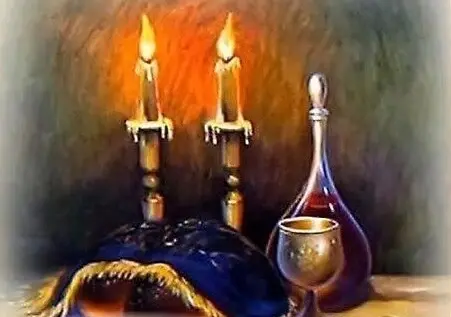
But there is another beautiful custom that should be observed on Shabbat night (Yom Tov): to look at the Shabbat candles before beginning Kiddush.
Many different segulot are associated with this.
For example, the Gemara notes that this is highly beneficial for the eyes and brings them healing.
The mekubalim reveal another secret: they connect the two Shabbat candles with raising children, and those who observe this custom will not experience difficulties in raising their children.
The Gemara says: “One who is accustomed to lighting Shabbat candles will have children who become Torah scholars.”
The two candles symbolize husband and wife.
A man has 248 organs in his body, while a woman has 252—four more because of the female reproductive system. Together, husband and wife comprise 500 organs.
The gematria of the word “ner”(candle) = 250. The two candles, which together equal 500, represent the union between husband and wife, which gives birth to children.
Interestingly, the phrase “Pru u'Rvu”—(be fruitful and multiply) also has a numerical value of 500.
Regarding this, the Gemara says: “ha-ragil be-ner” (one who is accustomed to [lighting] candles). The word “ha-ragil” = 248, while the word “be-ner” = 252, indicating the union between husband and wife, who together have children and, through the merit of their candles, raise them according to Torah.
This custom is very simple to observe and provides many benefits.
This is one reason why women should light Shabbat candles near the place where the Shabbat meal will take place.
If a woman lights the candles in the kitchen while the Shabbat meal will be held in the dining room, her husband will not be able to see the candles before Kiddush. Therefore, a wife should make sure to light the candles near the table where the Shabbat meal takes place, so that this custom can be properly observed.
(dailyhalacha.com, Rabbi Eli Mansour)
Was this helpful?
100% of readers found this article helpful (5 votes).
Please note: some articles on our site contain the holy Names of the Almighty. If you print these articles, they may not be thrown away or destroyed. Please handle printed copies with care and respect.
Material from our site may be copied for the purpose of spreading Torah, provided a link to Silatehilim.com is included. Any use of the site's material in print publications or for commercial purposes is prohibited without the rights holder's consent.