A Letter to the Shechinah, or How to Reach Kisei HaKavod
One of the great mystical segulot given to us by
Rabbi Chaim ben Attar — Ohr HaChaim HaKadosh is the practice of placing a note containing a request in the Western Wall.
Ohr HaChaim HaKadosh was the first to write a note addressed to the
Shechinah, and from that time the Jewish people adopted the custom of placing a
“petek be-Kotel HaMa'aravi” (a note in the Western Wall).
In his desire to help a poor man who had turned to him for assistance,
Ohr HaChaim HaKadosh always preferred a simple, straightforward prayer between man and G-d to all mystical combinations of Divine Names.
The following story has been preserved: One day, a poor man named
Marod came to Rabbi Chaim ben Attar — Ohr HaChaim HaKadosh — for help.
The poor man told the tzadik about his endless troubles and asked him:
“I heard that you know how to reach Kisei HaKavod (the Throne of Glory) through special combinations of the Names of HaShem, according to the hidden teachings. Please write me an amulet to change my mazal.”
Ohr HaChaim HaKadosh replied:
“I will give you a note that you should place between the stones of the Kotel HaMa'aravi (the Western Wall). If you add your own prayers, you will be saved with G-d’s help.”
The poor man followed the tzadik’s instructions and hurried to the Kotel. He approached the Wall, placed the note between the stones, and continued praying about his bitter situation.
A few minutes later, one of the worshippers noticed that the note written by Ohr HaChaim HaKadosh had fallen, and he became curious to see what it said.
Amazingly, the note contained no combinations of Divine Names, only a simple prayer.
Ohr HaChaim HaKadosh’s Letter to the Shechinah
לכבוד השכינה , אחותי, רעייתי, יונתי, תמתי. אבקשך ברחמים להשפיע פרנסה טובה לפלוני בן פלוני. חיים בן עטר
“Lechvod haShechinah — achoti, rayati, yonati, tamati. Avakesh mimach berachamim lehashpia parnasah tovah le-ploni ben ploni. Chaim ben Attar.”
(In honor of the Shechinah, my sister, my beloved, my dove, my perfect one, I ask you mercifully to bestow a good livelihood upon (the person’s name). Chaim ben Attar.)
Before long, the poor man’s mazal changed for the better.
How This Segula Became a Jewish Tradition
Rabbeinu Chida, the closest disciple of
Ohr HaChaim, earned his livelihood by transporting goods from place to place in his city on his donkey. He lived a very modest and simple life, and none of the residents of Jerusalem suspected the great holiness of Rabbeinu Chida.
A few days after his holy rabbi, Ohr HaChaim, passed away, Chida’s donkey died, leaving him without a livelihood. At that moment, Chida remembered that before his death, Ohr HaChaim had given him a folded piece of paper and asked him to go to the Kotel and place the note between its stones. This was unheard of at the time — placing a note in the Kotel?
Nevertheless, Chida decided to fulfill the words of his holy rabbi and hurried to the Western Wall. He placed the note between the stones, and from there went to one of the batei midrash in Jerusalem.
When he entered, the rosh yeshivah suddenly looked at Rabbeinu Chida’s face and cried out:
“Your face is shining so brightly! What mitzvah did you perform today? What deed brought such great light to your face?”
Chida replied, “I did nothing unusual.”
But the head of the yeshivah persisted: “Tell me exactly what you did today, in detail.”
Chida innocently told him that he was a disciple of Ohr HaChaim HaKadosh and described the note his teacher had asked him to place between the stones of the Kotel.
The chacham immediately stood up before Chida and said, “Take me to the Wall at once, to the place where you put the note.”
Chida and the chacham went to the Kotel and found the one and only note that had been placed at the Western Wall, since no one had ever placed a note there before. They removed it, and the rosh yeshivah recognized the handwriting of Ohr HaChaim HaKadosh:
“Holy Shechinah, help and have mercy on my disciple Chida.”
From that day on, Chida became known throughout the Jewish world, and from then on all the communities of Israel began writing their problems and requests on notes and placing them between the stones of the Western Wall.
P.S.
Now we, too, know how to write a note for the Kotel properly and to whom we address it — using the note written by the author of this great segula as our model.
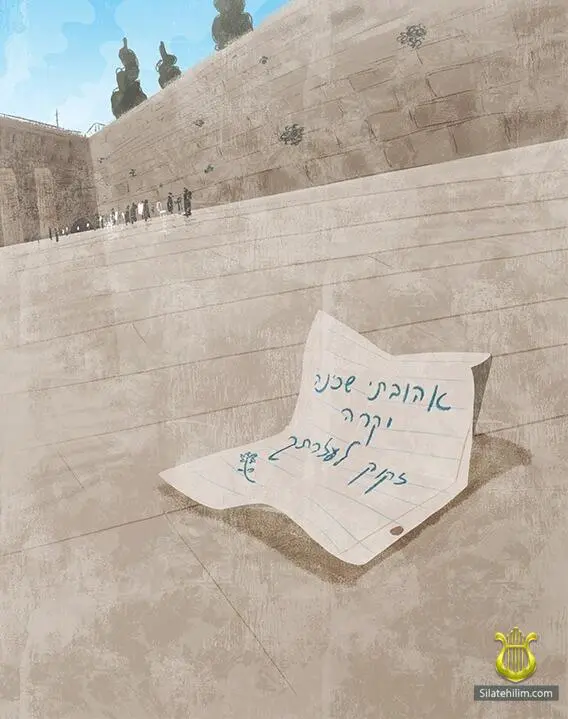
Photo: Menachem Halberstadt [the note says: “My dear Shechinah, I need Your help”]
(https://chakima.org.il/smarts/%D7%A8%D7%91%D7%99-%D7%97%D7%99%D7%99%D7%9D-%D7%91%D7%9F-%D7%A2%D7%98%D7%A8-%D7%90%D7%95%D7%A8-%D7%94%D7%97%D7%99%D7%99%D7%9D-%D7%94%D7%A7%D7%93%D7%95%D7%A9/; https://www.jewishmysticism.co.il/462)
Was this helpful?
100% of readers found this article helpful (35 votes).
Please note: some articles on our site contain the holy Names of the Almighty. If you print these articles, they may not be thrown away or destroyed. Please handle printed copies with care and respect.