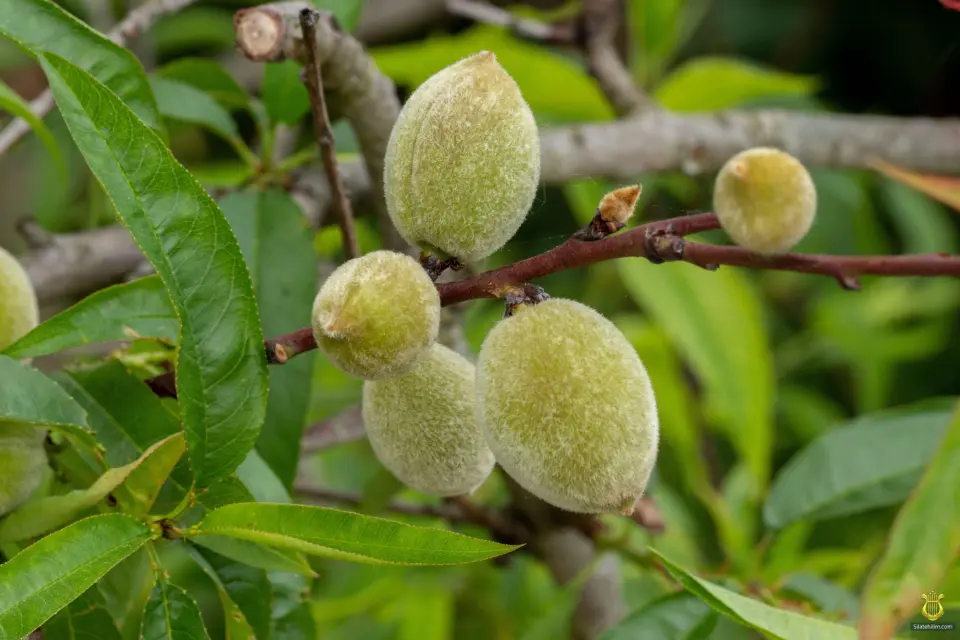
A vivid childhood memory is climbing trees in spring and eating fruit that had not yet ripened—our favorites being green almonds and unripe cherry plums, until our teeth were set on edge—and then being scolded by the adults for it.
Did our grandmothers understand that their prohibition was not merely because of an ordinary digestive upset, but had a profound meaning behind it?
Rabbi Nachman of Breslov reveals the hidden meaning of this prohibition.
“ a person must be careful not to eat unripe fruit. This is forbidden, just as it is forbidden to cut down a tree whose life force has not yet been exhausted. The Sages, of blessed memory, allude to this prohibition.”
It is also forbidden to pick fruit before it has ripened and to eat such fruit. Unripe fruit can cause serious harm to the soul of the person who eats it. He may even lose his soul. The reason for this prohibition is that while the fruit is ripening, it has the ability to draw into itself the life-giving juices with which the tree nourishes it. If the fruit is picked prematurely, this ability turns against the person who eats the unripe fruit.
Only ripe fruit, which has absorbed an ample measure of the tree’s life force and become filled with it, can nourish a person’s soul—and not the other way around, G-d forbid.
An unripe fruit can draw the life force from a person’s soul and thereby cause harm. But if a person recites a blessing over the fruit, concentrates on the meaning of what he is saying, and his heart trembles before Heaven, he will then be saved from the negative effect of the unripe fruit.
People who are spiritually strong and serve G-d with love and awe can also draw the vitality from an unripe fruit and use it to sustain their bodies and souls without harming themselves. Such a person may also discover in unripe fruit what is hidden, including great secrets of the highest order.
But above all, one must be careful not to taste the unripe fruit—or the lofty mysteries that are beyond human understanding.
Know that one may not even eat food prepared from unripe fruit. If the fruit has already been picked, it can be set aside until it ripens. Imagine a person exhausted after a difficult journey, breathing heavily and sighing until he has rested. The same applies to unripe fruit: it must be allowed to recover from the shock of having been separated from the branch prematurely. Only afterward may it be permitted as food. But all this involves hidden mysteries.”
In light of Rabbi Nachman’s words, one might say that black olives are healthier than green ones, since green olives are those picked prematurely. If they had remained on the branches, they would have turned black. Nevertheless, the color of olives is not an unequivocal indication of their ripeness: most often they change from green to black, but sometimes they retain their original green color, while in other cases they turn black immediately and then do not change color as they ripen.
(Rabbi Nachman of Breslov, “Likutey Moharan”; Rabbanit H. B. Segelbaum, “The Seven Species of the Land of Israel”)
Was this helpful?
100% of readers found this article helpful (21 votes).
Please note: some articles on our site contain the holy Names of the Almighty. If you print these articles, they may not be thrown away or destroyed. Please handle printed copies with care and respect.
Material from our site may be copied for the purpose of spreading Torah, provided a link to Silatehilim.com is included. Any use of the site's material in print publications or for commercial purposes is prohibited without the rights holder's consent.